
Commercial Generator Installation Planning in Greater Boston

Contact Us
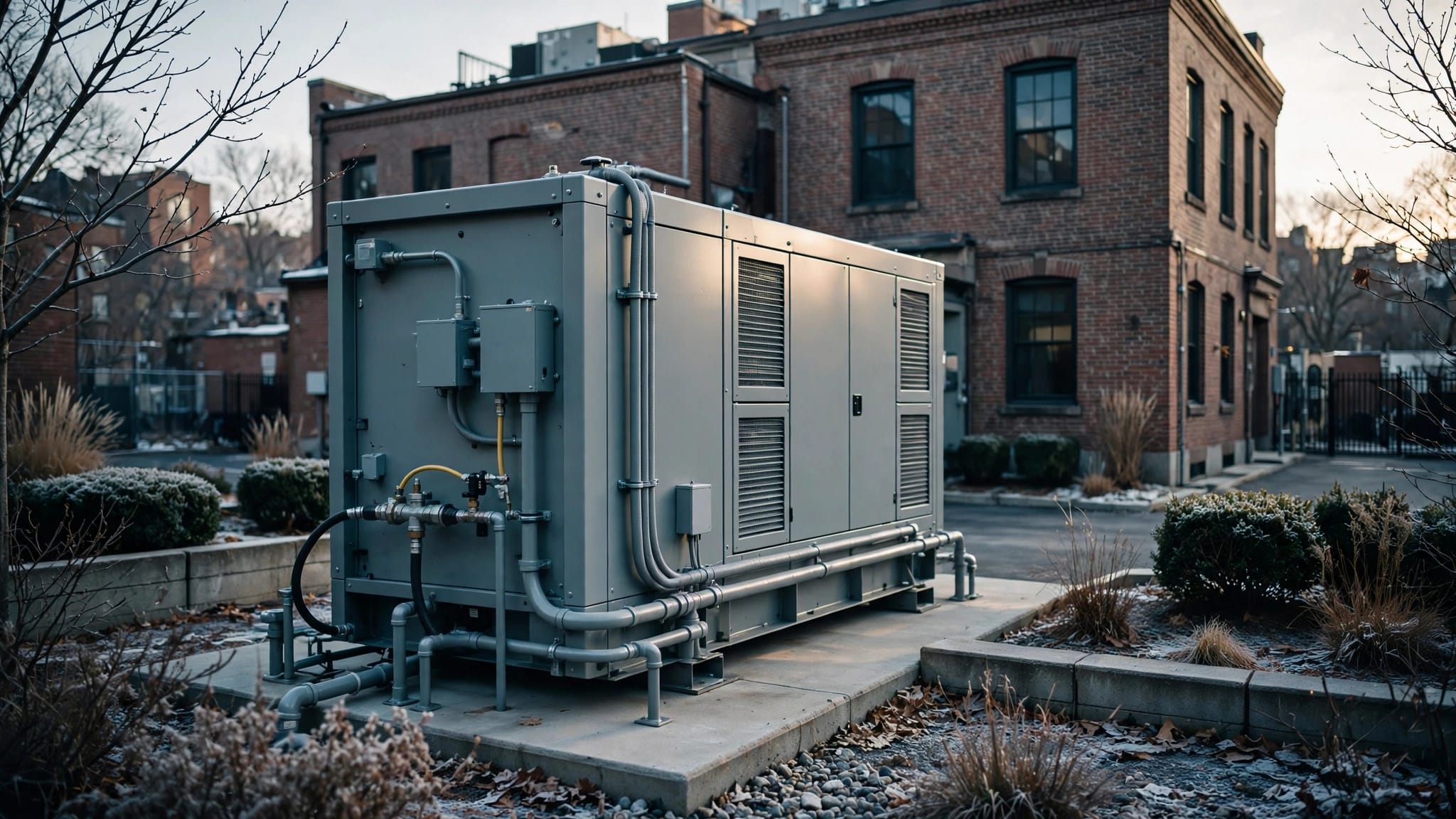
A generator only protects a facility if it can support the loads that matter, fit the site, and pass the required approvals. Commercial generator installation in Greater Boston calls for early coordination among facility managers, electrical and fuel professionals, utilities, and local authorities.
Dense lots, older buildings, winter access, and varied municipal procedures can affect equipment location and project timing. Start with the facility's outage priorities, then build the design and permit plan around those needs.
Commercial Generator Installation Starts With Outage Priorities
Identify what must stay online
List the systems that protect people, property, and essential operations during an outage. Depending on the facility, these might include fire and life-safety systems, communications, refrigeration, security, sump pumps, heating controls, or selected production equipment. A healthcare or institutional building may have different priorities from a restaurant, retail space, or office.
Then distinguish between loads that must run together and equipment that can operate in sequence. A generator plan based only on total building square footage can miss startup demands and operational limits. A qualified electrical professional can review service capacity, panels, equipment nameplates, and expected operating patterns to inform the load assessment.
We provide generator installation services in Metro and Greater Boston. Our commercial standby generator installation work begins with understanding how the property needs to function when utility power fails.
Include outage duration and operating limits
A short interruption and a prolonged outage place different demands on a facility. Consider the hours of operation, staffing, essential services, and how long the building may need backup power. Fuel type and available storage affect how long the system can run, so include fuel planning in the initial scope.
Also decide whether the generator supports the whole facility or selected circuits. Load-management equipment may help control which systems operate at once. The owner's operational plan should identify who can make those decisions during an outage.
Size the Generator and Design the Electrical System
Use the actual loads to determine capacity
The generator rating should follow the documented loads and operating plan, not a guess or a neighboring building's equipment. The electrical review should account for starting demands, equipment that may run at the same time, and any planned facility changes.
Record the proposed generator's kilowatt rating and type. The Massachusetts electrical permit application asks for those details, along with the city or town and other project information. This information helps connect the equipment choice to the electrical design and permit package.
Plan transfer equipment and the point of connection
The transfer arrangement must prevent unsafe backfeeding and establish which circuits receive generator power. Depending on the existing service and design, the project may involve an automatic transfer switch, panel changes, feeders, or dedicated circuits. Equipment must be compatible with the electrical system and installed according to its listing and instructions.
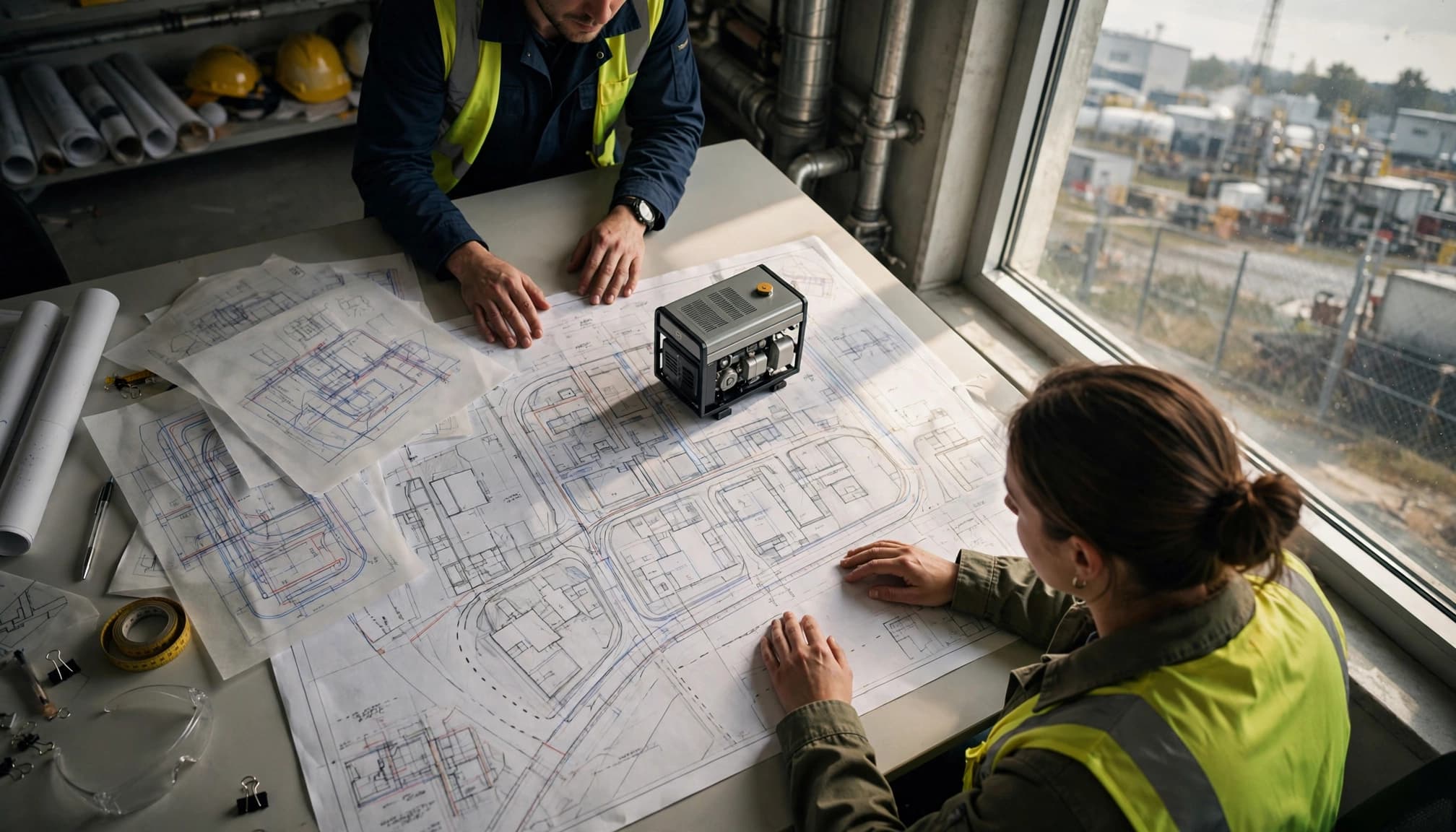
A site plan should show the generator, transfer equipment, electrical routes, and relevant building systems. Coordinate this plan with mechanical, fire protection, and building work so that equipment locations and pathways do not conflict. Our commercial electrical services for Greater Boston businesses include broader project needs that may affect backup-power planning.
Choose a Location That Works on a Tight Site
Map access, clearances, and building conditions
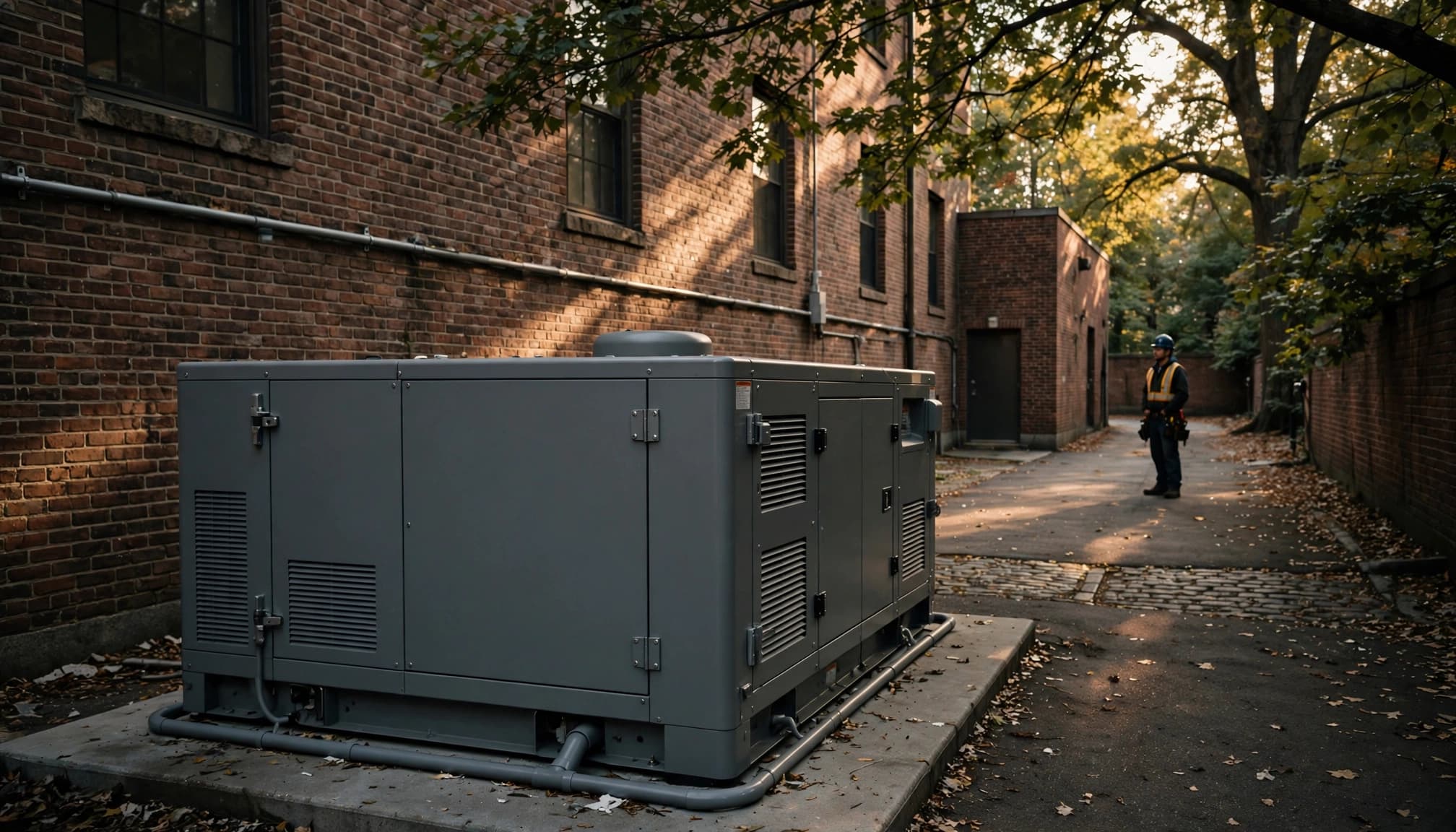
Greater Boston properties may have narrow service alleys, shared driveways, limited yard space, and nearby windows or air intakes. The proposed location needs to account for the generator manufacturer's clearances, applicable local siting rules, exhaust direction, and access for service. Consider noise near neighboring spaces, especially where a facility shares a wall or property line.
Plan for delivery and future maintenance, too. A unit that fits on a drawing may be difficult to move into place if fences, gates, pavement, or overhead obstructions restrict access. Identify any excavation, paving, landscaping, or restoration work before the estimate is finalized.
Account for weather and fuel routing
Snow storage, drifting, drainage, and seasonal access matter in New England. Keep the planned intake and exhaust areas clear, and consider whether snow removal could block service access. The site plan should also show utility routes and the proposed fuel connection.
Natural gas or propane work may involve separate coordination with qualified fuel professionals and, where applicable, the gas utility. Tank location and delivery access can affect a propane design. The electrician and fuel professional should coordinate connection points and installation sequencing rather than treating the electrical and fuel scopes as unrelated jobs.
Plan Permits and Inspections by Municipality
Apply the current Massachusetts electrical code
Massachusetts 527 CMR 12.00 is based on NFPA 70, 2026 edition, with state amendments. It took effect April 24, 2026, and applies to installations for which a permit was granted after that date. The local authority having jurisdiction administers the permit and inspection process for the project location.
The statewide electrical permit form is addressed to the Inspector of Wires and includes fields for the municipality, generator rating and type, and other project details. It also has fields for building-permit and utility-authorization numbers. Those fields do not mean every generator project requires each separate approval.
Coordinate inspections before work is concealed
Permit steps, reviews, and inspection schedules can differ among Boston, Burlington, and other Greater Boston communities. The project team should identify who files each application, who schedules inspections, and which work must remain accessible for review. Electrical work generally cannot be covered before inspection. Massachusetts code specifies inspection within 24 hours for excavations and 72 hours for other installations, excluding Saturdays, Sundays, and holidays.
The Massachusetts fire code, 527 CMR 1.00, is based on NFPA 1, 2021 edition, with state amendments. Fire-code review may relate to the particular building and scope. A project-specific commercial electrical safety assessment can help identify existing conditions that may affect the proposed work.
Coordinate Utility and Air-Permit Questions
Separate emergency operation from grid interconnection
The Massachusetts Department of Public Utilities says distributed-generation owners generally need written utility approval before connecting to the grid. That process includes an Interconnection Service Agreement followed by Authorization to Connect. DPU guidance says emergency generators are not required to follow that interconnection process, while still recommending contact with the electric utility.
The distinction matters if the proposed system will operate in parallel with the utility or export power, rather than serving the facility during outages only. Discuss the operating mode with the electrical designer and utility early. Eversource and National Grid may have project-specific coordination procedures, and the relevant utility depends on the property location.
Screen air-permit applicability
Do not assume that the word "emergency" settles air-permit requirements. MassDEP issued a permit under 310 CMR 7.00 for eight emergency generators at the Markley Group facility in Lowell. That example does not establish requirements for other facilities, but it shows why the operating plan and equipment details belong in the project review.
The number and type of units, expected operating conditions, fuel, and site context can affect the applicable review. Include those details when coordinating with the responsible environmental and local authorities. Avoid treating another facility's permit conditions as a standard for your own property.
Commission the System and Maintain Readiness
Test the complete operating sequence
Startup should verify more than whether the engine runs. The project closeout should cover transfer operation, the selected loads, alarms, and the return to normal utility power. Facility staff should understand how the system behaves, which loads it supports, and whom to contact if a fault appears.
Keep the final equipment information, permit records, inspection results, and operating instructions together. Document any limitations, such as loads that must be switched off or procedures required before maintenance. That record helps future facility managers respond without relying on assumptions.
Set a maintenance plan around the equipment
Follow the manufacturer's service schedule and maintain fuel-related equipment as directed. Routine checks can include batteries, fluids, filters, visible damage, and the condition of air intake and exhaust paths. After extended operation or severe weather, a qualified technician can assess the equipment and address any fault history.
A start test alone does not show how the system performs under load. Arrange appropriate testing and service with qualified personnel. Our commercial generator maintenance and testing guidance covers ongoing readiness for commercial electrical systems.
Key Takeaways
- Set the outage priorities before selecting a generator rating.
- Design around real loads, transfer equipment, site access, and fuel routing.
- Treat local permits and inspections as municipality-specific coordination.
- Clarify whether the system is emergency-only or will connect to the grid.
- Include commissioning and maintenance in the operating plan, not as afterthoughts.
Frequently Asked Questions
Does every Greater Boston generator project follow the same permit process?
No. Massachusetts provides a statewide electrical code, but each municipality administers local permits and inspections. Other approvals may depend on the building, equipment, fuel work, and project scope.
Does an emergency generator need utility interconnection approval?
DPU guidance says emergency generators do not need to follow its distributed-generation interconnection process. A system designed to operate in parallel with the utility may require a different review, so identify the intended operating mode early.
How do facility managers choose a generator size?
Begin with the loads that must operate during an outage, including their startup demands and whether they run simultaneously. An electrical load assessment can help match capacity, transfer equipment, and the facility's operating plan.
What should a commercial generator proposal include?
Ask for a written scope that identifies the rating and type, transfer equipment, electrical modifications, fuel coordination, site preparation, permit responsibilities, inspection scheduling, startup testing, and excluded work. A clear scope makes competing proposals easier to compare.
Build the Plan Around the Facility
Reliable backup power begins with a practical picture of what the building must keep running and what the site can support. In Greater Boston, the strongest plans account for local review, utility coordination, access, fuel, and maintenance before installation begins.
A generator is ready for an outage only when the equipment, electrical design, operating plan, and approvals work together.