
Massachusetts Electrical Rules for Garage Door Openers

Contact Us
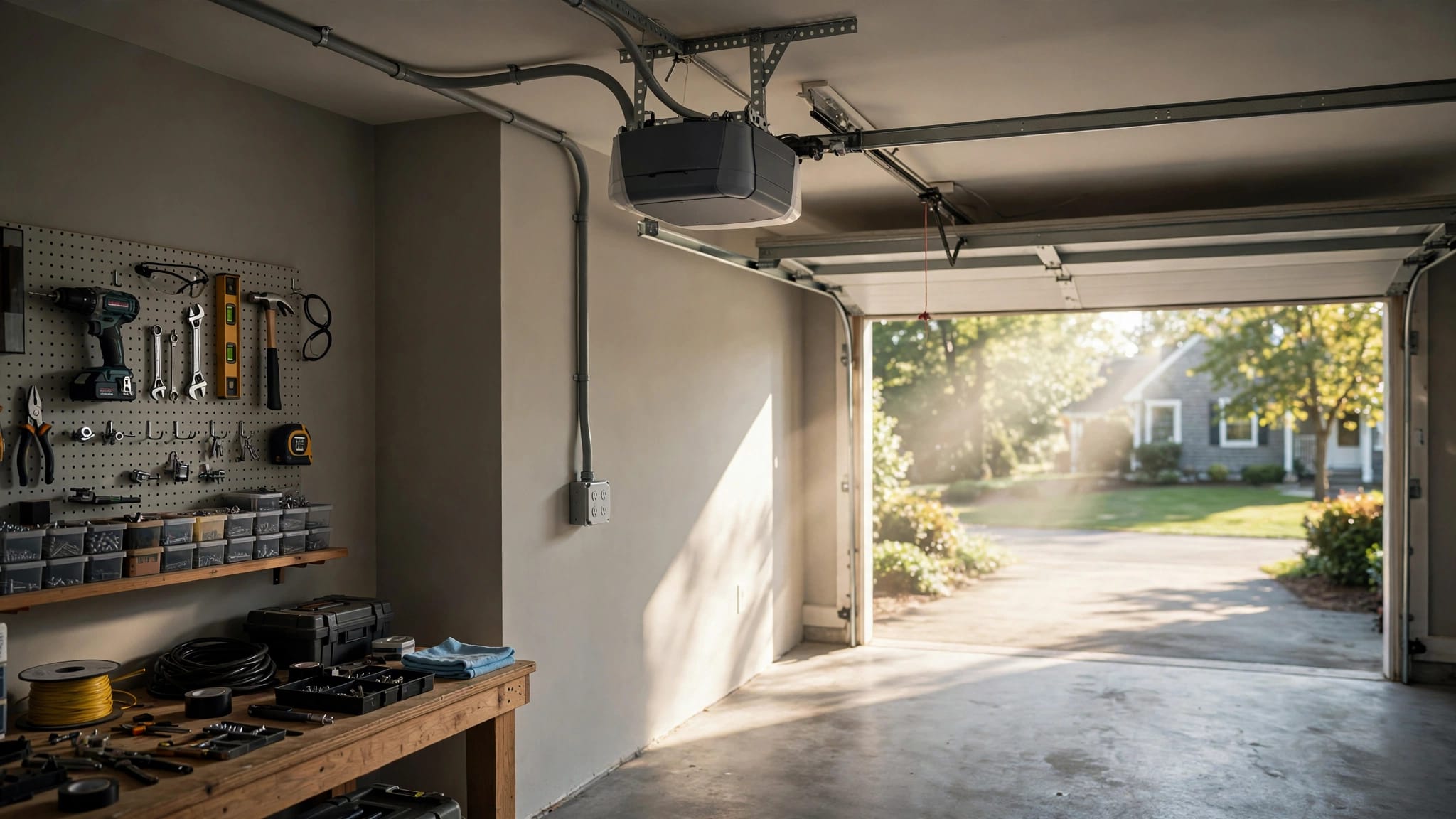
A garage door opener can run normally even when the outlet supplying it has unsafe wiring or inadequate protection. Massachusetts garage door opener wiring needs to account for the power supply, required garage receptacles, circuit protection, and permits.
The safest starting point is a properly installed permanent power source , with electrical work handled by a Massachusetts-licensed electrician. Before adding an outlet or replacing an opener, separate the equipment's installation instructions from the electrical-code requirements governing the garage.
Key Takeaways
- Massachusetts adopted the 2026 National Electrical Code with state amendments effective April 24, 2026.
- The required accessible garage receptacle and an overhead opener outlet have different purposes and circuit considerations.
- Garage receptacles generally need GFCI protection, including receptacles supplying door openers.
- New circuits, added outlets, and wiring alterations commonly require electrical permits and inspections. Use a licensed electrician for this work.
Which Massachusetts Electrical Code Applies?
Massachusetts regulates electrical installations through 527 CMR 12.00 , the Massachusetts Electrical Code. As of October 2026, it incorporates NFPA 70, the 2026 National Electrical Code, with Massachusetts amendments.
The updated code took effect April 24, 2026. The state's adoption language applies it to installations for which permits were granted after that date. Therefore, an earlier permitted project may fall under the previous edition.
That distinction matters when reading older installation advice. A national-code summary also doesn't capture every Massachusetts amendment. Our guide to 2026 Massachusetts electrical code updates covers the broader changes affecting residential projects.
The statewide code establishes the technical requirements. Municipal Inspectors of Wires administer permits and inspections. Local filing procedures and inspection scheduling can differ, but those administrative differences shouldn't be confused with a different statewide electrical code.
Residential garage provisions also shouldn't be applied automatically to commercial overhead-door installations.
How Garage Door Opener Wiring Works
The Motor Needs a Permanent Power Supply
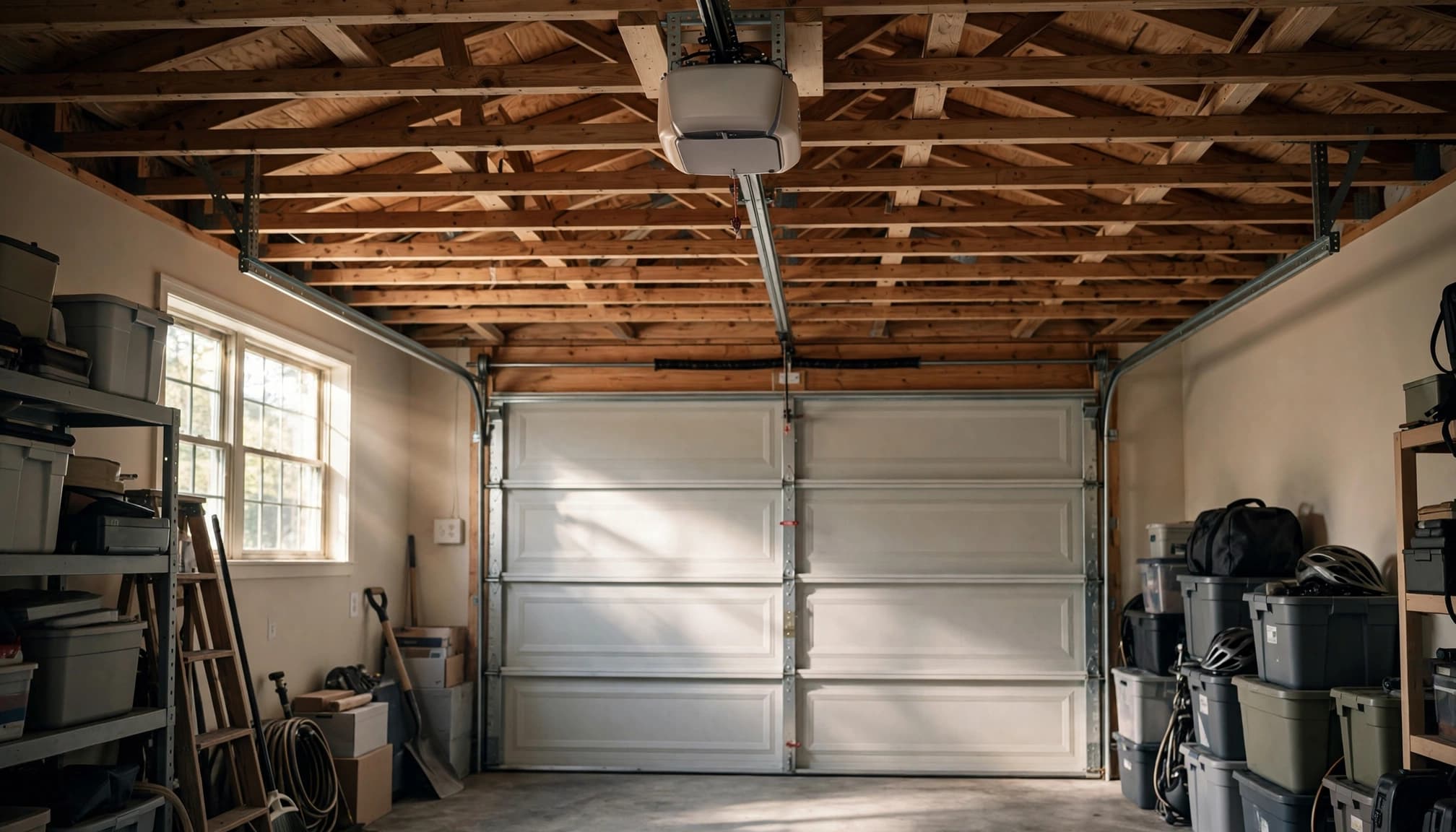
Many residential openers use a grounded cord plugged into a 120-volt receptacle. However, the equipment's nameplate and installation instructions determine its voltage, connection method, and other electrical specifications.
An electrician should position the receptacle so the factory cord reaches without stretching or crossing moving hardware. For a wall-mounted opener, that location may differ from the outlet used by a ceiling-mounted unit.
A permanently installed receptacle is the appropriate solution when the existing outlet is too far away. An extension cord isn't a substitute for permanent wiring. Likewise, removing a grounding pin or using an adapter doesn't repair an inadequate electrical supply.
Sensors and Wall Controls Use Different Wiring
The opener's electrical supply is separate from its control wiring. Photoelectric safety sensors and wall controls commonly connect to designated low-voltage terminals on the opener.
Those small wires don't belong in a household receptacle or connected to the opener's line-voltage supply. Their routing also needs protection against damage from door tracks, stored equipment, and moving parts.
Manufacturer instructions govern terminal assignments and equipment connections. Meanwhile, the electrician handles the branch circuit, receptacle, grounding, and applicable wiring separation.
Replacing an opener can therefore involve two distinct tasks: installing the door equipment and providing a compliant electrical supply.
The Required Garage Outlet Isn't the Opener Outlet
The Accessible Receptacle Has Its Own Purpose
Massachusetts' garage receptacle provision calls for at least one readily accessible 120-volt, 20-amp receptacle in each attached or detached garage. Under the applicable 2026 language, the required outlet must be no more than 5.5 feet above the finished floor .
An outlet mounted near a ceiling opener may not satisfy that requirement. Reaching the required accessible outlet shouldn't depend on a ladder, tools, or moving a fixed obstruction.
Our Massachusetts garage outlet requirements guide explains the minimum provision and its relationship to a practical garage layout.
Circuit Separation Affects the Installation
Massachusetts also limits what can connect to the circuit or circuits supplying those required garage receptacles. Lighting outlets and other receptacle outlets can't simply share that required circuit.
Therefore, adding an overhead opener receptacle requires more planning than extending cable from the nearest convenient outlet. The electrician needs to identify the existing circuit's purpose before selecting the power source.
This separation also helps keep a tool-related receptacle trip from shutting down garage lighting.
The required accessible garage receptacle doesn't automatically provide a permissible circuit for an additional opener outlet.
Extra outlets may improve convenience, but their circuit arrangement still needs to meet the applicable requirements.
GFCI, AFCI, and Grounding Serve Different Functions
GFCI Protection Applies to Garage Receptacles
Residential garage receptacles generally require ground-fault circuit-interrupter protection, including outlets supplying door openers. Mounting a receptacle overhead doesn't, by itself, create an exemption.
GFCI protection reduces shock risk by detecting an imbalance between outgoing and returning current. It can come from a GFCI receptacle, a properly connected upstream device, or an appropriate circuit breaker.
For an overhead outlet, an accessible upstream device or breaker can make testing and resetting easier. That's a layout consideration, separate from the requirement for protection.
An electrician should test the actual opener outlet. A nearby GFCI device doesn't prove that every receptacle in the garage receives protection.
AFCI Protection Doesn't Replace Grounding or GFCI
Arc-fault circuit-interrupter protection addresses certain dangerous arcing conditions. GFCI protection addresses ground-fault shock hazards. Neither replaces the other where both apply.
AFCI requirements depend on the circuit and the areas it supplies. For example, a circuit serving covered interior dwelling spaces can introduce requirements beyond those associated with the garage alone.
Grounding is another separate issue. A three-slot receptacle doesn't prove that a functioning equipment-grounding path exists behind it.
Likewise, GFCI protection doesn't replace the circuit breaker's overcurrent protection. The breaker, conductors, grounding, and protective devices must work together.
Don't install a larger breaker to stop repeated trips. That can leave the existing wiring inadequately protected.
Does the Opener Need a Dedicated Circuit?
A dedicated opener circuit can be a useful recommendation, but it shouldn't be presented as a universal Massachusetts requirement for every residential opener.
The final design depends on the equipment instructions, existing wiring, circuit loading, and Massachusetts circuit-separation rules. Some installations need a new circuit because the available circuit can't legally or safely supply the additional outlet.
Keeping an opener separate from heavily used equipment can also improve reliability. A table saw, space heater, freezer, or battery charger may change the load substantially.
However, separation doesn't eliminate the need for required protective devices.
For planning, give the electrician the opener's electrical specifications and a list of other garage equipment. Include equipment you expect to add later, rather than designing around today's load alone.
The garage door opener wiring should support reliable operation without depending on an overloaded general-use circuit. An equipment list also helps distinguish necessary work from optional improvements in the estimate.
Detached Garages Need More Than an Opener Outlet
A detached garage introduces electrical requirements that extend beyond the receptacle beside the opener.
Depending on the supply arrangement, the project can involve a feeder, building disconnect, grounding and bonding equipment, and protection where wiring enters each structure. Underground installations also involve conductor selection, burial conditions, and inspection before concealment.
For a garage used mainly for parking, a limited supply may meet the intended needs. However, a workshop, electric heater, or future EV charger can require a larger design.
A feeder and subpanel can provide separate circuits for lighting, receptacles, openers, and equipment. This generally involves more initial work, but it can reduce the need for another excavation later.
Our detached garage wiring options guide explains these planning choices.
The home's service capacity and the garage's expected load determine the appropriate approach. Installing a subpanel doesn't automatically create additional capacity at the house.
Permits and Inspections Are Part of the Electrical Work

Adding a branch circuit, relocating a receptacle, or installing new fixed wiring commonly requires an electrical permit and inspection. A building permit for garage construction doesn't replace the electrical permit.
Plugging a replacement opener into an existing suitable receptacle is different from altering the building's electrical system. However, an equipment replacement doesn't establish that the existing outlet is safe or compliant.
Use a Massachusetts-licensed electrician for new circuits, receptacle changes, grounding repairs, and fixed wiring. Include permitting and inspections in the project scope. Our Massachusetts electrical permit requirements guide explains that process.
Massachusetts requires covered electrical work to remain visible until the required inspection occurs. Don't close walls or backfill a wiring trench before that stage is complete.
An inspection may address conductor sizing, boxes, grounding, cable protection, circuit arrangement, and protective-device operation. Detached-garage work can also involve the feeder and building disconnect.
Our home electrical inspection guide describes the broader review.
Keep the permit record, inspection approval, and updated circuit directory with the property documents. Clear circuit identification is also useful when servicing the opener later.
Frequently Asked Questions
Can the Opener Share a Circuit With Garage Lights?
It may be possible on a suitable circuit, depending on the equipment and applicable rules. However, lighting can't share the circuit reserved for Massachusetts' required garage receptacles. The electrician must distinguish those circuits before adding the opener outlet.
Does a Battery Backup Replace the Electrical Supply?
No. Battery backup supports operation during an outage, but the opener still needs its specified normal power connection. It doesn't eliminate receptacle protection, grounding, or permit requirements for electrical alterations.
Should I Replace an Outlet That Keeps Tripping?
Repeated trips need diagnosis rather than an automatic outlet replacement. Possible causes include damaged wiring, moisture, a faulty opener, or excessive loading. If you notice burning odors, scorch marks, or unusual heat, stop using the equipment and have a licensed electrician assess it.
Plan the Power Supply Before Installing the Opener
A working door doesn't prove that its electrical supply is safe. Massachusetts installations need the right circuit arrangement, required receptacle protection, and inspections when electrical work is added or changed.
We provide electrical installations for homes and businesses throughout Metro and Greater Boston. Have a licensed electrician address the permanent power supply before the opener installation is complete, so safe operation doesn't depend on temporary cords or overlooked wiring problems.