

How an Electrical Load Calculation Works in Greater Boston Homes

Contact Us
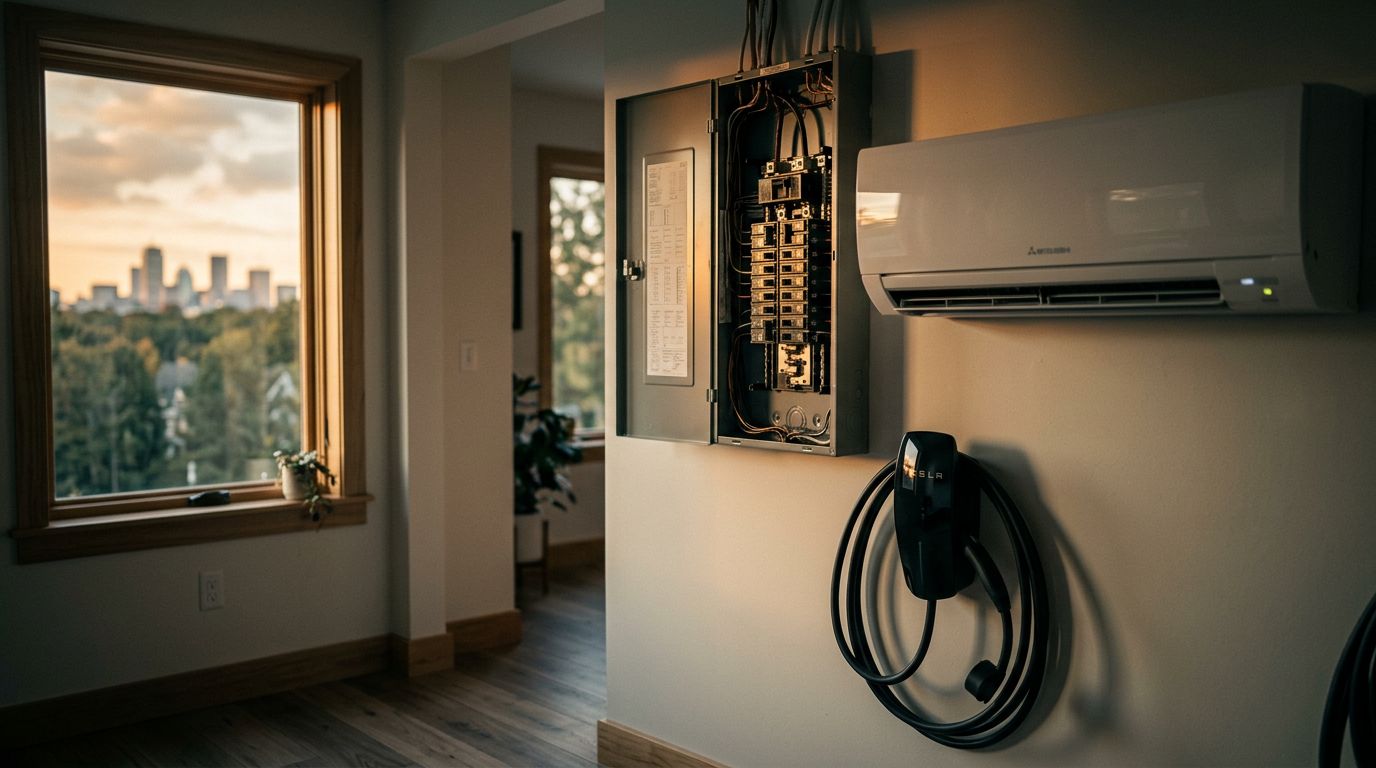
If you're adding a heat pump, planning an EV charger, or replacing an old panel, an electrical load calculation tells you whether your home can handle the extra demand. It gives you a clear answer instead of a guess.
That matters a lot in Greater Boston, where many homes were built for a much lighter electrical load. Kitchens are more electric, HVAC systems are larger, and aging service panels can run out of room fast. A proper calculation shows what your home uses now, what it may need next, and whether the panel can support it.
Why a load calculation matters before you add new equipment
A lot of homeowners assume panel size is the whole story. It isn't. Two homes can both have 200-amp service, but only one has enough spare capacity for a heat pump or EV charger.
That is why electricians look at the full picture. They check how much power your home already uses, then compare that total against the service size and the equipment you want to add. If the numbers are tight, the panel may need an upgrade before the project can move forward.
This matters most in older homes. Many houses in Metro Boston still have panels that were installed before modern appliances became the norm. Some have been patched over the years. Others have a few open breaker spots, but not much real room left for added demand.
A panel with empty breaker spaces is not always a panel with enough capacity.
If you're unsure about your system, a home electrical inspection guide for Boston homeowners can help explain how a broader safety review fits into the process.
What electricians count when they calculate home demand
A load calculation is part math and part real-world review. Licensed electricians use NEC-based methods, then apply local code and permit requirements before they recommend any change. That keeps the result tied to actual home use, not guesswork.
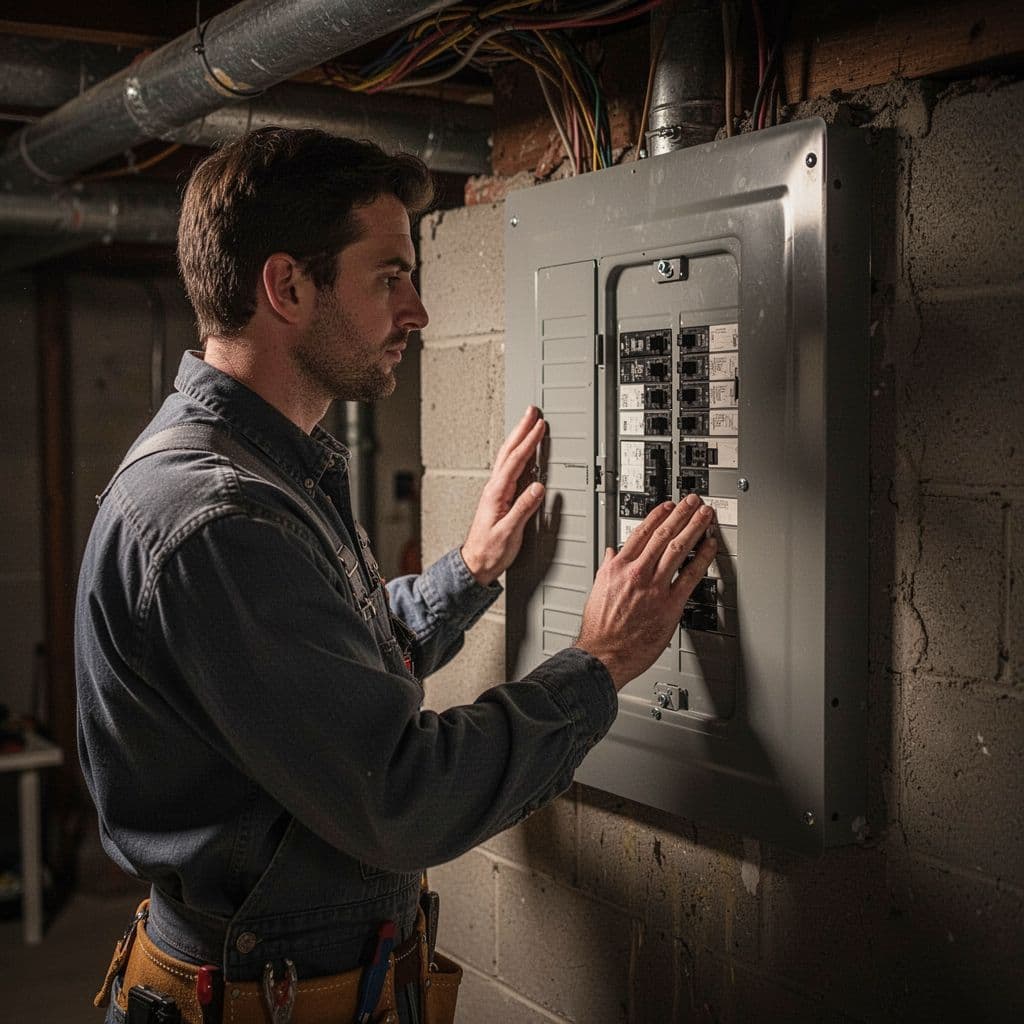
The calculation usually starts with the home's size and the loads that are always there. From there, the electrician looks at the equipment that draws power in larger bursts or runs for long periods.
Common items include:
- Square footage and general lighting load
- Kitchen and laundry circuits
- Heating and cooling equipment
- Water heaters and other fixed appliances
- EV chargers, heat pumps, and similar added loads
- The existing service size and panel condition
The point is simple. A home with a modest footprint and gas heat may have room to spare. A similar home with a finished basement, central air, a heat pump, and an EV charger can reach its limit fast.
The result is not just a number. It is a map of how your home uses electricity day to day.
Why older Greater Boston homes need extra attention
Older homes often need a closer look because they were not built around today's electrical habits. Many started with smaller service sizes, fewer circuits, and less demand from appliances. Later renovations sometimes added loads without fully updating the system.
That mix can create a false sense of safety. A house may seem fine until you add a major upgrade. Then the panel, wiring, or service entrance becomes the weak point.
Homes with outdated wiring deserve even more care. If a property still has knob-and-tube wiring, a load calculation may point to broader work, not just a panel change. In that case, modernizing electrical systems in older homes may be part of the long-term plan.
Boston-area weather also affects the math. Winters push heating equipment hard. Summers bring more air conditioning use. Many homeowners are now adding heat pumps to cut fuel use, and that changes the electrical load in a big way. The same goes for EV chargers, which can add a steady draw every night.
Renovations add more pressure too. A kitchen remodel often means new appliances, more outlets, and higher lighting demand. Finishing a basement may sound minor, but it often adds circuits, a dehumidifier, and home office equipment. Each change seems small on its own. Together, they can fill a panel quickly.
What the results mean for panels, EV chargers, and heat pumps
Once the math is done, the electrician can tell you where your system stands. Sometimes the answer is simple. Your current panel has enough capacity, and the new equipment can be added with the right circuit. Other times, the calculation shows that the home needs a service upgrade before the project can move ahead.
This is where the result becomes practical. It helps you avoid overbuilding in one area and underbuilding in another. It also helps you plan the order of work. For example, a homeowner may want an EV charger, but the load calculation may show that the panel should be replaced first.
A few common outcomes are easy to understand:
- The panel has enough capacity, so the new load can be added safely.
- The panel has room on paper, but the service size is too small for future plans.
- The existing panel is near capacity, so a subpanel or service upgrade makes more sense.
- The system has enough capacity, but some circuits need to be separated for better balance.
A strong result gives you options. It shows whether you can add equipment now or need to plan ahead. That can save time, money, and a lot of frustration during a renovation.
It also keeps the project moving in the right order. Heat pumps, EV chargers, and kitchen upgrades all work better when the electrical side is sorted first.
What a professional evaluation looks like in plain English
A professional load review usually starts with a walk-through of the home. The electrician checks the main service, panel rating, major appliances, and any recent upgrades. Then they compare the existing system to the new demand you want to add.
A licensed team like the one behind licensed electrical contracting services will use the proper calculation method, then factor in the home's age, condition, and local code requirements. That matters because a paper calculation only helps if it matches the real system in the house.
The visit may also reveal issues beyond capacity. Loose connections, outdated breakers, missing labels, or visible wear can all affect the next step. In some homes, the right answer is not only a bigger panel. It may also include better circuit layout, safer wiring, or a deeper inspection before any new equipment is installed.
That is the value of doing it early. You get a clear path before the project starts. You also avoid finding out too late that the panel cannot support the new load.
Conclusion
An electrical load calculation turns a guessing game into a clear plan. It shows how much power your home already uses, what your next project will add, and whether the panel can handle it.
For Greater Boston homeowners, that matters even more because so many homes are older and many are getting new electrification upgrades. A careful, code-based review helps you make the next move with confidence, whether that means a panel upgrade, a new circuit, or a bigger electrical plan for the home.