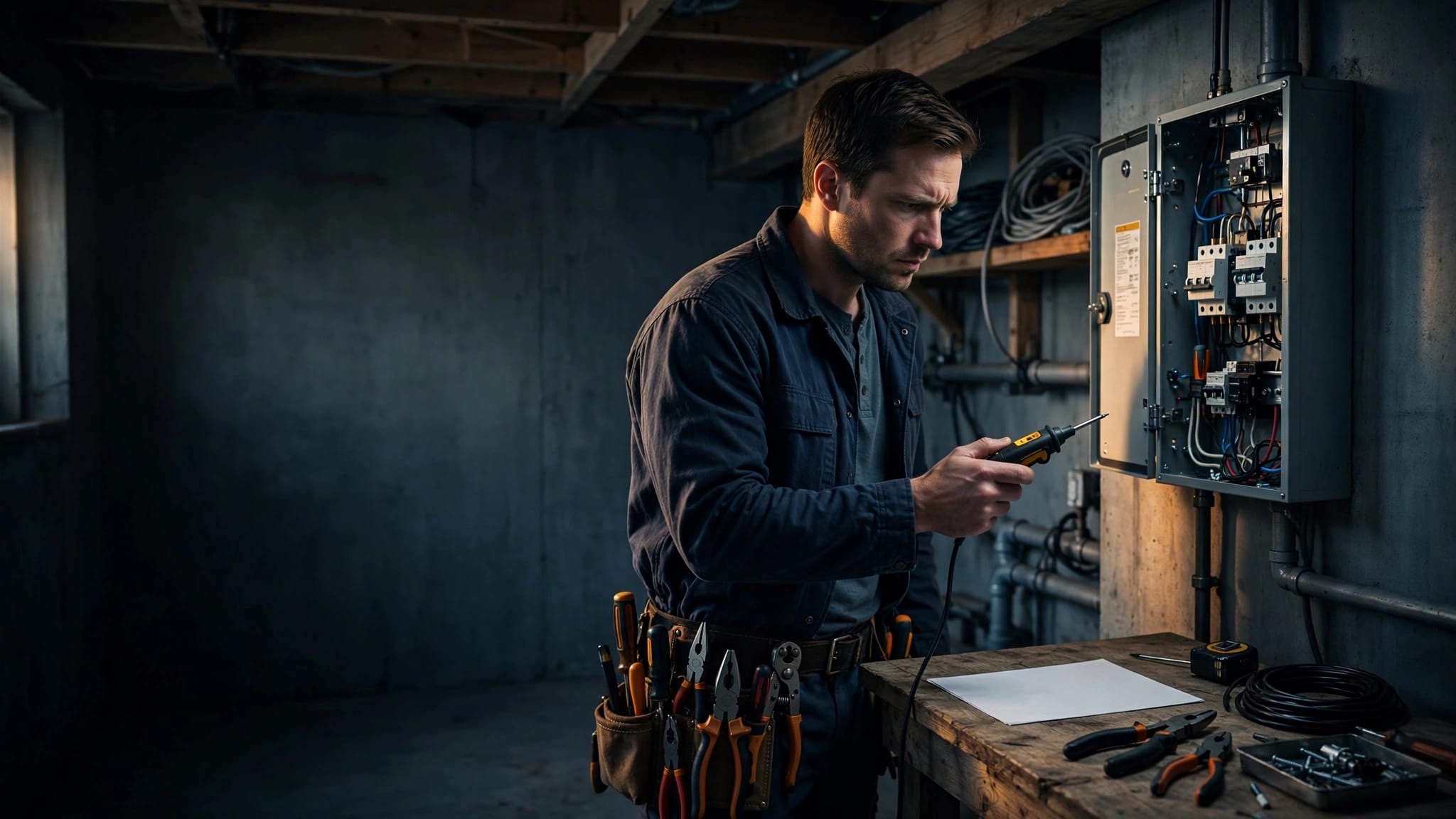

Massachusetts Baseboard Heating Circuit Requirements

Contact Us

A baseboard heater can look simple, but its circuit must match the heater, the building, and the Massachusetts code edition that applies to the project. Massachusetts baseboard heating installations often involve more than choosing a breaker and running cable.
The correct design depends on the heater's voltage, wattage, listing, installation manual, location, occupancy, existing service capacity, and local inspection requirements. Before work begins, a qualified Massachusetts electrician and the local building department should confirm the circuit design and permit process.
Key Takeaways
- Massachusetts currently uses the 2026 Massachusetts Electrical Code, 527 CMR 12.00, based on the 2026 edition of NFPA 70.
- The 2026 code applies to installations under permits granted after April 24, 2026, subject to the state's adoption rules and local enforcement.
- Fixed electric heating loads generally require branch-circuit conductors and overcurrent protection sized at 125% of the connected heating load when the applicable continuous-load rules apply.
- The heater nameplate and installation manual control important details, including voltage, minimum circuit ampacity, maximum overcurrent protection, wiring method, controls, and clearances.
- A panel with an unused breaker space may still lack enough capacity for additional electric heat.
- AFCI and GFCI requirements depend on the room, equipment, wiring method, and current code provisions. They aren't identical for every installation.
- Electrical work usually requires a permit and inspection through the local Inspector of Wires or building department.
- Wiring should remain accessible until the required rough inspection is complete. Don't energize or modify an unfamiliar circuit yourself.
Which Massachusetts Code Applies?
The permit date matters because Massachusetts periodically adopts a new edition of the National Electrical Code with state amendments. As of September 2026, the statewide electrical code is 527 CMR 12.00 , based on the 2026 edition of NFPA 70 and modified by the Board of Fire Prevention Regulations.
The 2026 code and permit cutoff
Massachusetts identifies April 24, 2026, as the effective date for the current code for permits granted after that date. Projects tied to older permits may fall under the code edition in effect when the permit was issued, depending on the project and local interpretation.
That distinction matters for a new baseboard circuit, a panel replacement, a finished basement, or a commercial renovation. A contractor shouldn't assume that information published under the 2023 code automatically describes a 2026 installation.
The local authority having jurisdiction, often called the AHJ, determines how the adopted requirements apply at the property. In Massachusetts, this is commonly the municipal electrical inspector, wiring inspector, or building department.
Code, equipment instructions, and local enforcement
The electrical code provides the safety baseline, but the heater's listing and installation instructions also control the installation. A Cadet, King Electric, Marley, QMark, Stelpro, Ouellet, or Broan heater may have different wiring diagrams and circuit instructions.
The manual may specify copper conductors, a required thermostat, a disconnecting method, minimum clearances, or a particular connection box. When the manufacturer's instructions are more restrictive than a general installation assumption, the electrician must resolve the design before installation.
Massachusetts building-code provisions also direct electric baseboard convectors to follow the manufacturer's instructions and 527 CMR 12.00. The local inspector has the final say on approval.
How to Size a Baseboard Heating Circuit
Circuit sizing starts with the heater's rated load. Wattage, voltage, amperage, conductor ampacity, breaker rating, equipment grounding, and the panel's available capacity all need to work together.
The 125% continuous-load calculation
Fixed electric space-heating equipment is generally treated as a continuous load when the applicable code classification and listing conditions are met. For the branch circuit, the conductors and overcurrent protection are commonly sized at no less than 125% of the connected heating load .
Use watts divided by volts to find the operating current:
Amps = watts / volts
For example, a 1,500-watt heater on a 120-volt circuit draws 12.5 amps. Applying the 125% factor produces 15.625 amps for branch-circuit planning. That result may point toward a 20-amp circuit, but the electrician still must verify conductor ratings, breaker compatibility, installation conditions, and the manufacturer's instructions.
A 4,500-watt heater at 240 volts draws 18.75 amps. Applying the same factor produces 23.4375 amps. That calculation doesn't automatically authorize a specific breaker or wire size.
Branch-circuit sizing differs from service sizing
The 125% calculation applies to branch-circuit design when the continuous-load rules apply. The building's service or feeder load calculation follows a separate process. Fixed electric heating loads are generally included at 100% of the connected load for the applicable service calculation.
This distinction is important in older Massachusetts homes. A panel may have an open breaker position but still lack the service capacity for multiple new heaters. The electrician may need to review the service rating, existing heating equipment, kitchen appliances, electric water heating, EV charging, and other large loads.
The final circuit design may also depend on conductor length, voltage drop, temperature ratings, cable or raceway installation, and the equipment grounding path. A breaker should never be selected from wattage alone.
Choosing the Circuit Arrangement
Baseboard heaters can operate at 120 or 240 volts, depending on the product and the planned heating load. The voltage shown on the heater nameplate must match the supply and the wiring diagram.
| Equipment detail | What the electrician verifies |
|---|---|
| Heater voltage | Supply voltage and approved connection method |
| Wattage or rated current | Branch-circuit load and continuous-load calculation |
| Minimum circuit ampacity | Conductor ampacity under the installation conditions |
| Maximum overcurrent protection | Breaker or fuse rating allowed by the listing |
| Thermostat and controls | Compatible control voltage, location, and wiring |
| Installation location | Clearances, protection, moisture, and access |
| Existing electrical service | Panel condition, available capacity, and grounding |
Dedicated circuits and shared circuits
A dedicated circuit is common for a larger baseboard zone or for equipment whose instructions require one. It prevents unrelated loads from using the same circuit capacity and makes troubleshooting easier.
A smaller heater may be permitted to share a circuit only when the equipment listing, calculated load, circuit rating, and local code requirements allow it. A shared circuit still has to carry every connected load safely, including receptacles, lighting, and other fixed equipment.
For example, a 1,500-watt heater can consume most of a 120-volt, 15-amp circuit's practical capacity. Adding portable heaters or high-wattage appliances to that circuit may cause nuisance trips or overheating.
Multiple heaters on one circuit
Several baseboard sections may be connected to one circuit when the total connected load, control arrangement, conductor size, breaker rating, and manufacturer's instructions support that design. The electrician must calculate the combined load rather than treating each heater as an isolated appliance.
Thermostat zoning also affects the wiring plan. A line-voltage thermostat, relay, or other control must be compatible with the heater and installed according to its instructions. Commercial, institutional, and multi-family projects may require additional controls or design documentation.
Wiring, Thermostats, and Protection
The circuit arrangement is only one part of a compliant installation. Wiring methods, boxes, terminations, grounding, controls, and protection must suit the heater and its location.
Follow the wiring diagram and listing
The nameplate identifies basic electrical requirements, but the installation manual often provides the connection details. It may show whether the heater is hardwired, connected through an approved junction box, or controlled by a listed thermostat.
A listed product should remain installed as designed. Cutting off factory wiring, replacing a control with an incompatible device, or using an adapter can create a code and safety problem.
The electrician also checks box fill, cable clamps, conductor terminations, equipment grounding, physical protection, and access to junction points. Connections hidden behind finished walls can create inspection and maintenance problems.
AFCI and GFCI requirements depend on location
AFCI and GFCI protection aren't universal requirements for every baseboard heater. Applicability depends on the adopted code, room, occupancy, receptacles, wiring method, and equipment location.
A heater in a bedroom, basement, bathroom-adjacent area, garage, or other special location may require a different protection review than one in a standard living room. The electrician should determine whether protection belongs at the breaker, receptacle, or another approved location.
The local inspector may also apply requirements based on the specific installation and current Massachusetts amendments. Don't assume that a heater's 240-volt rating eliminates every protection requirement.
Receptacles and Other Associated Loads
Permanently installed electric baseboard heaters sometimes include factory-installed receptacles. Those receptacles can't be connected to the heater circuit when the applicable code prohibits using the heating circuit for that purpose.
A heater circuit is designed around the heating load and its controls. Connecting a general-use receptacle to that circuit could add unpredictable loads and complicate the continuous-load calculation.
The same concern applies to adding lights, fans, or unrelated equipment to a circuit designed for fixed heat. If a room needs receptacles near the heater, the electrician should plan those circuits separately or confirm that the listed installation permits the proposed arrangement.
Clearance and placement also matter. Furniture, curtains, trim, and other materials must remain outside the heater's required clearances. Follow the product manual rather than relying on a generic distance used for another model.
Permits, Rough Inspections, and Final Approval
New baseboard circuits, panel modifications, hardwired heaters, and other fixed electrical work commonly require an electrical permit. A building or mechanical permit may also apply when the project changes walls, rooms, occupancy, or other building systems.
Coordinate with the local Inspector of Wires
Massachusetts cities and towns administer electrical permits and inspections locally. Boston, Burlington, Cambridge, Newton, Somerville, and other communities can have different application procedures and scheduling practices.
Ask the building department or electrician:
- Which code edition applies to the permit?
- Is a separate electrical permit required?
- Who will pull the permit and request inspections?
- Does the project need a rough inspection before insulation or drywall?
- Are approved plans, load calculations, or product documents required?
- Which AFCI or GFCI provisions apply at this location?
A homeowner permit may be available in some municipalities under defined conditions. That option doesn't make energized circuit work appropriate for an unqualified person.
Keep wiring visible before inspection
Don't cover new wiring with insulation, drywall, paneling, or other finishes until the required rough inspection is approved. The inspector may need to see cable routing, boxes, grounding, junctions, and panel connections.
Massachusetts inspection materials provide notice periods for completed work, including a maximum wait of 72 hours for many inspections, excluding weekends and holidays. Local scheduling procedures still control, so confirm the process before closing walls.
After the rough inspection, the electrician completes devices, thermostats, covers, labels, and testing. The final inspection confirms the finished installation under the permit.
FAQ: Massachusetts Baseboard Heating Circuits
Does every baseboard heater need a dedicated circuit?
No. A dedicated circuit is common for larger heaters and may be required by the equipment instructions, but it isn't a universal rule for every model. The electrician must evaluate the total load and determine whether a shared circuit is permitted and practical.
Is 240 volts required for electric baseboard heat?
No. Some heaters operate at 120 volts, while many higher-output systems use 240 volts. The nameplate and installation manual identify the approved voltage. The circuit must match the equipment exactly.
Can I use an existing circuit for a new heater?
Sometimes, but an existing circuit must be inspected and recalculated first. The electrician must verify conductor size, breaker rating, grounding, available capacity, existing connected loads, and the heater's instructions. An open breaker position doesn't prove that the panel can support additional heat.
Do baseboard heaters always need AFCI or GFCI protection?
No single answer applies to every installation. The requirement depends on the current Massachusetts code, room, occupancy, equipment, receptacles, and location. Have the electrician confirm the protection before materials are installed.
What information should I give the electrician?
Provide the heater model number, installation manual, voltage, wattage, proposed location, panel information, and any plans for additional heaters. Mention whether the property is a home, rental, business, condominium, or commercial space. Those details help the electrician and local inspector apply the correct requirements.
Conclusion
A safe Massachusetts baseboard heating installation begins with the heater's listing and nameplate, then accounts for continuous load, service capacity, wiring methods, controls, protection, permits, and inspections. The 2026 code applies to permits granted after April 24, 2026, but older permits and local enforcement can change which provisions govern.
Have a qualified Massachusetts electrician perform the load calculation and circuit design before work starts. Confirm the permit and inspection process with the local building department, and keep new wiring accessible until the inspector approves it. That preparation prevents an open breaker space, an outdated code assumption, or an incompatible thermostat from becoming a costly safety problem.