

Massachusetts Electrical Requirements for Radon Fans

Contact Us
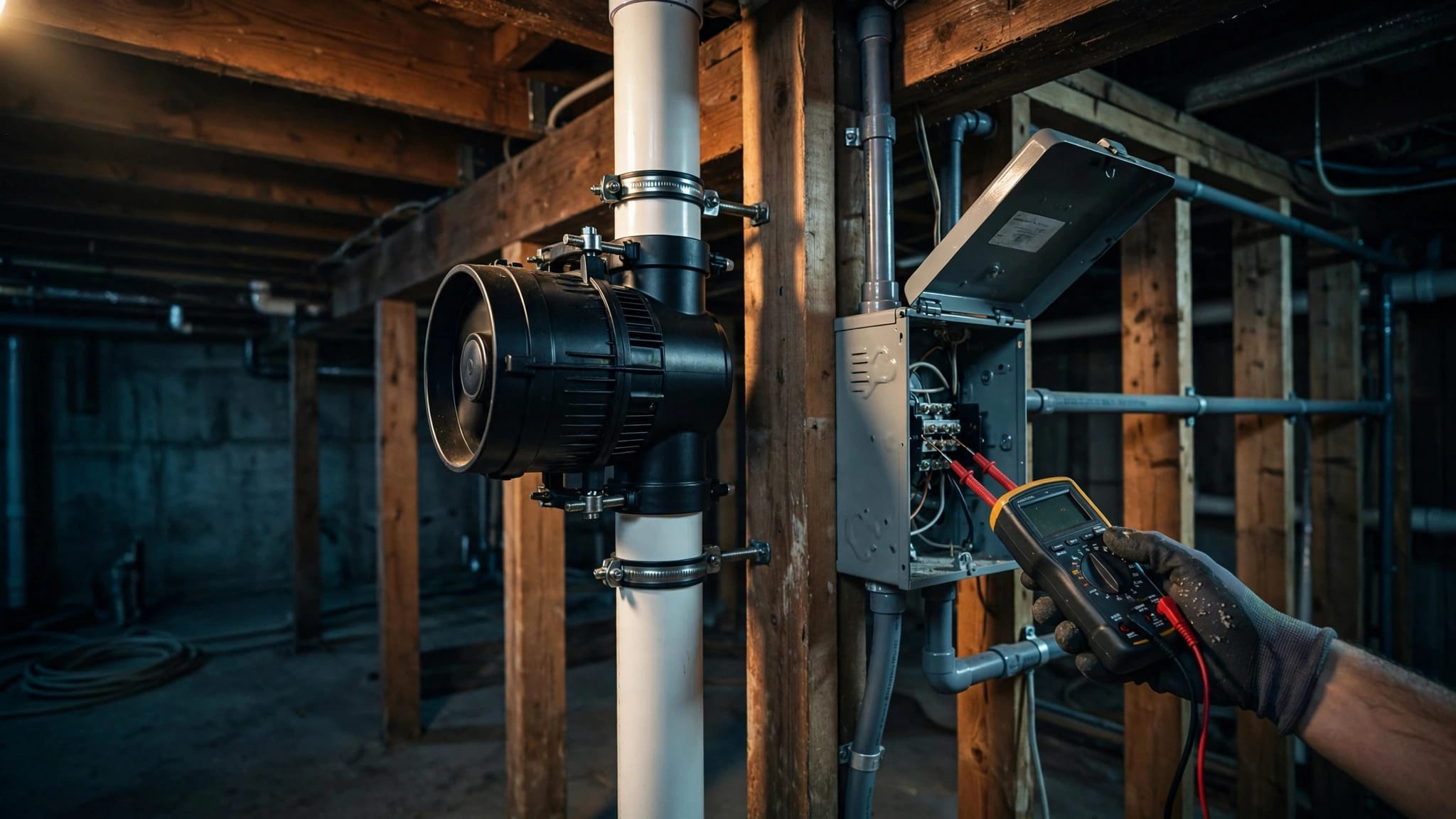
Massachusetts radon fan requirements depend on the electrical code in effect for the project, the fan's installation instructions, and the conditions at the home. A licensed electrician typically handles new wiring, circuit protection, and the electrical permit, while the local wiring inspector reviews the work.
The electrical plan also needs to support continuous operation and safe servicing. Here's what homeowners should understand before a fan is installed or replaced.
Key Takeaways
Massachusetts uses the state electrical code, 527 CMR 12.00, for residential fan wiring. The 2026 code applies to installations with permits granted after April 24, 2026.
A radon fan needs a suitable power supply, wiring method, and means to disconnect power for service. The details depend on the equipment and installation. Permitted wiring also needs inspection before it's concealed.
Which Massachusetts Electrical Code Applies?
The Massachusetts Electrical Code is 527 CMR 12.00. It incorporates the National Electrical Code (NEC), also called NFPA 70, with Massachusetts amendments.
The 2026 Massachusetts code took effect April 24, 2026. It applies to installations for which permits were granted after that date. Work permitted under an earlier code cycle may follow the previous edition.
The permit date matters
A radon project can take place in an older house while still involving new electrical work. For example, adding a circuit or extending wiring to a fan is evaluated under the code applicable to that work, not simply the code that applied when the house was built.
The electrician also needs the Massachusetts amendments. A copy of the NEC by itself doesn't show every state-specific provision.
Electrical and radon work have different scopes
The electrical code covers the fan's power connection and related wiring. The mitigation system also includes piping, sealing, discharge, and other work outside the electrician's scope.
Massachusetts advises homeowners to use a radon mitigation specialist certified by AARST-NRPP or the National Radon Safety Board (NRSB). Coordination between that specialist and the electrician helps place the fan where both the mitigation system and electrical connection can work properly.
Choosing a Circuit for a Radon Fan
A radon fan generally runs continuously, so its electrical supply needs to support that use. Before adding the fan to a circuit, an electrician considers the fan's nameplate ratings and the loads already connected.
Read the fan's electrical ratings
The equipment label and installation instructions identify the fan's voltage and current requirements. Those details guide the supply connection and help the electrician select appropriate circuit protection and wiring.
The installation instructions also matter when a manufacturer calls for a particular connection method or other equipment. A fan that physically fits an existing pipe still needs an electrical supply that matches its rating.
Consider existing circuit loads
An existing circuit may have enough capacity for a fan, but the presence of a nearby outlet or junction box doesn't establish that the circuit is suitable. The electrician needs to account for connected loads and the applicable rules for continuous operation.
A new circuit can be useful when existing wiring is crowded or an unrelated switch could interrupt the fan. Whether a separate circuit is required depends on the installation and applicable requirements. It shouldn't be assumed for every residential fan.
A fan can be small and still need careful circuit planning because it is intended to run around the clock.
Wiring and Connections Depend on the Location
Radon fans may be installed outdoors or in an attic or another approved location chosen for the mitigation system. Each location affects the electrical materials and route.
Outdoor connections
Outdoor wiring and equipment need to be suitable for the conditions where they're installed. Rain, snow, sunlight, and physical damage can affect exposed cable, boxes, fittings, and disconnect equipment.
For example, an exterior wall may offer a short route to the fan, but the connection still needs suitable protection and a proper entry into the building. Junction boxes and covers must remain accessible after the work is complete.
Attic and interior routes
An attic route can involve insulation, framing, stored belongings, and limited access. The electrician needs to select an appropriate wiring method, support and protect the wiring, and keep electrical boxes accessible.
Grounding and bonding also matter. The fan connection and any metal boxes or raceways must have the grounding and bonding required for the installation. Older wiring may need additional work if it doesn't provide a suitable grounding path.
Disconnecting Power for Fan Service
A fan needs a way for a person servicing it to disconnect power safely. The appropriate disconnecting arrangement depends on the equipment, its connection, and the applicable electrical code.
The electrician should plan that arrangement alongside the fan location rather than treating it as an afterthought. A disconnect that's difficult to reach or obscured by the finished installation can complicate maintenance.
The circuit directory should identify the fan's supply clearly. That makes the correct circuit easier to find when the fan needs service, although a panel label alone doesn't establish that every disconnect requirement has been met.
Homeowners should leave electrical testing and disconnection to a qualified electrician. Turning off a switch or breaker without identifying the circuit doesn't establish that every conductor at the equipment is de-energized.
Permits for Radon Fan Electrical Work
New fan wiring, a circuit extension, or panel work should be planned as permitted electrical work. In Massachusetts, the local electrical inspector administers the process, and the licensed electrical contractor typically handles the application for work performed for hire.
Under Massachusetts General Laws, Chapter 143, Section 3L, a person installing electrical wiring or fixtures for hire must notify the local Inspector of Wires before work begins or within five days after it starts. The installer must also provide written notice when the work is complete.
Coordinate the electrical scope
The radon contractor and electrician may have separate responsibilities. The mitigation specialist can identify the intended fan location and equipment, while the electrician plans the power supply and handles the electrical portion.
That distinction helps avoid a common scheduling problem: the fan and piping are installed, but the power connection hasn't been arranged. Our explanation of who pulls an electrical permit in Massachusetts covers responsibility for the electrical application.
Allow for local administration
Cities and towns administer permit forms, fees, and inspection scheduling. The electrical permit also doesn't automatically settle whether another permit applies to the mitigation project. Those details depend on the work and the municipality.
Keep the permit and approval records with the fan documentation. They'll be useful when the system needs service or the property changes hands.
Electrical Inspections Before and After Installation
Inspection gives the local Inspector of Wires an opportunity to review the electrical work before it is hidden and after it is complete. The stages depend on the project's scope.
Leave concealed wiring visible
Massachusetts rules prohibit concealing electrical work before inspection. That matters when a new cable will run behind drywall, above a finished ceiling, or through a trench.
At a rough inspection, the inspector can review accessible wiring, boxes, supports, grounding, and other components before finishes cover them. Our guide to Massachusetts electrical rough inspections explains what that stage can involve.
The 2026 code sets inspection timing after proper notice, including 72 hours for interior or exterior installations and 24 hours for interior or exterior excavations. Saturdays, Sundays, and holidays are excluded.
Close out the completed work
Once the electrical installation is complete, the installer provides written notice. State law calls for the inspector to issue written approval or disapproval within five days of that notice.
A final inspection can address the completed connection, covers, equipment access, and other items within the permit's scope. If corrections are required, they need to be completed before the electrical work is approved.
Keeping the Fan Running After Installation
A properly powered fan is one part of a radon mitigation system. The system also needs to move soil gas through its piping and discharge it as designed. Electrical approval alone doesn't establish the home's radon concentration.
Many active systems have a visible indicator, such as a manometer, that helps show whether the fan is producing pressure in the piping. The installer can explain the normal reading for that system. A changed reading can indicate a problem, but the indicator doesn't measure radon levels.
Post-mitigation radon testing provides a separate measurement of indoor radon. The U.S. Environmental Protection Agency recommends taking action when a home's radon level is 4 picocuries per liter or higher . A fan that has power can still be part of a system that needs adjustment, so testing remains important.
If the fan stops, trips a breaker, or shows signs of electrical damage, arrange service rather than repeatedly resetting the breaker. An electrician can address the power supply, while the mitigation specialist can assess the fan and piping.
Radon Fan Electrical FAQs
Does every radon fan need a new circuit?
A new circuit isn't the automatic answer for every installation. The electrician evaluates the fan's ratings, existing circuit loads, wiring condition, and applicable code before deciding how to supply it.
Can an existing fan be replaced without electrical changes?
That depends on the replacement and the condition of the existing connection. A new fan may have different ratings or installation instructions, and damaged or unsuitable wiring may need correction. The electrical scope can be small, but it still needs to suit the equipment.
Does a passive radon system need a fan?
A passive system doesn't operate a fan. Massachusetts requires passive systems in new one- and two-family homes and townhouses in Worcester, Essex, and Middlesex counties under the state's new-construction guidance. If a fan is added later, its electrical connection needs to meet the applicable requirements.
Plan the Electrical Work With the Mitigation System
Massachusetts radon fan requirements start with the applicable state electrical code and the fan's installation details. Circuit capacity, wiring conditions, service access, permits, and inspections all affect the finished connection.
At Sirois Electric, we provide electrical installation and inspection services in Greater Boston. Contact us to discuss the electrical scope before your radon fan installation or replacement.