
What Arc-Flash Labels Tell Facility Managers

Contact Us

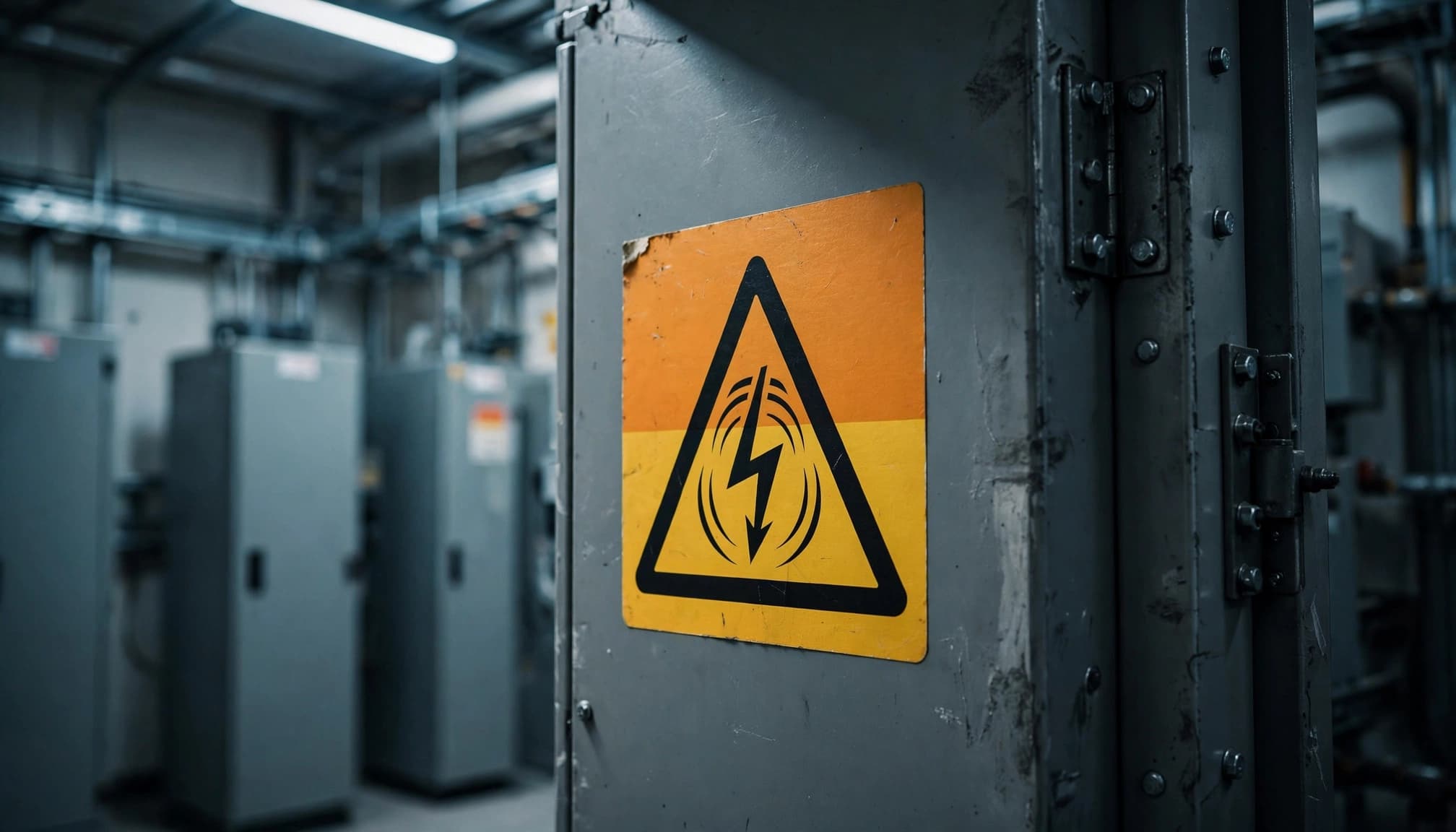
A label on electrical equipment can show the potential severity of an arc-flash hazard, the distance at which a boundary applies, and information used to select protective equipment. For facility managers, arc flash labels are useful only when they match the equipment and a current risk assessment.
They can support safer planning, but they don't authorize energized work or replace training, protective procedures, or qualified electrical expertise. Start by understanding what the label's terms mean and what they can't tell you.
Key takeaways
- A label may show system voltage, an arc-flash boundary, and information used to select personal protective equipment (PPE).
- Incident energy is an estimate tied to a particular working distance and assessment. It isn't a universal measure for every task near the equipment.
- A missing or outdated label doesn't establish that equipment is safe or that the hazard has been assessed.
- Labels support safe work procedures. They don't replace deenergizing equipment when required, employee training, or qualified electrical work.
- OSHA requirements, NFPA 70E guidance, adopted codes, and jurisdictional rules don't all mean the same thing.
What a commercial arc-flash label communicates
Arc-flash labels put important hazard information where workers and supervisors can see it before planning a task. The exact information and format may vary, so read the label as a set of details about specific equipment, not as a complete safety plan.
Incident energy and working distance
Incident energy describes the heat energy a worker could be exposed to during an arc-flash event. An assessment estimates that energy at a stated working distance, meaning the distance between a worker and the potential arc source.
The number helps qualified personnel select PPE with an appropriate arc rating. It depends on the assessment's conditions and assumptions, so it shouldn't be treated as a prediction for every task, equipment configuration, or worker position.
Arc-flash boundary and PPE information
The arc-flash boundary marks a distance associated with a specific incident-energy threshold. OSHA defines it as the distance where incident energy equals 1.2 calories per square centimeter, or 5.02 joules per square centimeter.
A label may also provide PPE selection information, such as incident energy at a stated working distance, a minimum clothing arc rating, or a site-specific PPE level. Those formats aren't interchangeable by default. A qualified person must interpret the information in the context of the task and the applicable safety program.
Read hazard values in context
A number on a label can look precise, but it depends on how the equipment was assessed. Managers should understand the limits of that information before using it in work planning.
The label belongs to particular equipment
A label applies to the equipment on which it appears, under the conditions reflected in its assessment. Similar-looking switchgear in another room may have different electrical characteristics or protective devices. Don't assume that one cabinet's label applies to adjacent equipment.
Changes to equipment, protective devices, system configuration, or work conditions may affect the assumptions behind the assessment. When a label appears inconsistent with the equipment or the available safety documentation, pause the work plan and involve a qualified electrical professional.
A boundary is not permission to cross
The arc-flash boundary is one part of electrical safety planning. It doesn't by itself explain every shock hazard or determine who may perform a task. Other boundaries and safeguards address different risks, and the applicable work procedures determine how they affect the job.
A posted boundary helps workers recognize a hazard. It doesn't make entry safe or grant permission to work on energized equipment.
What a label cannot establish
A label is a warning and a reference point, not a complete description of the equipment's condition or every hazard a worker could face.
It doesn't replace a current risk assessment
The label reflects information produced by an assessment. It can't confirm that the assessment still matches the installed equipment, current system configuration, or planned work. Nor can a label alone establish that a task is safe.
A current assessment considers the equipment and the conditions relevant to the hazard. Facility managers should treat the label as one part of the site's electrical safety information, alongside applicable procedures and qualified review.
It doesn't replace safe work procedures or training
Labels don't tell a worker how to deenergize equipment, establish an electrically safe work condition, verify the absence of voltage, or carry out a task safely. Those steps depend on the work, the equipment, and the governing safety program.
Employees who aren't qualified to perform electrical work should observe, report concerns, and keep clear of unsafe equipment. They shouldn't open panels or test wiring to investigate a label. Electrical work and assessment require qualified expertise.
How OSHA and NFPA 70E fit together
Facility managers may encounter both OSHA requirements and NFPA 70E in electrical safety planning. They're related, but they serve different purposes and shouldn't be treated as interchangeable.
OSHA's federal requirements
In a 2006 interpretation, OSHA said federal OSHA standards don't specifically require an arc-flash warning label to be affixed to electrical equipment. That doesn't mean arc-flash hazards are outside OSHA's scope. Other requirements address deenergizing exposed live parts, protective equipment, and safeguards, including signs, symbols, or tags in applicable situations.
OSHA also distinguishes equipment rating markings from arc-flash warning labels. Its interpretation on arc-flash warning labels explains that distinction. A missing label doesn't prove that equipment is safe or that an employer has met other electrical safety duties.
NFPA 70E and local adoption
NFPA 70E provides workplace electrical safety practices, including guidance relevant to arc-flash risk assessment and warning labels. NFPA lists the 2027 edition as current as of October 2026; the 2024 edition took effect May 13, 2023 .
Which edition applies to a particular workplace depends on adoption and jurisdictional requirements. OSHA obligations remain separate. For a facility, the practical approach is to identify the governing requirements and use the relevant safety program, rather than assuming a label alone settles compliance.
Use label information in facility work planning
Labels can help managers coordinate maintenance, contractors, and access to electrical rooms. They work best as part of a planned process, not as a stand-alone decision tool.
Share information before work begins
Before scheduled work, give qualified electrical personnel access to the equipment, labels, relevant records, and a clear description of the task. They can determine whether the assessment and label fit the equipment and work conditions, then apply the appropriate procedures.
If work calls for opening equipment, testing, repair, or energized troubleshooting, don't assign it based on the label alone. Qualified personnel must assess the hazards and determine whether the work can be done safely, including whether deenergizing is required.

Include labels in routine facility records
Keep label information with equipment records, maintenance history, and relevant safety procedures. When equipment is changed or work alters the electrical system, record the change and have a qualified professional determine whether the assessment or label needs attention.
A written maintenance program can help staff track recurring issues and route electrical concerns to the right people. Our commercial electrical maintenance checklist for Boston businesses offers related guidance for facility upkeep.
Respond to missing or questionable labels
A missing, damaged, or hard-to-read label is a reason to seek qualified review, not an invitation to estimate the hazard. Don't copy information from a nearby cabinet or assume a blank label means the equipment has no arc-flash risk.
Report concerns without opening equipment
Staff can note the equipment location, label condition, visible damage, or any mismatch between the label and the equipment identification. They should report concerns through the facility's safety process and avoid opening panels or touching wiring.
If equipment appears damaged or unsafe, keep people away and follow the site's established procedure for taking it out of service. A licensed electrician or other qualified electrical professional can assess the equipment and advise on the next steps.
Reassess after relevant changes
A label can lose relevance if the installed system no longer matches the conditions used in the assessment. Changes to equipment, protective devices, or electrical configuration warrant a qualified review of whether existing hazard information remains applicable.
The right response depends on the equipment, the work, and the applicable safety requirements. Managers should maintain accurate records so qualified personnel can compare the present installation with the available assessment and label information.
Frequently asked questions
Does every electrical panel need an arc-flash label?
Federal OSHA doesn't specifically require arc-flash warning labels on every piece of electrical equipment. Other OSHA requirements still apply, and NFPA 70E, adopted codes, employer programs, and jurisdictional rules may affect labeling practices. The requirement for a particular facility depends on those applicable rules.
Can a worker use the label to decide what PPE to wear?
A label may provide information used to select PPE, but workers shouldn't make that decision from the label alone. Qualified personnel must consider the task, the assessment, applicable procedures, and training requirements.
Does a missing label mean the equipment is safe?
No. It means the equipment lacks that visible information. It doesn't establish that an arc-flash hazard is absent, that the system has been assessed, or that electrical work is safe.
What should a facility manager do when a label looks outdated?
Don't guess, replace it with a copied label, or allow the label to serve as work authorization. Keep the equipment and task details available for a qualified electrical professional to review the assessment and determine the appropriate next step.
Conclusion
Arc-flash labels give facility managers useful hazard information, but their meaning depends on the equipment, assessment, and planned work. Treat them as one part of a broader safety program that includes qualified expertise, training, and safe work procedures.
When a label is missing, unclear, or inconsistent with the installation, pause and get qualified review. A label informs safe decisions; it doesn't make the decision for you.