
Can You Run a Portable Generator in a Garage?

Contact Us
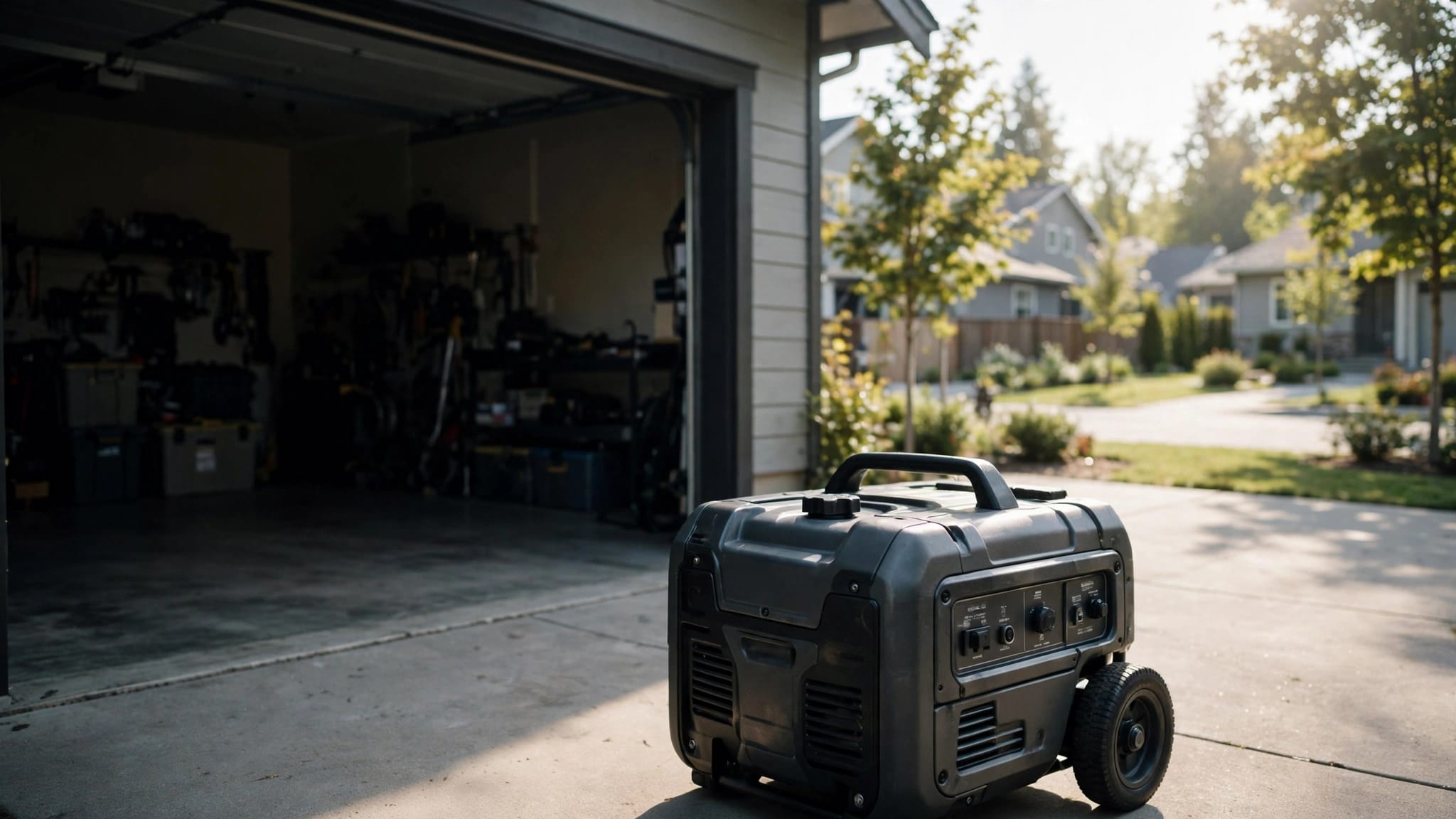
No. Never run a portable generator in a garage, even with the garage door fully open. Its exhaust contains carbon monoxide , a poisonous gas that can build up quickly and enter your home.
That rule applies to attached and detached garages. A safer backup plan starts with an outdoor location and a proper way to connect the power you need.
Why a Garage Is Unsafe for a Portable Generator
A generator burns fuel and releases carbon monoxide, often called CO. You can't see or smell the gas, so you may not realize you're being exposed. Opening the garage door or windows doesn't provide enough ventilation to prevent a dangerous buildup.
Attached garages can carry exhaust into the house
In an attached garage, CO can move into living areas through the connecting door and other openings. Once inside, it can reach bedrooms and other spaces where people spend time.
Keeping the door between the garage and house closed doesn't make the garage a safe operating location. Even a short run can create a serious hazard.
Detached garages aren't safe either
A detached garage is still an enclosed space where exhaust can build up. Anyone entering it could be exposed, and exhaust can also reach nearby buildings through doors, windows, or vents.
The same outdoor rule applies to sheds, enclosed porches, and carports. Use those spaces for storage when the generator is off and cool, not for operation.
Where to Place a Portable Generator Safely
Set the generator outdoors in an open area before starting it. Choose the location before an outage so you aren't making placement decisions in the dark or during a storm.

Keep it away from openings
The U.S. Consumer Product Safety Commission recommends placing a portable generator at least 20 feet from the house and away from doors, windows, and vents. The CDC recommends a distance of more than 20 feet from those openings.
Consider neighboring buildings, too. A spot far enough from your own window may still be close to a neighbor's door or fresh-air intake. On a tight lot, plan the location with that shared space in mind.
Point exhaust away from buildings
Direct the exhaust away from your home and any other building people could enter. Close windows and other openings in the exhaust path.
Distance and direction work together. Pointing the exhaust away doesn't make a location inside a garage safe, and a position outdoors still needs enough separation from openings. Keep the area clear of snow and debris that could obstruct airflow.
Install Carbon Monoxide Alarms Before an Outage
Working CO alarms are an important backup, but they don't make an indoor generator safe. The CPSC recommends battery-operated alarms or alarms with battery backup on every level of the home and outside sleeping areas. Test them monthly.
In a home with an attached garage, an additional alarm inside the living area near the garage entry can help provide coverage along a possible path for exhaust. Place it according to the alarm manufacturer's instructions, rather than putting it in the garage.
Make sure alarms can be heard in bedrooms with the doors closed. During a power outage, battery backup matters because a device that depends only on household electricity may stop working.
Some portable generators have a feature that shuts the engine off when CO concentrations get high. That feature adds protection, but it doesn't replace outdoor placement or working alarms.
Recognize the signs of exposure
Headache, dizziness, weakness, nausea, and confusion can be signs of CO poisoning. Exposure can also be deadly for someone who is asleep.
If an alarm sounds or you suspect exposure, get everyone into fresh air immediately and call 911 from outside. Don't delay your exit to investigate or turn off the generator. Stay out until emergency responders say it's safe to return.
Connect Appliances and Household Circuits Safely
Safe placement addresses the exhaust hazard. Your electrical connection needs attention too, especially when you want to power equipment throughout the house.
Powering individual appliances
You can connect an appliance directly to the generator using an outdoor-rated extension cord suited to the appliance's electrical load. Inspect the cord for damage, and keep plugs and connections dry.
Don't overload the generator. Add up the power needs of the equipment you plan to use, including any extra starting power required by motors. Run only the appliances the generator can support.
Keep cords where they won't be crushed or create a tripping hazard. Never hide one beneath a rug, where damage and heat can go unnoticed.
Connecting to home circuits
For power through household wiring, have a licensed electrician install compatible generator connection equipment. The arrangement must suit the generator, electrical panel, and circuits you want to use.
Tell your electrician which loads matter during an outage. A furnace, refrigerator, or well pump may have different power needs, and a portable unit may not be able to run everything at once. We provide generator installation in Bedford, MA and can help plan an appropriate backup connection.
Keep the Generator Outside
A garage door doesn't provide the ventilation a portable generator needs, whether the garage is attached or detached. Place the unit outdoors, away from openings, with its exhaust pointed away from buildings.
Combine that placement with working CO alarms and a safe electrical connection. Planning those details before an outage gives you a safer way to use backup power when you need it.