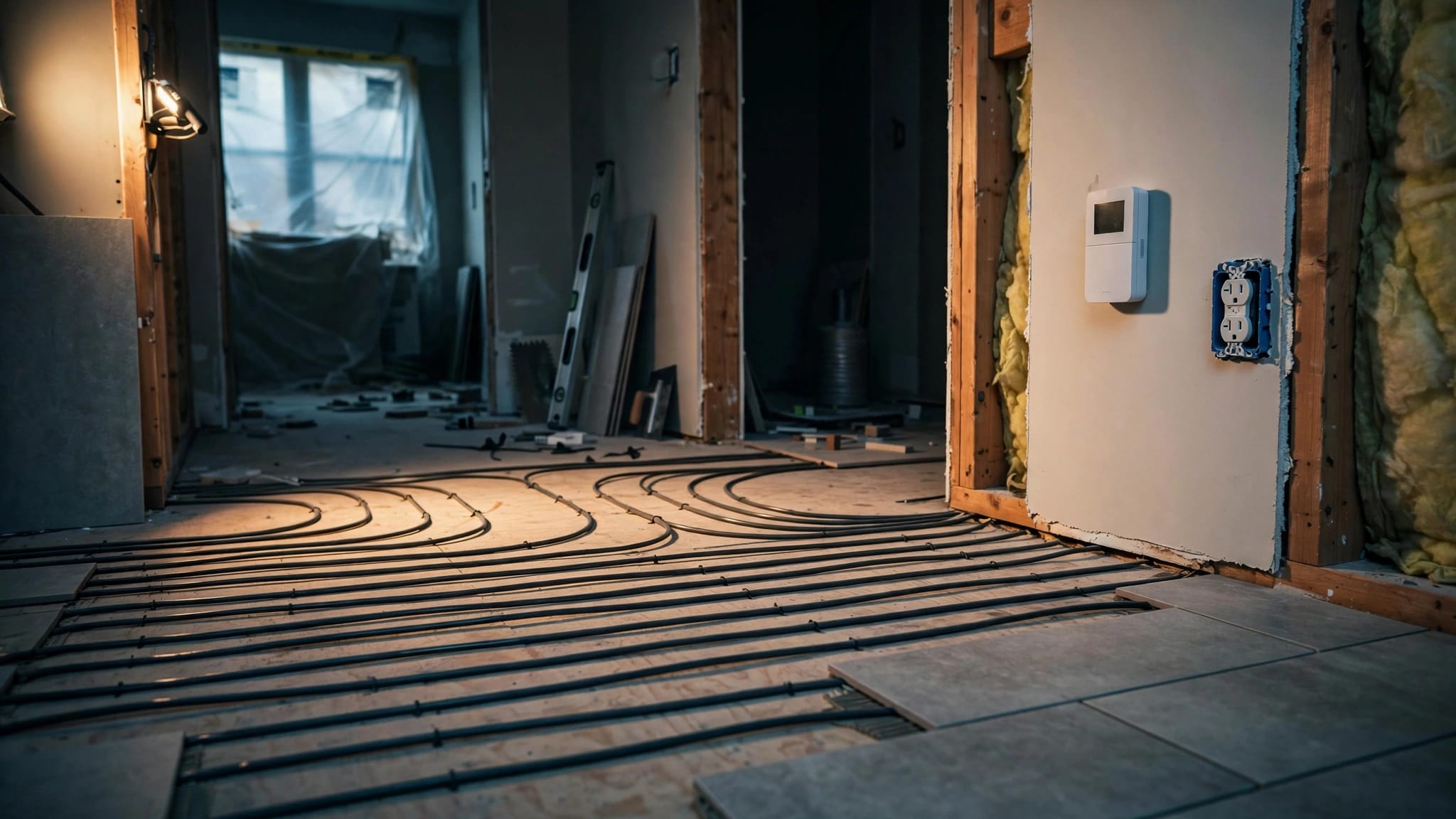

Massachusetts Closet Lighting: Fixtures and Clearances

Contact Us
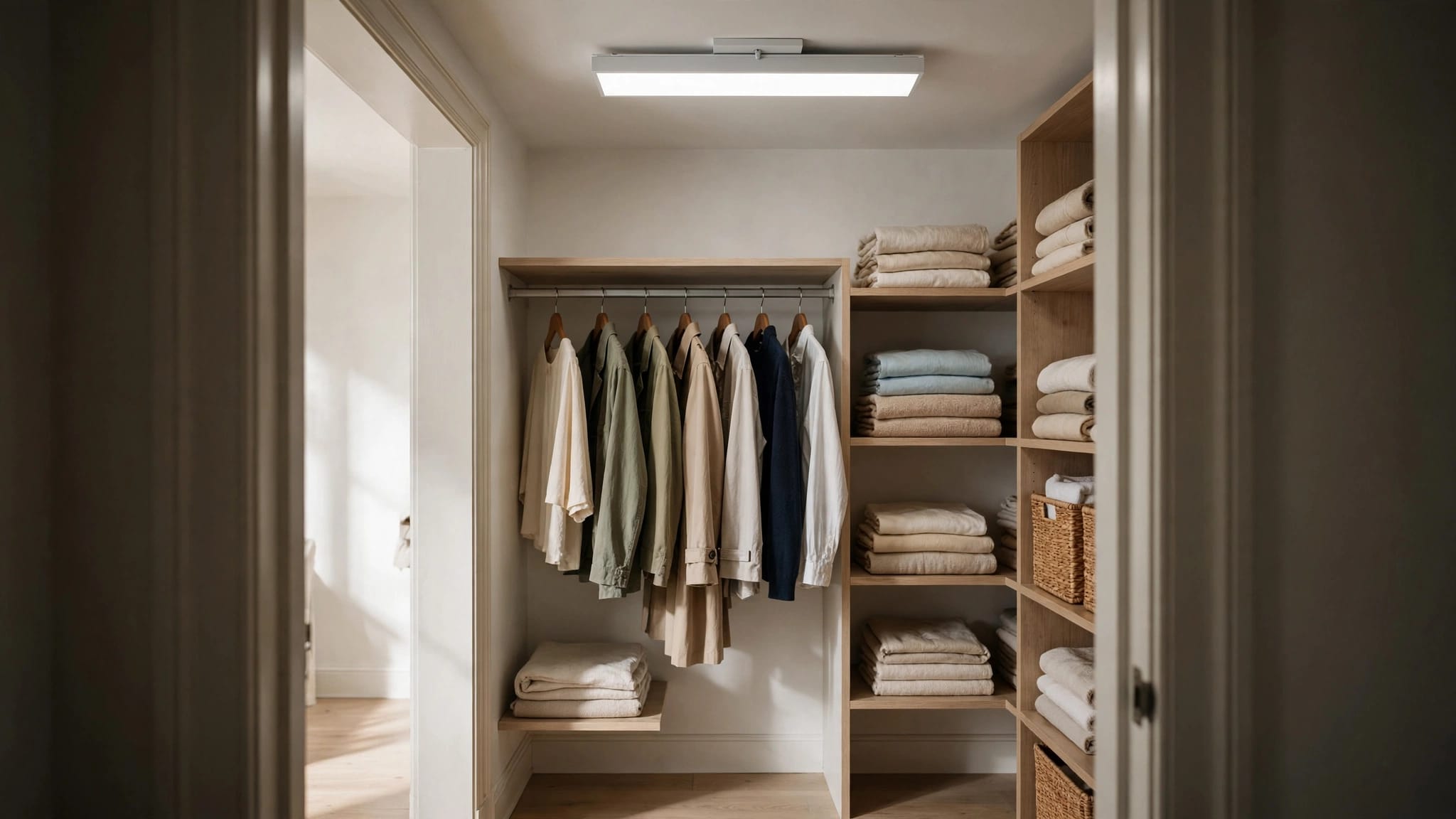
Massachusetts closet lighting needs a suitable fixture and enough space between that fixture and stored clothes. Under the 2026 state code, the required clearance is generally 6 or 12 inches , depending on the fixture and how it's installed.
A new LED light can make a closet easier to use, but the word "LED" alone doesn't settle the clearance question. The fixture's construction, location, and relationship to the storage space all matter.
Start with the state rules, then plan around the way you use the closet.
Key Takeaways
- Massachusetts uses the 2026 National Electrical Code with state amendments for permits granted after April 24, 2026.
- Surface-mounted LED fixtures factory-wired with their drivers need at least 6 inches of clearance under the state rule. Other surface-mounted LED fixtures need 12 inches.
- The measurement is from the fixture to the nearest point of the closet storage space, not simply to the clothes hanging there.
- A licensed electrician can assess the fixture, wiring, and layout before an installation or renovation.
Which Massachusetts Closet Lighting Code Applies?
The Massachusetts Electrical Code is 527 CMR 12.00 . It's based on NFPA 70, the National Electrical Code (NEC), with Massachusetts amendments.
For permits granted after April 24, 2026, the state uses the 2026 NEC and its amendments. An older installation or a project permitted before that date may fall under a different edition. That distinction matters when you're comparing an existing closet light with the requirements for new work.
Cities and towns administer electrical permits and inspections. The local wiring inspector reviews permitted work, while the state code provides the electrical rules.
If your project includes new wiring or a larger renovation, our Massachusetts electrical inspection guide explains what happens during the inspection process.
Understand the Required Closet Clearances
Massachusetts amends NEC Section 410.16(D) to set clearances for different closet fixtures. The distances below apply to the nearest point of the clothes-closet storage space .
| Fixture and installation | Minimum clearance |
|---|---|
| Surface-mounted incandescent with a completely enclosed light source, or an LED fixture not factory-wired with its driver | 12 inches |
| Surface-mounted fluorescent, or LED fixture factory-wired with its driver | 6 inches |
| Recessed incandescent or LED fixture with a completely enclosed light source, except a factory-wired LED fixture in the next row | 6 inches |
| Recessed fluorescent, or LED fixture factory-wired with its driver | 6 inches |
The surface-mounted fixtures in the table are installed on the ceiling or on the wall above the door. The recessed fixtures are installed in the wall or ceiling.
Surface-Mounted Fixtures
A surface-mounted fixture sits on the finished ceiling or wall rather than inside it. For an LED fixture, whether it's factory-wired with its driver determines which of the two surface-mounted clearance categories applies.
For example, a factory-wired LED fixture on the ceiling needs at least 6 inches between it and the storage space. Another surface-mounted LED fixture needs at least 12 inches. Choosing a thin fixture doesn't, by itself, change its category.
Recessed Fixtures
A recessed fixture sits within the ceiling or wall. The Massachusetts clearance categories listed above both require 6 inches, but the fixture must still fit the applicable category and be installed in an appropriate location.
Recessed lighting also affects what's above the ceiling. Insulation, framing, and access to wiring can influence the fixture choice and installation.
What Counts as Closet Storage Space?
The clearance isn't measured only to the nearest shirt, box, or coat. It's measured to the nearest point of the defined storage space . That distinction matters because a closet can be empty on installation day and full later.
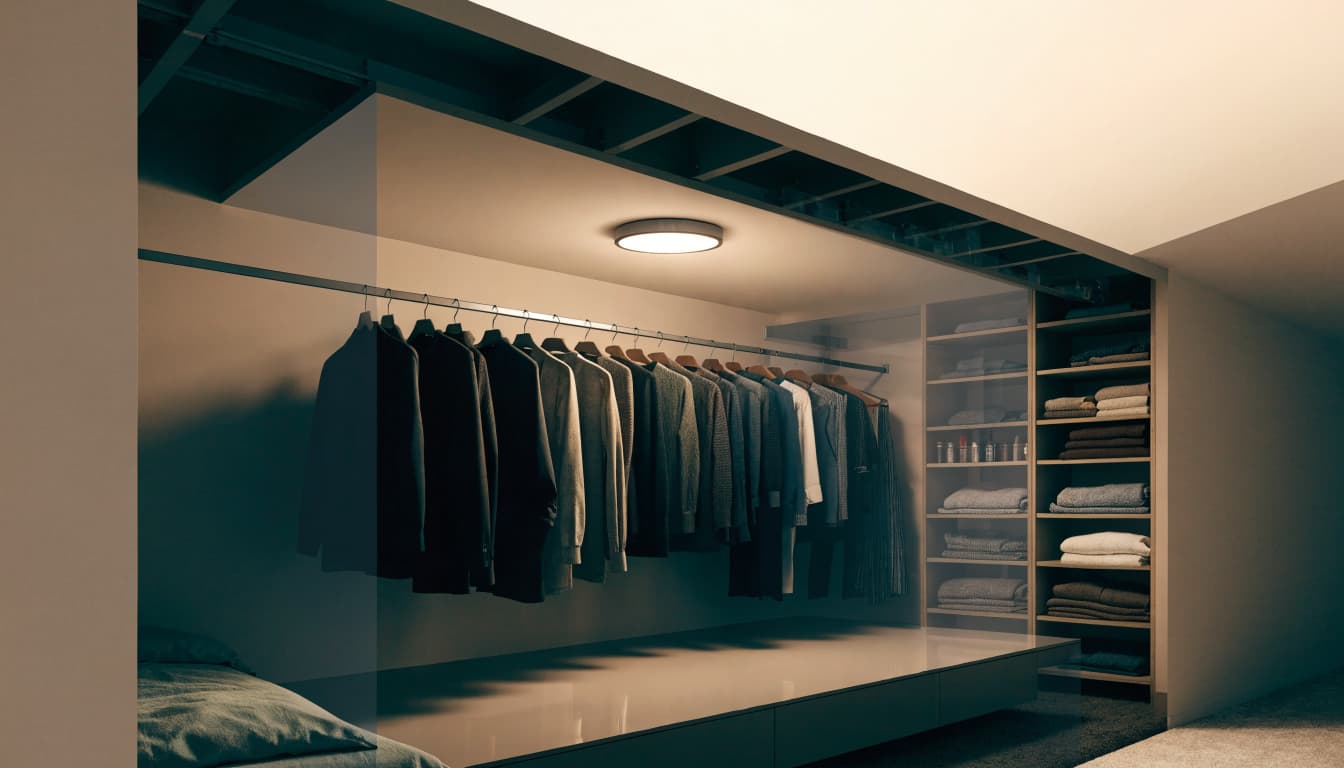
Shelves, hanging rods, and the closet's walls all affect the layout an electrician evaluates. A ceiling fixture can appear far enough away from the clothes below it but still be too close to the storage area beside it.
Plans for future shelving matter, too. If you're adding a high shelf or a second hanging rod, include that change when planning the light. Moving storage after a fixture is installed can change the space available around it.
Clearance is measured to the storage space, so temporarily moving clothes away from a light doesn't fix a poor fixture location.
Choose a Fixture That Fits the Closet
A good fixture provides useful light while leaving room for storage. It also has to match its intended installation location and the applicable clearance category.
Enclosed Fixtures and LED Options
An enclosed fixture protects the light source behind a cover or lens. That design is relevant to the state rule for incandescent fixtures and certain recessed LED fixtures.
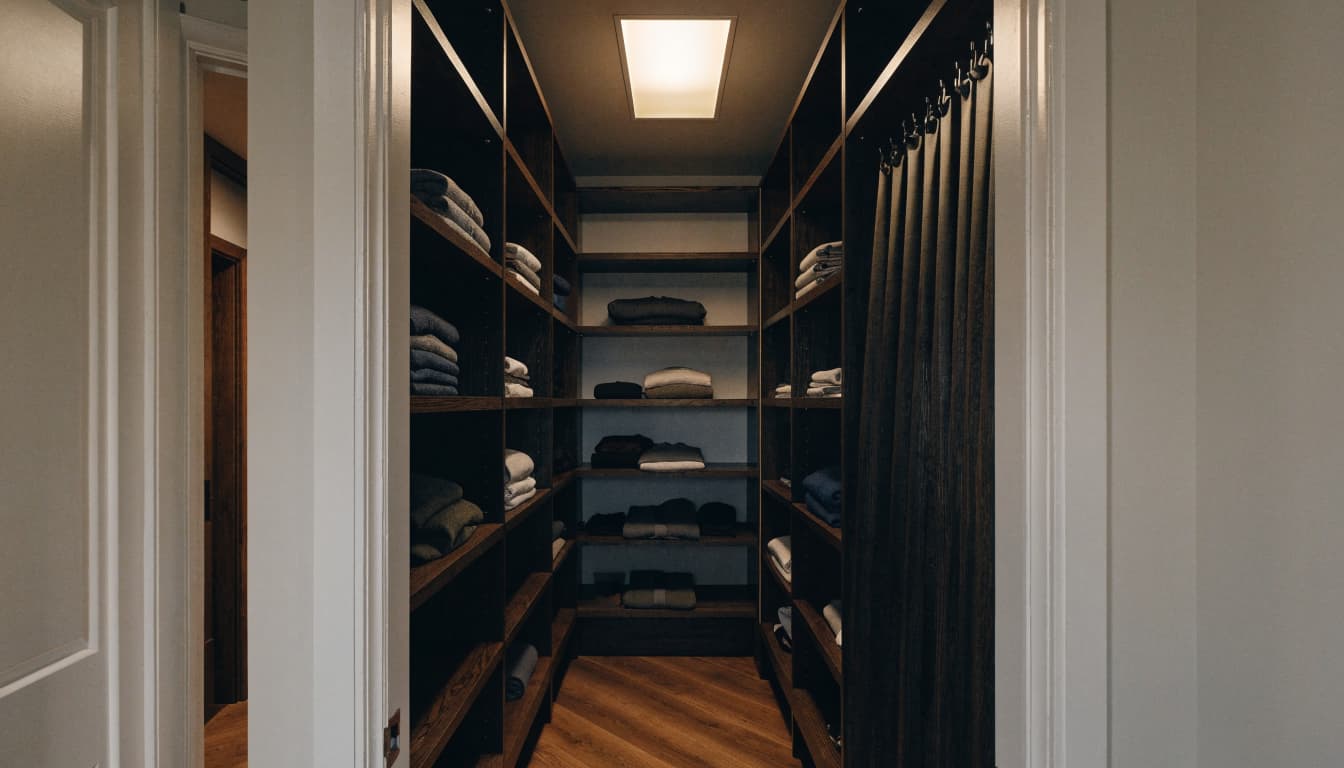
LED fixtures are available in surface-mounted and recessed styles. A surface-mounted model factory-wired with its driver can be useful in a tighter layout because the applicable clearance is 6 inches. However, the fixture still needs a permitted mounting location and proper wiring.
The fixture's instructions and markings matter. A product described as low-profile or closet-friendly doesn't automatically fit every closet arrangement. For homes in Lincoln, our LED lighting installation service includes professional fixture installation.
Recessed Lights and Ceiling Conditions
Recessed lighting can provide a clean look without a fixture projecting far into the room. It isn't always the simplest retrofit, though. The electrician needs to account for the space above the ceiling, including framing and existing wiring.
Insulation is another consideration. Where insulation will touch or cover a recessed fixture, the fixture needs an appropriate insulation-contact rating and installation. A suitable trim alone doesn't address conditions around the housing.
Plan the Light Around the Closet Layout
A reach-in closet and a walk-in closet present different challenges. In either case, the fixture location should account for the finished storage arrangement, not only the open ceiling.
In a reach-in closet, the wall above the door may offer a useful mounting location. A ceiling fixture may also work if it has the required clearance. The available space can be limited by a shelf that runs across the closet or clothes hanging close to the front.
A walk-in closet usually gives you more placement options, but shelves and rods may line several walls. Centering a light by eye doesn't guarantee the right separation from every storage area.
For either layout, consider where the light will fall. A fixture placed behind you may leave hanging clothes in shadow. A location that lights the front of the storage area can make it easier to distinguish colors and find items, provided it meets the clearance requirements.
Pick Controls That Work With the Space
The way a closet light turns on is a separate choice from the fixture's clearance. A convenient control can prevent the light from being left on and make a small closet easier to use.
Wall Switches and Door Controls
A wall switch is familiar and gives you direct control. Its location should be easy to reach without placing the switch where a door or stored items block access.
A door-operated control can turn the light on when the door opens. Door type and alignment matter when choosing that option. Sliding and folding doors don't operate the same way as a hinged door, so the control needs to suit the actual opening.
Occupancy Sensors and Dimmers
An occupancy sensor can be useful when your hands are full. Placement matters because shelves, doors, and walls can block the sensor's view of the person using the closet.
If you prefer dimming, the LED fixture and dimmer need to be compatible. A mismatched control can cause flickering or limited dimming. Neither a sensor nor a dimmer changes the fixture's required clearance from storage.
Recognize Signs of an Unsafe Existing Light
An older closet light isn't automatically unsafe because it predates the 2026 code. Its condition and installation still deserve attention, especially when storage has changed around it.
A damaged cover, discolored ceiling, burnt smell, or fixture that repeatedly turns off can point to a problem. Flickering and a breaker that trips also warrant professional attention. If you notice heat, smoke, or a burning smell, turn off the circuit if you can do so safely and contact a licensed electrician.
Don't use a larger bulb to make a dim fixture brighter without considering the fixture's rating. Bulb wattage and fixture limitations matter for fixtures that use replaceable lamps.
Our guide to recessed lights that keep shutting off covers possible causes, including overheating and insulation around a fixture.
What Affects Closet Lighting Cost?
The fixture price is only one part of an installation. Replacing a light in an accessible location may involve less work than adding a fixture where no wiring exists.
The route for new wiring, the type of ceiling, and access above it all affect the scope. A recessed fixture can also require more coordination if framing or insulation limits the available space. Adding a switch or sensor may change the work required.
For a broader reference, our Greater Boston recessed lighting cost guide discusses a 2026 range of $200 to $500 per fixture. That isn't a quote for every closet: the final price depends on the fixture and the work needed in your home.
When to Bring in an Electrician
Bring in a Massachusetts-licensed electrician when you need new wiring, a fixture moved, or an existing installation evaluated. An electrician can assess the storage layout, identify the fixture's clearance category, and plan a suitable wiring route.
That planning is especially useful before a closet renovation. If the project involves concealed wiring, the inspector may need to see the work before walls or ceilings are closed. Final inspection takes place after the permitted installation is complete.
Older wiring doesn't always mean the whole home needs to be rewired. It does mean the electrician needs to assess the portion involved in the work. Accessible connections, a suitable electrical box, and the condition of the existing circuit all matter.
At Sirois Electric, we provide lighting and electrical services throughout Metro and Greater Boston. We can help plan a closet light that fits the storage layout and the electrical work involved.
Frequently Asked Questions
Does Every LED Closet Light Need 6 Inches of Clearance?
No. Under the 2026 Massachusetts amendment, a surface-mounted LED fixture factory-wired with its driver needs 6 inches. Other surface-mounted LED fixtures fall under the 12-inch category.
The recessed categories listed in the state amendment require 6 inches. Fixture construction and mounting location still matter.
Can I Replace an Old Closet Light Without Moving It?
Sometimes. The answer depends on the existing location, the replacement fixture, and the applicable requirements for the work. A fixture that needs 12 inches of clearance may not fit where one in the 6-inch category would.
If storage has expanded around the old light, the replacement may need a different location.
Can Shelves Go Directly Under a Closet Light?
The layout must preserve the required clearance between the fixture and the closet storage space. An empty shelf below a light doesn't establish that the space is compliant, because the measurement isn't based only on what happens to be stored there.
Make Room for Safe, Useful Light
The right closet light starts with the fixture category and its distance from storage. In Massachusetts, the difference between 6 and 12 inches can determine where a surface-mounted LED fixture belongs.
Plan around your finished shelves and hanging space. That gives you a better chance of getting a light that's useful every day and suitable for the closet.