
Can Your Ceiling Electrical Box Support a Ceiling Fan?

Contact Us
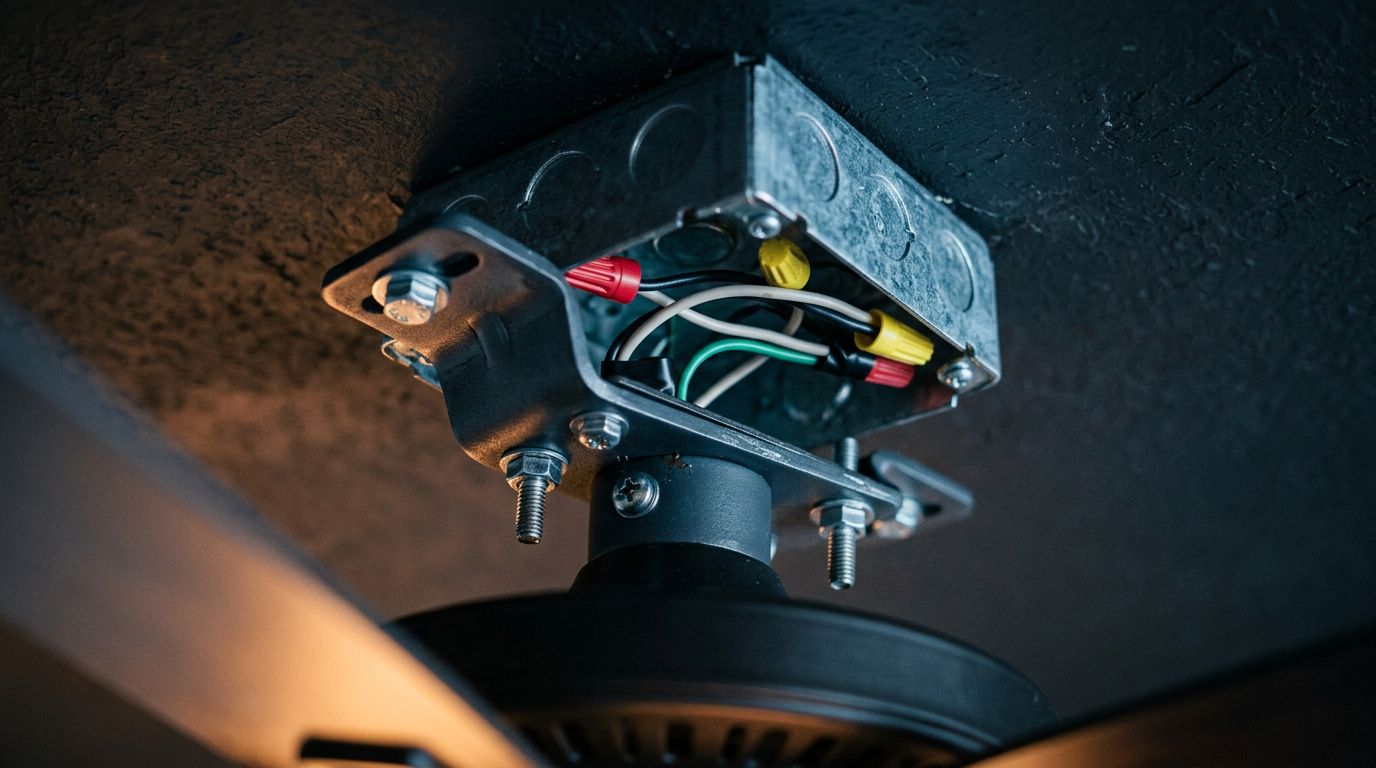
A ceiling fan puts more stress on an electrical box than a light fixture does. The motor creates vibration, and the fan's weight pulls on the box every time it starts, stops, or changes speed.
The ceiling fan electrical box must be listed for fan support and attached to solid framing. A label alone isn't enough if the box, fasteners, or supporting structure is loose, damaged, or installed incorrectly. Before inspecting anything, turn off the circuit breaker and verify that the power is off.
What Makes an Electrical Box Fan-Rated?
A fan-rated electrical box is built to handle both the weight of the fixture and the movement created by its motor. Standard ceiling boxes are often designed for light fixtures, which usually produce less vibration and mechanical stress.
Look inside or on the outside of the box for markings such as:
- "Rated for ceiling fans"
- "Fan support"
- A maximum supported weight
- A listing mark from a recognized testing laboratory
Common fan-box ratings include 35 or 50 pounds, but the exact rating depends on the product. Always compare the box rating with the ceiling fan manufacturer's installation instructions. A heavier fan may require additional support, even when the box is labeled for fan use.
Some fan-rated boxes attach directly to a ceiling joist. Others include an adjustable metal brace that spans between two joists. Both designs can work when installed according to the manufacturer's instructions. The support system matters as much as the box itself.
| Box type | Typical use | Suitable for a ceiling fan? |
|---|---|---|
| Standard plastic or metal ceiling box | Light fixtures | No, unless marked for fan support |
| Fan-rated box with a brace | Ceiling fans and light fixtures | Yes, when properly installed |
| Fan-rated old-work box | Retrofit installations | Yes, if the model and framing meet its requirements |
| Pancake box | Low-profile fixtures | Only when the specific model is fan-rated |
| Box attached only to drywall | Lightweight fixtures | No |
A plastic box isn't automatically unsafe, and a metal box isn't automatically strong enough. The listing, weight rating, mounting method, and condition all matter.
If you can't find a fan-support label, treat the box as unverified. The absence of a marking doesn't prove that the box is unsuitable, but it gives you no reliable way to confirm its capacity. Replacing it with a listed fan-rated box is usually safer than guessing.
How to Inspect a Ceiling Fan Box Safely
Electrical work begins at the breaker panel, not at the wall switch. Turn off the breaker that supplies the ceiling box, then verify that the fan and light circuit are dead. A wall switch can be off while the box still contains energized conductors.
Use a properly rated voltage tester, and test the tester on a known live source before and after checking the circuit. Test between conductors and between each conductor and ground when appropriate. If you find more than one cable or suspect that multiple circuits enter the box, stop and call a licensed electrician.
Turning off the wall switch is not the same as turning off power at the breaker.
After power is off and verified, you may be able to inspect the box through the fixture opening. Look for a manufacturer's label, visible screws, a brace, or a mounting strap. Don't pull on wires or remove connections unless you have the training to identify and secure them correctly.
A qualified electrician should inspect the box if any of these conditions appear:
- The box moves when the fixture mounting plate moves.
- Screws are missing, stripped, rusted, or loose.
- The box is cracked, bent, scorched, or water-damaged.
- The box hangs from drywall, a thin ceiling panel, or a damaged joist.
- The fan previously wobbled, clicked, or caused the ceiling to shake.
- The existing support uses ordinary wood screws that don't match the box instructions.
A box can carry the right label and still fail in service. Vibration can loosen poor fasteners, enlarge mounting holes, or expose damage that wasn't visible during an earlier light-fixture installation.
The Box Must Connect to Solid Ceiling Framing
The ceiling box doesn't carry the fan's weight by itself. Its screws, bracket, brace, joist, and surrounding ceiling structure all share the load.
For a new installation, an electrician may secure the fan box directly to a ceiling joist. When the box sits between joists, a listed fan brace can span the framing and transfer the load to both sides. The correct choice depends on access, joist spacing, ceiling construction, and the fan's weight.
Drywall anchors aren't a substitute for structural support. They can hold some light accessories, but they aren't designed to manage a motorized fan's repeated movement. The same rule applies to a box attached only to a thin ceiling surface.
Older homes deserve extra care. A joist may have rot, cracks, insect damage, or previous holes that weaken the mounting area. Water stains around the box can point to a roof or plumbing leak. Repairing the ceiling surface without repairing the framing leaves the fan support problem in place.
The box also needs to sit securely and flush with the finished ceiling. A loose box or uneven mounting surface can make the fan bracket sit incorrectly. That condition may lead to wobbling, noise, or stress on the screws.
A fan's weight rating is only one part of the assessment. Downrods, angled-ceiling adapters, large light kits, and other accessories can change the load or mounting arrangement. Follow the fan instructions rather than relying on the weight of the motor alone.
Fan-Rated Boxes for New and Existing Ceilings
If the existing box isn't fan-rated, the usual solution is to replace it with a listed box and proper support. An electrician may work from the attic, open a small section of ceiling, or install an approved retrofit brace from below.
A new-work fan box is often installed before drywall, when the framing is exposed. An old-work or remodel fan box is designed for an existing ceiling, but the term "old-work" doesn't guarantee fan support. The product must be specifically listed for a ceiling fan and installed with its required brace or framing connection.
Some retrofit boxes use a metal bar that expands between joists. Others attach to one joist with a heavy-duty bracket. The instructions specify which framing conditions are acceptable, how many fasteners to use, and what fan weight the assembly can carry.
Avoid choosing a box based only on appearance. A low-profile metal box may look stronger than a listed fan box, but it may have less room for wiring or no fan-support rating. Likewise, a box sold for a light fixture may not tolerate the fan's vibration.
A replacement may also be necessary when the box is overcrowded. Ceiling fans with lights, remote receivers, grounding conductors, and multiple cables can require more box volume than the original fixture used. The box must provide adequate space for the conductors and connections under applicable electrical rules.
Wiring Matters Even When the Box Is Strong
A fan-rated box solves the mechanical support problem, but it doesn't automatically make the wiring safe or suitable.
Older ceiling installations may have one switched cable for a light. A new fan with a separate light may need different control wiring, or it may use a compatible remote receiver. The electrician must identify the cable configuration, grounding path, circuit protection, and switch compatibility before making changes.
Never connect a speed control to a fan unless the control is rated for that fan type. A standard light dimmer can damage a motor or create a hazardous operating condition. Follow the fan manufacturer's instructions for wall controls and remote systems.
The box must also contain approved cable connectors, secure grounding connections, and enough space for the wires. Loose wire connections can overheat. Damaged insulation, aluminum branch-circuit wiring, or signs of previous overheating require professional evaluation.
Bathrooms, covered porches, and other damp locations add another concern. The fan, box, and wiring method must suit the location. An indoor-rated fan or box may not be acceptable in a damp or wet area.
Because the box often contains more than one cable, a simple visual check may not reveal every issue. A licensed electrician can determine whether the existing circuit can support the installation and whether local permit or inspection requirements apply.
When to Call an Electrician
Call an electrician before installing the fan if you can't confirm the box rating or support method. Professional help is also the right choice when the ceiling moves, the framing is damaged, or the wiring has unknown connections.
A qualified electrician can inspect the box without relying on its label alone. They can check the fasteners, framing, box fill, grounding, switching, and circuit condition. If the support is inadequate, they can install a listed fan brace or replace the box with an approved assembly.
Homeowners should avoid holding a fan in place while trying to reinforce the box, adding random screws, or attaching support to drywall. Those shortcuts can leave a heavy moving fixture above people and property.
Businesses face the same concern, with added considerations for occupancy, access, and inspection requirements. A commercial ceiling may also include suspended ceilings, finished structural systems, or concealed wiring that makes a professional assessment necessary.
Conclusion
Your ceiling box can support a ceiling fan only when the box is listed for fan use, rated for the fan's weight, and firmly attached to sound framing. The label helps, but it can't compensate for loose fasteners, damaged wood, a cracked box, or improper installation.
Turn off the breaker and verify the circuit is dead before inspecting the box. If the rating or support isn't clear, have a licensed electrician evaluate it. A secure fan-rated box protects the wiring, the ceiling, and everyone underneath the fan.