
Main Lug vs Main Breaker Panel in Boston Homes

Contact Us
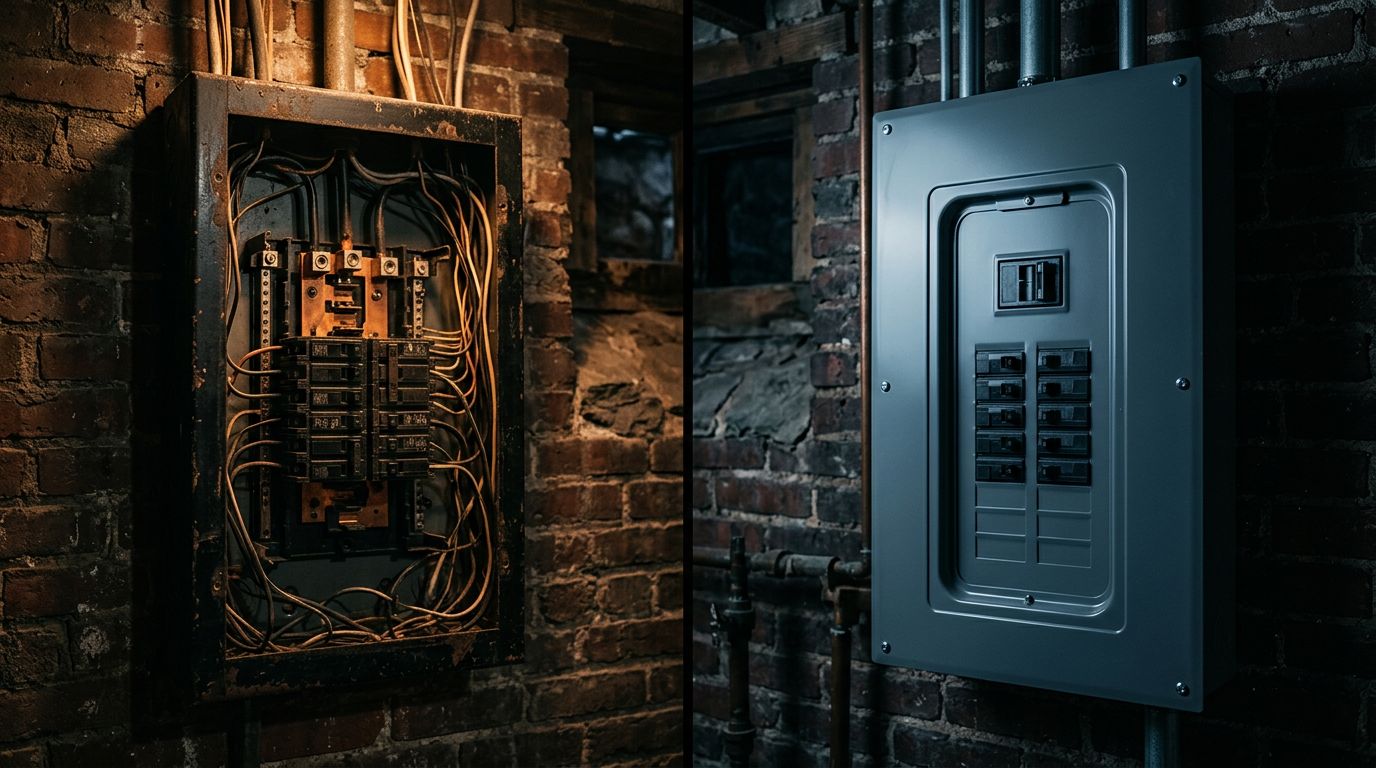
A panel upgrade can seem straightforward until you compare a main lug panel with a main breaker panel. These two designs represent the primary options when selecting an electrical panel for your home. Understanding how they distribute electricity is essential, as choosing the incorrect configuration can lead to safety concerns, failed inspections, and difficulties with future capacity expansion.
For homeowners managing residential applications in the Greater Boston area, making the right choice is vital to ensure safe and efficient power flow. The best option depends on the panel location, service size, existing wiring, available space, and planned infrastructure upgrades. Modern additions like high-efficiency heating equipment, electric vehicle chargers, induction ranges, and whole-home backup generators can all significantly impact your decision. Start by understanding the core differences between these two common panel types.
Key Takeaways
- A main breaker panel serves as the primary disconnect, housing the main switch directly within the unit.
- A main lug panel does not have its own main breaker, instead relying on an upstream disconnect or breaker for power control.
- Proper overcurrent protection is essential for safety, and main lug panels must be fed by a device that limits total amperage.
- Deciding between a subpanel configuration and a primary disconnect setup depends on your specific electrical panel layout and the unique power needs of your home.
- A licensed electrician should evaluate your existing electrical service, grounding, bonding, and local permit requirements before any panel replacement begins.
What a Main Breaker Panel Does
A main breaker panel features a large, dedicated breaker designed to disconnect power to all of the home's branch circuits. This primary component is usually positioned at the top of the electrical panel, though its exact location can vary depending on the manufacturer and the specific installation.
When the main breaker is switched off, it cuts power to the downstream branch circuits. However, it is important to remember that the service entrance conductors entering the panel remain energized even when the breaker is open. Consequently, homeowners should never remove the cover or assume the entire enclosure is safe to touch.
The main breaker also dictates the service capacity of the system. While a 200-amp amperage rating typically signifies a 200-amp service, the breaker itself does not guarantee that the home has an appropriately sized service. The meter equipment, service entrance conductors, grounding system, and utility connection must all be compatible with the installation.
This type of unit serves as the primary disconnect for the home, providing a convenient emergency power shutoff in a single location. It can also function as a subpanel if the feeder is routed through a main breaker, though that configuration is not always required.
A main breaker panel is often the ideal choice when:
- The panel acts as the first disconnect for the entire home.
- The existing service requires a comprehensive replacement.
- The homeowner desires a clearly labeled disconnect switch for rapid emergency power shutoff.
- The installation requires additional space for a generator transfer system or other specialized equipment.
- Future maintenance access would benefit from a local, dedicated disconnect.
For older Greater Boston houses, replacing an outdated fuse box or an aging unit often involves more than just installing a new main breaker panel. A licensed electrician must evaluate the service cable, meter base, grounding electrode system, and internal wiring before determining the best replacement for your home.
How a Main Lug-Only Panel Works
A main lug panel, often called an MLO only panel, does not contain a main breaker inside the enclosure. Instead, the incoming power cables connect directly to lugs that supply the branch-circuit breakers.
Because this electrical panel lacks a main disconnect, you must provide upstream breaker protection to shield the feeder. That protection usually comes from a breaker in a primary service entrance or a separate disconnect device. When configured as an MLO only unit, the upstream breaker protection effectively controls power to the load center.
This design is common for a subpanel installed in basements, additions, garages, workshops, and detached structures. For example, a home may have a main breaker panel near the utility service entrance and a main lug panel in a finished basement. The basement unit receives electricity through incoming power cables managed by a feeder breaker in the main panel.
A proper installation normally includes two ungrounded conductors, a neutral conductor, and an equipment grounding conductor. According to the National Electrical Code, the neutral bar must remain isolated from the enclosure in a downstream subpanel, while the grounding bar connects directly to the metal box. Mixing neutral and ground conductors can place normal current on metal parts and improper grounding paths.
When selecting this equipment, professionals also check the short circuit current rating to ensure the hardware can withstand potential electrical faults. While these units can offer more usable breaker spaces at a lower equipment cost, those savings may disappear if the feeder, upstream disconnect, grounding, or wiring requires major upgrades to meet safety standards.
A main lug panel is not automatically unsafe. It only becomes a problem when the upstream protection, feeder wiring, or panel bonding does not meet the requirements established by the National Electrical Code.
Main Lug vs Main Breaker Panel: The Practical Differences
Choosing between a main lug vs main breaker panel involves understanding how your home receives power and how you intend to manage your electrical distribution. The following table highlights the functional differences between these types of load center configurations.
| Feature | Main breaker panel | Main lug panel |
|---|---|---|
| Main disconnect | Built into the load center | Located upstream or separately |
| Typical use | Service equipment or subpanel | Subpanels and feeder-fed locations |
| Circuit protection | Main breaker provides protection | Upstream breaker must protect the feeder |
| Whole-panel shutdown | Available at the panel | Requires access to the upstream disconnect |
| Installation cost | Often higher | Often lower |
| Flexibility | Useful when a local disconnect is needed | Useful for downstream power distribution |
| Common concern | Limited spaces or service sizing | External disconnect switch requirements |
A main breaker panel provides a convenient, built-in way to cut power to the entire unit. This is particularly helpful when the load center is located in a garage, basement, or utility room where you need immediate access to a disconnect switch without walking to another part of the property.
A main lug panel is often chosen as a subpanel when the primary service equipment already has sufficient capacity and the new unit is located nearby. In this setup, the upstream feeder breaker provides the necessary circuit protection for the conductors. Because these units do not contain a main breaker, the installation cost is typically lower, making them an economical choice for expanding your electrical system. However, if the subpanel is located in a different building or a remote area, local electrical codes may require an external disconnect switch to ensure safety.
Deciding between these options requires more than just checking the label on the load center. A licensed electrician must trace the feeder, verify that your circuit protection is correctly sized, and confirm that the hardware meets all local safety standards. Whether you are installing a new subpanel or upgrading your main service, ensuring that your equipment matches your specific power needs is critical for a safe and code-compliant installation.
Which Panel Fits a Greater Boston Home?
Many Greater Boston homes have electrical systems installed decades apart. A 1920s house may have an older service, a later basement addition, and a newer garage circuit. Those layers affect your electrical panel decision.
If you are replacing the main panel at the service entrance, a main breaker panel is often the direct choice. It provides the required disconnect switch and supports a clean layout for the home's branch circuits. Your electrician may also recommend additional spaces to accommodate modern demands, such as new heat pumps or EV chargers.
A main lug only, or MLO, load center is often better for a new feeder serving a specific area. A finished lower level, a detached garage, a home office, or a workshop may need additional circuits without replacing the primary service panel. When installing a subpanel in a detached garage, the upstream breaker must have the correct amperage rating, and the feeder must be sized for the calculated load to handle potential fault current safely.
Planned electrical equipment also matters. A homeowner adding an air-source heat pump, electric water heater, EV charger, induction cooktop, or electric dryer may need a professional service load calculation. Adding a larger electrical panel does not create more service capacity. If the home's calculated demand exceeds the existing service, the project may require a formal service upgrade.
A generator adds another design question. The transfer switch, interlock, or other listed equipment must be compatible with the panel and installed according to its instructions. The electrician also needs to identify which circuits the generator will supply and prevent unsafe backfeeding.
In older homes, panel condition can change the recommendation. Rust from a damp basement, heat damage, loose connections, obsolete equipment, missing knockouts, and crowded wiring all deserve attention. Some older panels have known reliability concerns, but a qualified inspection should identify the actual condition rather than relying on the brand name alone.
Installation, Permits, and Inspection Concerns
Electrical panel work in Massachusetts requires strict adherence to code compliance and careful coordination with the local authority having jurisdiction. Permit and inspection requirements vary by municipality, and service upgrades may require coordination with the electric utility. In some jurisdictions, the local code may also mandate the installation of an external disconnect switch.
A professional installation should address more than the visible box. When installing a new electrical panel, a licensed electrician will evaluate several critical components:
- Service entrance conductors and meter equipment
- Grounding electrode and bonding connections
- Feeder size and overcurrent protection
- Neutral isolation in subpanels
- AFCI and GFCI protection where required
- Panel working clearance and accessibility
- Surge protection and generator connections
- Labels for disconnects and branch circuits
The electrician should also verify that all components are UL listed and check whether your existing branch circuits fit the new panel properly. A panel replacement does not automatically correct double-tapped conductors, damaged cable, missing grounding paths, or outdated wiring methods.
Greater Boston basements deserve extra attention because moisture and previous water damage can affect metal enclosures and terminations. An electrical panel installed in a damp or flood-prone area may need to be relocated or housed in a specialized enclosure. The working space must remain clear, even when the panel sits near storage shelves, laundry equipment, or a furnace.
When you request estimates, ask whether the price includes the permit, inspection, grounding changes, circuit labeling, disposal, and any necessary utility coordination. A lower equipment price does not always result in a lower project cost if the existing service entrance needs additional work to meet current safety standards.
Questions to Ask Before Replacing the Panel
A short conversation with your electrician can prevent an expensive mismatch. Ask these questions before approving the work on your electrical panel:
- Is this panel the home's primary service equipment or a downstream subpanel?
- Where is the primary disconnect located, and is there an accessible disconnect switch for emergency power shutoff?
- Does the existing service capacity support the home's current electrical load and future planned additions?
- What is the appropriate amperage rating for the new setup to ensure sufficient overcurrent protection?
- Will the project require a service upgrade or direct utility coordination for electrical distribution?
- Are the neutral and grounding conductors separated correctly if this is a subpanel?
- How many breaker spaces should the new panel have to accommodate current needs and future capacity?
- Will the installation support an EV charger, generator, heat pump, or other future electrical loads?
- Does the estimate include permits, inspection, labeling, and all necessary code-related corrections?
These answers reveal whether the project is a simple panel replacement or part of a larger electrical upgrade. They also help you compare estimates accurately.
A licensed electrician can perform a load calculation instead of choosing a panel based only on the old breaker size. That evaluation should account for the home's fixed equipment and planned additions. It may show that a larger panel is appropriate, or that the utility service itself needs attention first.
Choosing the Right Panel for Your Project
For most homes, a main breaker panel fits the primary service location because it provides a local disconnect and essential circuit protection. Conversely, a main lug panel often fits a subpanel location where an upstream breaker already provides the necessary overcurrent protection for the feeder.
Neither design is automatically better. The correct choice depends on the electrical system layout, the service capacity, the location, and the work planned for the property. When selecting the right electrical panel for residential applications, it is vital to balance these safety requirements with your home's specific power needs.
If your home has an older electrical panel, frequent breaker trips, visible heat damage, or new high-demand equipment, schedule an evaluation before buying a replacement. A licensed electrician serving Burlington and Greater Boston can inspect the existing system to help you decide whether a main breaker panel or a main lug panel is the safer, more efficient choice for your home.
Frequently Asked Questions
Can I use a main lug panel as my home's primary electrical panel?
No, a main lug panel cannot function as a primary service panel because it lacks an internal main disconnect switch. The National Electrical Code requires a way to shut off all power to the home at the service entrance, which must be provided by a main breaker panel or a separate external disconnect.
Why does the term 'subpanel' often come up when discussing main lug panels?
Main lug panels are frequently used as subpanels because they are an economical way to distribute power to specific areas like a garage or basement addition. In this configuration, the panel receives power from the main panel, which already provides the necessary upstream breaker protection for the feeder cables.
Is a main breaker panel always required for a home renovation project?
If you are adding a new sub-distribution point, a main lug panel is often perfectly acceptable if your existing service is sufficient and the feeder is properly protected. However, if you are replacing the main service panel where the utility power enters the home, a main breaker panel is almost always the required and safer choice.
What happens if I install a main lug panel without proper upstream protection?
Installing a main lug panel without a dedicated upstream breaker is a significant safety violation that leaves your electrical circuits unprotected from overcurrent faults. This can lead to melted wires, fire hazards, and failed building inspections, as there would be no reliable way to cut power to the panel in an emergency.
Conclusion
Selecting between a main lug vs main breaker panel ultimately depends on where the unit sits within your electrical system. A main breaker panel serves as the primary disconnect for the entire feed, while a main lug panel relies on upstream overcurrent protection and typically functions as a subpanel.
For a Greater Boston home, the safest decision involves carefully evaluating your service equipment, feeder wiring, grounding requirements, and future load needs. While industrial control panels are designed to handle significantly larger electrical loads in commercial settings, your home electrical distribution depends on strict code compliance and the selection of the correct hardware for your specific layout.
A panel with more slots will not solve an undersized service, and choosing a lower-cost main lug enclosure is not a viable strategy without proper upstream protection. The right panel is the one that aligns with the requirements of your complete installation, ensuring safety and efficiency for years to come.