
Home Sauna Electrical Requirements in Massachusetts

Contact Us
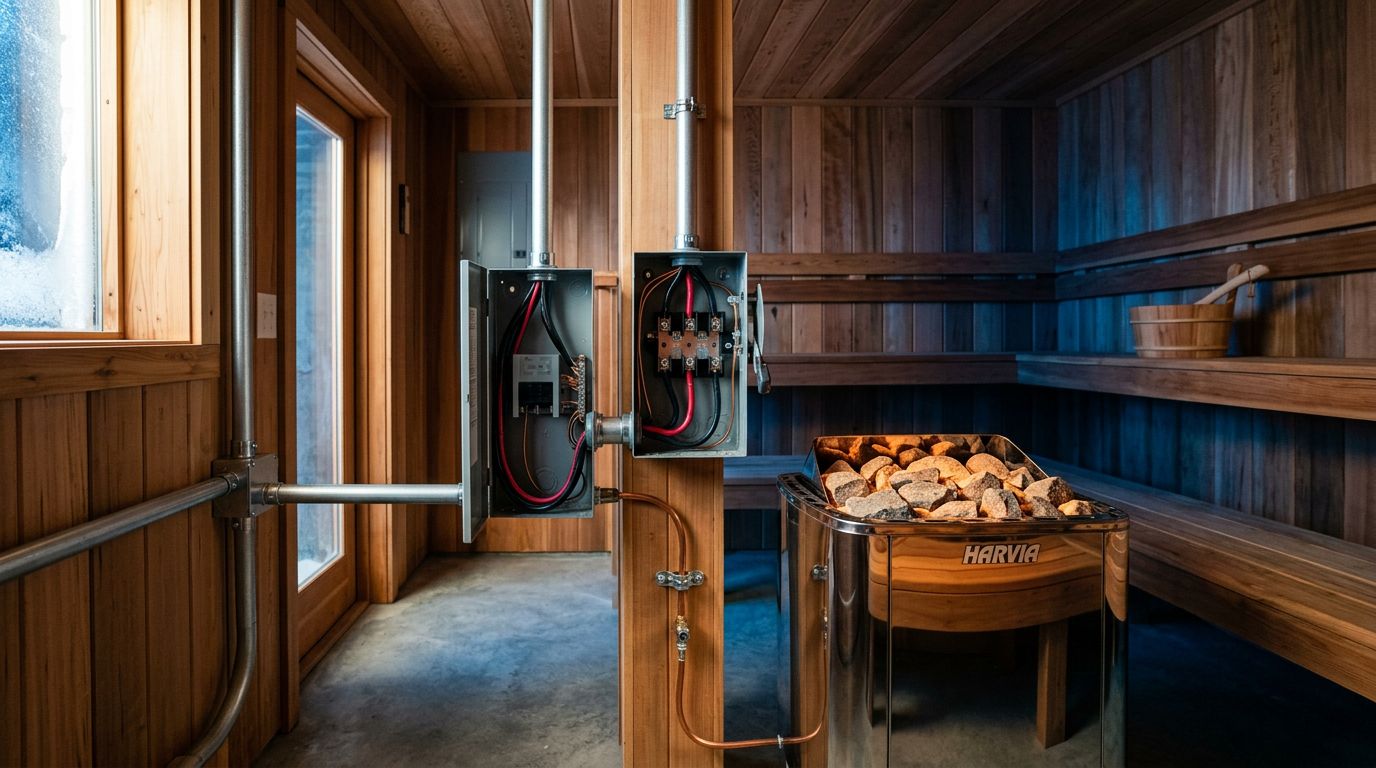
An electric sauna can turn an unused basement corner or spare room into a relaxing retreat. However, the heater is a serious electrical load, and Massachusetts homes often need more than a nearby outlet.
The right setup depends on the heater, sauna size, room location, manufacturer instructions, and local inspection requirements. Before ordering equipment, confirm the electrical plan with a licensed electrician and your local building or electrical department.
Key Takeaways
- Massachusetts uses 527 CMR 12.00 , based on the 2023 National Electrical Code for applicable permits.
- Most sauna heaters need a dedicated circuit, with circuit size based on the heater's voltage, wattage, and continuous load.
- Manufacturer instructions, electrical code, and local permit rules are separate requirements. Your installation must satisfy all three.
- GFCI protection, disconnects, grounding, high-temperature wiring, and listed sauna equipment require careful review.
- A pre-installation inspection of your panel, wiring route, and sauna location can prevent costly changes later.
Start With the Sauna Heater and Installation Manual
The heater determines most of the electrical requirements for a home sauna. Begin with the manufacturer's installation manual, not the size of the room or the outlet already on the wall.
Small infrared cabins often use 120-volt power. Depending on the model, they may require a dedicated 15-amp or 20-amp circuit. Larger infrared units and traditional electric heaters commonly use 240-volt, single-phase power. Their circuit requirements may range from 30 amps to 50 amps or more.
Check the manual for these details:
- Required voltage and phase
- Rated wattage and amperage
- Breaker size
- Conductor size and material
- Hardwired or receptacle connection
- Disconnect location
- GFCI requirements
- Minimum clearances around the heater
- Required thermostat and high-limit controls
A heater listed for 240 volts cannot use a standard 120-volt receptacle. Likewise, a 120-volt infrared unit shouldn't share its circuit with a light, bathroom fan, or another appliance.
Sauna heaters should carry a recognized safety listing, such as UL, ETL, or CSA, and should comply with the applicable sauna-heater standard. An unlisted product may create problems during inspection and could complicate an insurance claim after an electrical incident.
The manual also controls details that general electrical rules may not describe. For example, the manufacturer may require copper conductors, a particular disconnect, a specific thermostat location, or a dedicated control panel.
Massachusetts Code and Permit Requirements
Massachusetts currently uses 527 CMR 12.00 , the state electrical code based on the 2023 edition of NFPA 70, also called the National Electrical Code. The current code applies according to the permit application date and other state adoption rules, so your local authority having jurisdiction, or AHJ, should confirm which provisions apply to your project.
Your AHJ is usually the municipal building department, electrical inspector, or another local code office. Requirements can vary by town, especially for permits, inspection scheduling, basement conversions, and work near plumbing or bathing areas.
An electrical permit may be needed when a new circuit, disconnect, hardwired heater, panel modification, or other fixed electrical installation is involved. A building permit may also apply if you are constructing walls, changing ventilation, modifying a basement, or creating a new room. These are separate questions. An electrical permit doesn't automatically cover building work.
A licensed electrician should handle the final connection and required electrical work. Ask the electrician or local inspector about:
- Whether an electrical permit is required
- Whether a building or mechanical permit also applies
- Required rough and final inspections
- GFCI rules for the sauna's location
- Local rules for emergency shutoffs or warning devices
- Acceptable wiring methods inside and outside the enclosure
Massachusetts code sets the baseline, but the local inspector has authority over the project. Confirm requirements before materials arrive.
Manufacturer directions and code requirements also have different roles. The electrical code establishes minimum safety rules. The product listing and installation manual provide equipment-specific instructions. If the manual requires a larger conductor, extra clearance, or a different disconnect, follow the stricter requirement and ask the electrician to resolve any conflict.
Circuit Sizing, Wiring, and Protection
Most home sauna electrical requirements center on a dedicated circuit. The heater should have its own circuit, without shared lights, receptacles, fans, or other loads. A separate circuit may also be needed for controls, lighting, or ventilation if the sauna design includes them.
Sauna heaters generally operate for extended periods, so the electrician must account for continuous load requirements. A common sizing method applies 125 percent of the heater's rated current. For example, an 8,000-watt heater on a 240-volt circuit draws about 33.3 amps. Applying the continuous-load factor produces about 41.6 amps, which may lead to a 50-amp circuit after the conductor, breaker, equipment, and installation conditions are reviewed.
That example doesn't replace a load calculation. The electrician must also check the panel's available capacity, conductor temperature ratings, cable length, voltage drop, and the manufacturer's instructions.
| Sauna equipment | Common electrical arrangement | What must be confirmed |
|---|---|---|
| Small infrared cabin | Dedicated 120-volt, 15- or 20-amp circuit | Outlet type, GFCI, and heater manual |
| Larger infrared cabin | Dedicated 240-volt circuit | Breaker, receptacle, and conductor size |
| Traditional electric heater | Dedicated 240-volt hardwired circuit | Wattage, disconnect, clearances, and controls |
| Sauna lighting | Separate low-load circuit or approved connection | Damp-location rating and installation method |
A 120-volt circuit commonly uses 14 AWG copper conductors for 15 amps or 12 AWG copper for 20 amps, when permitted by the installation method and equipment instructions. Larger 240-volt heaters may need 10 AWG, 8 AWG, or larger copper conductors. The breaker and wire must match the actual calculated load, not a guess based on the heater's appearance.
Hardwired traditional heaters typically connect through an approved junction box or connection point. Infrared cabins may use a listed receptacle, such as a NEMA 5-15R, NEMA 5-20R, or a 240-volt configuration specified by the manufacturer. Never replace the required receptacle with an adapter.
GFCI protection depends on location and equipment. Outdoor saunas, installations near showers or pools, and certain receptacles near the sauna may require GFCI protection. A local inspector may also require GFCI protection for an indoor basement installation. Ask whether the project needs a GFCI breaker or GFCI receptacle, then follow the heater manual.
The circuit also needs proper grounding and bonding. Metal parts, boxes, raceways, and other conductive components must connect to the grounding system as required. Any wiring exposed to sauna heat must have a temperature rating suitable for the actual environment. Standard cable placement inside a hot enclosure can create an unsafe installation even when the breaker size looks correct.
Disconnects, Controls, Lighting, and Room Safety
A sauna heater needs a readily accessible means of disconnect. Depending on the product and layout, this may be a switch within sight of the heater or a lockable disconnect located elsewhere. The manual may specify the exact location and type.
Traditional sauna systems may also require a high-limit control, thermostat, timer, or emergency shutoff arrangement. Some installations include a labeled switch inside the sauna connected to an alarm or warning device in a supervised location. These details depend on the heater listing, installation instructions, and the code provisions adopted by the local AHJ.
The room's heat and moisture affect every electrical component. Lights installed inside the sauna must be listed for the temperature and damp or wet conditions where they operate. A standard decorative fixture isn't automatically suitable because it looks enclosed. The same rule applies to junction boxes, switches, controls, and wiring devices.
Keep receptacles outside the hot room unless the product and code clearly allow one inside. Never run an extension cord to a sauna heater. Extension cords aren't a safe substitute for a correctly sized branch circuit.
If you plan to add electric radiant floor heating in the changing area, treat it as a separate electrical load. A dedicated circuit, floor sensor, listed control, and GFCI protection may apply. Residential radiant floor heating installation should be coordinated with the sauna wiring before the floor is closed.
The panel may need an upgrade if it lacks space, has an older service, or cannot support the added demand. A sauna installation is a good time to review other large loads, such as an electric range, heat pump, water heater, or EV charger.
Pre-Installation Checklist for Massachusetts Homeowners
Complete these steps before buying the heater or closing walls around the sauna:
- Choose the exact heater model. Record its voltage, wattage, rated amperage, circuit size, connection method, listing, and required clearances.
- Read the complete installation manual. Mark requirements for thermostats, high-limit controls, disconnects, panic switches, wiring temperature, ventilation, and clearances.
- Have the electrical panel evaluated. Confirm available breaker spaces, service capacity, grounding, and the route for the new circuit.
- Confirm the sauna location. Note whether the room is in a basement, near a bathroom, outdoors, beside a shower, or near a pool. Location can change GFCI and permit requirements.
- Call the local AHJ. Ask about electrical and building permits, inspection stages, local amendments, and any requirements for sauna shutoffs or warning devices.
- Hire a licensed electrician. Provide the heater manual, room plans, and any information about future lighting, ventilation, radiant heat, or other equipment.
- Plan the wiring route before construction. Keep junction boxes accessible, protect conductors from heat, and avoid placing connections where sauna panels will permanently cover them.
- Schedule the required inspection. Don't energize the heater before the installation passes the applicable inspection and the electrician completes testing.
This review also catches conflicts between the sauna kit and the house. A heater may fit the room but exceed the panel's capacity. A planned receptacle may sit too close to a shower. A control cable may require a different temperature rating than the power cable.
Conclusion
Safe home sauna electrical requirements in Massachusetts begin with the specific heater manual and continue through code review, permit confirmation, circuit sizing, and inspection. The heater needs the right dedicated circuit, grounding, disconnect, controls, and environmental-rated wiring.
Before installation, have a licensed electrician review the equipment and the proposed location with your local inspector. That preparation keeps a relaxing sauna from becoming an expensive electrical correction later.