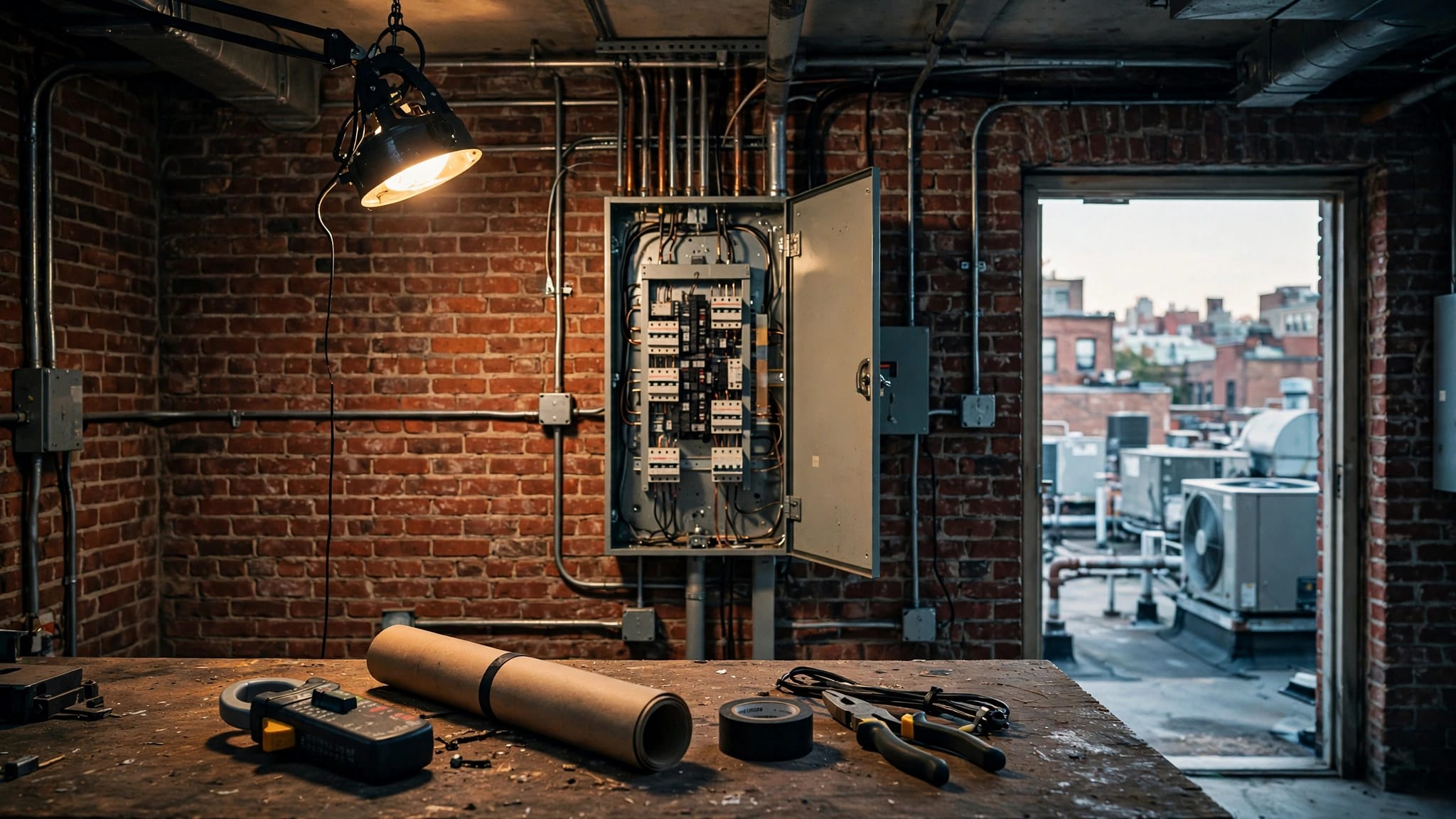

Tandem Breakers in Greater Boston Homes: What They Mean

Contact Us
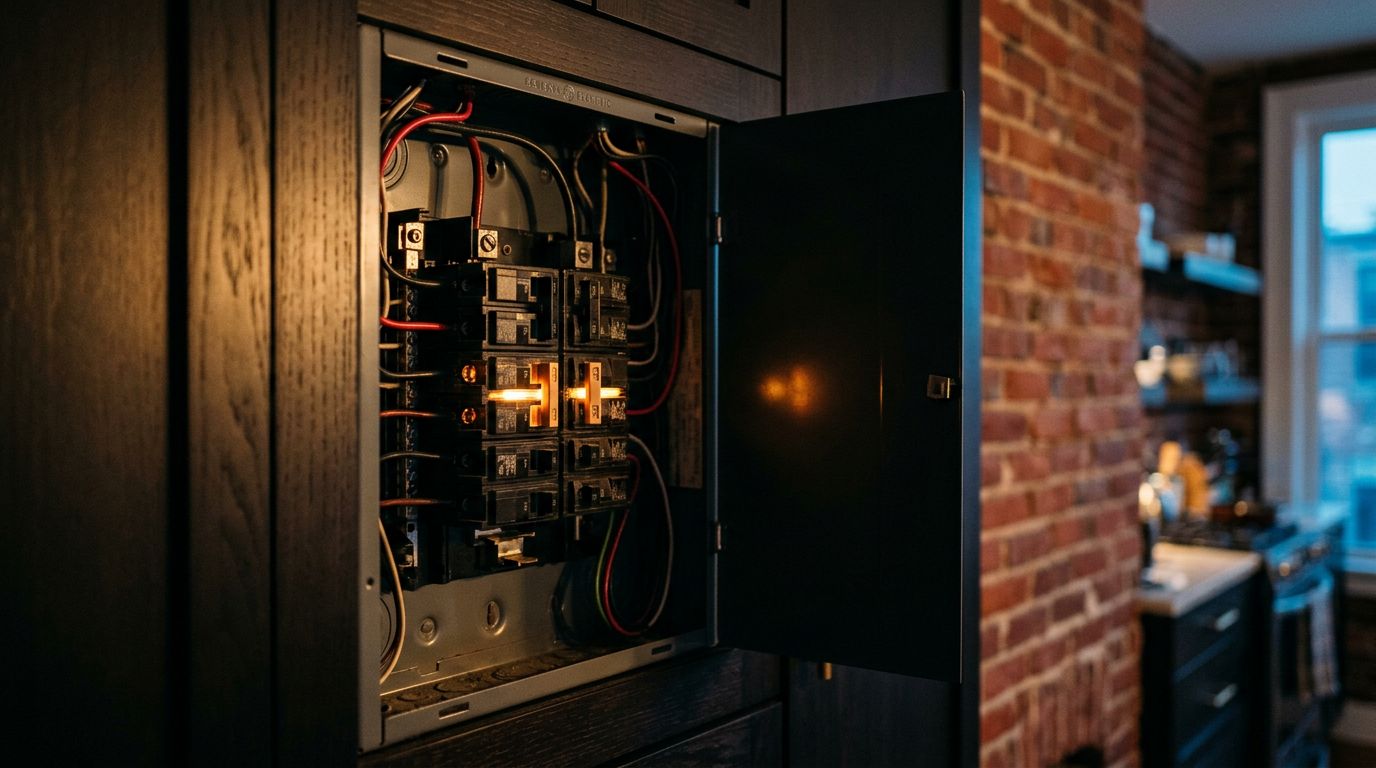
A breaker panel can look full even when a few spaces remain open. In that situation, a homeowner may hear an electrician mention tandem breakers , also called duplex or split breakers. The term describes a breaker that fits in one panel space but controls two separate 120-volt circuits.
That extra circuit capacity can help during a renovation, but it isn't a universal fix. Panel design, electrical load, breaker compatibility, and Massachusetts code requirements all matter. Here's what Greater Boston homeowners should know before approving the work.
Key Takeaways
- A tandem breaker contains two separate 120-volt breakers in one panel position.
- It doesn't increase the home's service capacity or create a 240-volt circuit.
- Only panels listed for tandem breakers can accept them, and approved positions may be limited.
- Tripping breakers, heat damage, corrosion, or an overloaded service require a broader electrical evaluation.
- A licensed electrician should select and install the breaker according to the panel manufacturer's specifications and applicable Massachusetts code.
What a Tandem Breaker Does
A standard single-pole breaker occupies one space in a residential panel and supplies one 120-volt circuit. A tandem breaker has two independent breaker mechanisms inside one housing. Each side controls its own circuit, with its own hot conductor and overcurrent protection.
The two switches often sit one above the other. Some models have a shared outer body with two small toggles, while others use a different handle design. The appearance can vary by manufacturer, so a narrow breaker isn't automatically a tandem breaker.
A tandem breaker shares the panel position, but the circuits remain electrically separate. One side might feed bedroom receptacles while the other supplies a hallway or lighting circuit. The arrangement depends on the wiring plan and the available panel spaces.
The comparison below shows why a tandem breaker shouldn't be confused with a two-pole breaker.
| Feature | Tandem breaker | Two-pole breaker |
|---|---|---|
| Panel space | Usually one position | Usually two adjacent positions |
| Circuits | Two separate 120-volt circuits | One 240-volt circuit, or an approved multi-wire arrangement |
| Common uses | Lighting and receptacle circuits | Ranges, dryers, heat pumps, and other 240-volt equipment |
| Handle action | Often two independent switches | Common handle or common trip |
A tandem breaker doesn't provide the 240 volts needed for an electric dryer, range, central air conditioner, heat pump, or many other large appliances. Those loads need the correct two-pole breaker and properly sized wiring.
Shared-neutral circuits require added care. A multi-wire branch circuit uses two hot conductors and one neutral, with the hot conductors on opposite legs of the service. A typical tandem breaker doesn't provide the correct arrangement or common disconnect for that application.
Why Tandem Breakers Appear in Greater Boston Homes
Greater Boston has a wide mix of housing. A single street can include a century-old Colonial, a mid-century ranch, and a newer home with a modern high-capacity panel. Their electrical systems may have very different amounts of usable space.
Older homes often gained circuits over time. A kitchen remodel may have added a dishwasher and garbage disposal. Later, a homeowner may have installed central air, a basement laundry area, an electric water heater, or a mini-split system. Each project can use more panel spaces and increase the electrical load.
During a small renovation, an electrician may find that the panel has enough service capacity but not enough open positions. If the panel is listed for them, tandem breakers can provide space for specific new 120-volt circuits without replacing the entire panel.
That doesn't mean every full-looking panel needs tandem breakers. The panel label may allow them only in certain locations. Some panels don't accept them at all, even if a breaker appears to fit physically.
Panel brands also use different product families and connection designs. A Square D QO panel requires breakers approved for that product line. A Square D Homeline breaker isn't automatically interchangeable with a QO breaker, and other manufacturers have their own requirements.
A breaker that fits into a panel is not necessarily a breaker approved for that panel.
The electrician should read the panel labeling and confirm the correct breaker model. Generic "thin" breakers can create a dangerous mismatch when they don't meet the panel's listing.
When Tandem Breakers Are Appropriate
A tandem breaker may be reasonable when the following conditions exist:
- The panel manufacturer lists tandem breakers as acceptable.
- The proposed position is approved for that breaker type.
- The service and feeder have enough capacity for the added circuit.
- The wiring, grounding, and neutral conductors are in suitable condition.
- The new circuit meets current requirements for protection and installation.
The decision starts with the panel, but it doesn't end there. An electrician also needs to review the home's connected loads. Adding a circuit for a few lights has a different effect than adding one for a bathroom heater, kitchen equipment, or a workshop.
A tandem breaker won't solve an overloaded service. If the main breaker trips, lights dim when appliances start, or multiple branch breakers trip during normal use, the home may need load corrections, a panel upgrade, or a service upgrade. Replacing a standard breaker with a tandem model doesn't increase the amperage supplied by the utility.
The same limitation applies to major electrification projects. An EV charger, electric heat pump, induction range, or whole-house generator may require a load calculation and additional service equipment. A tandem breaker cannot create capacity for those loads.
Homeowners should also avoid using a tandem breaker to work around a missing 240-volt circuit. Two 120-volt circuits do not equal one properly wired 240-volt circuit. The voltage, breaker configuration, conductor arrangement, and equipment grounding must match the appliance requirements.
Panel Compatibility and Massachusetts Electrical Code
The panel's label is the first place to check. It may identify the breaker families allowed, list positions approved for tandem breakers, and show the panel's maximum circuit count. The manufacturer's installation information can provide additional details.
Massachusetts electrical work follows a state electrical code based on the National Electrical Code, along with state requirements and local permitting procedures. Depending on the work, the town or city may require a permit and inspection. A licensed electrician can determine which requirements apply to the project.
Circuit protection can also affect the choice. Many circuits serving kitchens, bathrooms, garages, unfinished basements, exterior areas, bedrooms, and other locations may require GFCI or AFCI protection under the applicable code. A standard tandem breaker may not provide that protection. AFCI, GFCI, and dual-function tandem products exist for some panel families, but the exact model must be approved for the panel.
Shared neutrals deserve special attention. If two circuits share one neutral, the breaker arrangement must protect against unsafe servicing and meet the rules for multi-wire branch circuits. An electrician should inspect the neutral connections rather than assume two adjacent switches are suitable.
The panel itself may show warning signs that make a tandem installation a poor choice. These include:
- Rust or moisture inside the enclosure
- Discoloration around breaker connections
- Melted insulation or a burnt odor
- Loose breakers or damaged bus bars
- Repeated tripping
- Missing knockouts or an unsecured cover
- An outdated panel with known safety concerns
A tandem breaker cannot correct deteriorated wiring, a damaged bus, poor terminations, or an unsuitable enclosure. If the panel has heat damage or corrosion, adding circuits can make the problem harder to see and more expensive to repair later.
Never remove the panel's dead front to inspect the bus or wiring yourself. Parts inside can remain energized even when the main breaker is off. A homeowner can safely photograph the panel directory and visible breaker labels, then give that information to a licensed electrician.
What to Expect During a Tandem Breaker Evaluation
A proper evaluation usually begins with the panel's make, model, rating, and available positions. The electrician checks whether the panel is listed for tandem breakers and confirms the correct location for the proposed circuit.
Next, the electrician reviews the existing wiring and the intended load. A new basement receptacle circuit may need a different design from a dedicated circuit for a boiler control, freezer, or workshop tool. The wiring method, conductor size, grounding, and required protection all need to match the circuit.
The electrician may recommend one of several options:
- Install an approved tandem breaker in an allowed position.
- Rearrange existing circuits and use a standard breaker where appropriate.
- Add a subpanel when the main panel has limited space but the service can support the expansion.
- Replace the panel or upgrade the service when capacity, condition, or safety requires it.
Ask what the quoted work includes. The estimate may need to account for the breaker, wiring, panel repairs, permit fees, inspection, labeling, and any corrections found during the visit. A finished installation should leave the panel directory accurate and the new circuit clearly identified.
For commercial properties, multifamily buildings, and mixed-use spaces, the evaluation can involve additional equipment and tenant loads. Tandem breakers are not a substitute for a properly designed distribution system in those settings.
Conclusion
Tandem breakers can add a second 120-volt circuit within one panel position, which may help in some Greater Boston homes with limited space. Their use depends on the panel's listing, the circuit's purpose, the home's electrical load, and the applicable Massachusetts requirements.
If a panel is full, a breaker keeps tripping, or you're planning a kitchen, basement, EV charger, or heating upgrade, have a licensed electrician evaluate the entire system. The right solution may be a compatible tandem breaker, but it may also be a subpanel, panel replacement, or service upgrade. A crowded panel needs a careful assessment, not a smaller breaker.