
Massachusetts Home Battery Storage Requirements in 2026

Contact Us
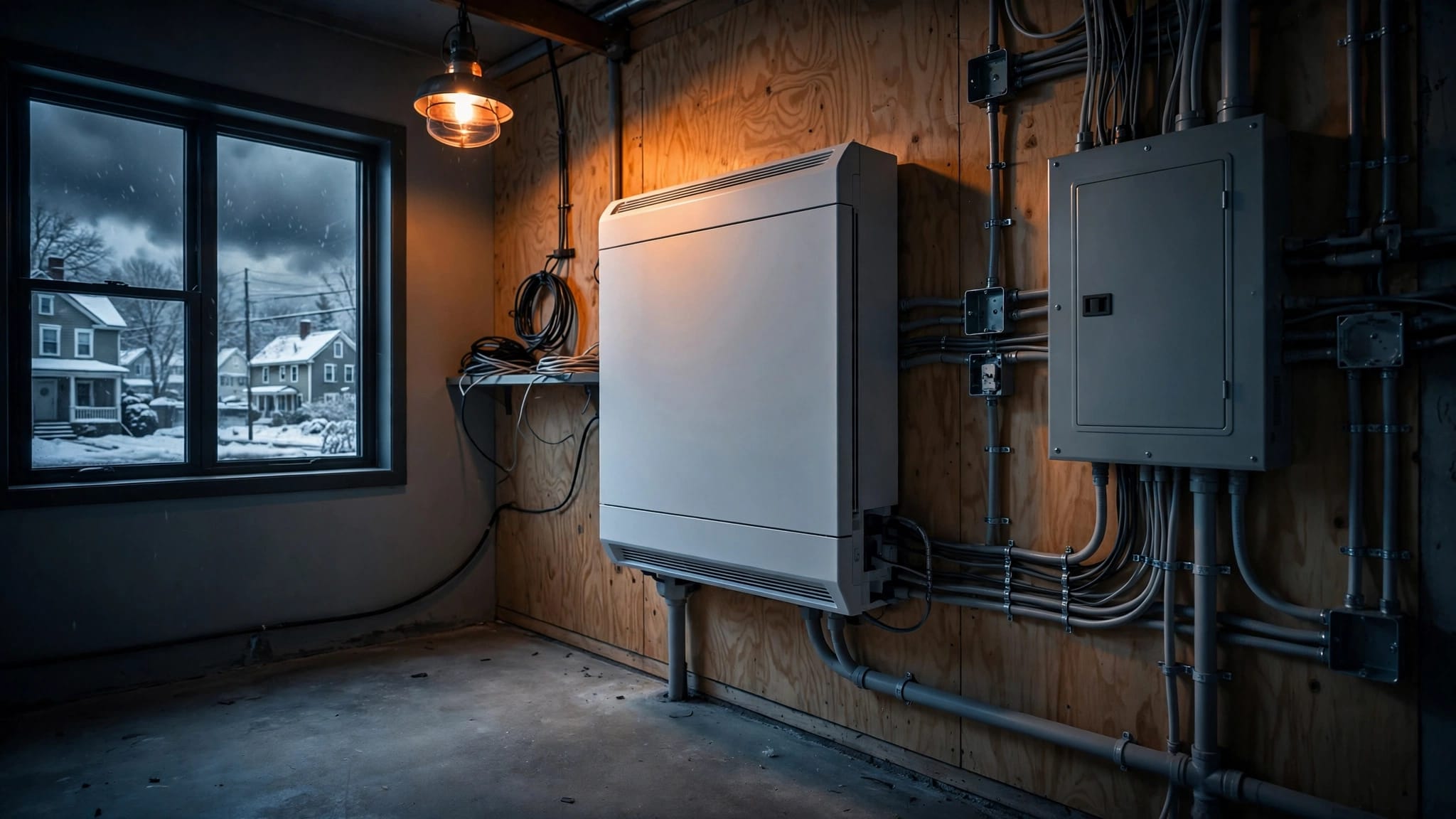
A battery can keep essential loads running during a Massachusetts outage, but installation involves more than mounting equipment and connecting wires. Massachusetts home battery storage projects must fit state electrical and fire rules, local permits, utility requirements, and the property's existing service capacity.
The process is easier when you separate those responsibilities early. State agencies set the technical baseline, while your municipality, fire department, utility, and licensed electrician review the actual project. Start with the rules that apply statewide, then confirm the local details before buying equipment.
What Massachusetts requires for a home battery
Massachusetts battery installations combine electrical, building, fire, and utility requirements. The exact answer depends on the battery's capacity, location, wiring method, connection to the grid, and whether solar panels are part of the system.
Electrical and fire-code baseline
For permits granted after April 24, 2026, Massachusetts Electrical Code 527 CMR 12.00 is based on the 2026 edition of NFPA 70, the National Electrical Code, with Massachusetts amendments. The local wiring inspector applies that code to the installation.
State guidance also points to the State Fire Code, 527 CMR 1.00, and NFPA 855 for energy storage safety. Equipment must be listed for its intended use and installed according to the manufacturer's instructions. A Tesla Powerwall, Enphase battery, or another listed system may have different clearance, disconnect, ventilation, and mounting requirements.
Your project may also involve a building permit, fire department review, zoning questions, and utility approval. The statewide code creates the baseline, but your local authority having jurisdiction makes the final decision about permits and inspections.
The residential fire-permit threshold
Massachusetts guidance identifies a local fire-department permit requirement for lithium-ion battery energy storage systems above 20 kilowatt-hours. A lower threshold applies to one- and two-family dwellings and townhouse units: a local fire permit is required when the system exceeds 1 kilowatt-hour.
That threshold doesn't replace electrical or building permits. It tells you when fire department approval is part of the project. Ask your fire official how the rule applies to the total system capacity, multiple battery cabinets, and the proposed location.
Permits, inspections, and local differences
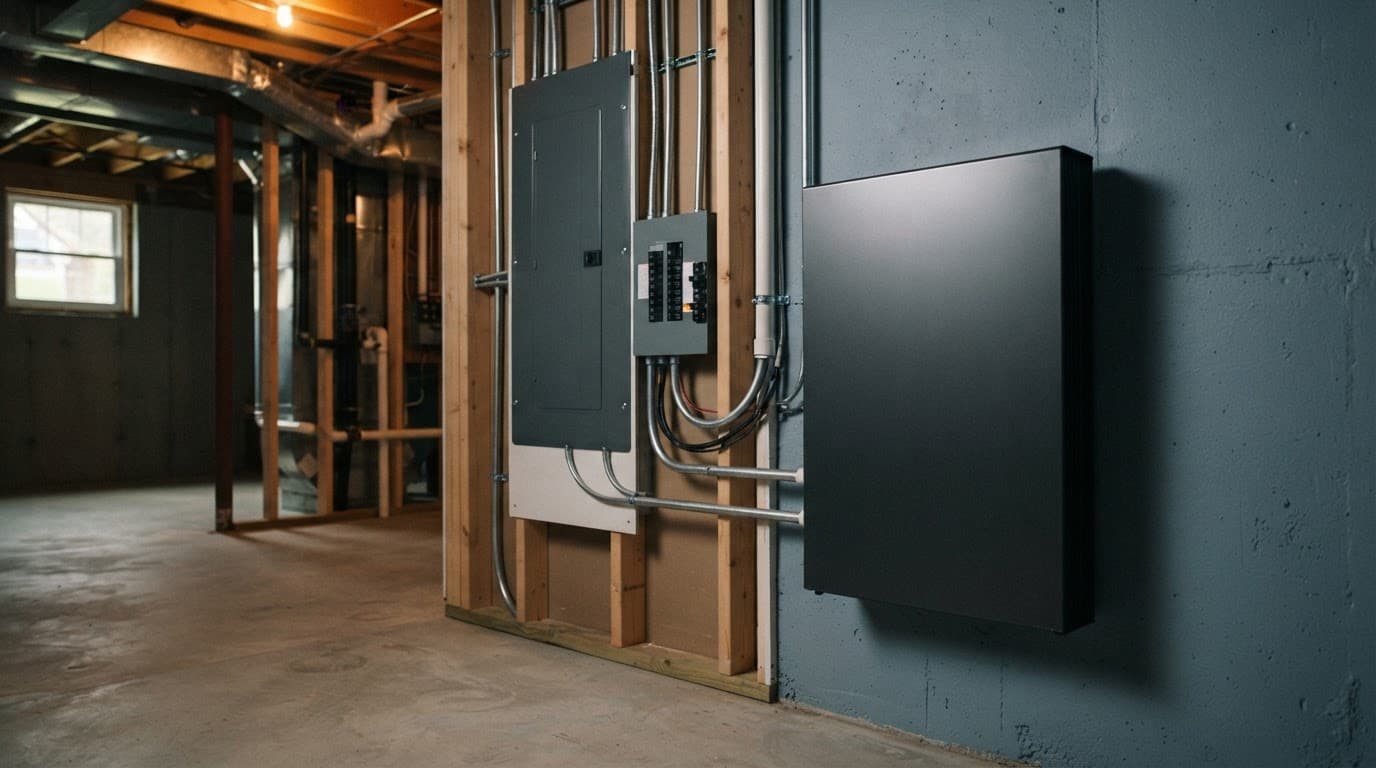
Massachusetts cities and towns administer permits through their own building departments, wiring inspectors, and fire officials. Boston, Burlington, Brookline, Newton, and other communities may use different application portals, document requests, inspection schedules, and zoning procedures.
Building and fire permits
A municipality may require a building permit before a battery energy storage system is constructed, installed, or modified. The Massachusetts Department of Energy Resources model battery storage bylaw uses that approach, but local adoption and administration can vary.
Your permit package may include:
- Battery specifications and installation instructions
- A one-line diagram or wiring plan
- Equipment location and clearance information
- Disconnect and emergency shutoff details
- Load calculations and panel information
- Manufacturer certifications
- Utility interconnection documents
- A site plan or photos of the proposed location
Your electrician usually coordinates the electrical permit, but confirm who is listed as the permit holder and who will request inspections. Do not cover wiring or close walls until the inspector approves the required stage.
For broader context on the code transition and inspection process, review these 2026 Massachusetts electrical code updates.
Brookline shows why local review matters
Brookline's published energy storage requirements provide a useful local example, not a universal statewide rule. Its application of NFPA 855 lists residential placement quantities of up to 40 kWh in utility closets, storage rooms, or utility spaces. It lists up to 80 kWh for attached or detached garages, detached accessory structures, exterior-wall installations, and outdoor installations.
Other municipalities may apply different procedures or request additional information. Never treat Brookline's numbers as a Massachusetts-wide setback standard. Confirm placement, access, separation, and emergency-response requirements with your town or city before construction.
Utility interconnection for Massachusetts batteries
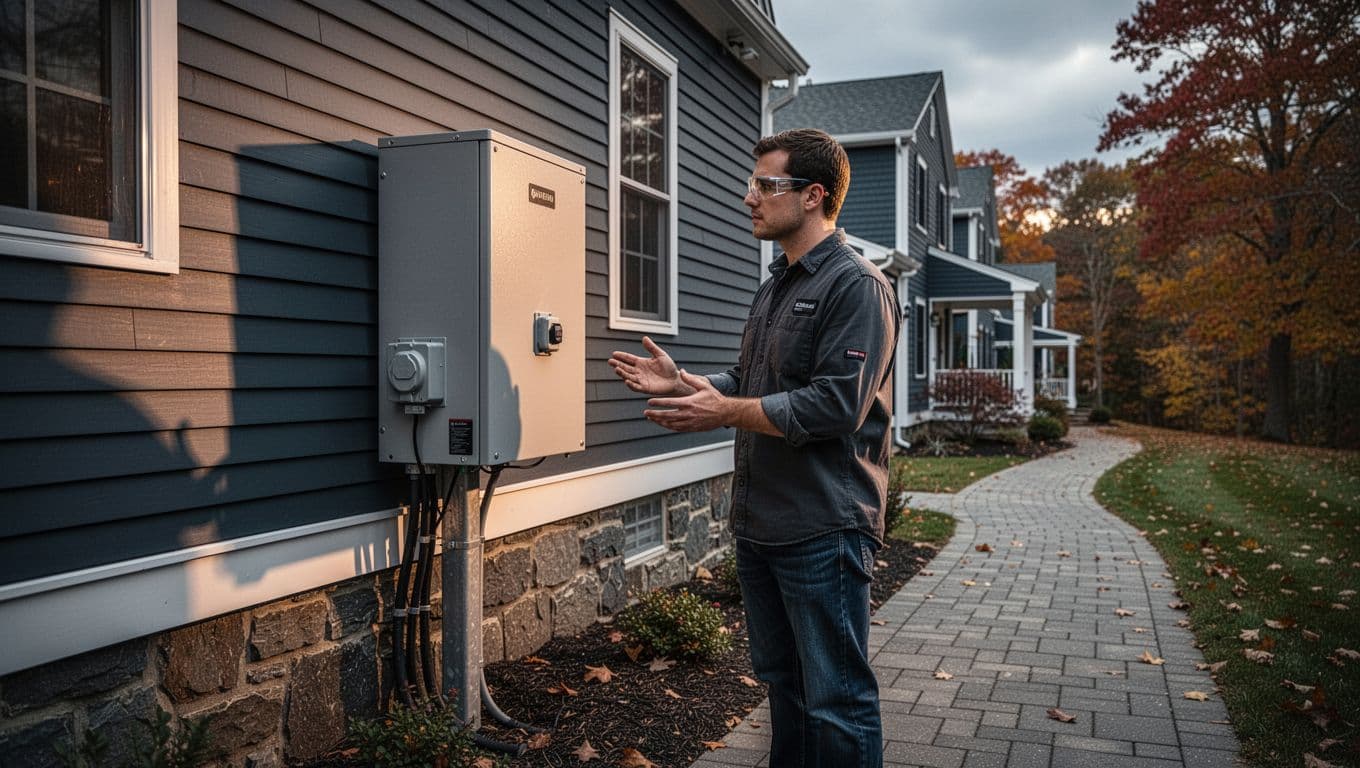
A battery connected to the home's electrical system may need utility approval, even when it mainly provides backup power. The utility needs to know whether the equipment can export electricity, how it disconnects during an outage, and whether the service can support the installation.
Eversource, National Grid, and Unitil
Eversource, National Grid, and Unitil each have interconnection procedures. Cape Light Compact customers may also need to coordinate with the electric utility that delivers service to the property.
The usual sequence includes an interconnection application, utility review, installation, municipal inspection, any required meter work, and permission to operate. Your installer should identify whether the battery is configured for non-export operation or can send energy back to the grid.
A battery may also share space in the service with solar panels, an EV charger, heat pumps, or an electric range. A load calculation can show whether the existing panel and service are adequate. If the panel is outdated or full, electrical panel upgrade services may be part of the project.
A tariff change is scheduled for November 1
Massachusetts regulators approved revised utility tariffs for Eversource, National Grid, and Unitil on August 12, 2026. The cited changes are scheduled to take effect November 1, 2026, so they aren't yet effective as of September.
For eligible inverter-based systems rated at 25 kW or less, the future common system modification fee is listed as $225. The referenced upgrade-cost allocations are up to $10,000 for Eversource and National Grid and up to $1,450 for Unitil. Costs above those amounts can remain the applicant's responsibility.
Ask your installer or utility which tariff applies when you submit the application. Fees and upgrade responsibilities can depend on the system design and the date of the interconnection request.
Battery placement and safety requirements
Placement affects both approval and emergency access. A battery should have the clearances specified by its listing and installation manual, with enough room for service, inspection, ventilation where required, and emergency response.
Common planning questions include:
- Is the location indoors, outdoors, in a garage, or in a utility room?
- Is the wall strong enough for the equipment and mounting system?
- Can the fire department reach the equipment?
- Is the battery near doors, windows, stairs, heat sources, or combustible storage?
- Can the disconnect be identified and reached quickly?
- Will flooding, snow, ice, or vehicle impact create a hazard?
- Does the equipment need weather protection or a rated enclosure?
A garage installation may require protection from vehicle impact. An outdoor unit may need manufacturer-approved weather and temperature protection. Indoor installations can raise questions about room size, separation, access, and nearby combustible materials.
The battery also needs proper overcurrent protection, grounding, bonding, disconnects, conductors, and labeling. These details depend on the listed equipment and system design. A battery should never be installed in a way that blocks electrical equipment working space or creates a path through living areas that the inspector rejects.
Massachusetts battery incentives in 2026
Incentive eligibility depends on the battery's ownership, location, utility, solar connection, operating settings, and program rules. Confirm current terms before signing a contract because programs can change.
Mass Save ConnectedSolutions
Mass Save ConnectedSolutions accepts qualifying standalone and solar-paired batteries for eligible Eversource, National Grid, and Cape Light Compact customers. The reported payment is $275 per kilowatt of average summer-event contribution.
For example, a battery contributing an average of 5 kW could earn as much as $1,375 per year under the reported rate. Events occur June 1 through September 30, generally from 3 p.m. to 8 p.m. The program can call events up to 60 times per summer, with each event lasting up to three hours.
The battery must meet program requirements and allow the utility or program operator to manage its discharge during events. Ask how participation could affect backup reserve settings.
SMART 3.0 is different
SMART 3.0 is tied to solar production. Current program materials describe a residential base rate of $0.03 per kilowatt-hour, with a battery adder of about $0.04 per kilowatt-hour for qualifying solar-paired storage. Program Year 2026 opened January 1, 2026.
That treatment doesn't mean SMART pays the same benefit for a standalone battery. If your system has no solar array, review Mass Save and utility programs instead of assuming the SMART battery adder applies.
Check the federal credit carefully
Current statutory information indicates that the 30% Residential Clean Energy Credit is unavailable for qualifying property placed in service after December 31, 2025. That means a battery placed in service during 2026 may not qualify under the current result, even though older IRS materials describe broader battery eligibility.
Tax rules can change and published guidance may lag behind statutory amendments. Have a tax professional confirm eligibility before including a federal credit in your project budget.
A practical Massachusetts installation checklist
A careful project starts before equipment arrives. Use this sequence to keep the technical, municipal, and utility steps aligned.
Before choosing the battery
First, identify the loads you want to back up. A refrigerator, heating system, sump pump, internet equipment, lighting, and selected receptacles require a different design than whole-home backup.
Then review the battery's usable capacity, continuous output, surge capacity, operating temperature, indoor or outdoor rating, warranty, and installer requirements. A larger battery doesn't automatically provide more power to every circuit. The inverter, transfer equipment, panel configuration, and backup-load selection all matter.
Finally, have a qualified electrician review the service, panel, grounding, and planned future loads. If an EV charger or heat pump is also planned, include it in the load discussion. You can compare related planning considerations in this guide to 100-amp vs. 200-amp electrical service.
Before work begins
Confirm the following with the appropriate parties:
- Ask the municipal building department which permits apply.
- Ask the wiring inspector which code edition governs the permit.
- Ask the fire department whether a fire permit or site review is required.
- Ask the utility about interconnection, export settings, metering, and upgrade costs.
- Have the installer submit equipment documents and a complete electrical plan.
- Schedule inspections before covering wiring or closing access.
- Keep the permit record, inspection approval, equipment manuals, and final wiring information.
If the battery is intended only for outages, discuss whether a properly installed generator would better match your expected runtime and load. Compare the design with local home generator installation services before making a final decision.
Key takeaways
Massachusetts home battery storage has four separate approval layers: state code, local permits, fire safety, and utility interconnection.
The 2026 electrical code applies to installations with permits granted after April 24, 2026. A local fire permit may be required above the state's lithium-ion storage thresholds, and municipalities can impose different application and placement procedures.
The safest plan is to select listed equipment, calculate the home's load, document the installation, and confirm the details with the municipality, fire department, utility, and qualified installer.
Frequently asked questions
Does every Massachusetts home battery need a permit?
Many installations require an electrical permit, and a municipality may also require a building permit. A local fire department permit can apply based on battery chemistry, capacity, dwelling type, and location. Ask your building department and fire official before work begins.
Can I install a battery without solar panels?
Yes, qualifying standalone batteries may participate in Mass Save ConnectedSolutions if the home and equipment meet program requirements. SMART 3.0 battery incentives are described for solar-paired systems, so don't assume SMART benefits apply to standalone storage.
Does a battery require a panel upgrade?
Not always. The answer depends on the battery's output, backup configuration, existing service, available breaker space, and other household loads. A load calculation may show that the existing equipment works, or it may identify the need for a panel, service, or load-management upgrade.
How long does approval take?
There is no single statewide timeline. Utility review, municipal permit processing, equipment availability, inspection scheduling, and required service work can all affect the schedule. Ask your installer and local offices for current expectations before setting an installation date.
Conclusion
A Massachusetts battery project succeeds when the equipment, electrical design, local permits, fire review, and utility approval all match. The statewide code provides the foundation, but your municipality and utility determine many practical details.
Confirm the plan before purchasing equipment, especially the battery location, capacity, service connection, interconnection settings, and incentive eligibility. A qualified Massachusetts electrician can help coordinate the work, while your local inspector, fire department, utility, and tax professional should confirm the requirements within their authority.