
Garbage Disposal Wiring Requirements in Massachusetts

Contact Us
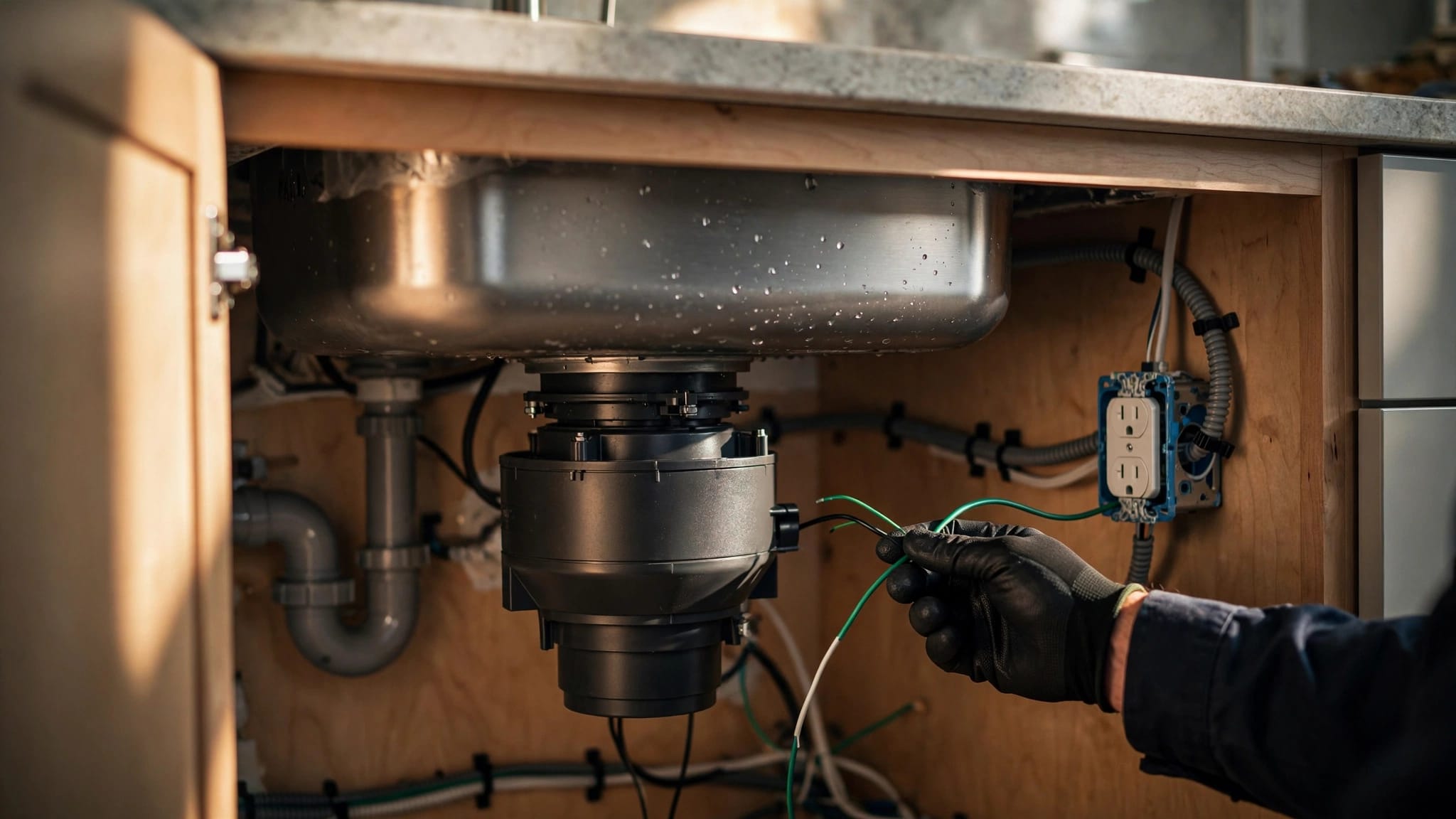
Massachusetts garbage disposal wiring must follow the electrical code assigned to the permit, applicable state amendments, and the disposal manufacturer's installation instructions. The requirements depend on the connection method, circuit load, protective devices, and existing wiring.
A working disposal doesn't prove that its electrical supply is safe or suitable for a replacement. Have a Massachusetts-licensed electrician design and install the connection because general guidance can't replace a project-specific code review . Start with the code edition that governs the work.
Key Takeaways
- Massachusetts uses 527 CMR 12.00, based on the 2026 National Electrical Code, for installations with permits granted after April 24, 2026.
- Covered sink-area receptacles, including those inside sink-supporting cabinets, require GFCI protection under the state amendments.
- Dwelling-unit circuits also need an AFCI review under the applicable provisions.
- Circuit capacity, connection methods, grounding, and controls must suit the disposal and its installation instructions.
- Electrical permits and inspections follow the statewide framework, but municipalities administer the local process.
Which Massachusetts Electrical Code Applies?
The permit date determines the code edition
The Department of Fire Services identifies Massachusetts' current electrical code as 527 CMR 12.00, based on NFPA 70, the 2026 National Electrical Code.
The adopted rule applies that edition to installations for which an electrical permit was granted after April 24, 2026 . An earlier permit may remain under the edition assigned to that project.
That distinction matters during a lengthy kitchen renovation. The date someone purchases a disposal or finishes the cabinets doesn't, by itself, establish which code edition governs the electrical work.
State amendments and local administration have different roles
Massachusetts amendments modify the national code for installations throughout the Commonwealth. Meanwhile, the local Inspector of Wires administers permitting, inspections, and project-specific approval.
Municipal application forms, fees, scheduling procedures, and inspection sequences can differ. Those administrative differences shouldn't be confused with amendments to the statewide technical requirements.
The electrician must account for both layers. The installation needs to satisfy the applicable code and equipment instructions while moving through the municipality's approval process.
GFCI and AFCI Protection for Garbage Disposal Wiring
GFCI protection applies to covered sink-area receptacles
The Massachusetts electrical code amendments require GFCI protection for covered receptacles within six feet of the top inside edge of a sink bowl. They also cover receptacles inside a cabinet that supports a sink.
The distance follows the shortest path the equipment's supply cord would take, subject to the amendment's rules about barriers and openings.
For a cord-connected disposal, the under-sink receptacle therefore deserves direct attention. GFCI protection reduces shock risk by detecting current flowing outside its intended path.
However, this receptacle requirement doesn't automatically establish the protection requirements for every hardwired disposal. That connection needs its own review under the applicable provisions.
AFCI protection addresses a different hazard
AFCI protection detects certain dangerous arcing conditions. It performs a different job than GFCI protection, so one doesn't automatically replace the other.
For dwelling units, Massachusetts' 2026 amendments address listed AFCI protection methods for 120-volt, single-phase, 10-, 15-, and 20-ampere branch circuits supplying outlets or devices. Application to disposal work depends on the installation and complete code provisions.
Where both protections apply, an appropriate dual-function breaker can provide both. The breaker must also be suitable for the panel and circuit arrangement.
A standard breaker, a GFCI device, and an AFCI device address different electrical hazards. One doesn't automatically provide the protection of the others.
Circuit Capacity and Shared Appliance Loads
The appliance rating guides circuit design
A disposal is a motor-driven appliance. Its nameplate and installation instructions provide information the electrician needs to select suitable conductors, overcurrent protection, and connection equipment.
Horsepower alone isn't enough to design the circuit. The electrician also evaluates the existing wiring, other connected loads, and applicable circuit rules.
Our guide to kitchen remodel circuit planning explains why appliance selection should happen before the electrical layout is finalized.
A higher-rated breaker isn't a remedy for a disposal that trips its existing breaker. Installing one without evaluating the wiring and equipment can create an overheating hazard.
Sharing with a dishwasher requires a designed arrangement
A dishwasher and disposal occupy the same general area, but proximity doesn't establish that they can share a circuit.
A shared arrangement must satisfy the applicable load restrictions, equipment instructions, and circuit requirements. In other installations, separate circuits are appropriate or necessary.
A new disposal connection shouldn't simply borrow power from whichever kitchen receptacle is closest. Required kitchen small-appliance circuits have restrictions on the loads they supply.
When both appliances are part of a renovation, our explanation of Massachusetts dishwasher wiring requirements covers the companion appliance's electrical considerations.
Connection Methods, Grounding, and Controls
Cord-connected and hardwired installations need suitable equipment
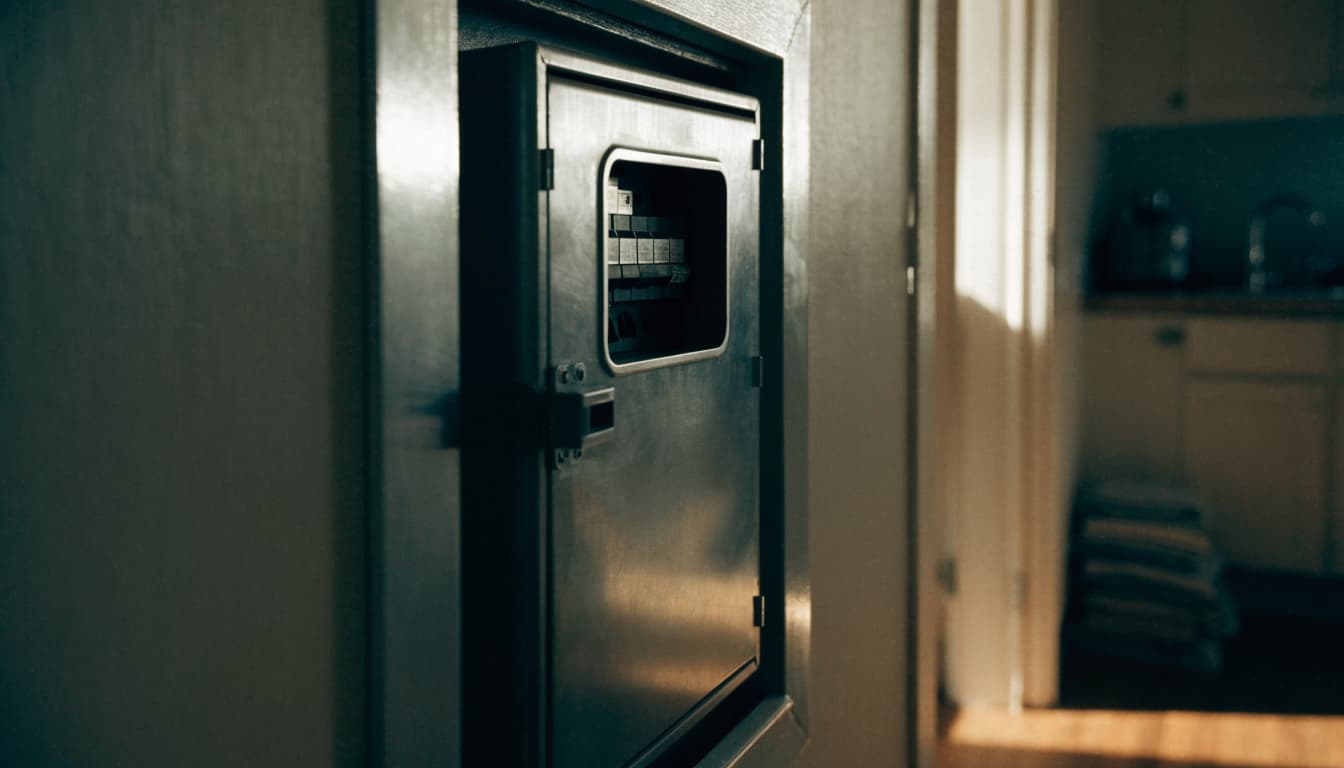
The permitted connection method depends on the disposal's listing, instructions, and applicable code. NEC 422.16(B)(1) addresses cord-and-plug connections for in-sink waste disposers.
A cord-connected installation needs a suitable cord assembly, grounding connection, and receptacle arrangement. Cord routing must avoid damage from cabinet doors, stored items, and sharp edges.
A hardwired installation needs an approved wiring method, secure enclosure connections, and proper grounding. Loose splices and unprotected cable entries don't become acceptable because they're hidden under a sink.
Neither connection method excuses inaccessible junction boxes or damaged wiring.
Switching and service disconnecting are separate considerations
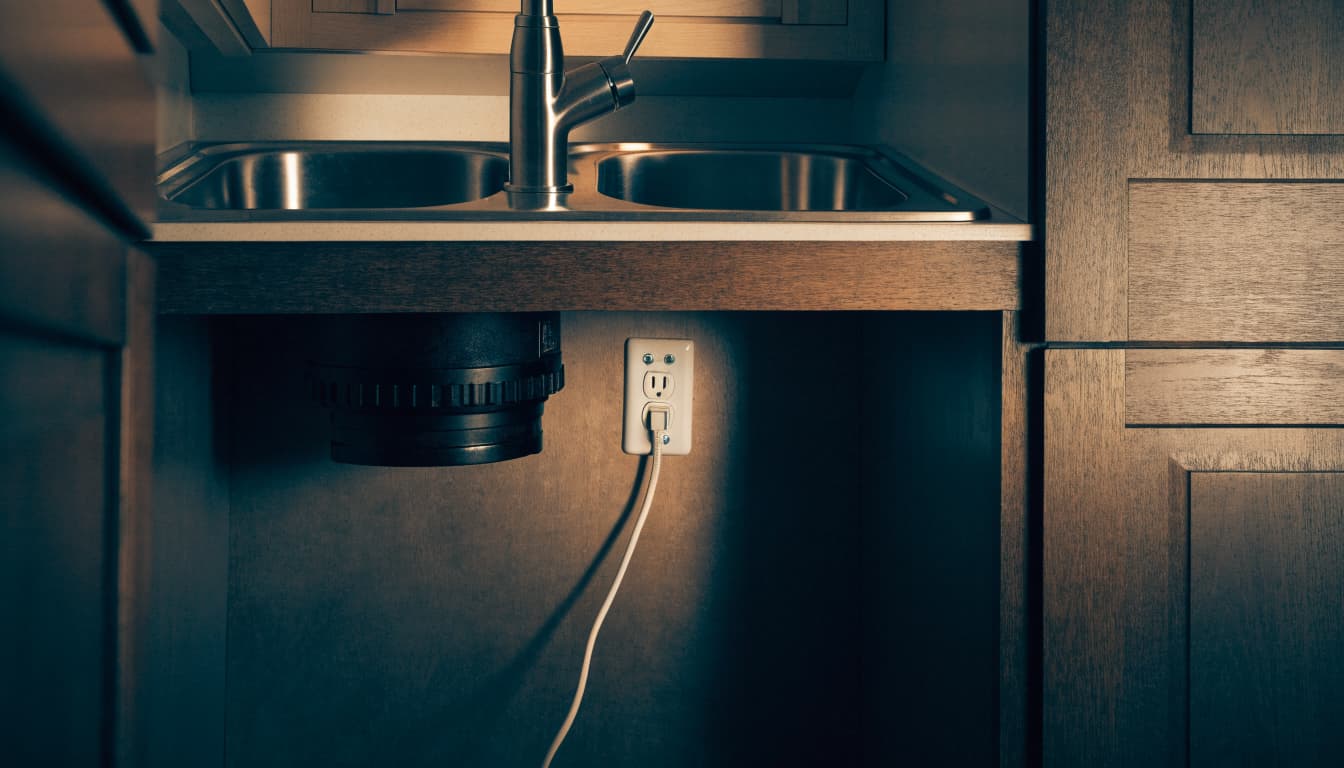
A wall switch or countertop air switch can control a disposal when the equipment and installation allow it.
An air switch uses a pneumatic button to operate an electrical control below the counter. However, it doesn't remove the need for a properly protected electrical supply.
The electrician must also provide a compliant way to disconnect power for servicing. A normal operating control doesn't automatically satisfy every disconnecting requirement.
Before servicing a disposal, disconnect its power using the appropriate method. Never rely on another person leaving the operating switch alone, and never reach into an energized unit.
Electrical Permits and Inspections in Massachusetts
Electrical work has its own permit process
New circuits, relocated receptacles, and altered disposal wiring generally require an electrical permit. A building or plumbing permit doesn't automatically authorize that electrical work.
The state electrical permit application addresses the local Inspector of Wires and identifies the proposed installation. It also allows the inspector to require additional installation details.
The permit holder coordinates the application and inspection requests through the municipality's process. Fees and scheduling aren't uniform statewide.
A simple appliance replacement and a new electrical installation can have different scopes. The licensed electrician should establish the electrical scope before work begins.
Inspection access must remain available
Massachusetts requires inspection before electrical installations are concealed. Therefore, new wiring inside walls needs the required inspection before drywall or other finishes cover it.
For kitchen work, cabinets can create similar access problems. A box that was reachable during rough-in may become inaccessible after drawers, fixed panels, or equipment are installed.
The statewide permit form references inspections under MEC Rule 10 and upon completion. The final review concerns the completed permitted installation, including relevant devices, connections, protection, and access.
Our guide to Massachusetts home electrical inspections describes the broader inspection process. Keep the permit and approval records with the property's renovation documents.
Plan the Under-Sink Layout Before Cabinets Arrive
Under-sink space often contains a disposal, drain piping, water valves, dishwasher hoses, and storage. Electrical placement needs to account for all of them.
Give the electrician the selected disposal's installation instructions and the cabinet layout before rough-in. The operating switch, receptacle, connection box, and any air-switch control equipment need suitable locations.
Also, cabinet installers need to understand which components must remain accessible. A removable storage bin differs from a fixed cabinet panel that blocks a junction box.
Existing leaks deserve attention before electrical work proceeds. Water damage, corrosion, missing covers, or a loose receptacle call for correction rather than reuse without assessment.
For restaurant or other commercial installations, residential assumptions aren't enough. Equipment ratings, the working environment, and the applicable non-dwelling provisions can change the electrical design.
Garbage Disposal Wiring FAQ
Can I use an extension cord for a disposal?
An extension cord isn't a substitute for permanent branch-circuit wiring. A disposal should connect through the wiring method and equipment permitted for that installation. If its supply doesn't reach the intended connection point, the electrician should correct the layout rather than add a temporary workaround.
Does the same horsepower mean replacement wiring is acceptable?
Matching horsepower doesn't establish electrical compatibility. Replacement models can differ in their ratings, cord arrangements, controls, and installation requirements. The existing circuit also may have damage or alterations unrelated to the old appliance. A replacement should include an assessment of the supply and connection, not only the mechanical fit.
What if the disposal repeatedly trips a protective device?
Stop using it until the cause is identified. A jammed motor, damaged insulation, moisture, or circuit problem can cause tripping, depending on the device involved. Don't bypass GFCI protection or repeatedly reset a breaker without addressing the fault. A licensed electrician can assess the electrical supply and distinguish wiring problems from appliance faults.
A Safe Installation Starts With the Circuit
Massachusetts garbage disposal wiring requirements depend on the permit's code edition, the installation method, circuit conditions, and manufacturer instructions. Proper protection and accessible connections belong in the original plan, before cabinet finishes limit access.
At Sirois Electric, we provide electrical installation and inspection services across Metro and Greater Boston. Have a licensed electrician handle the disposal's electrical connection so the finished installation fits the equipment, the kitchen, and the applicable requirements.