
Recessed Lighting Installation Cost in Greater Boston in 2026

Contact Us
A recessed lighting project can feel simple until the quotes come back. One electrician says a room will cost a few hundred dollars, while another gives you a number that is far higher.
That gap usually has a reason. Recessed lighting installation cost in Greater Boston depends on the home, the wiring, and how many lights you want in the room. Older houses, tight ceiling access, and panel limits can all change the price fast.
If you are comparing quotes now, the best move is to separate the price per light from the total project cost. That makes the numbers easier to read, and it keeps surprises to a minimum.
What recessed lighting costs in Greater Boston in 2026
For 2026, a realistic price in Greater Boston is $200 to $500 per recessed light for professional installation. Many homeowners land around $300 to $320 per light when the job is straightforward.
That range usually covers a normal ceiling, standard labor, and a basic fixture setup. It does not always include new wiring runs, dimmer upgrades, or ceiling repair.
Here is a practical way to think about the budget.
| Project size | Typical Greater Boston cost | What it often means |
|---|---|---|
| 1 light | $200 to $500 | Small job, simple access |
| 4 lights | $800 to $2,000 | Small room or short run |
| 6 lights | $1,200 to $3,000 | Common kitchen or living room layout |
| 8 lights | $1,600 to $4,000 | Larger room or multi-area install |
For many homeowners, a standard kitchen or living room lands around $1,800 to $3,200 when 6 to 8 lights are installed. That is a useful planning number, even before the electrician sees the space.
A quote only means something when the scope matches. Two bids can look close, but one may leave out wiring, dimmers, or patch work.
Why your price can rise or fall
No two homes in Greater Boston are built the same way, and that matters. A newer house with open attic access is usually easier to work in than a 90-year-old home with plaster ceilings and crowded framing.
Several things push the price up.
- Home age can add labor, especially if the existing wiring is old or the ceiling needs careful cutting.
- Electrical panel capacity matters because some homes need a panel upgrade or circuit changes before the lights go in.
- Ceiling type changes the labor. Drywall is easier than plaster, and sloped ceilings often take more time.
- Insulation and joist layout can make access harder. That slows the work and can change the housing type needed.
- Accessibility affects the crew's time. A finished basement, closed attic, or tight crawl space can add hours.
- Fixture quality changes material cost. Basic trims cost less than designer trims, airtight housings, or smart dimmable fixtures.
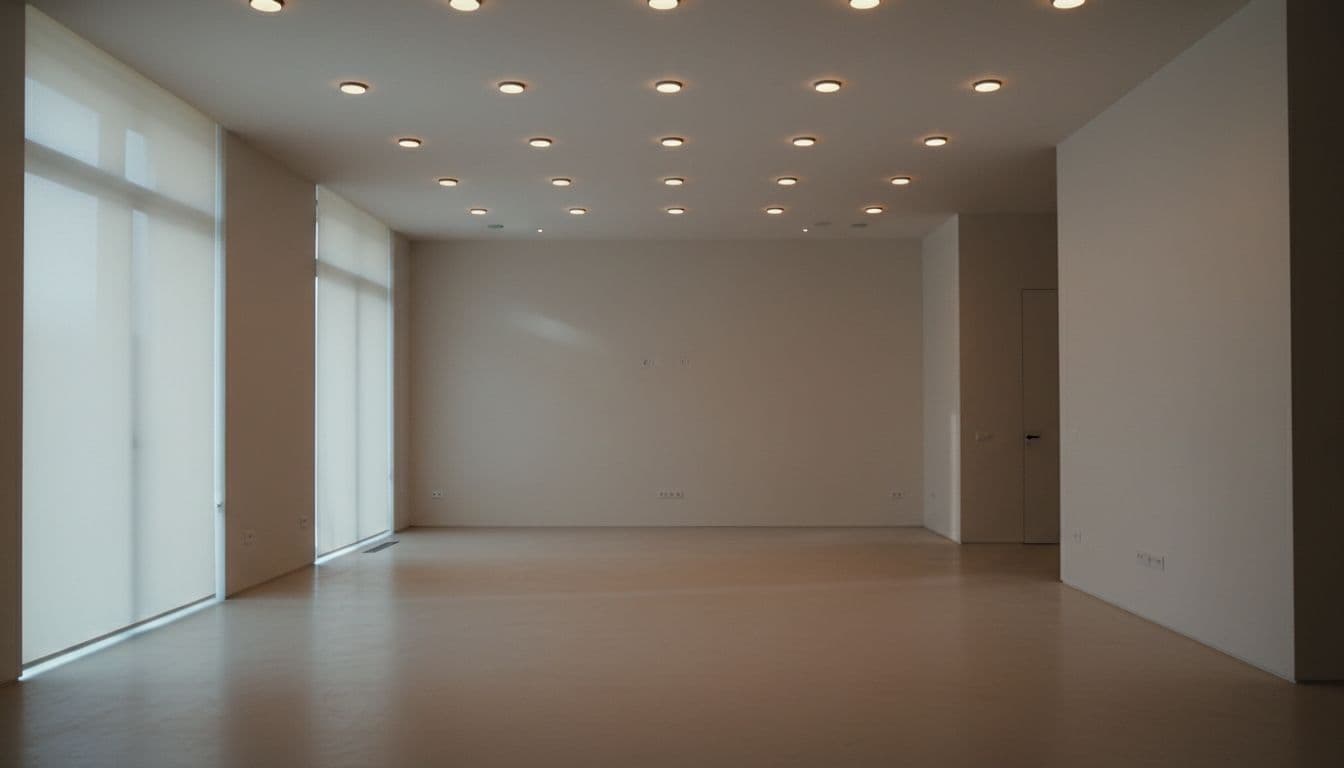
- Number of lights installed changes the unit price. More lights in one visit usually lowers the cost per fixture.
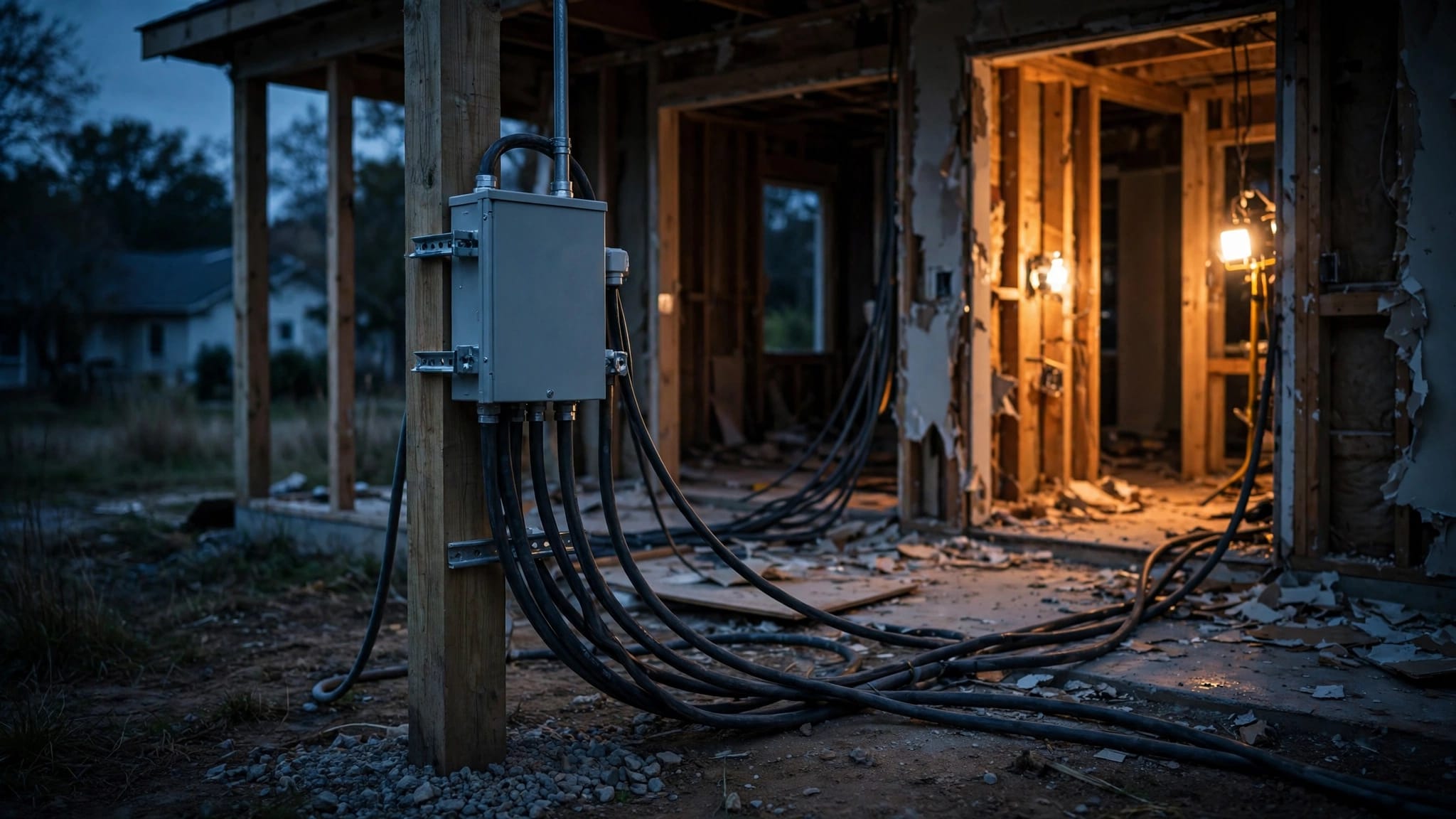
The second image gives a good sense of why labor matters so much.
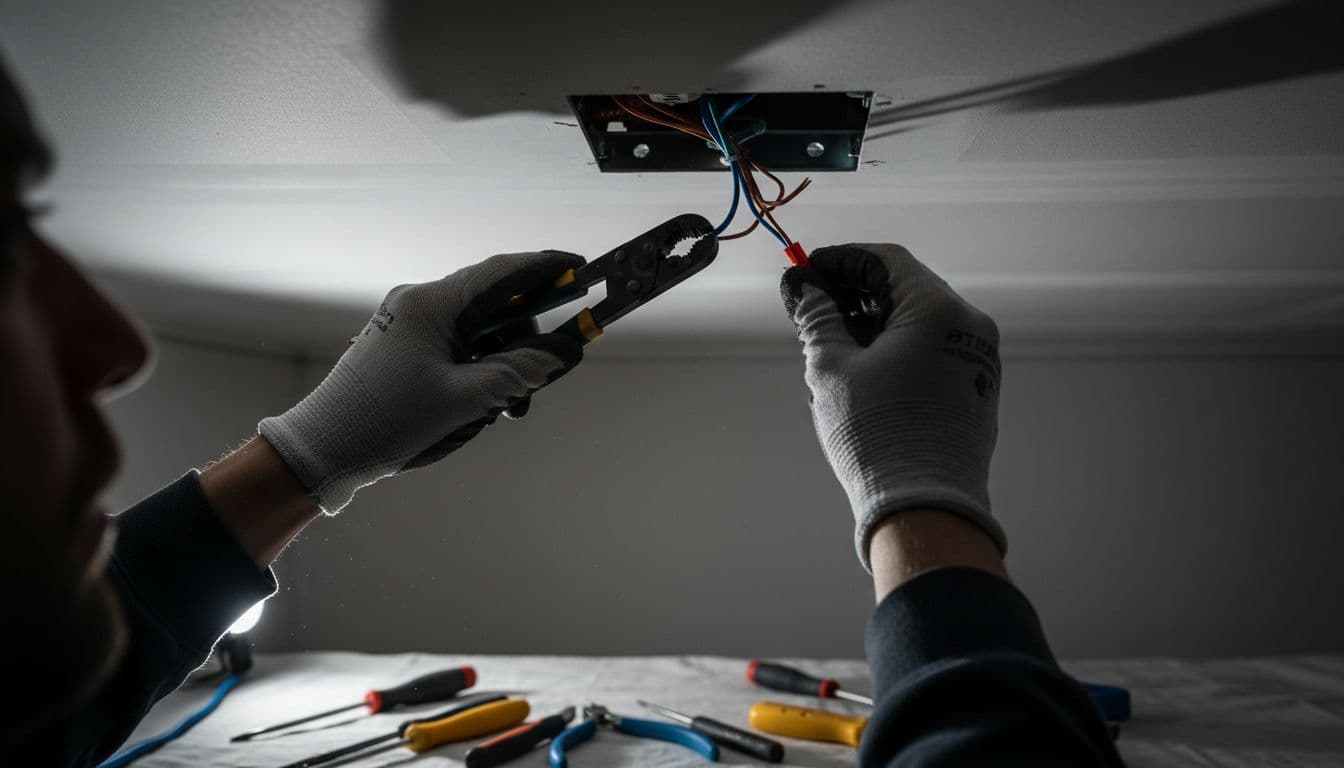
A simple rule helps here. The more the electrician has to open walls, fish wire, or work around old construction, the more the project costs.
What is usually included in the estimate
A solid recessed lighting estimate should tell you more than a single number. It should show what the electrician is actually doing in your home.
Most quotes include labor, basic materials, and installation of the light housing and trim. They may also include wiring from an existing circuit, a compatible switch, and cleanup after the job.
Ask whether the estimate includes:
- The recessed housing or retrofit kit
- Bulbs or integrated LED fixtures
- Wiring from the nearest safe source
- Dimmer or switch replacement
- Drywall patching or finish repair
- Permit costs, if the project needs one
That last point matters. Some projects are simple fixture swaps, while others involve new circuit work. If the scope changes, the permit and inspection process may change too.
The big question is not only "How much?" It is also "What work is included in that price?" That answer tells you whether the quote is complete or just a starting point.
How to compare quotes without getting burned
Comparing quotes is easier when you line them up side by side. Start with the scope, then look at the labor, then check the materials.
A quote from a licensed team that handles residential electrical services should explain how they will access the ceiling, what wiring they will use, and whether the panel can handle the load. If a bid leaves those points out, ask for details before you compare the price.
That same approach helps when you are replacing older fixtures with modern LED units. If you want a lower energy draw and cleaner light, ask about LED lighting installation and whether the fixture type changes the labor or material cost.
When you review bids, check for these differences:
- One quote may include new dimmers while another does not.
- One electrician may assume open attic access, while another sees a finished ceiling.
- One may price basic trim, while another includes higher-end fixtures.
- One may plan a short wire run, while another may need to add a circuit.
If the lowest bid looks tempting, pause and compare the details. A cheaper price can be fine, but only if the work is the same.
Ways to keep the project within budget
A few choices can lower the final bill without cutting quality. The simplest move is to install all the lights you want in one visit. That usually costs less per fixture than spreading the work out over several trips.
You can also save money by keeping the layout simple. Straight runs, standard trims, and existing circuits are easier to work with than custom placement or moved switches.
These steps help keep costs in check:
- Use the existing ceiling layout when possible.
- Choose standard LED trims instead of premium decorative options.
- Keep dimmer upgrades limited to the rooms that need them.
- Combine lighting work with other electrical projects only when it makes sense.
- Ask for an itemized quote so you can see where the money goes.
Older homes in Boston often need extra attention, but that does not mean every project has to spiral. A good electrician will point out where you can save and where you should not cut corners.
If your panel is near its limit, for example, it may be smarter to address that now instead of patching around it. The same goes for insulation, safety clearance, and fixture ratings. Skipping those details can cost more later.
Conclusion
For most Greater Boston homeowners, recessed lighting is best budgeted by the light, then checked against the full room price. In 2026, $200 to $500 per fixture is a realistic range, while many larger room projects land between $1,800 and $3,200 .
The final number depends on the home, the ceiling, the panel, and how hard the wiring is to reach. If you compare quotes by scope, not just by total, you will get a much clearer picture of the real cost.
A good lighting plan should fit the room, the house, and the budget. When those three line up, the result looks clean and feels worth it.