
Knob-and-Tube Wiring Risks in Greater Boston Homes

Contact Us
Old wiring shows up often in Greater Boston homes, and it can catch buyers and homeowners off guard. Knob-and-tube wiring is not automatically unsafe if it has stayed intact and untouched, but age, repairs, insulation contact, and modern electrical demand can change the picture fast.
That matters if you live in a triple-decker, a colonial, or any home built before the middle of the last century. It also matters if you are buying, selling, or planning a remodel. A careful inspection can separate a manageable issue from a bigger project.
What knob-and-tube wiring looks like in older homes
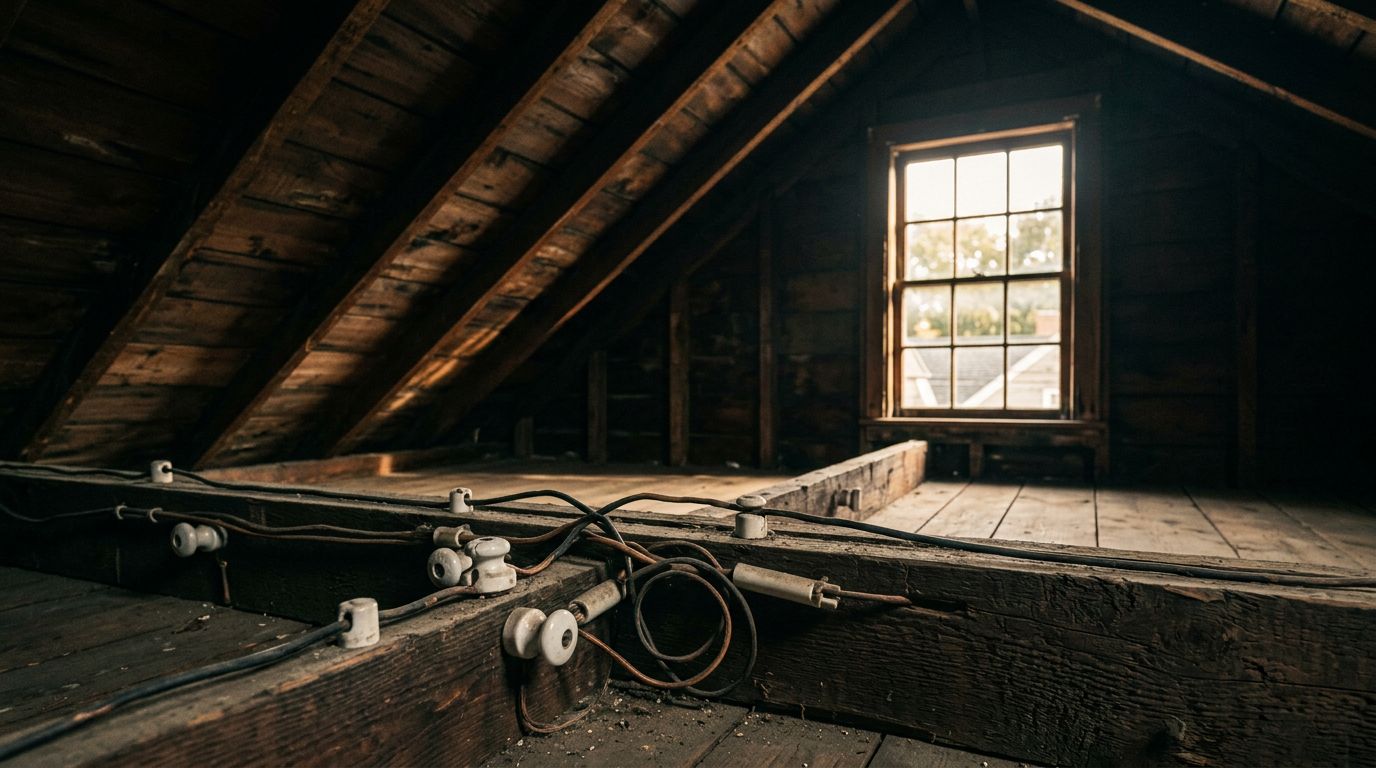
Knob-and-tube wiring is an early electrical system that used porcelain knobs to hold wires in place and porcelain tubes to protect wires passing through framing. You will usually see it in attics, basements, and wall cavities in older homes around Boston, Cambridge, Somerville, and nearby towns.
The system was built for a different time. Homes had fewer outlets, smaller appliances, and far less demand on each circuit. When the wiring is original, open to air, and still in good shape, it may continue to work. The trouble starts when age and later changes enter the picture.

Older homes often get updated in stages. A kitchen gets remodeled. A bathroom gets a new fan. A finished basement adds outlets. Each change can leave part of the old system in place, and that creates a mixed wiring setup. In those cases, the original wiring may still exist behind newer devices and drywall.
That is where a visual check is not enough. A neat-looking outlet can hide brittle insulation, unsafe splices, or overloaded circuits behind the wall. In a home with a lot of past work, the history matters as much as the appearance.
Why age and modern loads change the risk
Knob-and-tube wiring was designed for light electrical use. Today's homes ask more of every circuit. Air conditioners, microwaves, laundry equipment, computers, and chargers all draw more power than the system was built to carry.
The biggest concern is not one single flaw. It is the combination of old age and modern stress. The rubber or cloth insulation around the conductors can dry out and crack. Once that happens, exposed wire becomes more likely to short, spark, or overheat.
A second issue is grounding. Most knob-and-tube systems do not have a ground wire. That means they do not offer the same shock protection as modern wiring, and they are not a good match for many today's appliances and devices. Some fixes try to mask that gap, but a quick patch does not create a true grounded system.
Heat is another problem. Knob-and-tube wiring needs open air to cool. If insulation is packed around it, heat can build up in hidden spaces. That is one reason electricians take insulation contact so seriously in older homes.
If the wiring is old but untouched, it may still function. Risk rises when age, added load, and bad modifications all show up together.
Here are some warning signs that deserve a closer look:
- Frequent breaker trips or blown fuses point to circuits that are carrying too much.
- Warm outlets, switches, or cover plates can suggest loose connections or overload.
- Buzzing, crackling, or burning smells may mean heat is building somewhere hidden.
- Discolored walls or scorched plates are never a good sign.
- Lights that dim when a big appliance starts can point to an undersized or strained circuit.
These symptoms do not prove knob-and-tube wiring is the only problem. Still, they are enough reason to have a licensed electrician inspect the system.
How inspections, insurance, and home sales fit in
For Greater Boston homeowners, knob-and-tube wiring is often a practical issue before it becomes an emergency. It can affect insurance, mortgage approval, and the pace of a sale. That is why a general home inspection is only the first step.
A home inspector may note old wiring, but a licensed electrician can tell you what is active, what is abandoned, and what needs correction. If you are planning a purchase or a refinance, a targeted electrical review can save time and reduce surprises. A home electrical inspection in Greater Boston is often the right move when the age of the home or the condition of the wiring raises questions.
Insurance is another common sticking point. Some carriers want proof that the wiring is safe and properly maintained. Others may ask for repairs, a rewire, or at least a licensed inspection. Coverage decisions vary, so it helps to know what your insurer wants before the closing table or before a policy renewal.
For buyers, the lesson is simple. Do not assume a house with old wiring is a bad buy. Instead, treat it as a cost and timing issue. If the wiring is limited and in decent shape, a repair plan may be enough. If it is widespread, modified, or tied to outdated panels and circuits, the budget needs to reflect that.
Sellers should approach it the same way. A clean electrical report and clear repair records can make a big difference. Buyers feel better when they know a licensed electrician has looked at the system and explained the next steps in plain language.
Massachusetts homes also bring local permit and inspection considerations into the mix when electrical work is done. Panel changes, rewiring, and major circuit upgrades usually go through a permit process, and a final inspection is part of that path. That is normal. It protects the homeowner and helps confirm the work is done the right way.
When repair is enough, and when replacement makes more sense
Not every home with knob-and-tube wiring needs a full tear-out. That is an important point. If the system is isolated, still sound, and not buried under insulation, an electrician may recommend targeted repairs or careful monitoring instead of full replacement.
That said, full replacement becomes more likely when several issues stack up. The wiring may be brittle in many places. It may have unsafe splices added over the years. It may be mixed with modern wiring in a messy way. Or it may sit in areas that are already open for renovation, which makes replacement far easier than patchwork work later.
Replacement is often the better choice when:
- the wiring is widespread throughout the home
- the insulation is damaged or exposed
- there are unsafe extensions or taped splices
- the home needs more circuits for today's loads
- insurance, financing, or a sale depends on an upgrade
- you plan to open walls, finish a basement, or remodel a kitchen or bath
If you are dealing with any of those issues, a knob and tube rewiring service may be the most direct path forward. It gives the home a grounded, modern system that fits current use and reduces the chance of hidden problems later.
A licensed electrician can also help you phase the work. You may not need every circuit replaced at once. In some homes, the smart move is to start with the circuits that feed kitchens, baths, laundry areas, and heavy-use rooms. That keeps the project manageable while addressing the highest-risk areas first.
The right plan depends on the home, not on a blanket rule. A 100-year-old house that has been carefully maintained is a different case from a house full of patchwork repairs. That is why property-specific advice matters more than general claims.
Conclusion
Knob-and-tube wiring is part of the building history in many Greater Boston homes, but history alone does not tell you whether it is safe. The real question is how the system has aged, whether it has been altered, and how much demand it carries today.
If you are buying, selling, insulating, or planning upgrades, a licensed electrician should look at it before you make a decision. That single step can tell you whether the right answer is a repair, a partial upgrade, or a full rewire.
In the end, the goal is simple, a home electrical system that matches the way you live now, not the way people lived a century ago.