
Why a Three-Way Switch Works From Only One Location

Contact Us
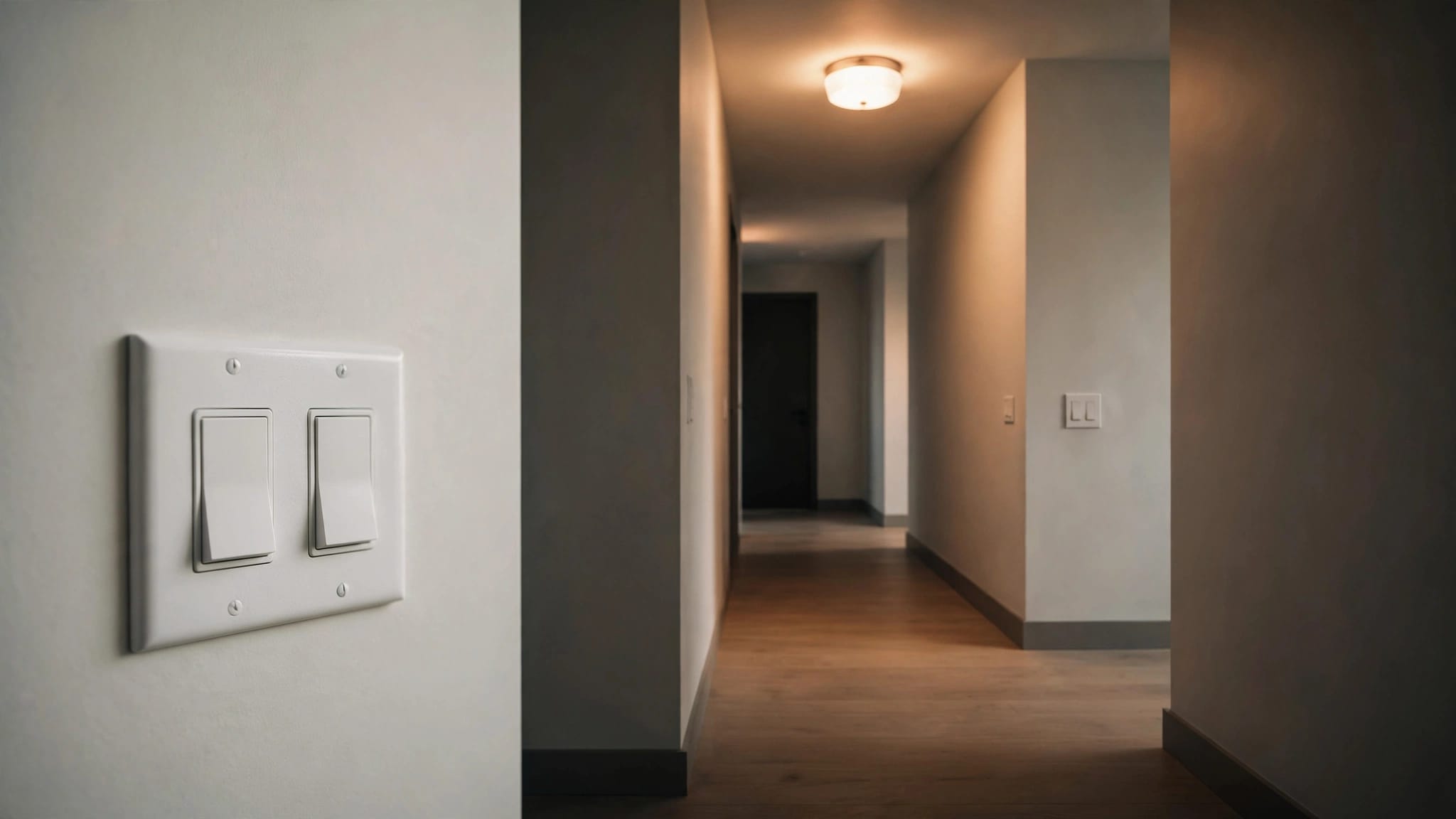
A three-way switch circuit is designed to control one light from two locations, such as opposite ends of a hallway. If one switch works and the other doesn't, a wiring mistake or a worn switch may be stopping the circuit from behaving as intended.
To troubleshoot a three-way switch, start with the symptom, not the wires. A few safe observations can help narrow down what changed, but switch-box wiring should be left to a licensed electrician if its connections aren't clear.
What two-location lighting should do
A standard three-way setup uses two switches to control the same fixture. Unlike a regular switch, neither three-way switch has a fixed "on" or "off" position. The light should respond when either switch changes position, regardless of where the other switch is set.
Inside each switch box, one terminal is called the common . The two traveler wires connect the switches, allowing the circuit to change paths when either switch moves. The common terminal is usually marked or has a darker screw than the traveler terminals, but wire colors alone don't reliably identify a conductor's role.
Three-way switch troubleshooting: common causes
A switch that works from only one location often points to a connection problem or a failed device. The timing can offer a useful clue. If the issue began right after a switch replacement, remodel, or lighting change, mention that when you call for help.
The common wire is on the wrong terminal
A three-way switch's common connection must be attached to the correct terminal. If someone connects that wire to a traveler terminal during replacement, the light may respond incorrectly or work only under certain switch positions.
The common wire isn't always the same color, and its location can vary between switch boxes. Don't guess based on color or on how a similar switch looks. A licensed electrician can identify the conductors and correct the connection safely.
A traveler connection is loose or misplaced
The traveler wires carry the switching path between the two locations. If one is loose, damaged, or connected to the wrong terminal, one switch may appear to have no effect. A poor connection can also cause intermittent operation.
A switch can fail internally as well. Its contacts wear over time, so a switch may stop reliably changing the circuit even when the other location still works. In some homes, a replacement switch may also be incompatible with an existing dimmer or multi-location control. Follow the device manufacturer's instructions rather than assuming every three-way device can replace every other one.
Safe checks before calling an electrician
You can gather useful information without opening a switch box. Try both switches in different positions and note whether the light responds consistently. Also record whether the problem started after a recent repair, fixture installation, or dimmer change.
Look for patterns, not wire colors
Notice whether the light stays off, works only with one particular switch position, or turns on and off unpredictably. Check whether the fixture uses a dimmer or smart control. Some dimmer systems require a compatible companion switch at the second location, and a standard three-way switch may not be a suitable replacement.
If the light flickers, the switch feels hot, or you hear buzzing, stop using it. Sparks, a burning odor, shocks, or repeated breaker trips require prompt attention. These are among the warning signs of electrical problems that shouldn't be ignored.
Keep the switch box closed
Don't remove the cover or touch conductors while power is on. Before any work inside a switch box, turn off the circuit at the breaker and verify that power is off with a properly functioning tester. A switch being in the off position doesn't make its wiring safe to touch.
If you can't identify the correct breaker or aren't sure how to test for voltage, leave the box closed. Never keep flipping a switch that sparks, buzzes, or feels unusually warm.
When to call a licensed electrician
Call a licensed electrician if the wiring is unclear, the problem persists, or the circuit began acting up after previous work. The electrician can inspect the common and traveler connections, check whether either switch has failed, and determine whether a dimmer or other control is compatible with the setup.
A professional may also look beyond the switches if other lights or outlets are acting strangely. A broader inspection can assess wiring and devices across the home, including through a home electrical inspection in Greater Boston. For a switch that needs repair or replacement, see our outlet and switch installation and replacement.
Key takeaways
- Both switches in a three-way circuit should control the same light.
- A miswired common terminal, loose or misplaced traveler, or faulty switch can limit control to one location.
- Switch positions and wire colors don't prove that wiring is safe.
- Turn off power at the breaker before any switch-box work, and contact a licensed electrician if the wiring is unclear or the issue continues.
Frequently asked questions
Can a three-way switch work from one location if the other switch is bad?
Yes. A failed switch or a poor connection can prevent one location from changing the light, while the other still appears to work. The symptom alone doesn't identify which part has failed.
Should I replace the switch myself?
Only if you can safely identify the circuit and wiring, and you understand the device instructions. Because a three-way switch has a common terminal and traveler connections, guessing can make the circuit less reliable or unsafe. If anything is unclear, stop and call an electrician.
Conclusion
A three-way switch should control a light from either location. When it doesn't, a miswired common, a traveler connection, or a worn switch may be the cause, but the wiring needs proper identification before anyone attempts a repair.
Keep the box closed if you're unsure, turn off power before electrical work, and contact a licensed electrician when the fault persists.