

15-Amp vs 20-Amp Circuits for a Kitchen Remodel

Contact Us
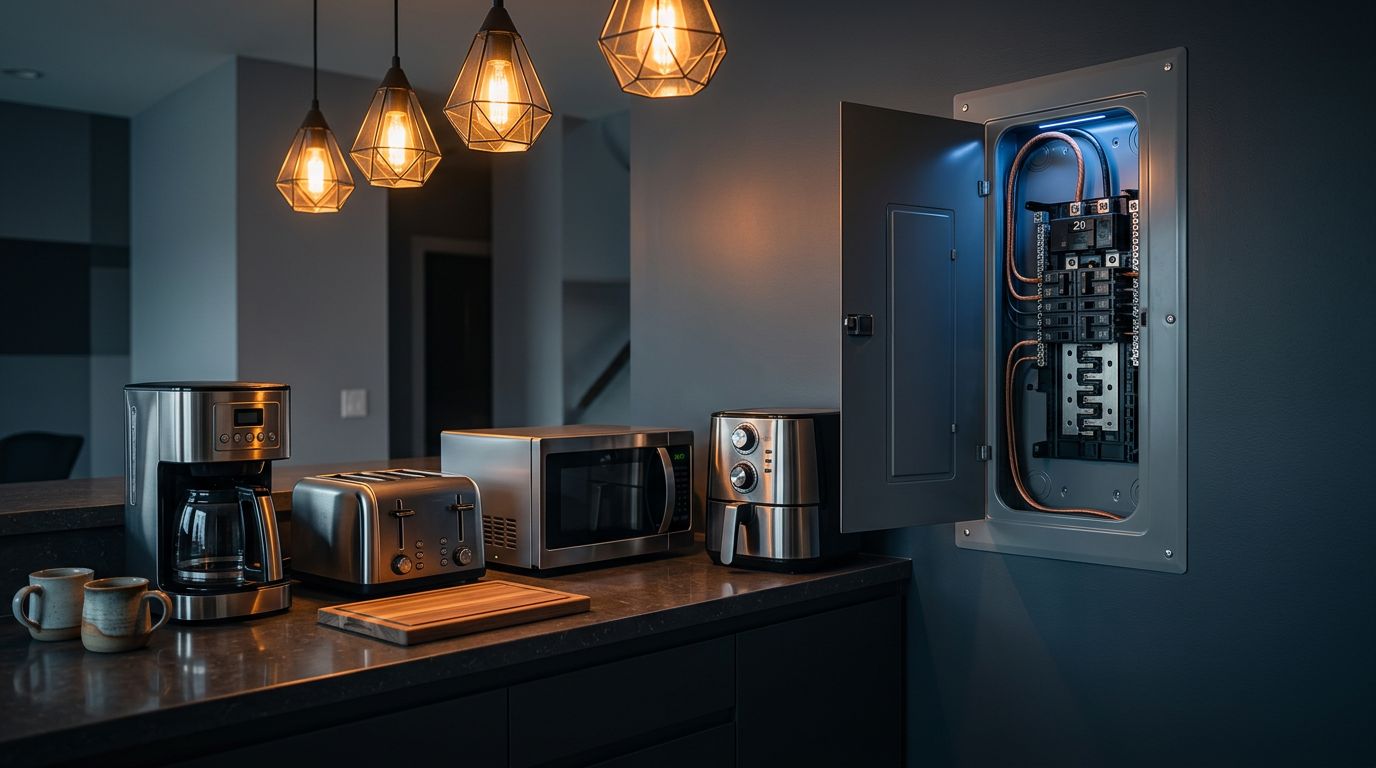
A kitchen remodel can look finished on paper and still fall short in daily use if the wiring is undersized. The difference between 15-amp and 20-amp circuits sounds small, but it affects what you can plug in, how often a breaker trips, and how much flexibility you have later.
That matters most in kitchens, where coffee makers, toasters, microwaves, air fryers, and mixers can all show up at once. Local electrical code requirements also vary, so the right answer for your home should always be confirmed with a licensed electrician or your local authority.
Key Takeaways
- A 15-amp circuit usually uses 14-gauge copper wire and a 15-amp breaker.
- A 20-amp circuit usually uses 12-gauge copper wire and a 20-amp breaker.
- Kitchens often benefit from 20-amp circuits because countertop appliances draw a lot of power.
- Many remodels need dedicated circuits for specific appliances, not one shared line for everything.
- Code rules vary by location, so your final layout should be checked before drywall goes up.
What really changes between 15-amp and 20-amp circuits
The breaker size is the easiest place to start. A 15-amp circuit has a 15-amp breaker, and a 20-amp circuit has a 20-amp breaker. That breaker size matches the wire, because the wire has to carry the current safely.
For typical copper wiring, a 15-amp circuit usually uses 14-gauge wire , while a 20-amp circuit usually uses 12-gauge wire . The thicker wire on the 20-amp circuit can handle more current without heating up as quickly. That extra capacity gives you more room when multiple appliances are running, which is common in kitchens.
Here is a simple comparison.
| Feature | 15-amp circuit | 20-amp circuit |
|---|---|---|
| Breaker | 15 amps | 20 amps |
| Typical copper wire | 14-gauge | 12-gauge |
| Common kitchen use | Lights, lighter loads, some single-purpose circuits | Countertop outlets, many small appliances, dedicated appliance circuits |
| Theoretical 120-volt capacity | 1,800 watts | 2,400 watts |
That wattage number helps explain why 20-amp circuits matter. A 15-amp circuit can handle less total demand before it becomes strained. In a kitchen, where loads stack up fast, that lower ceiling can become a nuisance. A 20-amp circuit gives you more breathing room and usually better long-term flexibility.
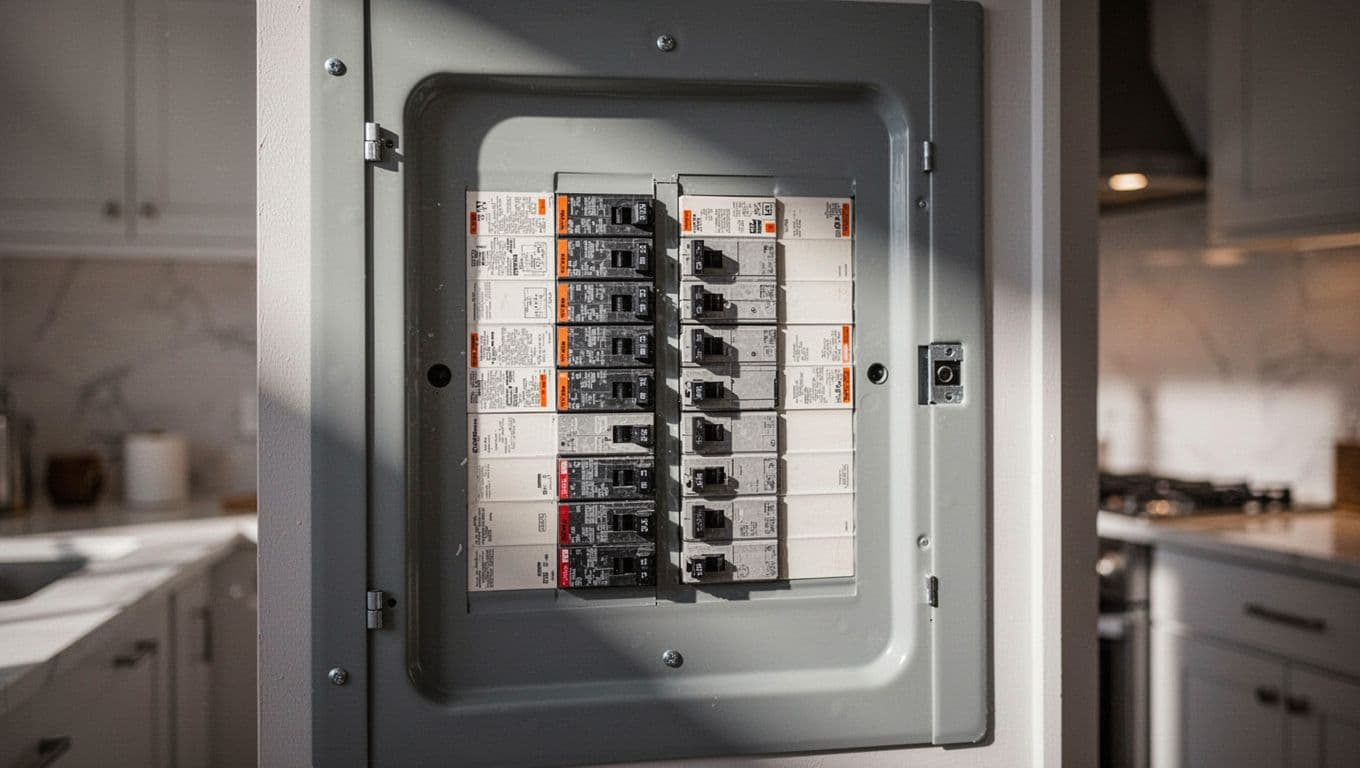
The practical point is simple. If a circuit will only run a light load, 15 amps may be fine. If it will feed busy kitchen receptacles, 20 amps is often the smarter choice.
Which kitchen appliances belong on 20-amp circuits
Kitchen counters are where electrical demand piles up. A toaster, coffee maker, and microwave can easily be in use at the same time. Add a blender or air fryer, and a modest circuit starts to feel stretched.
That is why many kitchen remodels use 20-amp circuits for countertop receptacles . In many homes, this setup is expected for the small-appliance circuits that serve the work areas. If you're sorting out outlet placement and countertop rules, the common kitchen electrical installation questions page is a useful companion.
A kitchen circuit that seems fine during the walkthrough can trip the first time breakfast, lunch prep, and dish cleanup happen at once.
Certain appliances also benefit from their own dedicated line. That includes many built-in or fixed appliances, depending on the model and the local code. Common examples include:
- Microwaves, especially built-in units
- Dishwashers
- Garbage disposals
- Refrigerators, when the manufacturer or design calls for a dedicated circuit
- Toaster ovens, air fryers, and induction countertop appliances
- Stand mixers and heavy food prep equipment in busy kitchens
Manufacturer instructions matter here. Some appliances have a dedicated circuit requirement in the installation manual, and that instruction overrides casual guesswork. A new remodel is the right time to follow that guidance, because changing it later is more expensive.
How to plan kitchen wiring around real-world use
The smartest kitchen electrical plan starts with how the space will actually work. Think about where the appliances will sit, how many people cook there, and which devices you use at the same time. A small galley kitchen with light cooking habits has different needs than a large family kitchen with multiple countertop appliances.
When 15 amps still makes sense
A 15-amp circuit can still fit in a kitchen remodel when the load is light and the circuit has a narrow job. It may work for lighting, a hood with modest demand, or certain dedicated loads that do not pull much power. In some remodels, it also fits when the existing wiring is already in place and the circuit is being reused for a low-demand purpose.
That said, 15 amps leaves less margin. If a circuit is meant to support busy countertop use, a 15-amp setup can become the weak link. Breakers trip more often, and the kitchen feels less forgiving when multiple devices come on at once.
When 20 amps is the better fit
A 20-amp circuit usually makes more sense for countertop receptacles, especially in kitchens where several small appliances run close together. It also gives you better protection against nuisance trips when a microwave, coffee maker, and toaster are all part of the same morning routine.
This is also where remodel planning matters most. If you are opening walls anyway, it is much easier to install the right wire size, breaker, and outlet layout now than to patch the problem later. A kitchen that feels overbuilt on day one often feels perfectly normal five years later.
A quick way to think about the choice
If the circuit will support shared kitchen use , lean toward 20 amps. If it will support a light, specific load, 15 amps may be enough. The deciding factors are the appliance list, the outlet layout, and the code rules that apply where you live.
Mistakes that cause trouble after the remodel
Most kitchen wiring problems come from small planning misses, not dramatic failures. A circuit that looks fine on a drawing can become frustrating once the room is in daily use.
The biggest mistake is putting too many outlets and appliances on one circuit. Another common problem is keeping old 14-gauge wiring when the new kitchen load really calls for 12-gauge wire. That mismatch can turn a simple upgrade into a repeat service call.
Homeowners also run into trouble when they assume every appliance can share the same branch circuit. Refrigerators, dishwashers, disposals, and microwaves often have separate expectations. If the plan ignores those details, the finished kitchen may fail inspection or need rework.
A final mistake is treating code as a guess. Kitchen receptacle placement, GFCI protection, AFCI requirements, and dedicated-circuit rules can all vary by location and project scope. A licensed electrician can review the layout before rough-in, which is the best time to make changes.
Conclusion
The difference between 15 amps and 20 amps is not just a number on a breaker. In a kitchen remodel, it changes how comfortably the room handles everyday life, especially when several appliances run at once.
For many kitchens, 20-amp circuits are the better fit for countertop use and dedicated appliance loads. Fifteen amps can still work in the right place, but the circuit has less room to breathe.
Before the walls close up, have the layout checked against the appliances you plan to use and the code that applies in your area. That step keeps the kitchen safe, practical, and ready for real cooking instead of just a staged walkthrough.