

Hot Tub Wiring Requirements Before Installation Day

Contact Us
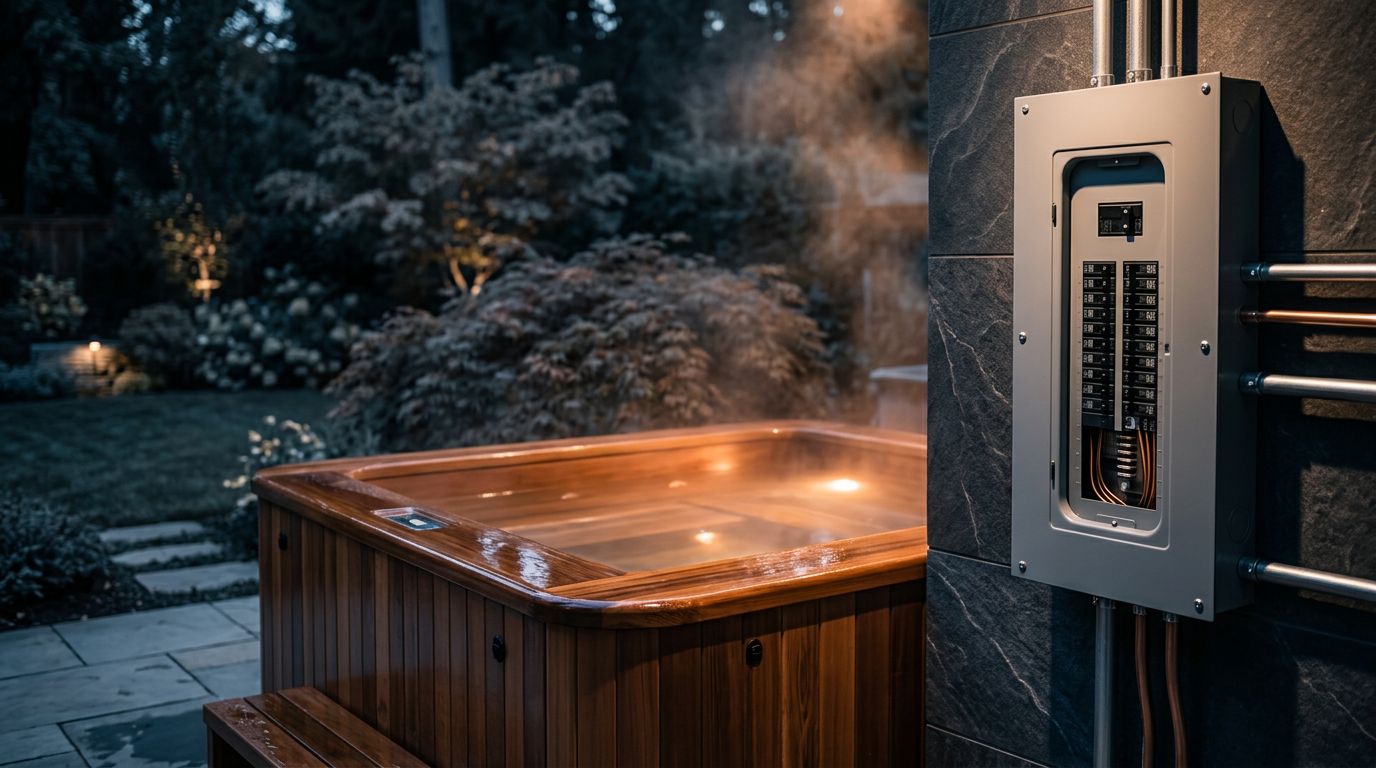
Hot tubs feel simple on the surface, until wiring day arrives and the install stalls. The right setup depends on the spa's voltage, amperage, distance from the panel, and your local code. Manufacturer specs matter too, and they can override general advice.
If you're getting ready for a new spa, the smartest move is to confirm the hot tub wiring requirements before the delivery truck shows up. That keeps the project moving and helps you avoid last-minute changes that can get expensive fast.
Key Takeaways
- Most hot tubs need their own circuit, not a shared outlet.
- Many full-size spas use 240 volts, while some smaller models use 120 volts.
- Your electrical panel needs enough space and enough capacity before installation day.
- The disconnect location, clearances, and permit rules matter just as much as the breaker size.
- The spa manual and local electrical code must be followed, even when general advice says something else.
What Most Hot Tubs Need Electrically
Most hot tubs need their own circuit. They also need ground-fault protection, which helps shut power off fast if water and electricity create a problem. A spa is a wet appliance, so shared circuits are a poor fit.
A quick comparison helps make the differences easier to see.
| Common spa type | Typical electrical setup | What to confirm |
|---|---|---|
| Smaller 120V unit | Dedicated outdoor receptacle with protection | Can it run on its own circuit without sharing loads? |
| Standard 240V spa | Hardwired circuit with a disconnect | What amperage, breaker, and wiring does the manual call for? |
| Larger spa with extra features | May need more panel space or a service review | Does the home have enough capacity for the added load? |
The manual decides the final details. A spa with extra pumps, a larger heater, or a different control pack can need a different breaker size or wiring path, even when the cabinet looks similar to another model.
That is why a licensed electrician should review the model number, not just the brochure photo. Local code matters as much as the manufacturer sheet, and sometimes it is stricter.
A nearby outdoor outlet is not automatically enough, because the tub still needs the exact circuit its label calls for. If the spa is built for a dedicated 240-volt feed, there is no safe shortcut around that requirement.
Check the Panel Before Installation Day
The panel should be checked before the tub ever arrives. Breaker space matters, but so does the amount of power the home can spare. If the service is already busy with a range, heat pump, EV charger, or finished-basement circuits, a hot tub can push it close to the limit.
If you already suspect the service is tight, assessing home electrical capacity for upgrades gives you a better framework for the conversation. That kind of review helps you separate a simple circuit addition from a bigger service issue.
An older panel can create other problems too. Corrosion, outdated breakers, or limited room for a GFCI device can slow the project down. Even when the tub is ready, the house may not be.
The goal is not to oversize everything. The goal is to match the spa to the home's electrical system without forcing the panel to do too much. A clean installation starts with enough room for the new load and enough margin for the rest of the house.
If the panel is already crowded, your electrician may need to talk about a load calculation, a panel replacement, or a service upgrade before installation day. That part is easy to overlook, but it is often where delays begin.
Where the Tub Sits Matters More Than People Expect
Location affects wiring more than many homeowners expect. The shortest path is not always the best one, because the circuit still has to meet code, stay protected, and leave room for future service.
The electrician may need access to the side yard, basement wall, crawlspace, or deck structure. A pretty placement can turn into a complicated run if the route crosses obstacles or needs trenching. In some yards, the tub location is fine and the disconnect location is the real puzzle.
Measure the pad area, the distance to the panel, and the route a technician would use to service the system later. Also leave room for the cover to open, the equipment to breathe, and the disconnect to stay reachable. A tub that feels tucked in can become a headache if no one can get to the control gear without climbing over furniture or plants.
Decks, fences, shrubs, and patio walls all affect the plan. So do stone paths, finished basements, and tight utility areas. One backyard may need a simple circuit run. Another may need trenching, conduit, or minor exterior work before the wiring can even begin.
Questions to Ask Before the Crew Arrives
Before installation day, ask for clear answers to a few questions. If the electrician can answer them early, the schedule usually goes smoother.
- Does this spa need 120 volts or 240 volts?
- What amperage does the manufacturer call for?
- Will the job need a GFCI breaker, a disconnect, or both?
- Does the panel have enough space and capacity?
- Is a permit or inspection required in my town?
- Will the route need trenching, conduit, or other exterior work?
Those answers tell you whether the project is a simple circuit addition or a larger electrical job. They also help you compare quotes fairly, because one bid may include work the other one leaves out.
It helps to ask about timing too. If the electrician needs a panel upgrade, a trench, or an inspection, the spa delivery date may need to shift. That is much easier to adjust before the truck backs into the driveway.
A good installer will also talk through access, weather, and any site conditions that could affect the work. If something in the yard looks cramped or unstable, bring it up early. Small issues are easier to solve before the tub is on the pad.
What to Have Ready on Installation Day
Once the plan is set, clear the work area. Move patio furniture, trim access paths, unlock gates, and keep pets indoors. If the technician needs to reach the panel, make sure the area is open and easy to work around.
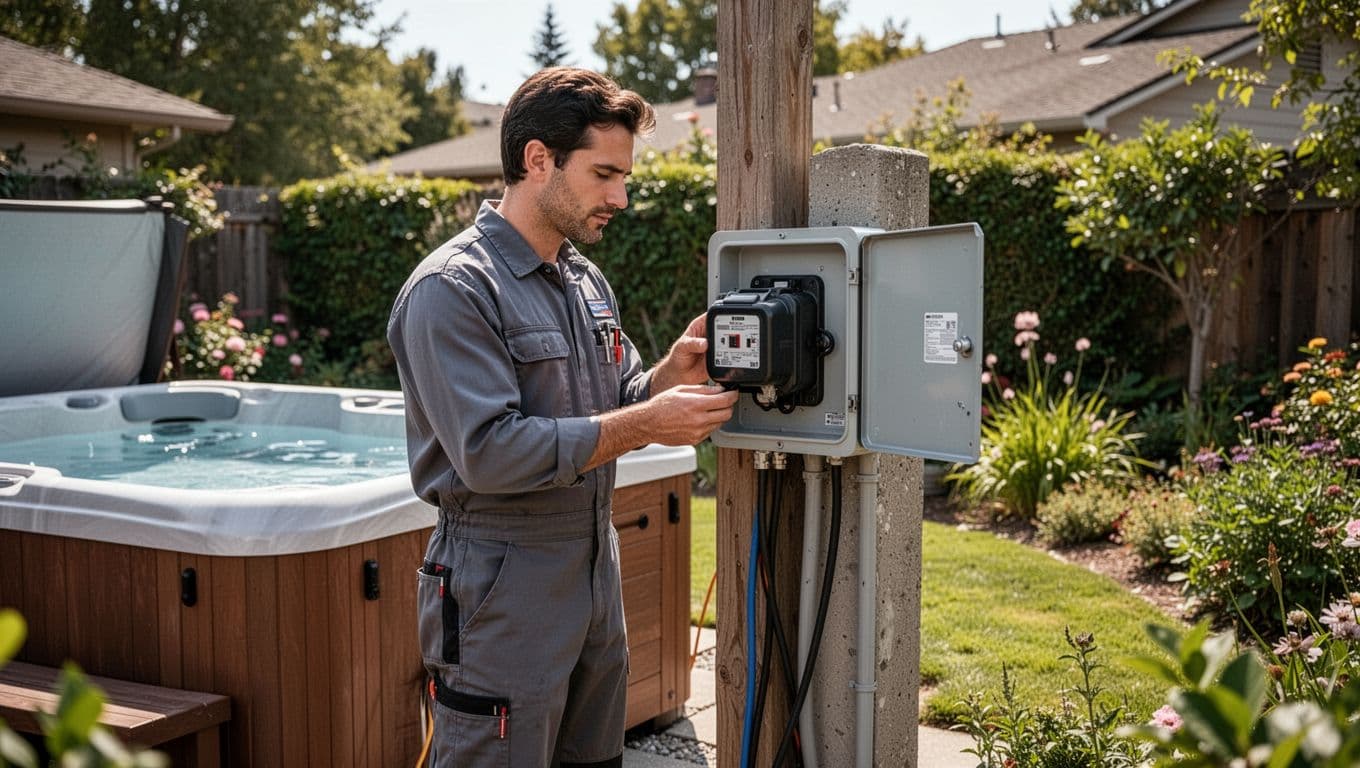
Have the manual, model number, permit information, and any site notes ready. If the electrician needs to confirm the disconnect location or inspect the tub pad, those details save time. A clean site and a clear paper trail make the day feel organized instead of rushed.
Weather matters too, especially in a yard that sees rain, mud, or snow. Dry footing and enough light help the crew work safely, and they also make it easier to move equipment without damage. If part of the job depends on outdoor access, plan for that ahead of time.
It also helps to know who can make decisions on site. If the crew has a question about the exact tub position or access route, someone should be available to answer it. That keeps the work moving and avoids unnecessary back-and-forth.
Conclusion
Hot tub wiring gets easier when you treat it like a planning project, not a delivery-day surprise. The panel, circuit, location, and permit all have to line up before the spa arrives.
The safest approach is simple, follow the spa manual, follow local electrical code, and let the electrician confirm anything that affects the final layout. Once those details are settled, installation day turns into a straightforward step instead of a stressful one.
The better the prep, the smoother the first soak.