
Can a Smart Switch Work Without a Neutral Wire?

Contact Us
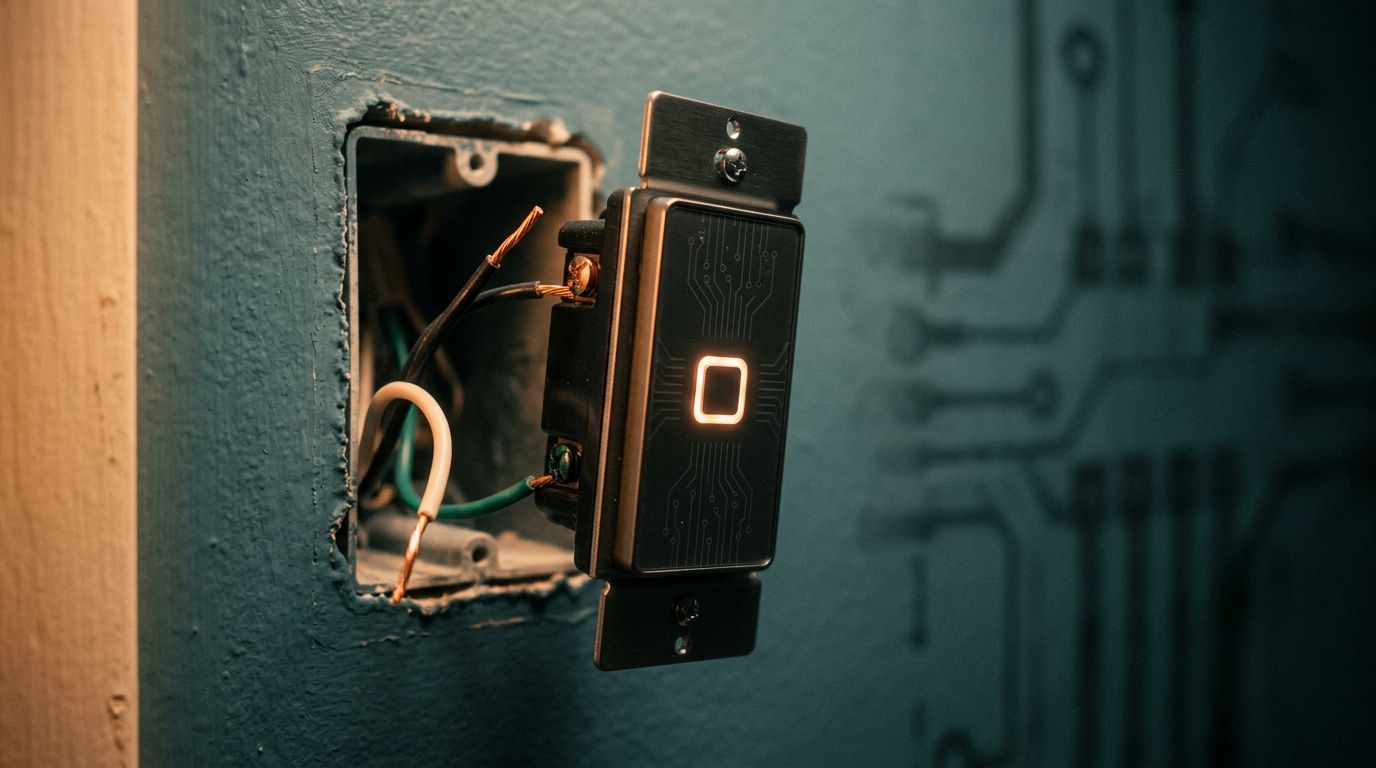
A smart switch without a neutral can work, but only if the switch is designed for that setup. The neutral wire gives many switches a steady path for power, so when it is missing, the switch has to use a different design.
That difference matters a lot in real homes. Wiring varies by house age, the switch box, and the light fixture on the circuit, so the same model can work fine in one room and fail in another.
Key Takeaways
- Standard smart switches usually need a neutral wire to power their electronics.
- No-neutral smart switches use alternate designs, but they can be pickier about the load.
- Flickering, dim glow, or delayed shutoff often points to compatibility issues.
- Some no-neutral models need a bypass, a minimum load, or a hub.
- If the wiring is unclear, shut off the power and call a licensed electrician.
How Smart Switches Use Power
A regular wall switch only opens or closes a circuit. A smart switch does that too, but it also needs power for its radio, processor, and control features. That extra power is why the neutral wire matters so much.
In a typical switch box, the neutral wire acts as the return path for current. Without it, many smart switches would have no steady way to stay powered while controlling the light. They might work for a moment and then act unstable, or not work at all.
Older homes often have switch boxes without a neutral because the wiring was done before smart controls were common. Newer homes usually have more complete wiring in the box, but that still depends on how the circuit was run. A homeowner can't tell by age alone.
What a No-Neutral Smart Switch Changes
A no-neutral model does not create a neutral wire. It works around the missing wire with a different internal design. Some draw a tiny amount of current through the light load. Others use a capacitor, a relay, or a companion device at the fixture.
Here is the basic difference:
| Feature | Standard smart switch | No-neutral smart switch |
|---|---|---|
| Neutral wire | Required | Not required |
| Power path | Uses neutral for constant power | Uses an alternate power method |
| Best fit | Homes with modern wiring | Homes without neutral in the switch box |
| Common issues | Fewer compatibility problems | Flickering, minimum load limits, bypass needs |
| Extra gear | Usually none | May need a bypass, hub, or bridge |
That table gives the short version. The long version is simple too, no-neutral switches can work well, but they ask more from the rest of the circuit.
If a no-neutral switch is paired with a low-wattage LED load, trouble can start fast.
Lights may flicker, glow faintly when off, or turn on with a delay. Dimming can also be uneven if the switch cannot get enough current to stay stable. Some products list a minimum load, which means the circuit must draw enough wattage for the switch to behave correctly.
Hub dependency is another thing to watch. A few no-neutral systems rely on a hub or bridge for communication and stability. That can be fine if you want the features, but it adds another piece to install and troubleshoot.
When Wiring and Load Cause Trouble
If a smart switch acts strange after installation, the wiring and the light load are the first places to look. A homeowner might blame the switch, but the issue often comes from the circuit itself.
Watch for these signs:
- The light flickers when it turns on or off.
- The bulb glows a little when the switch is off.
- The switch feels slow or unreliable.
- Dimmer control jumps instead of fading smoothly.
- The app works, but the light does not behave the same every time.
LED bulbs are a common source of trouble because they use so little power. One bulb on a circuit may not meet the switch's minimum load. A bypass device can help in some cases, but it has to match the switch and the fixture.
The switch box also matters. Some boxes are crowded, which leaves little room for modern devices and wire connectors. If the box is shallow or the wiring is old and brittle, the job gets harder fast. In that case, residential electrical panel upgrades may come into play if the larger system needs attention too.
Safe Installation Matters More Than Convenience
Power should be shut off at the breaker before any switch work begins. Then the circuit should be tested to confirm it is dead. A switch position is not proof of safety.
If you open the box and you are not sure which wire is which, stop there. A neutral wire can be bundled with other whites in the back of the box, or it may be missing entirely. That is normal in some homes, and it is one reason guesswork is a bad idea.
A licensed electrician can check whether the home needs a true no-neutral model, a bypass, a new cable run, or a different solution. That is especially important if the switch controls a ceiling fan, a multi-way circuit, or a lighting load that already behaves oddly.
Conclusion
Yes, a smart switch can work without a neutral wire, but only with the right model and the right circuit. The easy part is buying the switch. The harder part is matching it to the wiring, the load, and the way the light actually behaves.
If the box is older, crowded, or unclear, treat that as a warning sign, not a challenge to push through. A little caution up front is far cheaper than chasing flicker, failure, or a risky install later.