
Can Space Heaters Share a Circuit Safely?

Contact Us
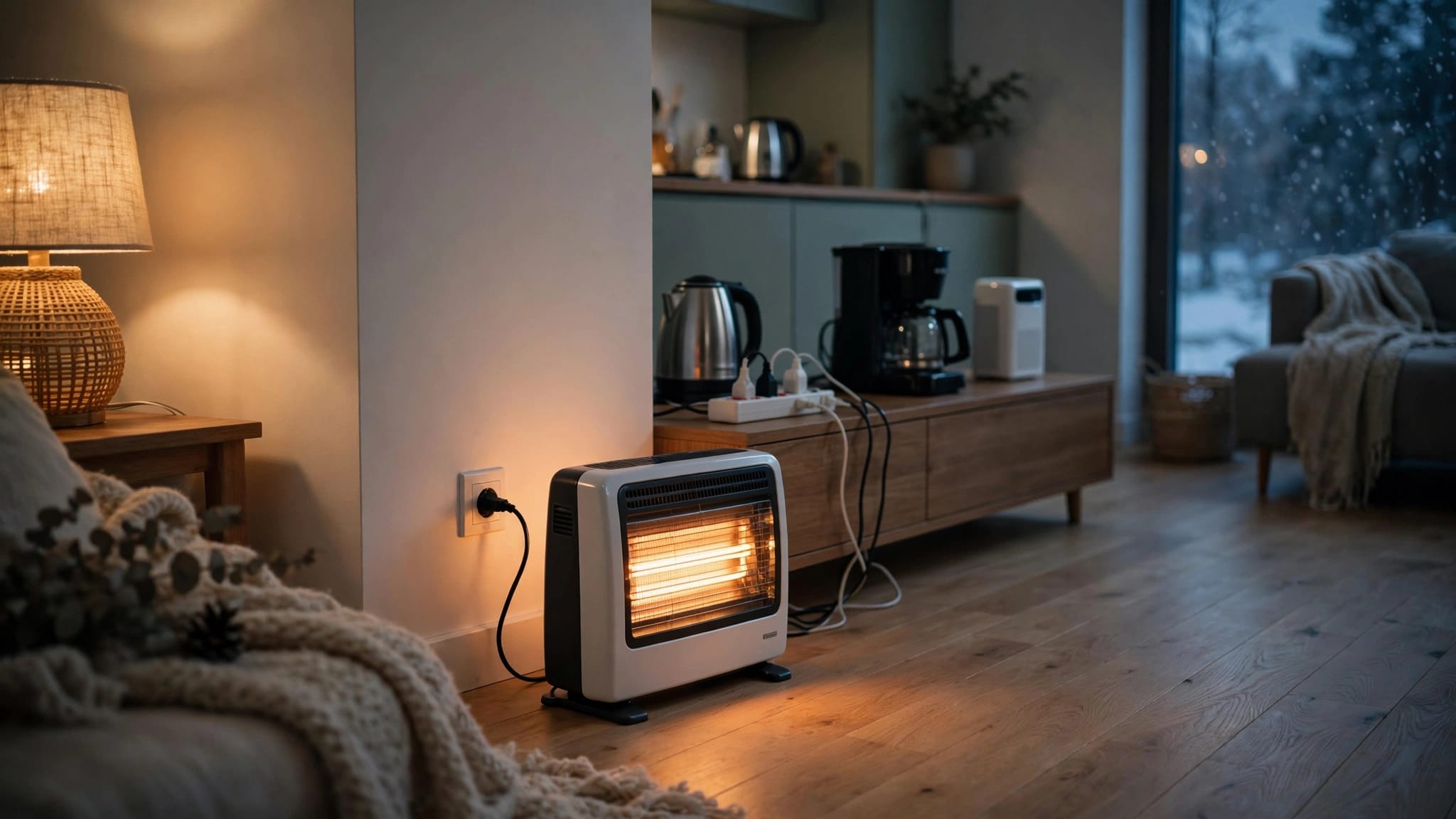
Yes, a space heater can share a branch circuit with other appliances if the total electrical load stays within the circuit's capacity. However, that doesn't mean you should run a heater alongside other high-wattage devices. A space heater circuit needs to account for every appliance drawing power from it, not just what's plugged into the nearest outlet.
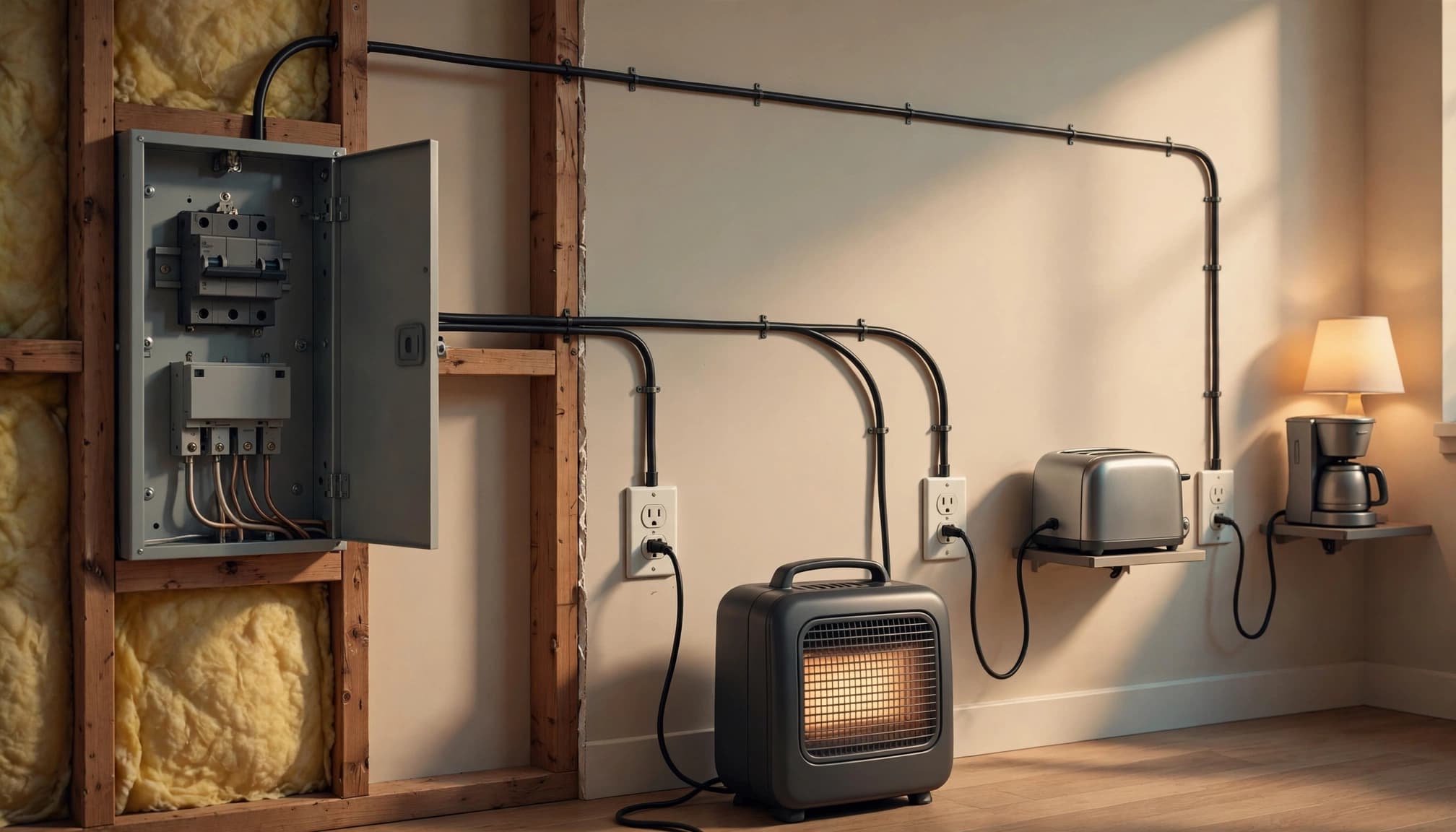
The receptacle and the circuit are related but different: two separate outlets may connect to the same circuit. Understanding that distinction helps you use a heater more safely.
Can a space heater share a circuit with other appliances?
Sometimes. The answer depends on the heater's power draw, the circuit rating, and what else is running on that circuit. A heater may plug into one outlet while other devices draw power from outlets elsewhere in the room.
Receptacle guidance is not circuit guidance
The NFPA's electrical safety guidance recommends using only one heat-producing appliance, such as a toaster, coffee maker, or space heater, at a receptacle outlet at a time. It also advises against extension cords and plug strips.
That advice concerns appliances sharing one receptacle. It doesn't mean every appliance on a branch circuit must have a separate circuit. Still, if a heater and another high-wattage appliance share the same circuit, their combined demand matters even when they use different outlets.
Add up the appliances that may run together
A microwave, hair dryer, toaster, or vacuum can draw substantial power. If the heater and another high-demand appliance run at the same time, the circuit may be carrying more load than its rating allows. Small devices draw less individually, but several of them can add up.
How much capacity does a space heater circuit have?
Check the heater's label or manual for its wattage and voltage. A common 1,500-watt heater rated for 120 volts draws 12.5 amps , calculated by dividing watts by volts.
What the 15-amp and 20-amp figures mean
At 120 volts, a 15-amp circuit has a nominal capacity of 1,800 watts. A 1,500-watt heater leaves 300 watts of theoretical capacity for other loads. On a 20-amp, 120-volt circuit, the nominal figure is 2,400 watts, leaving 900 watts after the heater's draw.
Those are basic calculations, not guarantees that the remaining capacity is safe or available. Other connected appliances, the circuit's wiring and condition, and the heater's listed requirements all affect what can run together.
Use the heater's own rating
Not every portable heater draws 1,500 watts. A lower setting may reduce the load, while a different model may have a different rated draw. Use the heater's nameplate and manual as the starting point, then consider the other appliances on the circuit.
How to reduce risk when using a space heater
A safe setup starts with the product instructions and a suitable receptacle. Avoid improvised connections, and don't assume that an outlet in another part of the room belongs to a separate circuit.
Use a suitable wall receptacle
Plug the heater into a suitable receptacle rather than an extension cord or plug strip. Don't connect a toaster, coffee maker, or another heat-producing appliance to that same receptacle while the heater is in use. Keep the heater's cord and the appliance clear of damage, rugs, and objects that can block airflow.
Pay attention to what else is running
If you don't know which outlets share a circuit, avoid running the heater alongside other high-wattage appliances in the area. In older homes, a circuit labeled for one room may also supply outlets or lights elsewhere. Dedicated circuits for high-demand appliances can help when several heavy loads compete for the same supply.
When a separate circuit may make sense
A separate circuit may be appropriate when the heater's instructions call for one, when several high-demand appliances share the existing circuit, or when the circuit can't support the combined load. A dedicated circuit can prevent unrelated appliances from competing with the heater, but a 1,500-watt portable heater doesn't automatically require one in every home.
If a breaker trips repeatedly, lights dim, or an outlet feels warm, stop treating the issue as a routine inconvenience. Have a licensed electrician assess the load and wiring. Our page on why circuit breakers keep tripping covers common causes and when an electrical evaluation may help.
Key takeaways
- A heater may share a branch circuit only when the combined load is within its capacity.
- NFPA recommends one heat-producing appliance per receptacle at a time.
- A 1,500-watt, 120-volt heater draws 12.5 amps.
- Use the heater's nameplate and manual, and avoid extension cords and plug strips.
Frequently asked questions
Can I run a space heater and toaster at the same time?
Avoid plugging both into the same receptacle. If they're on separate outlets but the same circuit, their combined load still matters. Both are heat-producing appliances, so avoid running them together when you aren't sure the circuit can handle the demand.
Does every space heater need a dedicated circuit?
No universal rule in the guidance cited here requires every portable space heater to have its own circuit. The heater's instructions, its electrical rating, and the other loads on the circuit determine whether a separate circuit is appropriate.
Does a lower heat setting make sharing a circuit safe?
It may reduce the heater's draw, but it doesn't establish that the circuit can safely support the other appliances. Use the heater's rated information and account for the full load.
Choose the circuit based on the full load
A space heater may share a circuit, but the answer depends on more than the outlet it uses. Account for the heater's rating and every appliance that may run at the same time. When the load or circuit condition is uncertain, an electrician can evaluate the wiring and recommend a safe setup.