

Massachusetts bedroom AFCI requirements explained

Contact Us
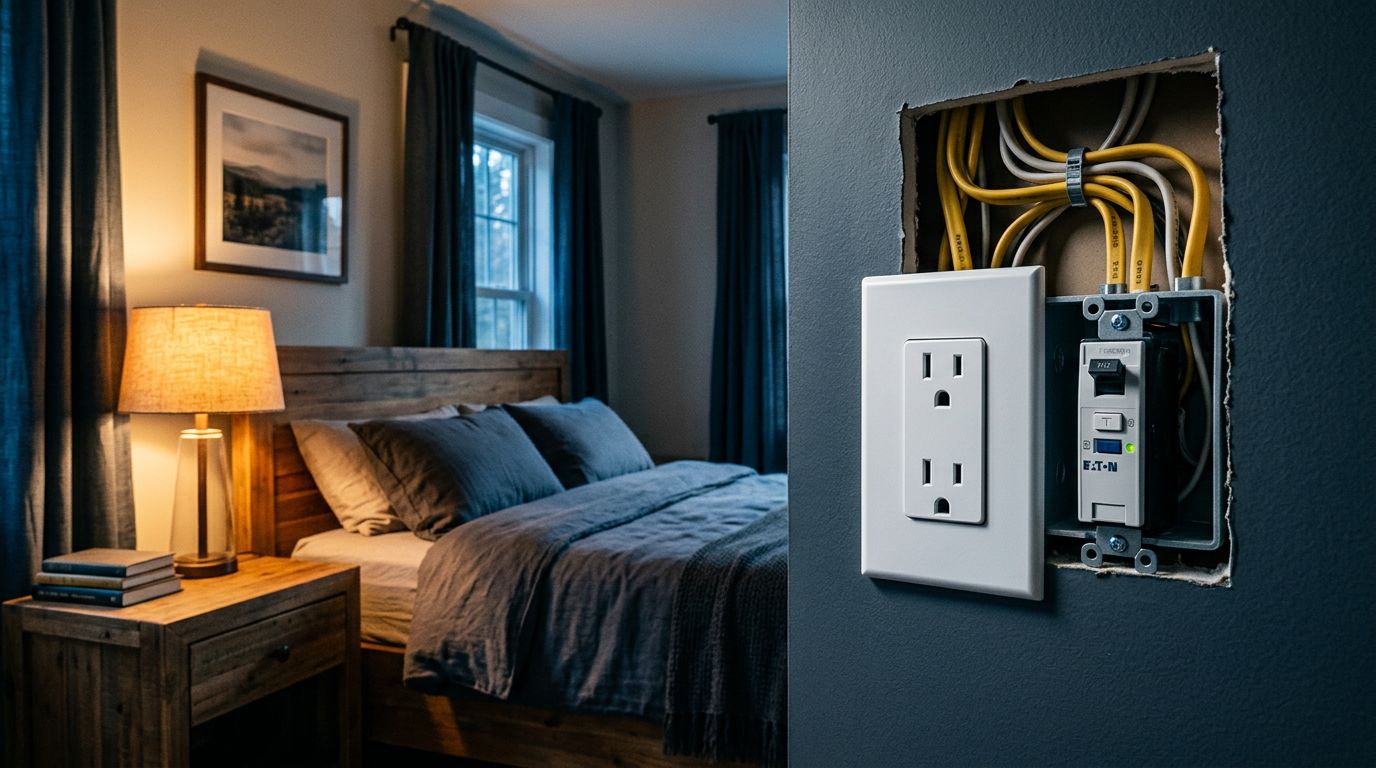
An electrical fault behind a wall can create heat before anyone notices a problem. That's why Massachusetts bedroom AFCI requirements cover many of the circuits that power outlets, lights, and other devices in sleeping areas.
The short answer is yes for covered new or altered circuits, but Massachusetts does not automatically require every older bedroom to be rewired. The result depends on the home's age, the circuit work being performed, the current code edition, and the local inspection requirements.
Massachusetts bedroom AFCI requirements: the direct answer
Massachusetts follows an NEC-based electrical code through 527 CMR 12.00. Under the current code framework, 120-volt, single-phase, 10-, 15-, and 20-ampere branch circuits supplying outlets or devices in dwelling-unit bedrooms generally require AFCI protection.
For most homeowners, that includes ordinary bedroom circuits serving:
- Wall receptacles used for lamps, chargers, televisions, or other equipment.
- Ceiling lights, wall switches, and ceiling fans.
- Smoke alarms and other permanently connected devices.
- Other outlets or electrical devices supplied by the bedroom branch circuit.
An AFCI, or arc-fault circuit interrupter, watches for electrical patterns that can indicate dangerous arcing. Arcing can develop when a wire is damaged, a connection loosens, insulation breaks down, or a cord becomes pinched. If the device detects a hazardous pattern, it disconnects power before the fault can heat nearby materials.
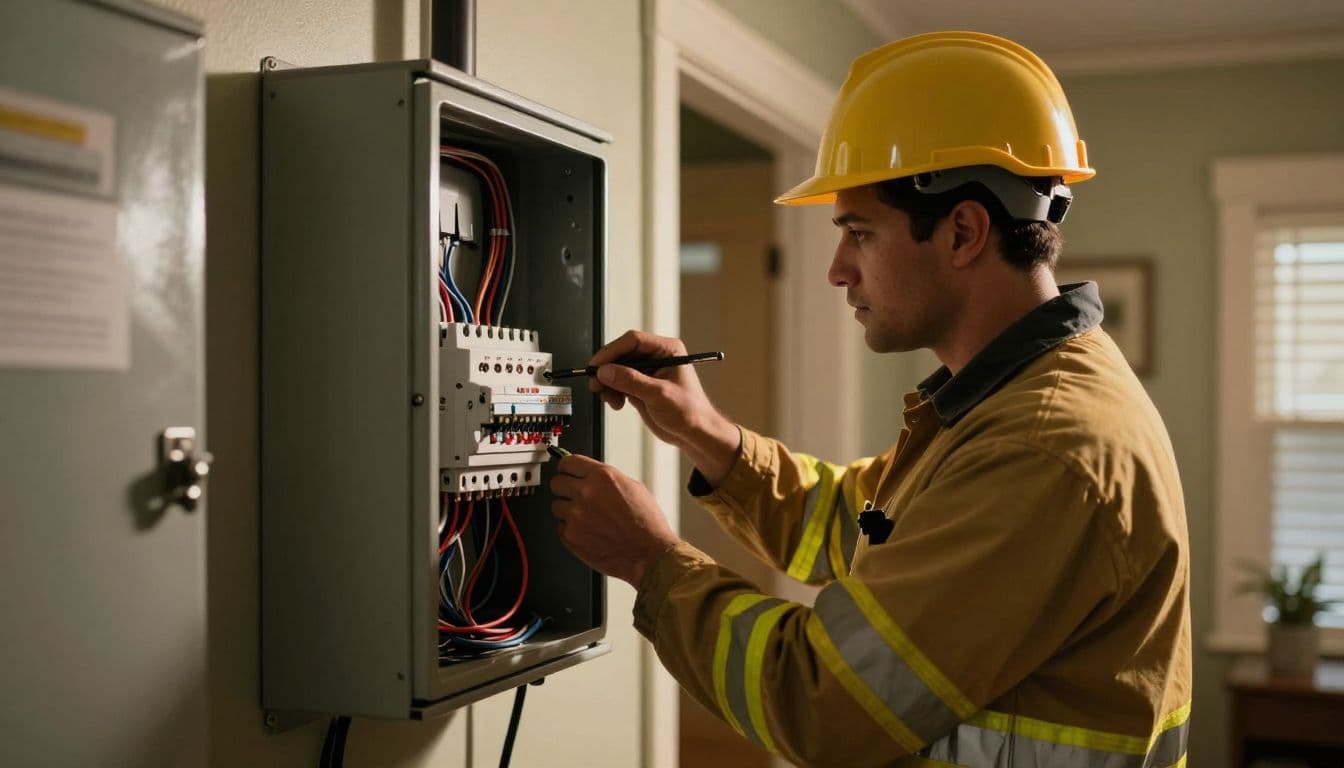
Massachusetts bedroom AFCI requirements usually apply to the branch circuit, not only to the receptacle closest to the bed. A circuit that supplies several bedroom outlets and lights may need protection at the panel or through another code-approved method.
The state's current code also reaches beyond bedrooms. Depending on the applicable edition and project scope, AFCI rules cover listed areas such as living rooms, dining rooms, family rooms, dens, libraries, sunrooms, recreation rooms, closets, hallways, and laundry areas. You can review the current state framework through the Massachusetts Electrical Code information page.
A current AFCI rule for new work does not automatically mean every unchanged circuit in an older Massachusetts home must be retrofitted.
What bedroom circuits and outlets need protection?
AFCI protection follows the circuit's function. If a branch circuit supplies an outlet or device in a covered bedroom, the circuit generally falls within the AFCI requirement for new construction and qualifying electrical work.
That distinction matters because homeowners sometimes assume only bedroom receptacles need protection. A bedroom lighting circuit can also fall under the rule. So can a circuit supplying a hardwired smoke alarm, ceiling fan, or combination of outlets and lights.

A bedroom may also share a branch circuit with an adjacent area. For example, one circuit might supply a bedroom receptacle, a hallway light, and a closet light. When that circuit supplies a covered bedroom outlet or device, an electrician will usually evaluate the entire branch circuit for AFCI protection.
The amperage and voltage matter. The bedroom rule concerns 120-volt, single-phase branch circuits within the listed ampere range. Larger 240-volt equipment circuits are evaluated under different provisions. A licensed electrician must identify the circuit type instead of relying only on the breaker handle label.
AFCI protection is also different from GFCI protection. A GFCI responds to current flowing along an unintended path, such as through a person. An AFCI responds to patterns associated with arcing. Some locations and equipment may require both types of protection, and listed dual-function devices can provide both when the installation allows them.
When work on an older home triggers AFCI changes
Massachusetts bedroom AFCI requirements are most likely to affect you when you build, remodel, replace, or extend electrical wiring. New homes and additions typically receive AFCI protection as part of the original installation. Renovation work can bring existing circuits under newer requirements when the work changes the branch circuit.
Common examples include:
- Adding bedroom receptacles or lighting.
- Extending a circuit into a finished attic, basement, or addition.
- Moving a receptacle to a new wall location.
- Replacing branch-circuit wiring during a remodel.
- Installing new smoke alarms or other devices on an existing circuit.
- Rewiring a room after water, fire, or other damage.
Under the NEC language used in Massachusetts, modified, replaced, or extended branch-circuit wiring in covered areas generally requires AFCI protection. A limited extension may qualify for an exception when it is no more than 6 feet long and adds no new outlet or device. Conductors inside an enclosure, cabinet, or junction box do not count toward that 6-foot measurement.
That exception is narrow. An electrician still needs to confirm whether the work qualifies and whether another code provision applies. A longer extension, a new receptacle, or a circuit change usually requires a closer AFCI review.
A panel replacement is not automatically a full bedroom retrofit
Replacing an electrical panel often leads to questions about every circuit in the home. A panel change can trigger a permit and inspection, but it does not automatically mean that every existing bedroom circuit must be upgraded to current AFCI standards.
The answer depends on the project scope, the condition of the wiring, the panel and breaker compatibility, and the local inspector's requirements. If the electrician is also changing branch-circuit wiring, adding circuits, or correcting unsafe conditions, AFCI protection may become part of that work.
A larger renovation may also expose a separate service-capacity issue. If you're adding heat pumps, an EV charger, an electric range, or other high-load equipment, review the electrical service upgrade cost in Greater Boston before approving a panel plan. AFCI protection and service capacity address different problems, but both can affect the right electrical design.
How electricians install and test AFCI protection
A combination-type AFCI breaker at the electrical panel is common in Massachusetts homes. The breaker protects the branch circuit and its connected outlets or devices. In some installations, a listed outlet-branch-circuit AFCI receptacle at the first outlet can provide protection when the wiring arrangement meets code and the manufacturer's instructions.
The correct method depends on the panel, circuit layout, wiring method, and available products. An AFCI breaker must be listed for the panel or used in an approved combination. Older panels may not accept modern AFCI breakers, and shared-neutral circuits often require a compatible two-pole AFCI breaker or a wiring correction.
A licensed electrician will also check neutral connections, grounding, box fill, conductor condition, and the circuit's load. Simply installing a breaker with an AFCI label does not correct damaged wiring or an overloaded circuit.
After installation, the device should be tested with its test button. If an AFCI trips repeatedly, don't keep resetting it without finding the cause. Repeated trips can point to a damaged appliance cord, a loose connection, a wiring defect, a shared-neutral problem, or an incompatible breaker.
AFCI nuisance trips can be frustrating, especially in older homes with several devices on one circuit. The right response is diagnosis, not bypassing the protection or replacing the breaker with a standard model.
When to call a licensed Massachusetts electrician
Contact a licensed Massachusetts electrician before you change bedroom wiring, especially if the work involves a panel, concealed cable, new outlets, or a finished space. Electrical work that appears small can affect the entire branch circuit and may require a permit.
Professional help is especially important when:
- An AFCI breaker trips as soon as you reset it.
- You smell burning or notice warmth, discoloration, buzzing, or crackling.
- Your panel is too old for the required AFCI equipment.
- You're remodeling a bedroom or finishing an attic or basement.
- You're adding multiple outlets, lights, or hardwired devices.
- Existing wiring has damaged insulation, aluminum conductors, or unknown modifications.
The electrician can identify which circuits supply the bedroom, determine whether the work triggers current AFCI rules, and coordinate the permit and inspection process. Keep the circuit off if it shows signs of overheating or continues to trip.
Local building and electrical inspectors have the final say on how the code applies to a specific project. Ask the electrician to confirm the applicable requirements before work begins, especially in an older Burlington, Boston-area, or Greater Boston home where previous renovations may have changed the wiring.
Conclusion
Massachusetts bedroom AFCI requirements generally apply to new and qualifying altered 120-volt bedroom branch circuits, including circuits that supply lights, receptacles, smoke alarms, and other devices. They don't automatically require every existing bedroom in an older home to be retrofitted.
The safest approach is to review the actual circuit and project scope with a licensed electrician. When a bedroom circuit is extended, replaced, or substantially changed, AFCI protection should be part of the code review, not an afterthought.