

Massachusetts Electrical Rules for Microwave Drawer Installation

Contact Us
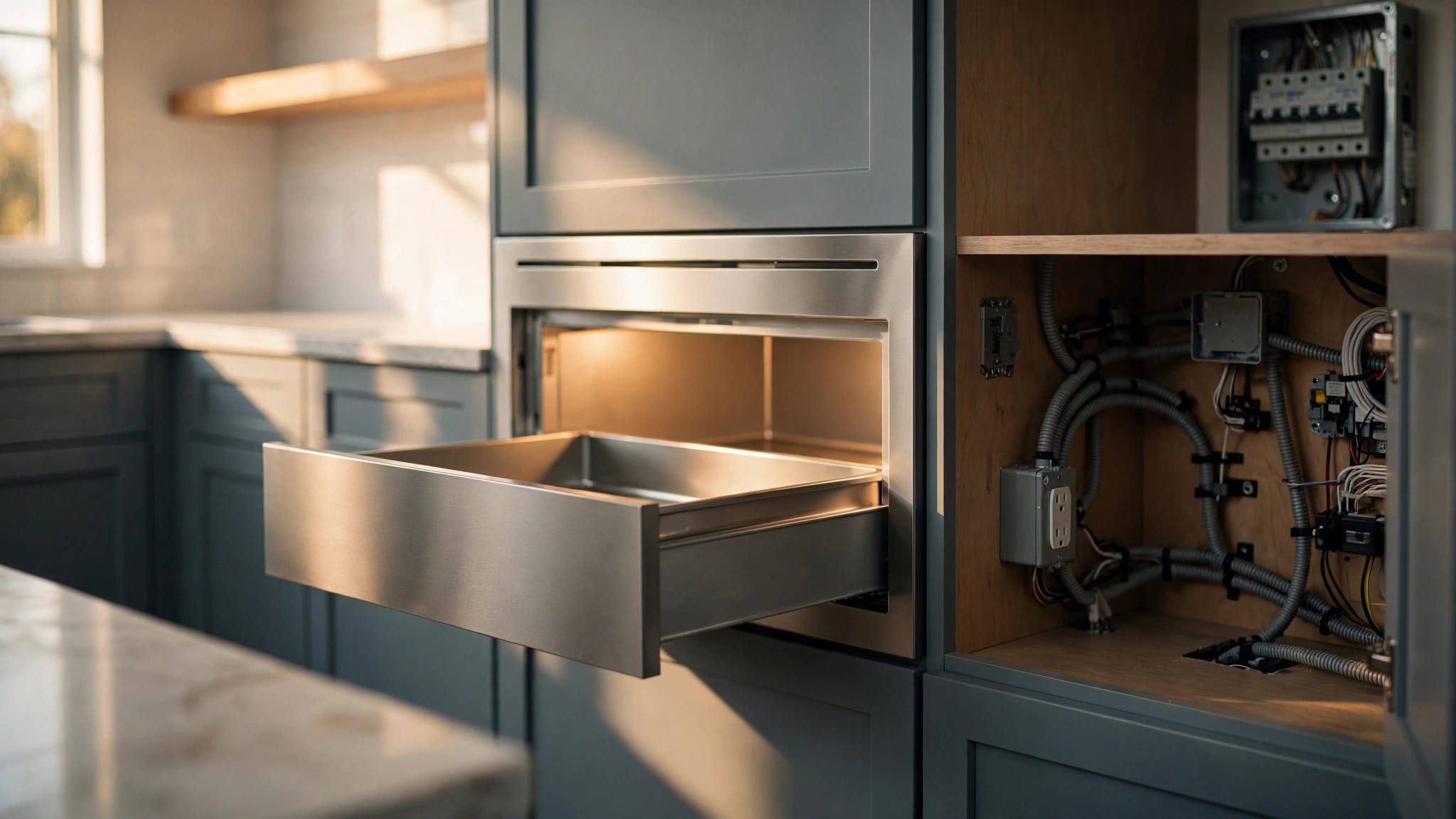
Microwave drawer installation in Massachusetts must meet the state electrical code, the appliance's instructions, and local permit requirements when electrical work is involved. The circuit also needs the correct capacity, grounding, and protective devices for the installation.
A drawer that plugs into a receptacle may look simple, but the outlet behind it can be connected to aging or overloaded wiring. Start with the electrical requirements before cabinetry or finished walls limit access.
Key Takeaways
- Massachusetts uses 527 CMR 12.00 for electrical work. The 2026 National Electrical Code with state amendments applies to permits granted after April 24, 2026.
- The appliance's installation manual determines its electrical supply and connection requirements. A separate circuit may be recommended without being a universal state requirement.
- New kitchen wiring may need both GFCI and AFCI protection. Grounding and access to the connection also matter.
- Adding or changing wiring generally calls for a licensed electrician, an electrical permit, and inspection.
Which Massachusetts Electrical Code Applies?
The Massachusetts Electrical Code is published as 527 CMR 12.00. For electrical permits granted after April 24, 2026, it is based on the 2026 National Electrical Code, or NEC, with Massachusetts amendments.
The permit date matters more than the date the microwave arrives. Work under an earlier permit may follow an earlier code edition. The scope of the project also matters: installing a new circuit is different from plugging a replacement appliance into an existing, suitable receptacle.
Massachusetts sets the statewide electrical rules, while the local authority having jurisdiction, often the municipal wiring inspector, administers the permit and inspection process. Cities and towns can have different application forms, fees, and scheduling procedures.
The appliance's listing and installation instructions are another part of the electrical plan. A general rule of thumb cannot override a requirement for the model being installed.
Circuit Requirements for a Microwave Drawer
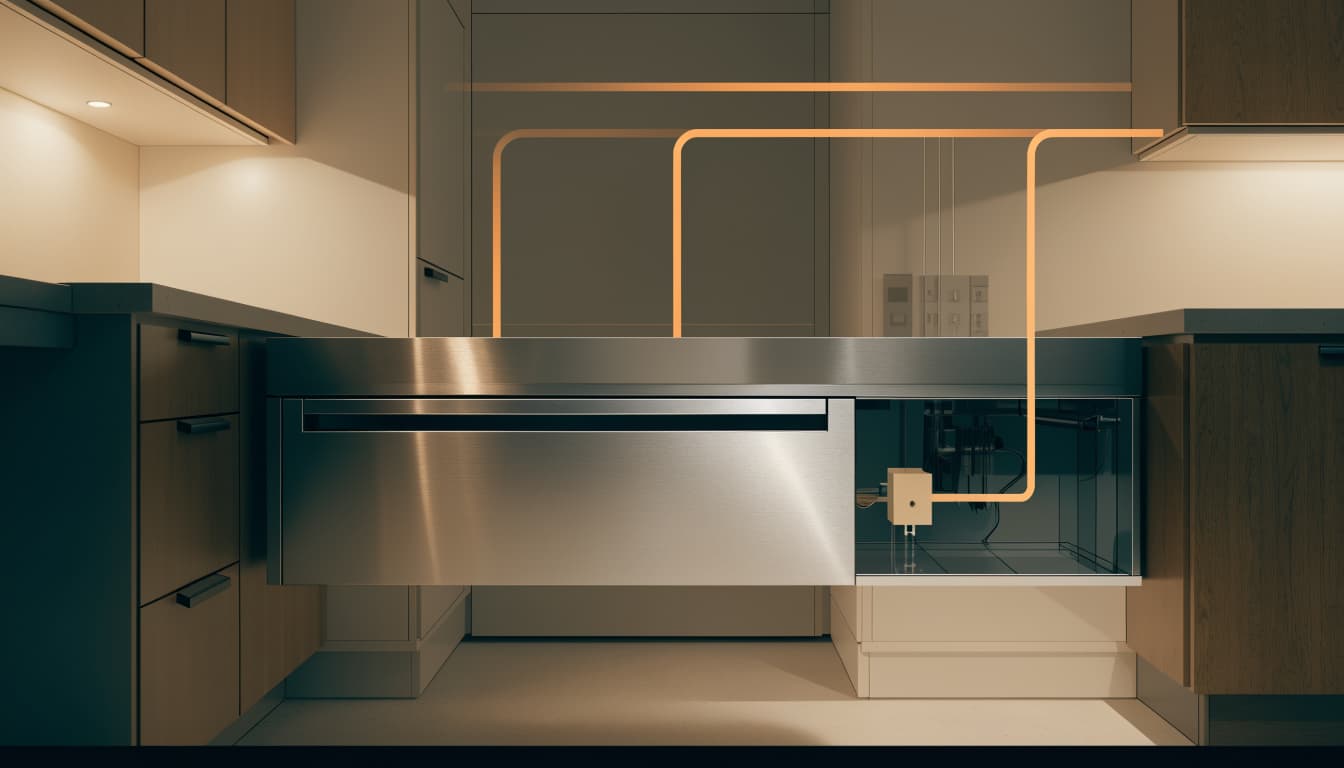
Most residential microwave drawers use a 120-volt supply, but the required circuit depends on the appliance. The electrician needs the model's installation instructions and electrical rating before selecting the wiring and breaker.
Circuit Rating and Manufacturer Instructions
The Sharp SMD2440JS installation manual, for example, specifies a 120-volt, 60 Hz, AC-only supply protected at 15 amps or more. It also calls for a properly grounded receptacle and recommends a separate circuit serving only the appliance.
Bosch's drawer-microwave installation document likewise specifies a 120-volt supply and a 15-amp minimum circuit. These examples are useful starting points, but another model can have different instructions.
For typical copper branch-circuit wiring, a 15-amp circuit commonly uses at least 14 AWG conductors, while a 20-amp circuit commonly uses at least 12 AWG. The electrician selects the complete wiring method and protective device for the installation. A larger breaker cannot be added to undersized wiring to stop nuisance trips.
Dedicated Circuit or Shared Circuit?
A dedicated, or individual, branch circuit supplies one appliance. It can reduce competition with a toaster, coffee maker, or other kitchen loads. If the manufacturer's instructions require an individual circuit, the installation must follow that requirement.
A recommendation for a separate circuit is different from a mandatory instruction. Massachusetts doesn't impose one blanket dedicated-circuit rule for every microwave drawer. On a shared circuit, the electrician must account for the drawer's load, other connected equipment, circuit rating, and applicable code restrictions.
Kitchen countertop small-appliance circuits have their own rules. An available receptacle on one of those circuits isn't automatically an approved source for a built-in appliance.
Receptacle and Hardwired Connections
The appliance's listed connection method determines how it should receive power. Don't choose between a plug and a hardwired connection based only on which appears easier.
Cord-and-Plug Models
The Sharp example uses a supplied three-prong plug and a properly grounded receptacle. The electrician must place the outlet where the manufacturer's instructions permit it and where the cord can reach without damage.
The finished installation should leave the plug and receptacle accessible as required for service and disconnection. A cord trapped behind the drawer, pinched by cabinetry, or stretched to reach an outlet can create problems even when the circuit has enough capacity.
Extension cords and plug adapters aren't substitutes for a properly located receptacle. Likewise, removing the grounding prong defeats an important safety feature.
Hardwired Equipment
Some electrical equipment is designed for a permanent connection, but that doesn't make hardwiring an option for every microwave drawer. The cited Sharp and Bosch drawer instructions specify grounded cord-and-plug connections.
If a different appliance is listed for permanent connection, its instructions govern the connection details. The electrician also has to provide the required disconnecting means and keep junction boxes accessible. The appliance's cord should never be cut off to turn a plug-in model into a hardwired installation.
GFCI and AFCI Protection in a Kitchen
GFCI and AFCI devices address different hazards. GFCI protection reduces shock risk, while AFCI protection addresses certain electrical arcing faults that can start fires. Depending on the circuit and location, a new installation may need both.
GFCI Protection for the Receptacle
For a microwave drawer receptacle in a dwelling kitchen, plan on GFCI protection under the current code. Protection can be provided by an appropriate GFCI breaker or another permitted device arrangement. The reset location must meet the applicable accessibility requirements.
The 2026 Massachusetts electrical code amendments include a limited exception for certain listed cooking equipment when available circuit protection is incompatible. It has specific conditions, including installation and inspection under Rule 11, and expires January 1, 2029. The exception shouldn't be assumed to apply to a particular microwave drawer.
If a GFCI trips repeatedly, leave the problem for a licensed electrician to diagnose rather than bypassing the protection. A damaged cord, wiring fault, appliance issue, or other condition may need attention.
AFCI Protection for Dwelling Circuits
Massachusetts' 2026 code generally requires AFCI protection for 120-volt, single-phase, 10-, 15-, and 20-amp branch circuits supplying outlets or devices in dwelling units, subject to the permitted protection methods and exceptions.
A new microwave drawer circuit in a home will therefore generally need AFCI protection as well. The electrician may use a suitable dual-function breaker where appropriate. Our guide to how GFCI and AFCI protection differ explains the separate jobs these devices perform.
Grounding and Existing Wiring
An existing three-slot outlet doesn't prove that the microwave has a reliable equipment-grounding path. In older Massachusetts homes, the electrician may find an ungrounded circuit, damaged cable, a worn receptacle, or alterations that aren't visible until the box is opened.
Why the Grounding Path Matters
A grounding connection provides a path for fault current so the protective device can operate when certain faults occur. The receptacle and circuit must provide the grounding required by the appliance and the applicable code.
A GFCI can provide shock protection in some ungrounded receptacle arrangements, but it doesn't create an equipment ground . It shouldn't be treated as a substitute for the grounding connection required by a microwave drawer's instructions.
Depending on the existing system, correcting the problem may involve a permitted grounding method or a new circuit. The right repair depends on the wiring present, rather than the appearance of the outlet cover.
Panel Capacity and Existing Loads
The electrician also evaluates the panel, available breaker space, and the load on the circuit. A panel with an open slot isn't automatically proof that the electrical service can support every new appliance.
Older kitchens may have a refrigerator, countertop outlets, and other equipment connected in ways that limit available capacity. If the drawer is part of a larger renovation, a load calculation can identify whether additional panel or service work is needed. Labeling the circuit makes the finished installation easier to identify during future service.
Permits and Inspections in Massachusetts
Adding, moving, repairing, or changing a branch circuit or receptacle is electrical work. In Massachusetts, that work generally requires a permit and inspection, and it should be handled by a properly licensed electrician.
Who Handles the Permit?
The electrical contractor typically handles the permit application and inspection coordination. A general building permit for a kitchen remodel shouldn't be assumed to cover the electrical scope.
A like-for-like appliance replacement may involve no new electrical work if an existing receptacle and circuit are suitable. However, moving the outlet or correcting wiring changes the scope. Our overview of Massachusetts kitchen electrical permit requirements explains how electrical work fits into a renovation.
Local procedures differ. In Boston, for example, the contractor performing the work applies for the electrical permit, and work must wait until the permit is issued. Boston also requires the contractor to be present for the inspection.
Rough and Final Inspections
If new wiring will be concealed, a rough inspection may be required before drywall, cabinets, or other finishes cover it. The inspector can then review the visible wiring and boxes.
A final inspection follows completion of the permitted work. Keep the permit and approval records with the appliance instructions for future service. Our Massachusetts home electrical inspection guide covers what homeowners can expect at this stage.
Considerations for Commercial Kitchens
A microwave drawer in a restaurant, office, or other business still needs a supply that matches its listing and installation instructions. The surrounding electrical requirements may differ from those for a dwelling kitchen.
Commercial projects can involve shared panels, tenant spaces, heavier equipment loads, and separate building or fire approvals. The electrical plan should identify the appliance's circuit and connection alongside the rest of the kitchen equipment. The electrician can coordinate the work and inspection with the local authority and the other trades.
Microwave Drawer Electrical FAQs
Can a Microwave Drawer Share a Circuit?
It can in some installations, provided the manufacturer doesn't require an individual circuit and the shared circuit meets applicable code and load requirements. A separate circuit may still be the better choice when other kitchen equipment would compete for capacity.
Can I Use an Existing Outlet?
An existing outlet may be suitable if its location, circuit rating, grounding, protection, and condition meet the appliance's instructions and applicable code. A receptacle that happens to be close enough isn't automatically suitable.
Does Every Replacement Require New Wiring?
No. A replacement that plugs into a suitable existing receptacle may not need a new branch circuit. New electrical work may be necessary if the outlet is ungrounded, incorrectly located, damaged, or unable to support the appliance.
Plan the Electrical Work Before Installation
A safe microwave drawer installation starts with the appliance's instructions and the wiring that will supply it. The circuit, connection, grounding, and protection must work together under the code edition assigned to the project.
If your Greater Boston kitchen needs a new circuit or electrical corrections, we can help plan the work before the drawer goes in.