
Massachusetts Stair Lift Electrical Requirements

Contact Us
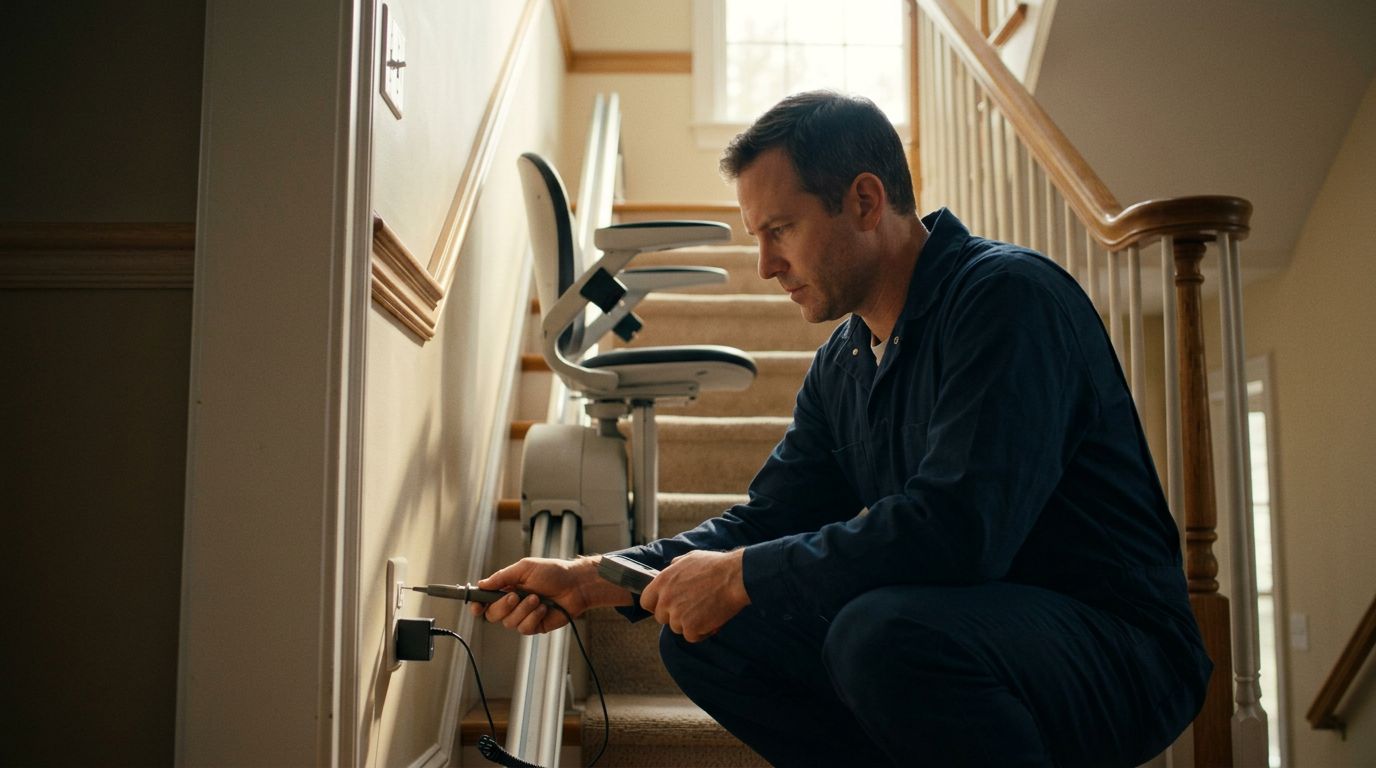
Massachusetts stair lift electrical requirements depend on the lift's instructions, the home's wiring, and whether the installation needs new electrical work. Some models use a household outlet to charge onboard batteries, but the right outlet and circuit depend on the equipment and its location.
Before installation, identify the lift's power needs and have a licensed electrician assess the proposed connection. That can help you arrange any wiring, permit, and inspection work before the lift arrives.
Which Massachusetts electrical code applies?
The Massachusetts Electrical Code, 527 CMR 12.00, governs electrical installations in the state. It incorporates the National Electrical Code (NEC), also known as NFPA 70, with Massachusetts amendments.
The permit date matters
Massachusetts adopted the 2026 NEC through its state code effective April 24, 2026. That edition applies to installations with permits granted after that date. Work permitted earlier may fall under the prior edition.
The Massachusetts Electrical Code provides the statewide rules. Your city or town's Inspector of Wires administers the local electrical permit and inspection process.
The equipment instructions matter, too
The electrical code provides the framework for wiring and protection. The lift manufacturer's instructions add equipment-specific details, such as the power supply, charger location, and connection method.
A straight lift and a curved lift may fit the same home differently. Their charging arrangements can differ as well. Give your electrician the instructions for the model you've selected so the electrical plan matches the equipment that will be installed.
Start with the stair lift's power supply

Many residential stair lifts use rechargeable batteries to power the chair. A charger connects to household power and keeps those batteries ready for use.
Household power and the charger
Bruno's stair lift guide says its charger plugs into a standard 110-volt household outlet. The outlet may be at the top or bottom of the stairs.
That guidance applies to Bruno's equipment. Other manufacturers and models have their own instructions, so the electrician needs the selected lift's voltage, electrical rating, and installation details before planning the connection.
Charger load versus lift motor load
For a battery-powered lift, the outlet supplies the charger. The batteries then supply the lift motor. That distinction matters when the electrician evaluates the electrical load: the charger's input rating is relevant to the household circuit.
Keep the equipment manual and electrical specifications available during the site visit. They help the electrician determine whether an existing outlet is suitable or whether the installation needs a different electrical arrangement.
Assess the outlet near the stairs
An outlet close to the staircase may be convenient, but proximity alone doesn't establish that it's suitable. Its condition, circuit, and position all matter.
Placement should fit the installation
The lift installer needs enough reach for the supplied cord and a location that works with the model's charging setup. The plug and cord shouldn't obstruct the stairway, interfere with the chair, or create a tripping hazard at a landing.
A receptacle behind furniture or in the path of a moving chair can make the installation awkward. Plan the outlet location alongside the lift rail and parked chair position, before any new wiring begins.
Older receptacles deserve attention
A damaged, loose, or ungrounded receptacle may need repair or replacement before it can supply the lift. Discoloration, a warm faceplate, buzzing, or a plug that won't stay in place are reasons to stop using an outlet and call an electrician.
A three-prong opening alone doesn't establish that an older receptacle has a proper equipment ground. Our guide to home electrical inspections in Greater Boston explains when a broader review can be useful.
Avoid relying on extension cords or power strips as a substitute for a properly located receptacle. A permanent outlet gives the installer a more dependable connection without a cord stretched across the walking route.
Review the circuit and panel capacity
The outlet's circuit may serve other rooms or equipment. An electrician can identify what it supplies and evaluate the added charger load against the circuit's wiring and protection.
Shared circuits and dedicated circuits
A shared circuit may be suitable when its existing load and the lift's instructions allow it. In other installations, the manufacturer may call for a dedicated circuit, or an electrician may recommend one because of the circuit's condition or other connected equipment.
For example, a circuit that already trips when household appliances run needs attention before another load is added. A dedicated circuit also gives the lift its own branch circuit, although a power outage or a tripped breaker can still interrupt charging.
Panel space is only part of the assessment
An available breaker position doesn't, by itself, establish that the service or panel can accommodate every planned load. The electrician may review the panel's condition, available capacity, grounding, and the route for a new circuit.
A small charger load doesn't automatically mean the home needs a panel upgrade. The decision depends on the existing system and the scope of work. Our guide to electrical panel installation and safety covers the considerations behind panel work.
Understand charging and power outages
Battery operation can help a stair lift remain usable during an outage, but performance depends on the equipment and battery condition. The manufacturer can explain the operating features for the selected model.
Keep the charger supplied
A lift that runs on batteries still needs a working electrical supply to recharge them. If the outlet loses power because of a tripped breaker, switched circuit, or disconnected plug, the batteries can eventually run down.
Choose a location where the plug can remain connected and the charging equipment is accessible. The lift installer can explain where the chair should be parked for the model's charging system and how its indicators work.
Make an outage plan
Ask the installer to explain how the chair operates when household power is unavailable and what the user should do if it stops. Battery age, charge level, and the equipment's design can affect operation.
For someone who relies on the lift to move between floors, discuss an outage plan with household members or caregivers. That plan should account for the person's mobility needs rather than assume the lift will run indefinitely without power.
When permits and inspections are involved
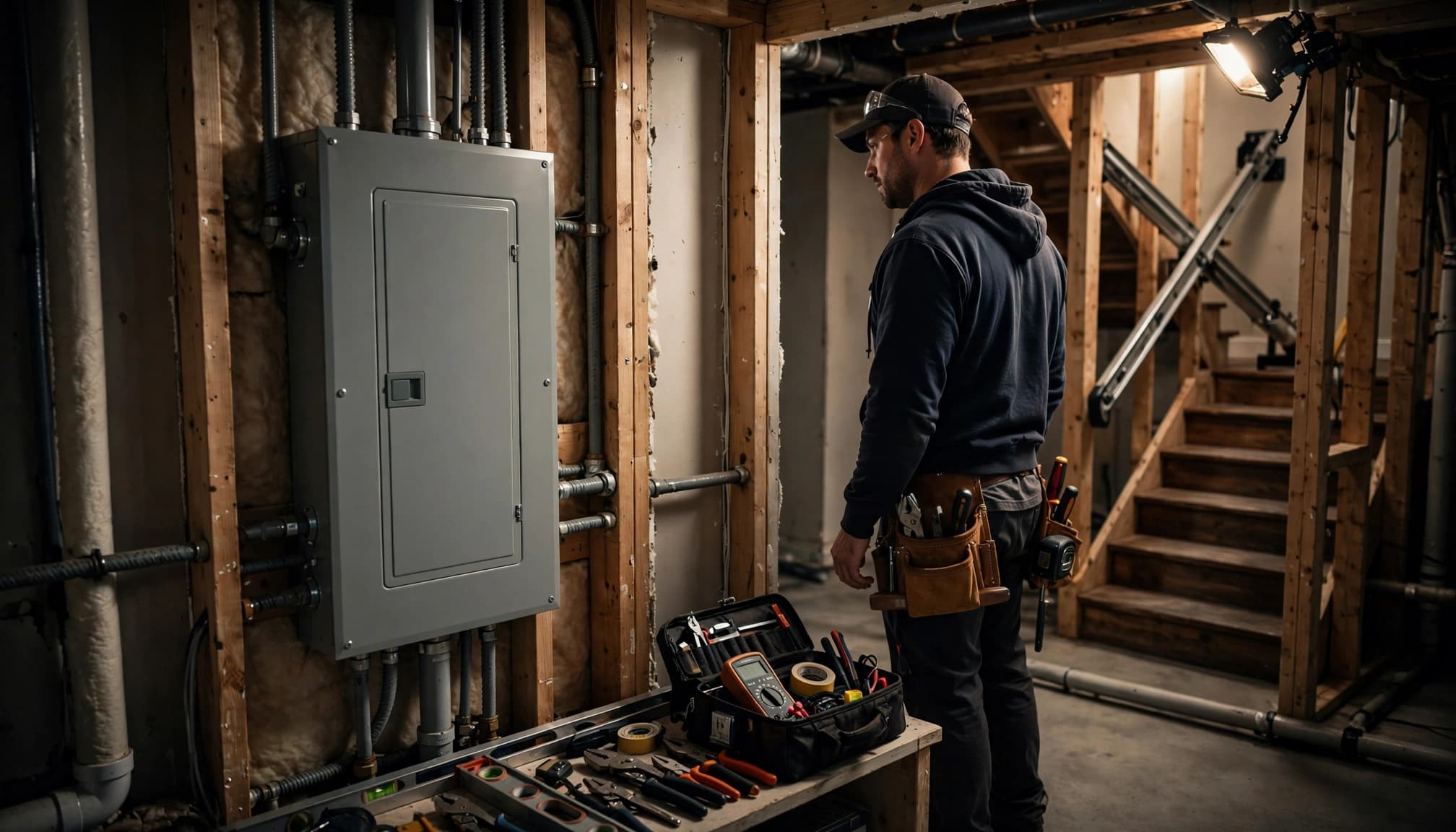
Adding a receptacle or branch-circuit wiring brings the project into Massachusetts' electrical permitting process. The city or town's Inspector of Wires handles local administration and inspections.
Electrical work has its own permit process
The state electrical permit application includes receptacle outlets and asks whether the electrical permit is associated with a building permit. A building permit for a larger renovation shouldn't be assumed to cover the electrical work.
Before work starts, agree with the electrician on who will apply for the electrical permit and arrange inspections. The lift installer and electrician can also coordinate any other approvals that apply to the project. For condominium projects, our guide to electrical permits for condo renovations explains the separate electrical process.
New wiring may need review before walls close
Under the 2026 Massachusetts Electrical Code, electrical work can't be concealed before inspection. If a new circuit runs inside a wall, the electrician must coordinate the inspection before the wiring is covered.
After proper notice, the code states an inspection window of no more than 72 hours for interior or exterior installations, excluding Saturdays, Sundays, and holidays. The permit form also addresses inspection upon completion. The electrician can schedule the required visits with the local inspector.
What to expect during installation
The smoothest schedule gives the electrician and lift installer enough information to plan their work in the right order. A site visit before installation can uncover issues that aren't visible in a product photo.
Before the lift arrives
Share the model instructions and show both contractors the intended stairway, nearby receptacles, and electrical panel. The electrician can identify a suitable connection and explain any proposed wiring or repairs.
If new wiring is needed, expect the plan to address the cable route, receptacle location, circuit protection, and any wall or ceiling openings. The electrician will also determine whether protections such as GFCI or AFCI apply to the work based on the location and code.
On installation day
Once the electrical supply is ready, the lift installer can fit the equipment and connect its charger according to the manufacturer's instructions. The installer should demonstrate normal operation, parking and charging, and the lift's controls.
If the electrical work requires a final inspection, keep access clear to the receptacle, panel, and other parts of the installation. Retain the equipment manual, permit record, and inspection documentation with your home records.
Plan for shared spaces and future service
A staircase inside a condominium can raise questions beyond the outlet itself. The association's documents may address alterations, access to shared areas, work hours, and restoration after wiring work.
If the proposed cable route crosses a common area or involves a shared electrical system, coordinate the work with the association before installation. The electrician needs to know which panel and wiring serve the unit, while the lift installer needs a clear plan for the staircase and landings.
After installation, keep the area around the charger accessible. Don't ignore repeated breaker trips, damaged cords, or charging warnings. A licensed electrician can investigate the electrical supply, while the lift service provider can address equipment and battery issues.
A dependable connection starts with the right plan
A home stair lift needs an electrical supply that fits the model and the condition of your home. Reviewing the outlet and circuit early gives you time to arrange any necessary wiring and inspections before the lift is installed.
At Sirois Electric, we help homeowners in Metro and Greater Boston plan electrical work for equipment and home improvements. Call us at (781) 229-9988 to discuss the electrical supply for your stair lift.