
Photocell vs Timer: Choosing Outdoor Lighting Controls

Contact Us
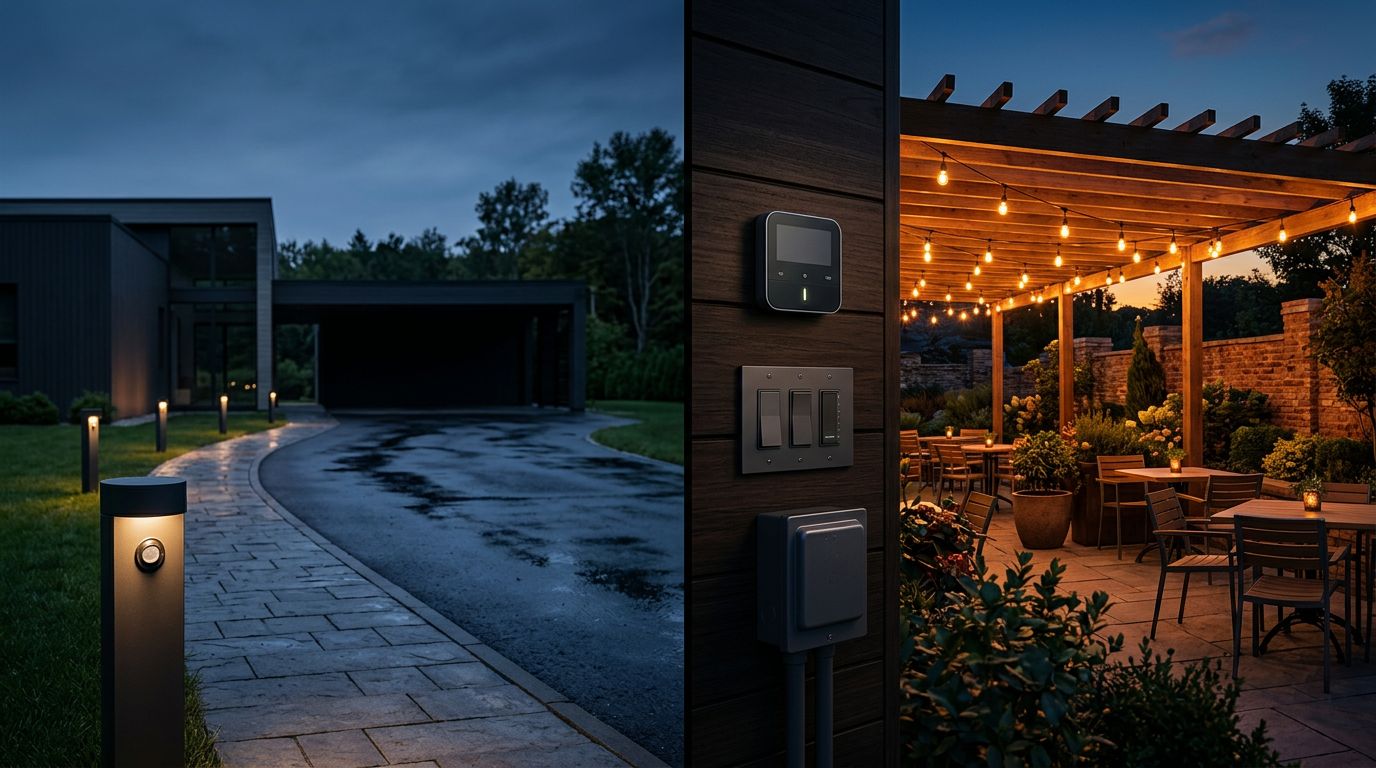
Outdoor lights should turn on when you need them, without wasting energy or leaving fixtures on all night. The right control depends on whether your property needs lighting based on darkness, a fixed schedule, or both.
When comparing photocell vs timer controls, consider how your property changes throughout the year, when people use the space, and how much control you want over operating hours. A driveway, storefront, parking area, and restaurant patio may each need a different setup.
Understanding photocell vs timer controls
The main difference is simple: a photocell responds to the amount of light outside, while a timer follows the clock. Each option can work well when matched to the right application.
Photocells respond to outdoor light levels
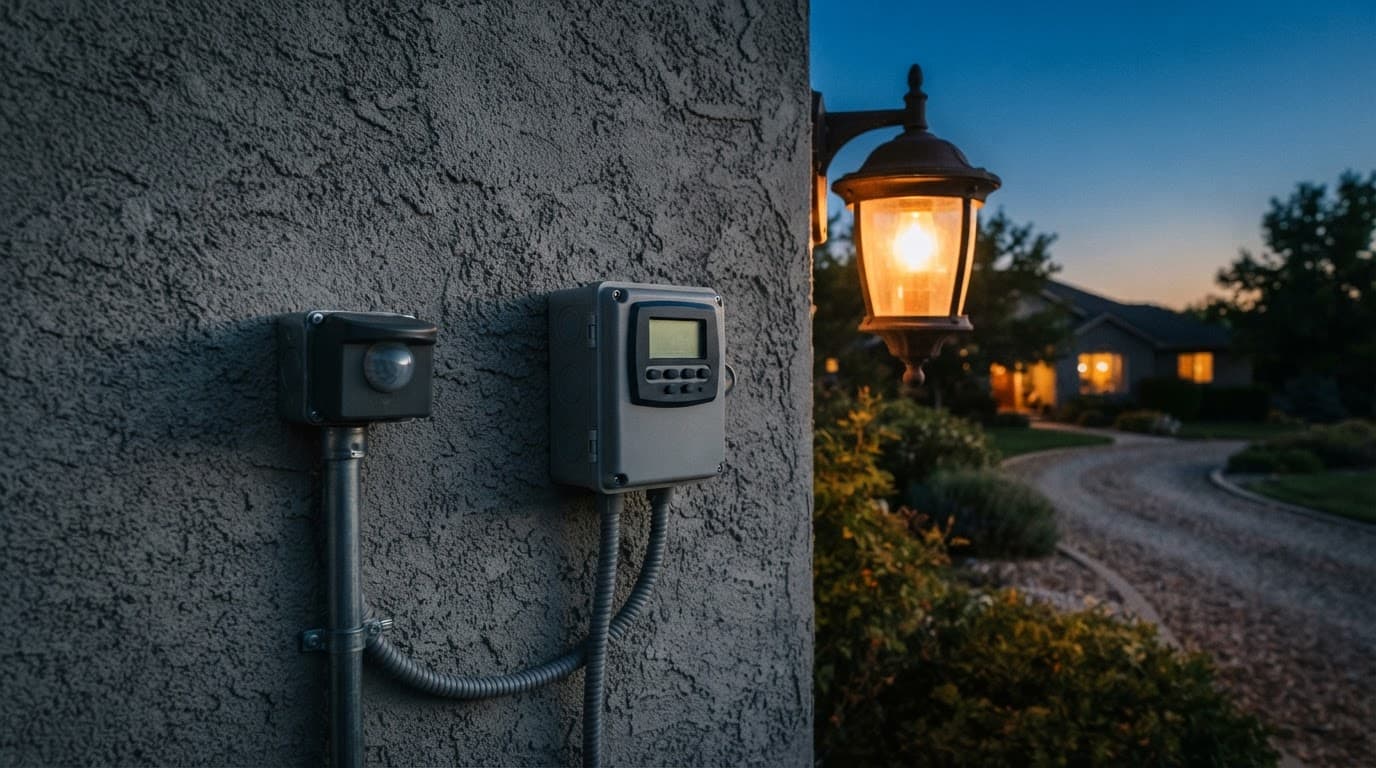
A photocell, also called a dusk-to-dawn sensor, measures the surrounding light. As daylight fades below a set level, the photocell sends power to the outdoor light. When the sun rises and the area becomes bright again, it shuts the light off.
This approach follows actual conditions rather than a preset time. Sunset changes throughout the year, but a photocell adjusts automatically. That makes it useful for entry lights, pathway fixtures, driveway lighting, and other lights that should operate whenever it gets dark.
Placement affects performance. A photocell that faces a bright porch fixture may shut the lights off too soon. One blocked by a wall, tree, or other obstruction may turn on earlier than expected. Dirt, snow, and nearby artificial light can also affect the sensor.
Timers follow a programmed schedule
A timer turns lights on and off at selected times. A basic model may use the same schedule every day, while a digital or astronomical timer can offer more flexible programming. Some astronomical timers calculate sunrise and sunset based on the date and location.
Timers give you tighter control over operating hours. For example, a business might keep exterior lights on before opening and during customer hours, then shut them off after closing. A homeowner may want decorative patio lights on from sunset until 10:30 p.m., rather than running them until sunrise.
Timers need accurate settings and occasional checks. Power interruptions, daylight-saving changes, seasonal schedule changes, and incorrect programming can affect operation. A battery backup or astronomical feature can reduce some of these problems, depending on the control.
Photocell vs timer: A side-by-side comparison
The table below shows how the two controls differ in everyday use.
| Feature | Photocell | Timer |
|---|---|---|
| Trigger | Outdoor light level | Clock or programmed schedule |
| Seasonal adjustment | Automatic | Manual, unless astronomical |
| Operating control | Usually dusk to dawn | Set on and off times |
| Best fit | Lights needed whenever it's dark | Lights needed during defined hours |
| Common concern | Sensor placement or false readings | Clock settings, outages, or schedule changes |
When a photocell makes more sense
Choose a photocell when the main goal is consistent operation as daylight changes. This is often the better fit for a front entrance, side door, driveway, or walkway where visibility matters whenever people arrive after dark.
Photocells also reduce the need to change settings throughout the year. A light that turns on at 4:30 p.m. in December can wait until after 8:00 p.m. in June without manual programming.
However, dusk-to-dawn operation can use more electricity than a shorter schedule. If the light doesn't need to run overnight, a photocell alone may keep it on longer than necessary.
When a timer makes more sense
A timer fits properties with predictable activity periods. Retail entrances, restaurant patios, office buildings, signs, and parking areas may need lighting during specific hours instead of the entire night.
Timers also work well for decorative or event lighting. You can set the lights to operate during evening hours and turn them off after most people have left.
The tradeoff is that a standard timer doesn't know whether it's dark outside. If the schedule is set incorrectly, the lights may run during daylight or remain off during an unexpectedly dark period. Astronomical timers address some seasonal changes, but they still need proper programming and maintenance.
Common outdoor lighting applications
Outdoor lighting controls should match the purpose of the fixtures. A light that protects a delivery area may need a different schedule than a wall sconce beside a residential entry.
Homes, driveways, and pathways
Residential entry lights and driveway fixtures often benefit from photocells because homeowners may arrive at different times. The lights can come on as evening begins without requiring anyone to adjust a schedule.
A timer may be better for backyard lighting, patio fixtures, landscape accents, or seasonal decorations. These lights often provide comfort and visibility during evening activities but don't need to stay on until morning.
Some properties combine controls. A photocell can activate the system after dark, while a timer limits how late it stays on. For a larger project involving pathway and accent fixtures, professional outdoor lighting installation can coordinate fixture locations, wiring, and control placement.
Motion sensors can also work with either option. For example, a photocell may keep a low level of pathway lighting on, while a motion sensor increases light output when someone approaches. The exact wiring depends on the fixtures and control equipment.
Stores, offices, restaurants, and shared properties
Commercial properties often have more than one lighting need. Exterior doors may require lighting during all dark hours, while parking areas, signs, loading zones, and decorative fixtures may follow separate schedules.
A timer can help coordinate lighting with opening and closing hours. A photocell can prevent the system from relying on a fixed sunset time. For larger sites, separate control zones allow the owner to avoid operating every fixture when only one area needs illumination.
Restaurants and hospitality properties may keep patio or entry lighting on during service, then reduce or shut off selected fixtures later. Office buildings may need early-morning lighting for staff but little exterior lighting after the building closes.
How to choose the right control for your property
The best photocell vs timer choice starts with the reason the lights are installed. Security, access, appearance, energy use, and business hours can all point toward different control methods.
Start with the lighting purpose
Ask when the light needs to operate. If the answer is "whenever the area is dark," a photocell may be the simplest choice. If the answer is "only while people use the property," a timer may give you better control.
Also consider how much light the fixtures produce and where they point. A bright parking lot may create glare for nearby homes if it runs all night. A dim entry light may need to remain active longer so visitors can find the door safely.
Write down the desired schedule before selecting equipment. Include normal opening hours, early deliveries, late staff departures, tenant access, and seasonal events. That information helps determine whether one control or several zones make sense.
Consider weather, placement, and maintenance
Photocells need a clear view of changing outdoor light. The sensor should stay away from direct light produced by the fixtures it controls. It also needs an installation location that remains accessible for cleaning or replacement.
Timers need a suitable location, accurate programming, and protection from moisture if installed outdoors. Indoor timer controls can be easier to service, while exterior equipment must be rated for its location.
Property owners should also consider future changes. A business may change its hours, add a sign, or expand a parking area. A timer system with separate circuits can provide more flexibility than one control operating every fixture together.
Consider using both controls
A photocell and timer can work together when the property needs automatic seasonal response and limited operating hours. For example, the photocell can prevent the lights from turning on during daylight, while the timer can turn them off at midnight.
This combined arrangement can reduce unnecessary runtime, but the controls must be compatible and wired correctly. The electrician should confirm how the controls interact with the circuit, fixtures, contactors, and any building automation system.
Installation and electrical safety considerations
Outdoor lighting controls are part of the electrical system, not standalone accessories. The control must match the circuit voltage, connected load, fixture type, enclosure, and wiring method.
Placement and wiring affect reliability
A poorly placed sensor can create short cycling, delayed operation, or lights that never shut off. A poorly located timer can be difficult to reach when the schedule needs adjustment.
Outdoor wiring also needs protection against moisture, physical damage, and weather exposure. Fixtures, boxes, conduits, and connections should suit the installation location. LED fixtures may use less power, but the control still needs to be compatible with the load and switching method.
If a system includes multiple zones, contactors, low-voltage landscape lighting, or a control panel, the design becomes more involved. Planning the circuit layout before installation helps avoid nuisance problems later.
Follow local codes and use qualified help
Electrical installation should follow local codes and may require a qualified electrician. Outdoor circuits and equipment may require GFCI protection, weather-rated components, approved enclosures, permits, or inspection, depending on the project.
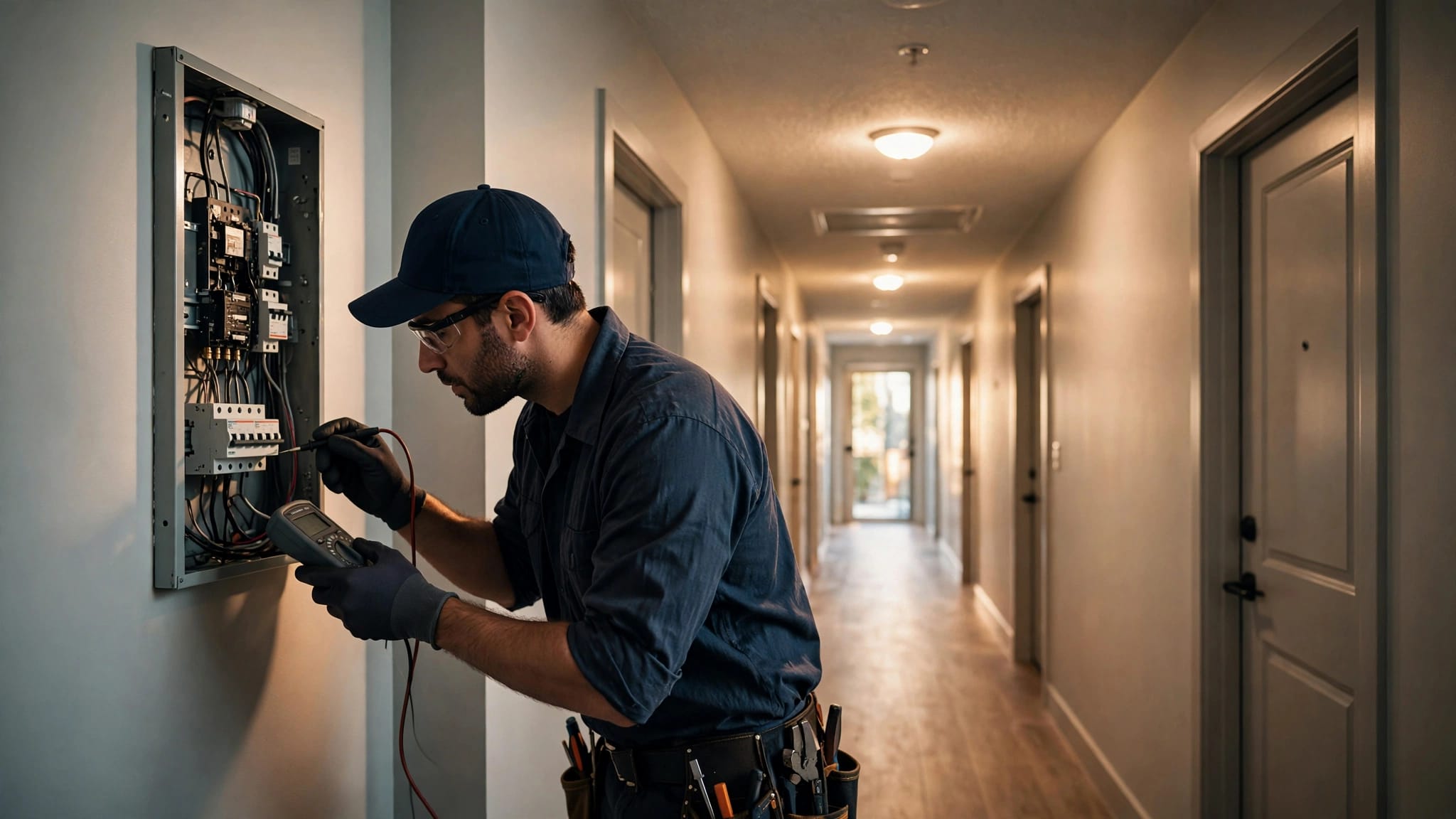
A licensed electrician can check the existing circuit, confirm the control rating, identify safe mounting locations, and test the system after installation. This matters even more when the work involves a service panel, commercial property, buried wiring, or connections between several control devices.
Property owners should also separate ordinary exterior lighting from emergency lighting. Required emergency and exit lighting may follow different rules and should not depend on a standard photocell or timer.
Conclusion
The right photocell vs timer decision depends on how your property uses outdoor light. Photocells respond to changing daylight and work well when lights should operate whenever it's dark. Timers provide tighter control when lighting needs to follow business hours, quiet hours, or a planned evening schedule.
Many properties benefit from a combination of controls, especially when they need seasonal adjustment without all-night operation. Review the purpose, schedule, sensor placement, circuit, and local electrical requirements before choosing equipment. A properly designed control system keeps outdoor areas usable and reduces unnecessary runtime without forcing every property into the same solution.