
Massachusetts Whole-House Fan Electrical Requirements

Contact Us
A whole-house fan in Massachusetts needs an electrical installation that fits the fan's specifications, the home's wiring, and the applicable state code. The work commonly involves a permit and inspection, especially when it includes new wiring or changes to a circuit.
The right setup depends on the fan you choose and where you install it. Planning the electrical work before cutting the ceiling gives your electrician room to address circuit capacity, attic access, and controls.
Which Massachusetts Electrical Code Applies?
Massachusetts regulates electrical installations under 527 CMR 12.00, the Massachusetts Electrical Code. For permits granted after April 24, 2026, the code is based on the 2026 edition of NFPA 70, the National Electrical Code, with Massachusetts amendments.
An older permit may fall under an earlier edition. The state's electrical code page provides the adopted code and amendments.
State rules and local administration
The state code provides the technical framework. Your city or town administers the permit and inspection process through its wiring inspector or other local authority.
Application methods, fees, inspection scheduling, and closeout procedures can differ by municipality. For example, an installation in Boston may follow a different scheduling process than one in Burlington, even though both use the Massachusetts code.
Why the fan manual matters
A listed fan's instructions contain details needed for its installation. These can include supply voltage, motor or input current, control connections, mounting methods, and access clearances.
Give your electrician the exact model information early. A replacement fan that fits an existing opening may still need different wiring or controls.
Circuit and Wiring Requirements for a Whole-House Fan
Your electrician needs to account for the fan's electrical demand and the capacity of the circuit supplying it. The right arrangement depends on the equipment, the existing load, and the wiring route.
Using an existing circuit
An existing circuit may be suitable when its wiring, breaker, available capacity, and permitted use support the added fan. The electrician must account for the other loads on that circuit as well as the new equipment.
A nearby attic light or receptacle doesn't automatically make its circuit suitable. Its wiring may be damaged, heavily loaded, or subject to restrictions that prevent the proposed connection.
Adding a new circuit
A new branch circuit may be appropriate when the existing wiring can't support the fan or the manufacturer's instructions call for one. The electrician selects the conductors and overcurrent protection for the installation and the equipment's electrical requirements.
For ordinary copper branch circuits, 14 AWG conductors commonly pair with 15-amp protection, while 12 AWG conductors commonly pair with 20-amp protection. Motor-circuit rules and equipment instructions can affect the design, so those examples aren't a substitute for sizing the actual fan circuit.
A new circuit also requires a suitable route to the panel and space for the necessary equipment. If the panel is crowded or the service has limited capacity, the scope may extend beyond the fan connection.
Grounding and Circuit Protection
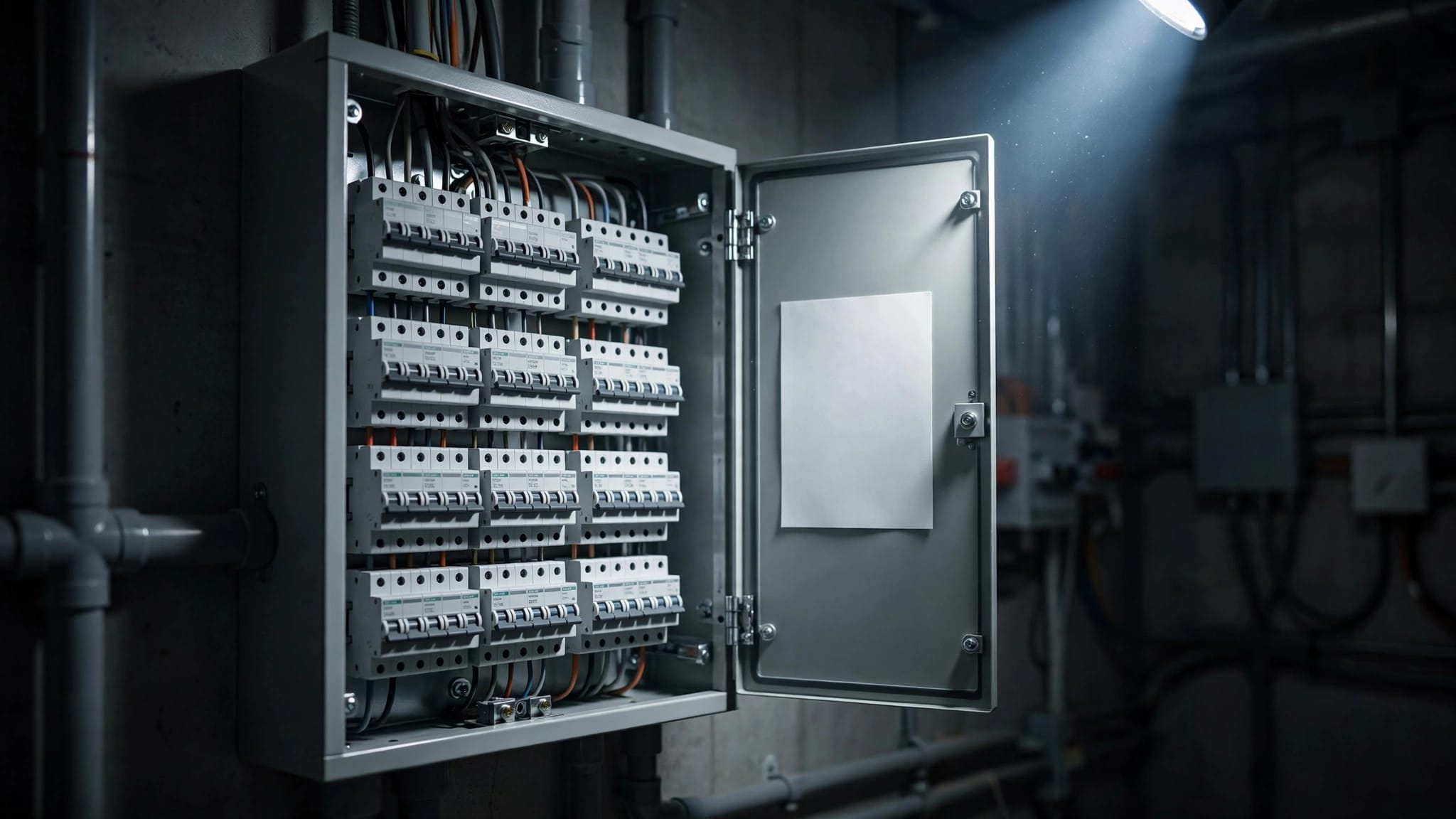
The fan and associated wiring need an effective equipment grounding path. Metal boxes and other metal components that require bonding must connect to that path correctly.
This deserves attention in older homes. A cable without an equipment grounding conductor, a damaged metal wiring system, or an improperly altered circuit can complicate a fan installation. Our guide to grounding and bonding in older homes explains why the two are related but have different jobs.
AFCI or GFCI protection may also be relevant, depending on the circuit, location, and work being performed. The electrician selects the required protection for the actual installation rather than assuming every attic fan needs the same devices.
If the existing circuit has repeated trips, heat damage, or loose connections, adding a fan won't resolve those conditions. They need attention as part of the electrical work.
Switches, Controls, and Disconnects
Whole-house fans may use wall switches, timers, speed controls, remote controls, or manufacturer-supplied control modules. The wiring must match the selected fan and control.
Choosing a control location
A hallway wall control can make the fan easy to operate near the rooms it serves. Some controls need a neutral conductor or other wiring at the wall box, while others use a different arrangement.
An older switch box may have limited space or lack the conductors a new control needs. In that case, the electrician may need to run new cable or replace the box.
Use controls compatible with the fan motor and the manufacturer's instructions. A dimmer intended for lighting, for example, shouldn't be assumed suitable for controlling a fan.
Providing a safe way to disconnect power
The installation must include the means of disconnecting power required for the equipment and applicable code. Depending on the fan and its arrangement, the solution may involve a local disconnect, a qualifying plug connection, or another permitted method.
A wall control that starts and stops the fan doesn't automatically satisfy every servicing requirement. The electrician considers the fan's connection, the location of the controls, and access for future maintenance.
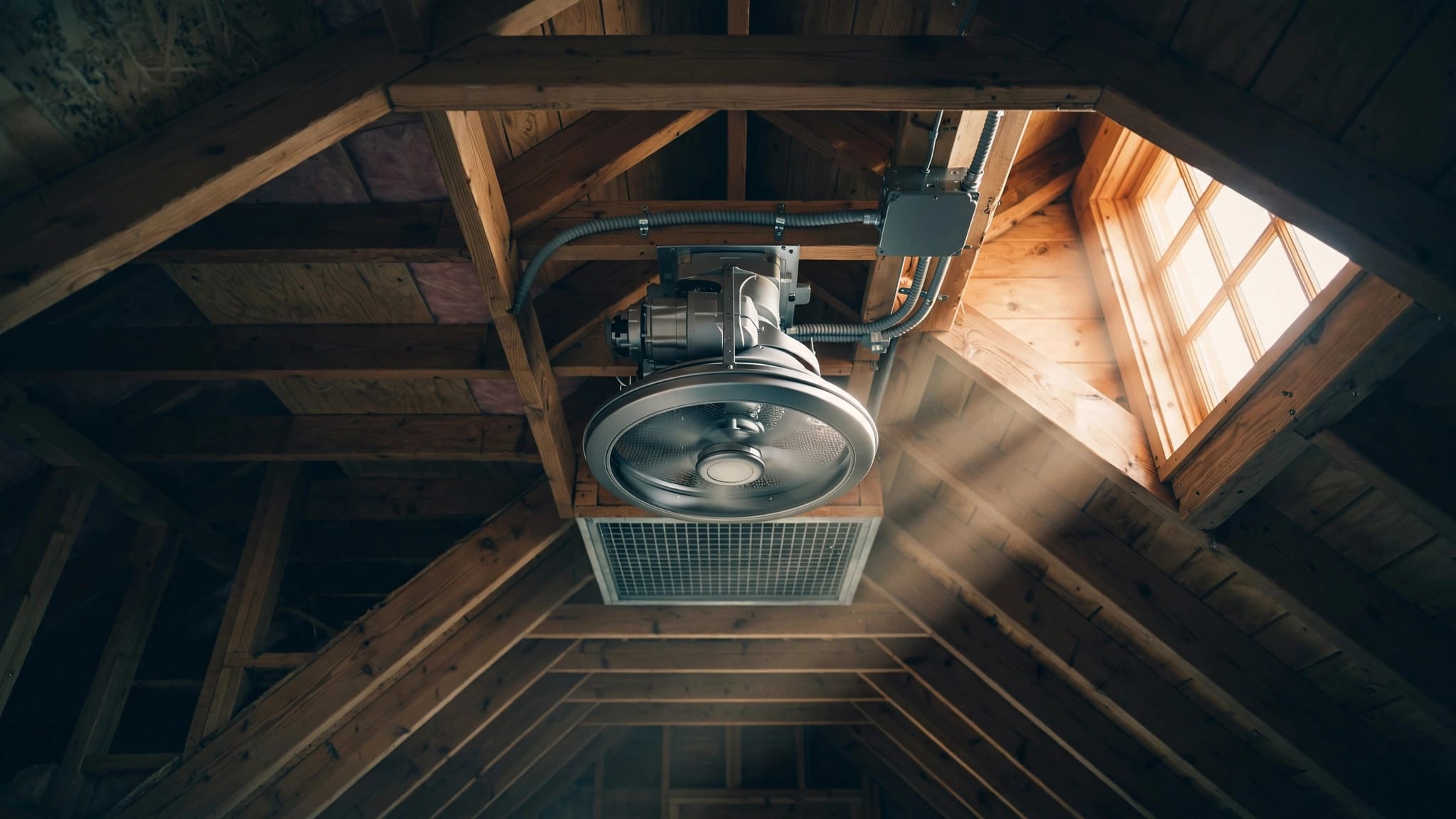
Attic Wiring Needs Protection and Access
The attic often determines how much electrical work the project needs. A short distance on a floor plan can still involve joists, insulation, stored belongings, and limited access.
Cable routing and protection
Wiring must be suitable for its location and installed with the required support and protection. The electrician plans the route to reduce exposure to damage at framing edges, access openings, and areas used for storage.
Cable shouldn't be left loose where people can step on it or move boxes across it. Protection may also be needed where wiring passes through framing or near surfaces that could receive nails or screws.
Our article on Massachusetts attic wiring requirements covers more of the conditions that affect these routes.
Accessible junction boxes
Connections and splices belong in suitable enclosures, with covers and cable entries installed correctly. A junction box needs to remain accessible after the work is complete.
An electrician may need to relocate a box if the fan housing, insulation, or a new platform would make it inaccessible. Similarly, a splice hidden behind finished drywall or buried in a permanently inaccessible cavity can create a problem for inspection and future repairs.
Fan Support and Ceiling-Box Considerations
A whole-house fan installed in a ceiling opening needs secure structural support. The fan's instructions determine how its housing or frame attaches to the building structure.
The electrical box and the fan mounting system do different jobs. A box can contain and protect electrical connections without supporting the entire fan assembly. Depending on the model, connections may be housed in a box supplied with the fan or in another suitable enclosure.
Box size matters, too. Conductors, cable clamps, devices, and other components affect the space needed for safe connections. The electrician also needs enough access to install the cover and service the wiring later.
Don't assume that a box previously used for a light fixture can support a new fan. Likewise, rules for a hanging ceiling fan shouldn't be applied automatically to a whole-house fan. The equipment's mounting instructions and the actual installation determine the support arrangement.
Ventilation and Insulation Affect the Installation
Electrical planning works best alongside the fan's airflow and building details. A whole-house fan draws indoor air into the attic, so the system needs an appropriate path for air to enter the house and leave the attic.
The fan's instructions address the required attic exhaust area and operating conditions. Running the fan without enough open windows or attic exhaust can reduce performance and create unwanted pressure conditions.
Combustion appliances also deserve attention. A whole-house fan can depressurize a home under some conditions, creating a risk of drawing combustion gases indoors. The installation and operating plan should account for appliances such as furnaces and water heaters.
The ceiling opening also affects insulation and air leakage. A properly fitted insulated cover or damper, where compatible with the fan, can help limit unwanted airflow when the equipment is off. Keep the manufacturer's required access and clearances in mind.
Electrical Permits for a Massachusetts Whole-House Fan
New circuits and other electrical alterations commonly require an electrical permit. A separate building permit for the ceiling opening or another part of the project doesn't automatically cover the electrical work.
For a typical installation, a Massachusetts-licensed electrician can handle the wiring and coordinate the electrical permit. Our guide to Massachusetts electrical permit responsibilities explains how permit responsibilities are assigned.
The permit should describe the work being performed. That might include a new circuit, a switch location, a fan connection, or changes to an existing circuit. Keeping the electrical scope aligned with the project helps the inspector identify what needs review.
Municipalities manage their own submission and scheduling processes. Boston's electrical permit process, for example, provides online or phone scheduling. The city says an inspector contacts the applicant within 48 hours to arrange a visit, and a licensed contractor must be present when a contractor performed the work.
For a condo, electrical approval may be only one part of the project. The ceiling, attic, or roof ventilation areas may involve shared property, so association approval can affect the installation plan.
What Happens During Electrical Inspection?
Inspection gives the local wiring inspector an opportunity to review the permitted work. The number and timing of visits depend on the project and local procedure.
Before wiring is concealed
A rough inspection may be required before insulation or finished surfaces cover new wiring. At that stage, the inspector can review visible cable routes, boxes, grounding connections, and other portions of the installation.
Leave the work exposed until the required inspection and authorization to cover it. If wiring is concealed too early, the inspector may require access to be reopened.
After the fan is installed
A final inspection generally follows completion of the permitted work. The inspector may review the fan connection, switch, covers, circuit identification, and access to electrical components.
If corrections are required, the electrician can address them and arrange any necessary follow-up. Keep the permit and approval records with your other home improvement documents.
Plan the Electrical Work Around the Fan
A safe installation starts with the selected fan and the conditions in your home. Circuit capacity, grounding, controls, and attic access all affect the work.
At Sirois Electric, we provide electrical installation and inspection services in Metro and Greater Boston. A coordinated plan helps keep the wiring accessible and the permit process on track.