
Standby Generator Maintenance Checklist for Boston Homes

Contact Us
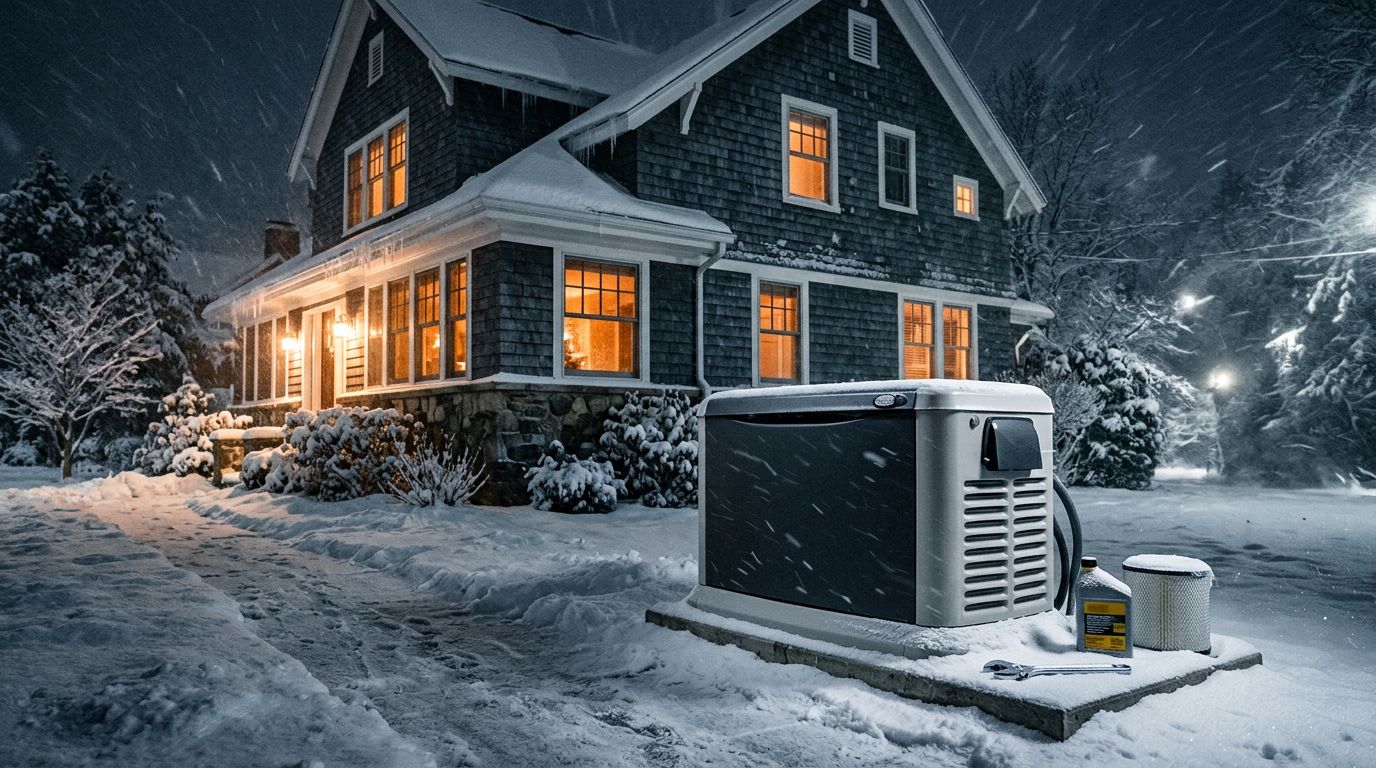
A standby generator can keep your heat, refrigerator, sump pump, and internet running when a nor'easter knocks out power. However, that protection depends on standby generator maintenance long before the lights go out.
Greater Boston weather puts outdoor equipment through snow, freeze-thaw cycles, wind-driven rain, and summer humidity. A simple routine, built around your manufacturer's manual, helps you spot trouble early and schedule service before an outage tests the system.
Start With Your Generator's Manual and Service Record
Every home standby unit has its own maintenance requirements. The manual for your exact model takes priority over any general schedule, including this one. It identifies the approved oil, filter type, exercise settings, clearance requirements, cold-weather service intervals, and fault-code meanings.
Keep a paper copy of the manual in a dry indoor location. Also save a digital copy, along with the generator's model number, serial number, installation date, warranty information, and service invoices.
Use runtime hours, not only calendar dates
A generator's controller records operating hours. Those hours matter after a long outage, even if the annual service visit happened recently. Check the display after every extended power loss and write down the runtime.
Many Generac air-cooled standby models call for an initial oil change after the first 25 hours. Some manuals then list oil and filter service every 200 hours or two years. Cold-weather operation can shorten that interval to every year or 100 hours on certain models.
A maintenance reminder based on hours should never wait for the next calendar appointment. The engine has already done the work that triggers service.
Learn the controller's normal condition
Check the controller during your regular walk-around. It should show normal automatic operation, with no active warning or fault message. On applicable Generac units, a yellow maintenance light can point to a service need.
Record any alert code before resetting or calling for service. A technician can diagnose the issue much faster with the exact message, run hours, and a note about recent outages.
Printable Standby Generator Maintenance Checklist
Print this checklist and keep it with the owner's manual. Add the date, runtime hours, and result beside each item so your service history stays useful.
| When | Homeowner check | Call for service when |
|---|---|---|
| Monthly | Look over the enclosure, controller, battery area, and surrounding ground. | You see corrosion, damage, standing water, warning lights, or leaks. |
| During scheduled exercise | Listen from a safe distance and confirm the unit starts and stops normally. | It fails to start, runs roughly, produces unusual smoke, or posts a code. |
| Before storm season | Clear loose debris and confirm required air-space around the unit. | Snow, shrubs, fencing, or stored items block required clearance. |
| After an outage | Check runtime hours, controller status, and visible condition after utility power returns. | The unit does not return to automatic mode or has an active fault. |
| At the manual's service interval | Review oil, filter, spark-plug, air-filter, and battery requirements. | Hours or dates show that scheduled maintenance is due. |
What to inspect during a monthly walk-around
Walk around the generator only when conditions are safe. Look for leaves, mulch, branches, animal nesting material, trash, ice buildup, or snow that could block airflow. Keep patio furniture, firewood, and storage bins away from the enclosure.
Also look for rust, loose panels, water intrusion, or signs of rodents chewing exterior components. Check the ground below the unit for fresh oil or coolant stains. If you smell natural gas or propane, move away from the area and call your fuel supplier or emergency services from a safe location.
What homeowners should leave alone
Do not open the electrical panel, transfer switch, fuel connections, or sealed engine components. Don't disconnect battery cables, adjust regulators, tighten gas fittings, or attempt a repair while the generator is running.
Those systems carry shock, fire, and fuel hazards. A professional technician should handle oil and filter changes, battery testing or replacement, wiring repairs, fuel-system work, and transfer-switch diagnostics.
Exercise Cycles Keep the Engine Ready
Automatic exercise cycles are more than a calendar reminder. They circulate oil, charge the battery, and reveal some starting problems before a real outage. Still, an exercise cycle isn't the same as a full inspection.
Confirm the scheduled exercise setting
Look at the controller to confirm the day and time still suit your household. Avoid a schedule that runs while everyone is asleep or away, because you may miss an unusual sound or warning light.
Exercise length varies by manufacturer and model. Many Generac home standby systems run for about five minutes, with settings that may be weekly, biweekly, or monthly. Kohler residential manuals commonly call for a 20-minute exercise every week or every other week, with weekly operation recommended.
If the battery or control power has been disconnected, verify that the schedule has not reset. Your manual explains the correct setting for the equipment at your home.
Schedule a supervised load test
A no-load exercise confirms that the engine starts. It does not prove that the generator, automatic transfer switch, and selected household circuits will carry the intended load during an outage.
Ask a qualified generator technician to perform periodic load testing as the manufacturer recommends. The technician can check output, transfer operation, battery condition, engine performance, and any fault history without unsafe homeowner testing.
For a system that has never been tested under real household demand, professional generator installation support can also identify whether the transfer equipment and connected loads still match your home's needs.
Winter Maintenance for Greater Boston Generators
Snow and ice create the most common local access problems. A generator needs open intake and exhaust paths to run safely. Even a well-maintained unit can shut down or overheat if drifting snow packs around the enclosure.
Keep snow and debris out of the clearance zone
Before winter, trim back shrubs and remove loose leaves around the generator. Follow the clearance distances in your manual, since they differ by model and installation location.
After a storm, inspect the area once conditions are safe. Brush away loose snow around the enclosure without damaging louvers, wiring, or controls. Never chip at ice with metal tools. If ice has sealed vents or buried the unit, call for service rather than forcing access.
Keep the generator area visible from a safe path. A shoveled route helps a technician reach the equipment during an outage or after a storm.
Watch the battery and oil schedule in cold weather
Cold temperatures reduce battery performance. A weak battery may pass a mild-weather exercise cycle yet struggle during a January outage. Corrosion around the battery, slow cranking, repeated failed starts, or controller alerts call for professional attention.
Some Generac air-cooled manuals require more frequent oil and filter changes when temperatures remain below 40 degrees F. That schedule can be annual or every 100 operating hours for certain models. Your own manual controls, so review it before winter instead of assuming every unit follows the same rule.
Signs You Need Professional Generator Service
A generator should start, run, transfer power, and return to standby without drama. Pay attention when it behaves differently. Small problems often become expensive repairs after a long outage.
Warning signs that should not wait
Arrange professional service if you notice any of these conditions:
- The generator misses its exercise cycle, cranks without starting, or shuts down unexpectedly.
- The controller shows an alert, fault code, maintenance reminder, or low-battery message.
- You hear repeated clicking, grinding, loud rattling, or unstable engine speed.
- Exhaust looks unusually dark, white, or heavy after normal warm-up.
- The enclosure has water inside, storm damage, rodent damage, or extensive corrosion.
- You see oil or coolant beneath the unit, or smell fuel near the generator.
Don't keep resetting a fault and hoping it clears. The controller stores useful information, and repeated reset attempts can make the original problem harder to trace.
Permits, electrical work, and local inspections
Massachusetts communities administer permits and inspections through local authorities. A new standby generator, electrical panel work, transfer-switch installation, fuel piping, or changes to an existing system may require separate electrical, building, plumbing, or fuel-gas approvals.
Rules vary by city and town, so check with the local building department and inspectors before work begins. A licensed electrician should handle generator wiring, grounding, overcurrent protection, and transfer equipment. Licensed fuel professionals should handle natural-gas or propane connections.
Manufacturer requirements and local codes both apply. Neither replaces the other.
Set a Maintenance Calendar You Will Follow
The best schedule is one that matches your generator's manual and is easy to maintain. Put monthly checks and seasonal reminders on your phone calendar. Then schedule professional service before the due date, not after a storm exposes a problem.
A practical yearly rhythm
In spring, inspect for winter damage and clear debris from the generator area. Before hurricane and nor'easter season, verify the exercise schedule, controller status, and access path. After every extended outage, log runtime hours and arrange service if the manual's hour-based threshold is near.
Annual professional service often includes oil and filter work when due, air-filter inspection, spark-plug review where required, battery testing, enclosure inspection, and a review of controller history. However, standby generator maintenance intervals can change with engine type, fuel, climate, and use.
Keep service receipts with your maintenance log. They help protect warranty coverage and give the next technician a clear record of what the unit has experienced.
Keep Backup Power Ready for the Next Outage
A standby generator is most useful when you barely have to think about it during a storm. That confidence comes from a clean enclosure, a healthy battery, correct exercise settings, and service based on the manufacturer's schedule.
Treat the manual as the final word, especially after heavy runtime or a harsh Greater Boston winter. Consistent standby generator maintenance gives your system the best chance to respond when your home needs power most.