
Are Hidden Junction Boxes a Code Violation?

Contact Us
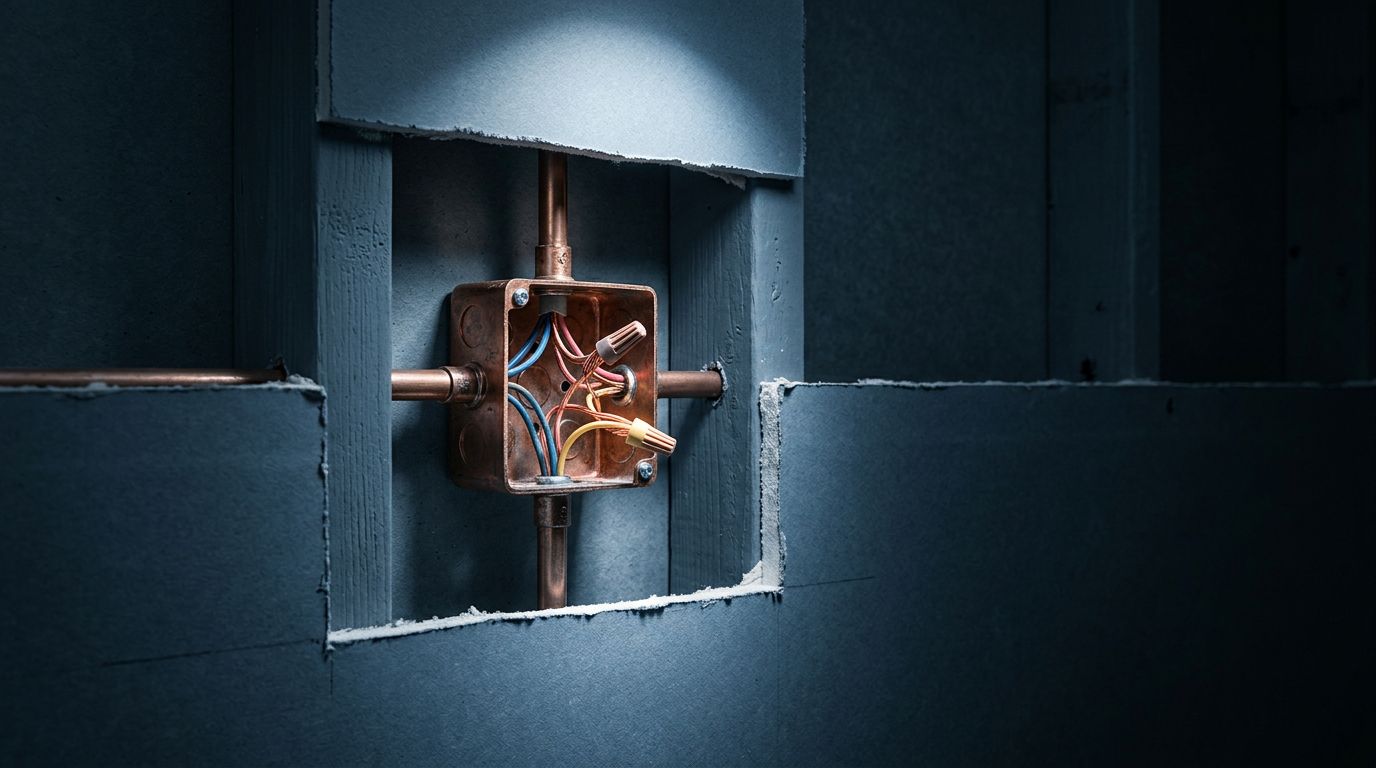
Yes, hidden junction boxes are generally a code violation when they're buried behind drywall, plaster, cabinets, tile, or other finished surfaces. Junction boxes need to stay accessible so the connections inside can be checked, repaired, or replaced without tearing open the building.
That matters because hidden splices are a lot harder to inspect, and electrical faults don't announce themselves politely. A loose connection can overheat for months before anyone notices, which is why accessibility rules exist in the first place.
Local adoption of the NEC can vary, so the exact answer still depends on your jurisdiction. If you're looking at a suspicious wall patch or a box that seems to have disappeared, the next sections will help you sort out what counts as accessible, what counts as concealed, and what to do next.
Why hidden junction boxes usually fail code
Electrical boxes are not meant to disappear into the structure of a home or building. They are service points. If a connection lives inside a box, someone should be able to reach it later without removing building materials.
That's the core safety issue. Wires can loosen, insulation can age, and splices can fail. When a box is hidden behind a finished surface, even a small repair can turn into guesswork. You may end up cutting open walls just to find a connection that should have been left reachable from the start.
If a box can only be reached by cutting drywall, removing tile, or pulling off cabinetry, it's usually not acceptable as a hidden splice point.
The rule is straightforward, but the real world gets messy during remodels. A contractor may move a light, extend a cable, or reroute a switch leg, then close the wall before the box gets moved to an accessible spot. That's when problems start.
If you're already seeing signs of a buried box, a professional electrical safety inspection can help confirm whether the installation still meets code and whether the circuit needs correction.
Accessible, visible, and concealed are not the same
These three words get mixed up all the time, but they do not mean the same thing. A box can be visible and still not be properly accessible. It can also be accessible without being obvious at first glance.
Here's a simple way to compare them:
| Term | What it means | Code risk |
|---|---|---|
| Accessible | You can reach the box and remove the cover without tearing out finished surfaces | Usually acceptable |
| Visible | You can see the box or its cover | Helpful, but visibility alone doesn't prove compliance |
| Concealed | The box is buried behind drywall, tile, paneling, cabinetry, or trim | Usually a problem if it contains splices or terminations |
A painted-over blank cover plate is still a visible access point if you can get to it. A box hidden behind a cabinet backer, a tiled shower wall, or a patched section of drywall is a different story. That's where accessibility disappears, even if the wiring still exists behind the surface.
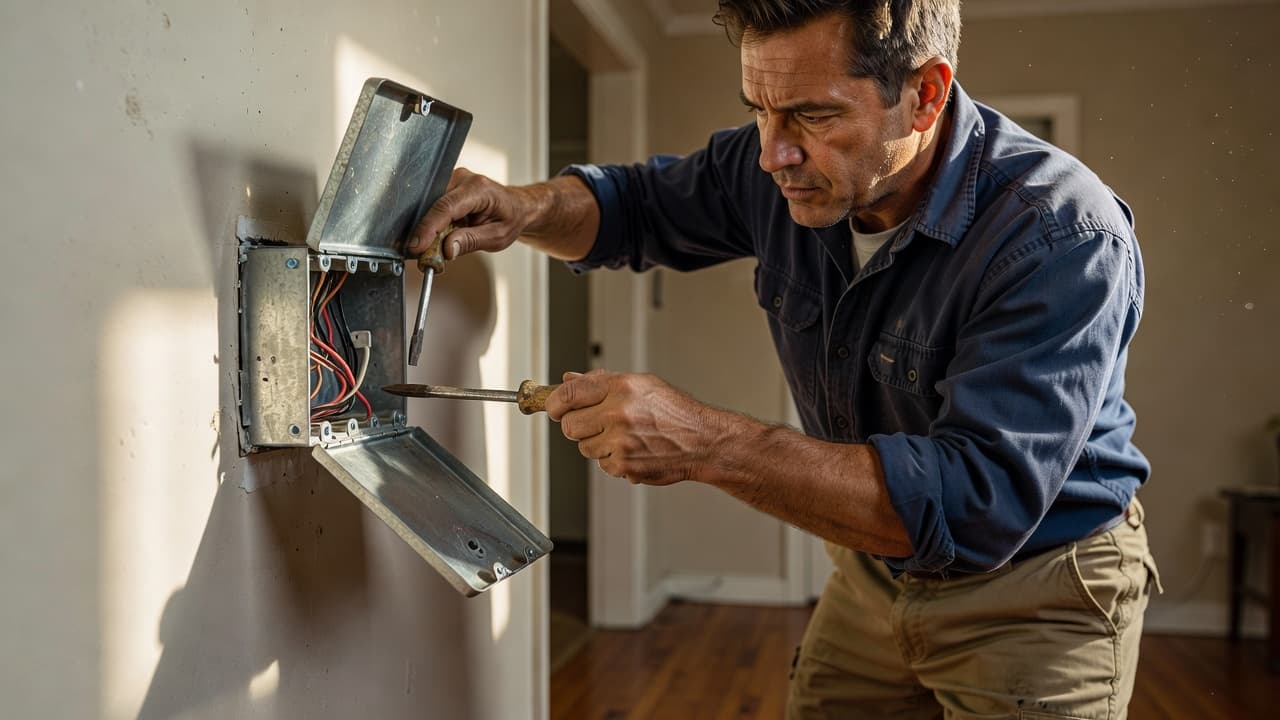
The practical test is simple. If the box can be opened and serviced without damaging the building finish, it's likely in better shape. If you need to start cutting, prying, or removing fixed materials, the installation has crossed into risky territory.
Common places hidden boxes show up
Hidden boxes often appear after a remodel, not because someone meant to break code, but because the work changed the layout and the old access point got forgotten. That's why these problems show up so often in finished homes and tenant spaces.
A few common examples stand out:
- A kitchen remodel leaves an old box behind new cabinets or a tile backsplash.
- A basement finish covers a ceiling box that used to be open.
- Drywall patches seal over a box after a cable was extended.
- A box gets trapped behind built-in shelving or a fixed bookcase.
- A decorative wall treatment hides a cover plate that should have stayed reachable.
In commercial spaces, tenant fit-outs create the same issue. A wall gets reworked for new offices, a conference room, or display shelving, and the box that once sat in plain view gets sealed in. That can create a problem during an inspection, a lease turnover, or a future repair.
Warning signs are often easy to spot if you slow down and look closely. Paint ridges around a suspicious patch, a blank wall plate that seems out of place, or an area where trim seems to cover an electrical route all deserve a second look. In older homes, you may also find a box hidden in a closet, behind paneling, or near a ceiling line where the finish work swallowed the access point.
What to do if you suspect a buried box
If you think a junction box has been hidden, don't start cutting randomly. The safer move is to map the circuit first and figure out where the box should have been left accessible.
- Turn off the circuit if you plan to inspect the area closely.
- Look for a cover plate, blank plate, or access panel nearby.
- Check the other side of the wall, along with the attic, basement, or adjacent room.
- Review any remodel history, because buried boxes often show up after renovation work.
- Call a licensed electrician if the box still can't be found or reached.
If you're buying, selling, or renovating, it helps to document the location of any suspected hidden junction box before more work happens around it. That can save time later and prevent a simple correction from turning into a bigger drywall repair.
For homes and businesses in Metro Boston, this is also a good moment to schedule an inspection before the next permit, sale, or tenant improvement. A buried box is easier to fix when the wall is already open.
When a concealed box may still pass
Not every box that isn't obvious is a violation. Some boxes remain acceptable because they're still reachable through a listed access point or an open space that doesn't require demolition. An attic, basement, crawlspace, or utility room can provide acceptable access if the box remains serviceable.
A box inside a fixture can also be part of a compliant setup when the fixture itself provides the intended access. The same idea applies to certain panels, covers, and listed enclosures. The key point is that the box still has to be reachable for inspection and maintenance.
That's where local enforcement matters. NEC requirements may be adopted differently by each city or town, and inspectors can apply those rules with local amendments in mind. What passes in one jurisdiction may fail in another, especially in older buildings or mixed-use properties.
If the situation is unclear, a licensed electrician or local inspector should make the call. That matters more than guessing based on what looks tidy behind the finished wall.
Conclusion
A junction box that disappears behind a finished surface is usually a problem, because electrical connections need to stay reachable. The safest standard is simple: if you can't access the box without opening the building, it probably shouldn't be hidden there.
If you spot an odd patch, a missing cover, or a box that seems buried after a remodel, treat it as a real clue. A quick inspection now can prevent a harder repair later, and it can keep the wiring where it belongs, in reach, visible when needed, and ready for service.