
Can Recessed Lights Go in Insulated Ceilings?

Contact Us
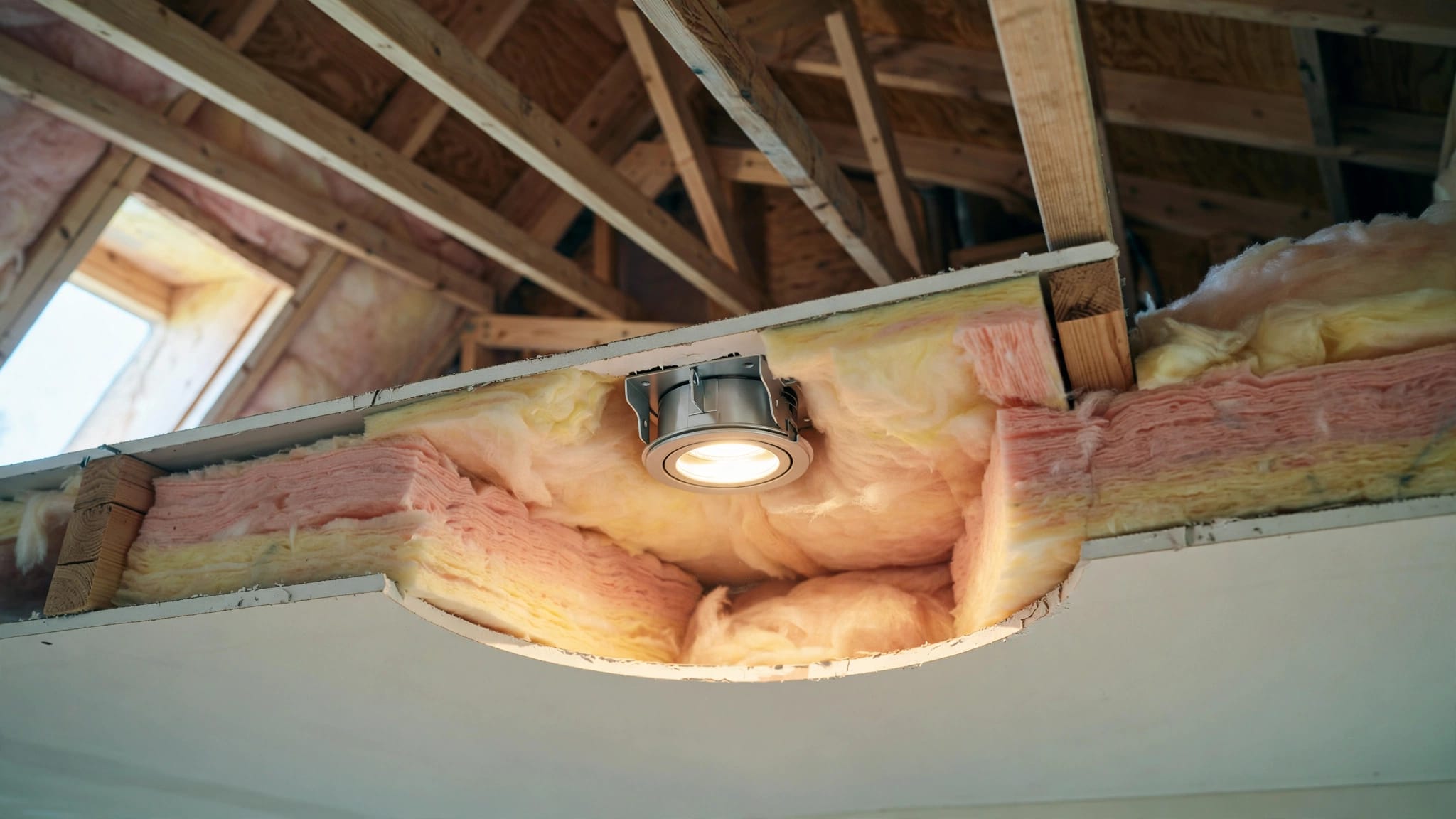
Yes, recessed lights can be installed in insulated ceilings when the fixture is designed for the conditions above it and the installation follows its listing and instructions. The key is matching the light to the insulation, air barrier, ceiling access, and local electrical requirements.
An older can light may not be suitable for insulation contact, while a newer LED fixture still needs the right rating and installation. Here's what to consider before adding lights or upgrading insulation.
When recessed lights and insulation can work together
The fixture's label is the starting point. An IC-rated recessed light is designed for insulation contact when installed according to the manufacturer's instructions. A non-IC fixture may need a clear space around its housing, so insulation shouldn't be packed against it.

Check the fixture, not just the bulb
An LED bulb or trim doesn't automatically make an older recessed housing safe for insulation contact. The rating applies to the fixture and its listed installation, so identify the housing and read its label or manufacturer instructions. If the label is missing or the fixture is outdated, have an electrician assess it before insulation covers the ceiling cavity.
Modern LED fixtures often produce less heat than older lamp setups, but they still need to be installed correctly. Poor airflow, an incompatible bulb, or insulation pressed against a fixture that requires clearance can contribute to overheating.
Treat IC and airtight ratings as separate
An IC rating addresses insulation contact. An airtight rating addresses air movement through the fixture and ceiling assembly. These features may appear together, but one does not automatically mean the other.
Air leakage around a ceiling opening can carry conditioned air into the attic, where it may affect energy use and comfort. When the ceiling is part of an air barrier, choose a fixture and sealing method suited to that assembly. Follow the manufacturer's details rather than improvising a cover or seal.
How fixture ratings affect heat and air leakage
Insulation changes the conditions around a recessed light by reducing heat loss from the room and limiting airflow around the housing. That makes fixture selection important, especially if insulation is being added around older lights.
Watch for older cans and repeated shutoffs
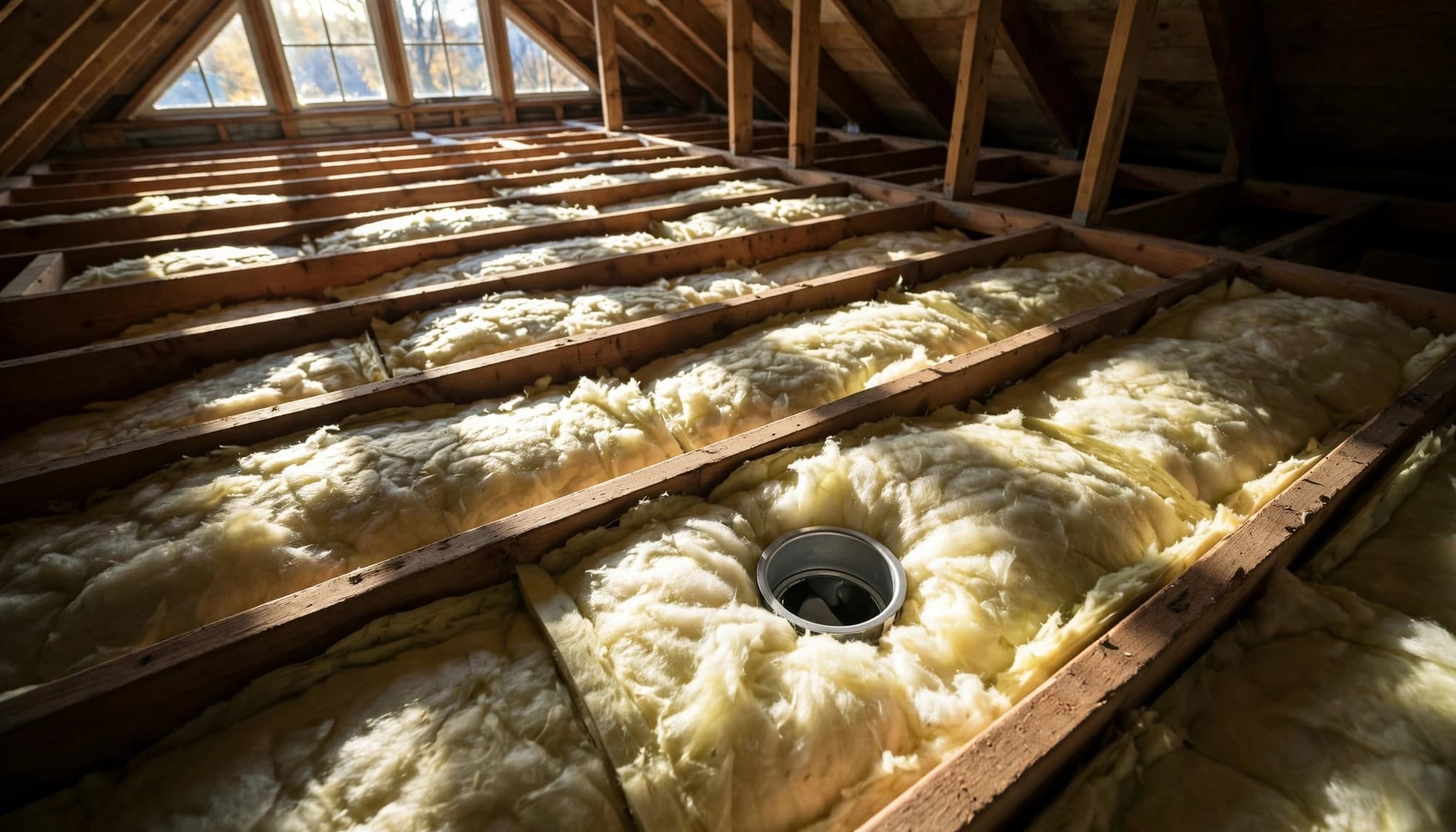
Older recessed cans may lack current insulation-contact ratings or thermal protection. If a light shuts off after it has been on for a while, heat may be triggering its safety device. Insulation too close to the housing is one possible cause, though a bulb, dimmer, or wiring problem can create similar symptoms.
In Greater Boston, many older homes had recessed fixtures added during later kitchen, bathroom, or basement updates. Those retrofit lights may sit close to framing and insulation. Read more about why recessed lights turn off when heat or another fixture problem may be involved.
Keep boxes and labels accessible
Insulation should not hide junction boxes, disconnects, panelboards, or fixture labels. Electrical boxes need to remain accessible as required, and a loose cover on top of insulation is not a substitute for proper access. Marking their locations before an insulation project can help crews avoid covering them, but markings don't replace access requirements.
New-construction and retrofit installations differ
The ceiling's condition affects how the work is planned. In new construction, the framing is open, so the electrician can position housings and wiring before drywall and insulation go in. That makes it easier to coordinate the lights with the insulation plan and air barrier.
Plan new construction before insulation
Before the ceiling is closed, select fixtures for the insulation conditions and establish where wiring and boxes will sit. Coordinate electrical work with air sealing and insulation rather than scheduling it after blown-in insulation is installed. Reopening a finished or insulated ceiling can add mess and repair work.
Expect tighter access with retrofits
A retrofit usually starts from the finished room, where the electrician cuts an opening and works through limited access. In older homes, framing, existing wiring, and insulation can restrict where a light can go. The fixture still needs to meet the conditions in its listing, even when access makes installation more challenging.
Avoid pushing insulation aside and leaving gaps, or compressing it into a thin layer around the fixture. Both can undermine the planned insulation coverage. An electrician can assess the ceiling cavity and choose an installation approach that fits the fixture and the space.
Preserve insulation and address local requirements
A good lighting plan accounts for the full ceiling assembly, not only the visible trim. Keep insulation evenly distributed around fixtures that are rated for contact, and maintain any clearance required for other housings. Don't cover an unidentified fixture and assume its label or design is suitable.
In Massachusetts, electrical permits and inspection requirements depend on the project and local jurisdiction. New circuits or wiring modifications may require permits and inspection. In some projects, the inspector needs to see concealed electrical work before insulation or drywall covers it. Coordinate the electrical work with the insulation schedule to avoid closing the ceiling too soon.
The fixture label and manufacturer's instructions control installation details such as insulation contact and clearance. If a light is hot, discolored, buzzing, or repeatedly shutting off, leave it off and arrange an electrical inspection rather than shifting insulation around the housing yourself.
Key takeaways
- Use an IC-rated fixture where insulation will contact the housing, following its installation instructions.
- Treat airtight and IC ratings as different features, even when a fixture has both.
- Plan new-construction lighting before insulation goes in, and account for limited access during retrofits.
- Keep electrical boxes accessible and coordinate inspections before concealed work is covered.
For Greater Boston homeowners planning a project, our recessed lighting installation cost guide offers added context for budgeting.
Conclusion
Recessed lights can work in insulated ceilings when the fixture rating, air sealing, and installation method match the ceiling conditions. Old cans deserve particular attention before new insulation goes in, since a light that once had open space around it may now face different heat conditions.
Plan electrical work before insulation whenever possible. That gives the installer access to the ceiling cavity and helps protect both the lighting and the insulation.