
Can You Sell a Massachusetts Home With Electrical Code Violations?

Contact Us
You can sell a home with Massachusetts electrical code violations , but the issue can change the price, timing, and terms of the deal. A code concern doesn't automatically make a property unsellable.
The safest path is to identify the problem, document what you know, and decide whether repair or disclosure makes better sense for your sale. Serious hazards and unpermitted work deserve attention before the listing goes live.
Massachusetts Electrical Code Violations Do Not Automatically Stop a Sale
Massachusetts does not have a statewide rule that forces every older home to meet every current electrical requirement before it can be sold. Older houses often contain wiring or equipment installed under an earlier code edition.
However, a visible hazard, an open permit, or unpermitted work can become a major issue once a buyer's inspector, lender, insurer, or local official sees it. The result may be a repair request, a price reduction, or a delayed closing.
The condition of the system matters more than its age
A home built in 1925 may have an older panel or wiring methods that no longer meet current standards. Age alone does not prove the system is unsafe or automatically require a whole-house rewire.
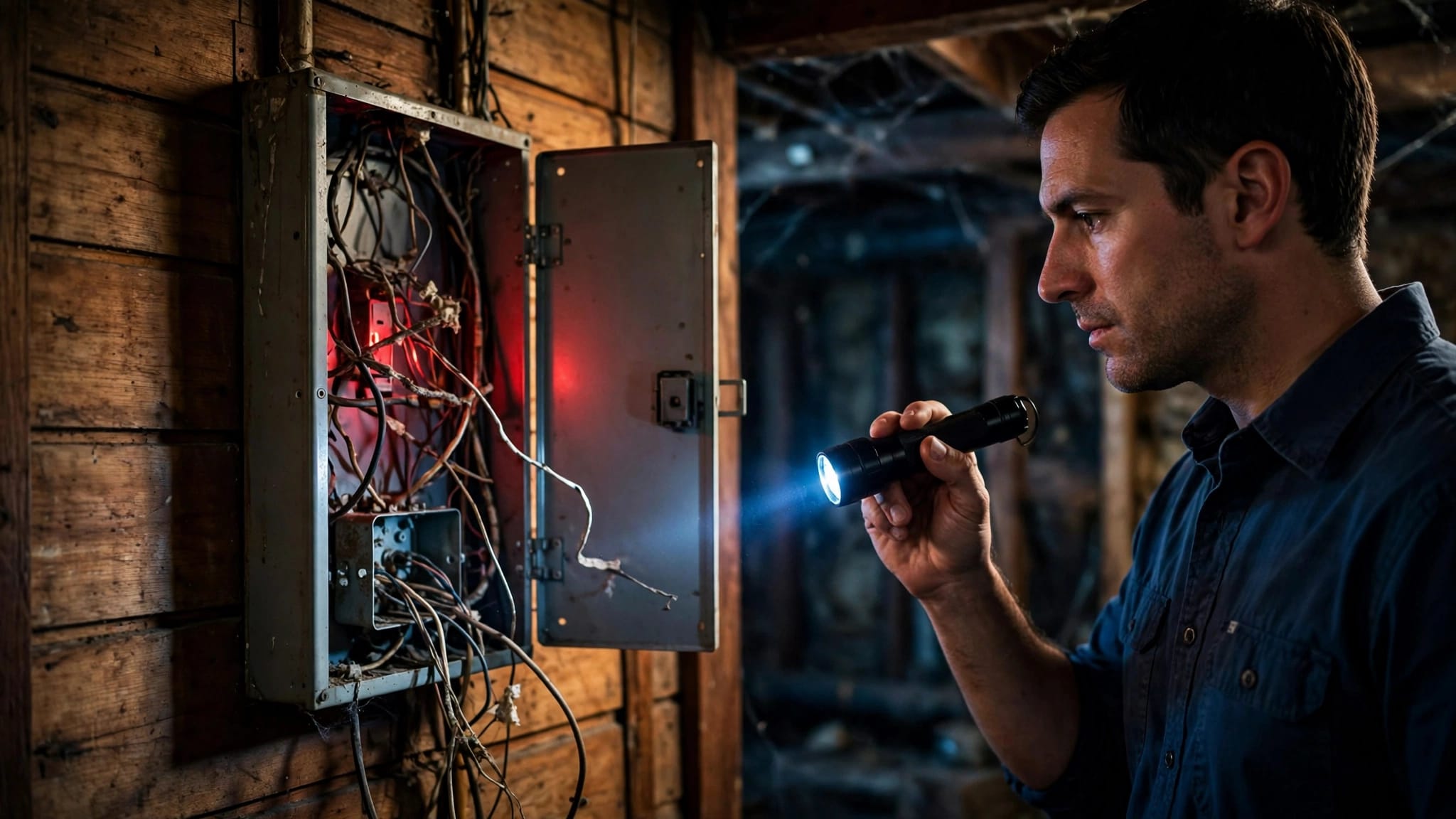
On the other hand, exposed live parts, overheated conductors, damaged insulation, loose connections, or improper splices need prompt evaluation. Those conditions create real safety concerns and can make buyers walk away.
A home inspection finding is not always a final code ruling
Home inspectors identify concerns, but they do not issue electrical permits or approve corrective work. The local Inspector of Wires has authority over permitting and inspection in the municipality.
Therefore, an inspection report that says "not to current code" may call for further review rather than a full upgrade. A licensed electrician can explain whether the item is a present hazard, an installation defect, or an older condition that can remain in place.
A sale does not automatically trigger a whole-house electrical upgrade, but known unsafe conditions can still derail the transaction.
Which Electrical Problems Create the Most Concern?
Some findings carry more weight because they involve shock, fire, or reliability risks. Buyers also react differently when they see a small outlet correction versus a questionable service panel.
Hazards that often lead to repair requests
A buyer may ask for repairs when an inspection identifies conditions such as:
- An overloaded, corroded, or damaged electrical panel.
- Missing panel covers, open junction boxes, or exposed wiring.
- Double-tapped breakers where the equipment is not listed for two conductors.
- Improper splices, loose outlets, or heat damage at connections.
- Missing GFCI protection near sinks, bathrooms, garages, or outdoor outlets.
- Knob-and-tube wiring that has been altered, buried in insulation, or shows deterioration.
These conditions do not all have the same fix. For example, adding GFCI protection can be straightforward, while a deteriorated service entrance or widespread unsafe wiring may require larger repairs.
Older wiring requires a closer look
Knob-and-tube wiring, fuse panels, aluminum branch-circuit wiring, and undersized services appear in many Greater Boston homes. Some systems can continue operating safely after a proper assessment. Others need correction because prior alterations created unsafe connections or overloaded circuits.
A licensed electrician should inspect the service size, grounding and bonding, panel condition, visible branch wiring, and devices near water. For a more complete review before listing, consider professional electrical inspections in Greater Boston.
Permits, Inspections, and Open Electrical Work
Permits often become the center of a sale dispute. A buyer may accept an older panel, yet object strongly to a recently finished basement, kitchen remodel, or panel replacement with no permit history.
Under Massachusetts Electrical Code, 527 CMR 12.00, electrical work generally requires a permit and inspection through the local Inspector of Wires. Electrical work also cannot be covered before the required inspection.
Find the paper trail before you list
Gather permits, final inspection approvals, invoices, warranties, and any electrician reports related to electrical work. Keep copies of records for panel upgrades, additions, kitchens, finished basements, EV chargers, generators, and service changes.
If a permit remains open, contact the local electrical inspector before assuming it can be closed with a quick phone call. The inspector may require access, corrections, or updated work before issuing approval.
For newer projects, the permit's date matters. Permits issued after April 24, 2026 generally follow Massachusetts' 2026 electrical code adoption, while earlier permits may follow the code in effect when they were issued. The local authority can confirm which edition applies.
Unpermitted work may need to be legalized
A seller should not try to hide an unpermitted panel swap, basement wiring, or added circuit. Once discovered, the work may need a permit, inspection, and corrections before an inspector will approve it.
In some cases, an electrician can inspect accessible work, identify needed repairs, and coordinate a permit. Walls may need limited access if hidden wiring cannot be evaluated safely. The Massachusetts electrical rough inspection guide explains why inspectors need to see wiring before it is covered.
Disclosure Rules and the Limits of an "As-Is" Sale
Massachusetts generally follows a buyer-beware approach and does not use one broad statewide seller disclosure form for every residential sale. Still, that does not give a seller permission to make misleading statements or conceal known problems.
If you know the basement wiring was installed without a permit, a panel overheats, or an electrician identified a fire risk, be accurate when a buyer asks about it. Provide the report or invoice if it helps show what the issue is and what work has occurred.
Known material defects deserve direct answers
Massachusetts real estate licensees must disclose known latent or material defects that could affect a buyer's decision. Sellers also face risk if they provide false answers, omit facts in a misleading way, or cover up a defect.
Write disclosures carefully. "Electrical system may need updating" is not a useful substitute for a known fact such as "A 2024 electrician report identified damaged wiring in the attic." Clear facts give both sides a better basis for negotiation.
A Massachusetts real estate attorney can review the purchase-and-sale agreement and disclosure language when the electrical condition is serious, disputed, or tied to unpermitted work.
"As is" does not erase safety or honesty duties
An as-is clause usually means the buyer agrees to take the property in its present condition. It can limit repair obligations negotiated in the contract.
It does not protect a seller who lies, hides a defect, or falsely claims work was permitted and inspected. It also does not replace mandatory transfer requirements for smoke and carbon monoxide alarms.
Smoke and Carbon Monoxide Alarms Are Separate Sale Requirements
Electrical code violations and alarm compliance are related safety topics, but they follow different rules during a Massachusetts home sale.
Under M.G.L. c. 148, Section 26F, a seller must provide approved smoke alarms when a residential property transfers. Section 26F 1/2 requires carbon monoxide alarms in homes with fossil-fuel-burning equipment or enclosed parking, and the property must be inspected for compliance at transfer.
Schedule the local fire inspection early
Your local fire department handles the inspection and certificate process. Cities and towns may use different scheduling systems, lead times, and documentation.
Do not wait until the week of closing. Test alarms, replace expired units, confirm placement, and schedule the inspection early enough to correct any failed items. A passed smoke and CO inspection does not certify every part of the electrical system, but the certificate is commonly needed for closing.
Repair, Credit, or Price Adjustment: Choosing a Path
Once you have an electrician's findings, you can choose a selling strategy that fits the property and market. The best choice depends on cost, urgency, buyer demand, and how the condition affects financing.
Repair first when the issue is dangerous or likely to block financing
Repairing before listing often makes sense for active hazards, a badly damaged panel, exposed wiring, failed safety devices, or clearly unpermitted recent work. Buyers feel more confident when they can see a licensed electrician's invoice, permit, and final inspection record.
Repairs can also prevent a small issue from becoming a much larger buyer demand after the home inspection. If the panel shows warning signs, review these electrical panel upgrade warning signs before deciding whether a targeted repair is enough.
Use a credit only when the scope is clear
A credit or price adjustment can work when an electrician has defined the problem and the buyer can obtain insurance and financing. It may suit an older system that functions safely but needs modernization for the buyer's future plans.
Put the agreement in writing. The contract should state the credit amount, whether the buyer accepts the condition, and whether any permit, inspection, or alarm certificate still must be completed before closing.
For large unknowns, a credit may not solve the problem. A lender or insurer may still require repairs, and a buyer may worry that the actual cost will exceed the estimate.
A Practical Pre-Listing Electrical Checklist
Before listing a Massachusetts home with electrical code violations, take these steps:
- Hire a licensed electrician to evaluate reported defects, visible hazards, and questionable past work.
- Collect permits, final approvals, invoices, and prior inspection reports.
- Ask the local Inspector of Wires about open permits or work that may need legalization.
- Correct immediate hazards before showings or buyer inspections.
- Discuss known issues and planned disclosures with your real estate agent and, when appropriate, a Massachusetts real estate attorney.
- Schedule the local fire department's smoke and carbon monoxide compliance inspection well before closing.
- Keep repair receipts and final inspection records available for buyers, lenders, and insurers.
This preparation also helps you avoid vague promises. If you decide to sell without repairing an item, disclose the known condition plainly and let the contract address the buyer's response.
A Safer Sale Starts With Clear Information
You can sell a Massachusetts home with electrical code violations, especially when the issues are older conditions rather than immediate hazards. Still, the sale becomes easier when you understand the defect, verify permit status, and share accurate information.
A licensed electrician can separate a manageable correction from a serious safety problem. Clear records, honest disclosure, and completed safety requirements give buyers fewer reasons to question the home after they make an offer.