

Electrical Checklist for Buying an Older Home in Greater Boston

Contact Us

Older homes in Greater Boston have a lot to offer, but their wiring can hide costly surprises. An older home electrical checklist helps you spot safety issues before charm turns into an expensive repair.
That matters in Boston, Cambridge, Somerville, Brookline, Quincy, Newton, and nearby towns, where many houses were built long before today's power demands. Kitchens, home offices, EV chargers, mini-splits, and finished basements all ask more from a system than it was built to handle.
Start with the parts you can see during a showing, then bring in a licensed electrician before you close.
Why older Boston homes need a closer look
Many older homes still have good bones and solid structure. The electrical system, however, may have been patched over several decades. One addition might have new wiring, while the rest of the house still depends on older circuits.
That mix is common in historic homes. It can also hide problems. A room may look updated, but the wiring behind the walls may not match the finish you see.
If the home is more than a few decades old, a home electrical inspection in Greater Boston belongs on your pre-closing list. It gives you a clearer picture of what is safe, what is outdated, and what may need immediate attention.

Common issues in older Boston-area homes include:
- Outdated service panels that no longer match household demand.
- Two-prong or ungrounded outlets in bedrooms, halls, and living rooms.
- Patchwork repairs from past remodels, often done room by room.
- Crowded extension-cord use , which can hint at too few outlets or overloaded circuits.
A home does not need to be rewired just because it is old. It does need a system that is safe, sized well, and suited to your plans.
What to check yourself during a showing
You do not need to open the panel to spot early warning signs. A careful walk-through can tell you a lot.
Start with the panel area, if it is visible. Look for rust, missing knockouts, loose covers, or scorch marks. Listen for buzzing. Smell matters too. A burnt odor near the electrical panel is a serious clue.
Then scan the living spaces. Too many power strips, extension cords under rugs, or lamps with dimming lights can point to weak circuit support. Flickering when a microwave, vacuum, or space heater starts up is another clue.
During a showing, look for these items:
- Clearly labeled breakers instead of mystery switches.
- Three-prong grounded outlets in the main rooms.
- GFCI protection near sinks, baths, laundry areas, garage spaces, and basements.
- Neat, modern fixtures that sit flush and feel secure.
- No exposed splices or loose wires in closets, attics, or utility spaces.
A tidy room can still hide a tired electrical system. Look past paint and finishes.
Ask the seller or agent about major updates. If the kitchen, bath, or basement was remodeled, ask who did the electrical work and when. If nobody can explain the history, that does not prove trouble, but it does mean you need a closer look.
What an electrician should test before closing
This is where a visual check ends and a real evaluation begins. A licensed electrician can test the system, open the panel safely, and look for problems that a buyer cannot spot on a walk-through.
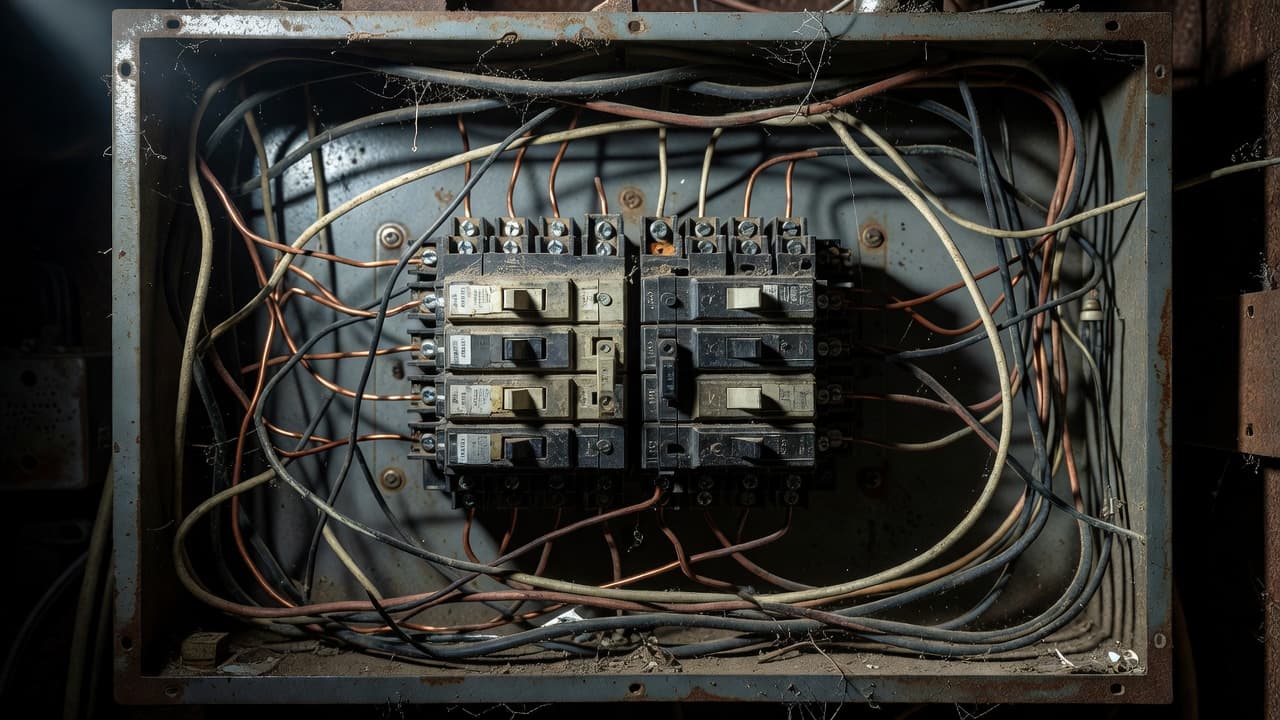
An electrician should review the service size, panel condition, grounding, bonding, and the state of visible branch circuits. They should also test outlets, verify protection where water is present, and check for signs of heat damage or loose connections.
If the home has had many changes over the years, ask about a thermal scan or infrared check. Hot spots behind the panel or inside a connection can point to trouble before a breaker trips.
Service panel, grounding, and branch circuits
The panel should have enough capacity for the home's current use. A smaller service may be fine for a modest house, but it may struggle once a modern kitchen, laundry, and heating equipment all run at once.
The electrician should also check whether grounding and bonding are in place and whether the panel shows signs of wear, corrosion, or outdated components. Older fuse panels, tired breakers, and cramped wiring all deserve attention.
If the home still has knob and tube, knob and tube wiring replacement services may be part of the path forward. That wiring can appear in older Boston-area homes, especially where original systems were never fully replaced.
Safety devices and load checks
GFCI protection matters anywhere water and electricity can meet. AFCI protection may also be recommended in some living spaces, depending on the wiring and the work already done in the home. The goal is simple, safer operation and fewer fire risks.
The electrician should also look at how the home uses power now. A house that once ran on a few lamps and a radio may now support computers, chargers, appliances, and air conditioning. That change can expose weak circuits fast.
Before you close, hire a licensed electrician for a full evaluation. A home inspector can point out clues, but a licensed pro can test the system properly and tell you what needs attention now.
Red flags and upgrade opportunities
Some findings need urgent action. Others are better treated as planned upgrades after closing. The difference matters when you start negotiating.
| Finding | What it means | Urgency | Typical buyer move |
|---|---|---|---|
| Active knob and tube wiring | Old insulation, no grounding, and limited support for modern loads | Urgent safety issue if still in use | Ask for repair credit, replacement estimate, or seller action |
| Burn marks, heat damage, or buzzing at the panel | Possible overheating or loose connections | Urgent safety issue | Request immediate electrician review before closing |
| Missing GFCI protection near water | Higher shock risk in kitchens, baths, basements, or garages | Urgent or near-term fix | Negotiate for correction or credit |
| Overcrowded panel or frequent breaker trips | System may be undersized for the home | Upgrade opportunity, sometimes urgent | Get pricing and use it in negotiations |
| Two-prong outlets or limited receptacles | Older convenience and grounding limits | Upgrade opportunity | Plan for upgrades after closing if the system is stable |
| Neat remodels with dated circuits behind them | New finishes may hide old wiring | Needs full review | Ask for proof of permits, invoices, or an electrician report |
The key split is simple. Active hazards belong in the urgent column. Comfort and capacity upgrades belong in the negotiation column.
You do not need to scare yourself out of a house that needs work. You do need to know which problems are safety issues and which ones are part of a normal update plan.
How electrical findings affect your offer
Electrical issues often have real value in a purchase negotiation. A clear report can support a repair request, a closing credit, or a price adjustment. That is especially useful in Greater Boston, where older homes attract strong interest and buyers need to move fast.
If the problem is safety-related, ask for a specific fix, not a vague promise. Written estimates help. So do photos and a short report from the electrician. A seller is more likely to respond to a clear scope than to a general concern.
If the system is mostly sound but dated, a credit may make more sense than asking the seller to manage every upgrade. That gives you control after closing, which often works better for panel changes, outlet additions, or a planned rewiring project.
Keep the offer focused on facts. A home with an old panel is one thing. A home with signs of heat damage is another. The first may be a budget item. The second needs attention before the keys change hands.
Conclusion
Older Boston homes can be excellent purchases, but the electrical system needs the same care as the roof, boiler, or foundation. A smart buyer looks past fresh paint and checks for capacity, grounding, protection, and signs of age.
Use the older home electrical checklist to separate urgent safety issues from upgrades you can plan for later. That approach keeps the charm in the house and the risk out of your closing table.
Before you sign, get a licensed electrician to review the home fully. A careful inspection now can save you from surprises after moving day.