

Is Cloth Wiring Safe in Older Greater Boston Homes?

Contact Us
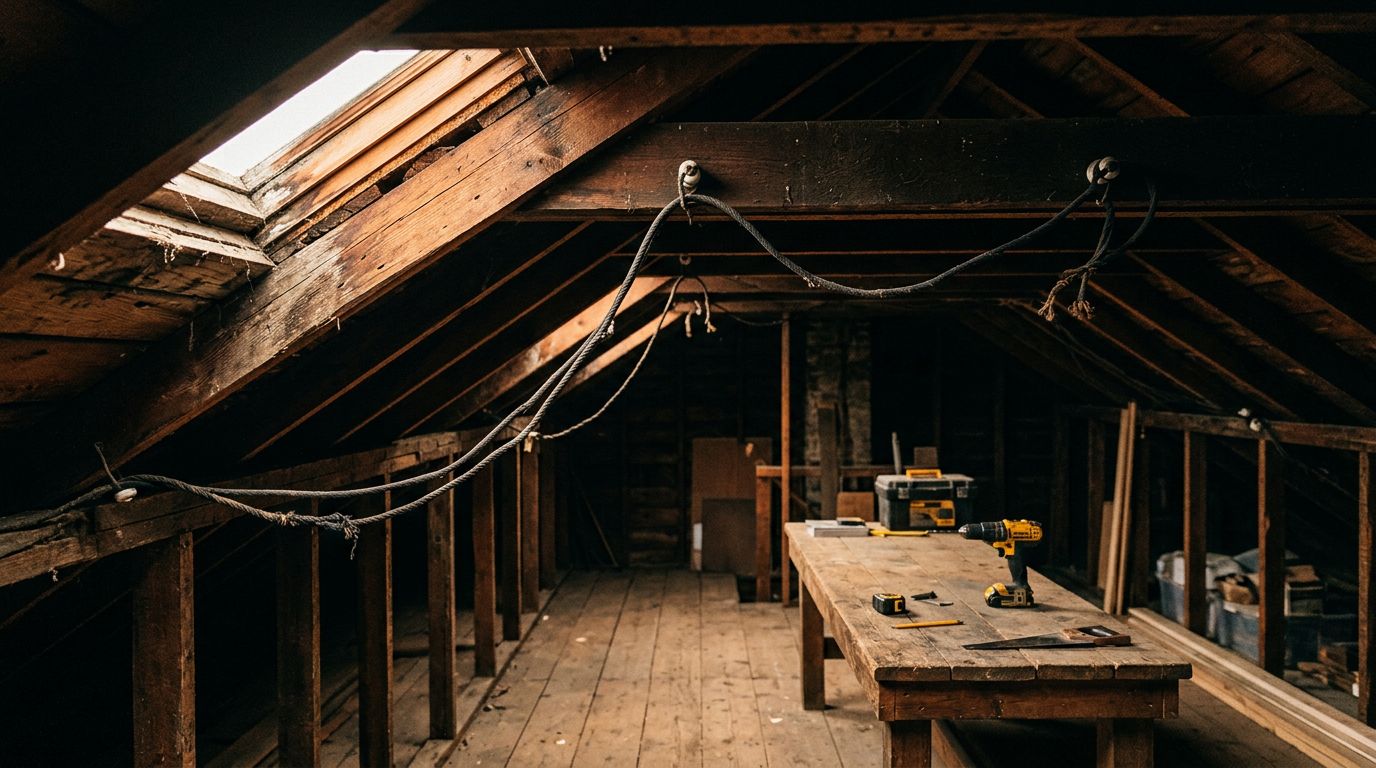
Cloth wiring can make a home feel older in a hurry, but age alone does not make it unsafe. In many Greater Boston houses, legacy wiring is part of the building's history, and the real question is condition, load, and past repairs. A clean, intact old circuit can still work for years, while a patched-up one can hide trouble.
That matters in a region with a lot of older housing stock. If you own or are buying an older home, cloth wiring safety depends on what you can see, what has been changed, and how the system is being used today.
What cloth wiring tells you about an older home
Cloth-covered wiring shows up in many homes built before modern plastic-insulated cable became standard. In practical terms, that means the wiring may be decades old, but the age itself does not tell the whole story. Some cloth wiring stays stable. Some dries out, cracks, and falls apart.
Greater Boston has plenty of homes with layers of updates. A house might still have original cloth wiring in the attic, newer cable in the kitchen, and a panel that was replaced years ago. That mix is common. It also makes quick guesses risky.
The wiring matters most when you look at how it has aged. Dry basements, hot attics, old repairs, and heavy appliance use all change the picture. A circuit that once powered a few lights may now feed a TV, chargers, a dehumidifier, and a space heater.
Here is a quick way to think about it.
| Condition | What it usually suggests | Best next step |
|---|---|---|
| Cloth jacket is intact and flexible | Wiring may still be serviceable | Plan a professional inspection |
| Insulation is brittle or crumbling | Aging insulation may be failing | Schedule evaluation soon |
| Outlets feel warm or show discoloration | Possible overheating | Stop using the circuit and call an electrician |
| Old wire meets newer cable in the same box | Past upgrades may be incomplete | Review the full circuit |
| Fuse or breaker looks oversized for the wire | Protection may not match the conductor | Have the panel checked |
The takeaway is simple. Cloth wiring can exist in a safe home, but it needs to be judged by condition, not by age alone.
Old wiring is not the same as bad wiring. The trouble starts when old wiring is damaged, overloaded, or altered badly.
When cloth wiring can still be serviceable
Some cloth wiring stays in decent shape for a long time. If the outer wrap is intact, connections are secure, and the circuit is not being pushed hard, the wiring may still do its job. That is especially true in homes where the system has been left alone and protected from heat and moisture.
Dry, cool spaces are kinder to old wiring than hot attics or damp basements. Clean junction boxes and tight connections also help. So does modest electrical demand. A few lights and small loads are one thing. Modern kitchen appliances and laundry equipment are another.
Older circuits can also remain usable when they are protected and not modified in a sloppy way. The condition of the panel matters here. If the breaker or fuse size matches the wire, the circuit is less likely to overheat. If someone swapped in a larger fuse to stop nuisance tripping, the risk goes up.
For buyers, this is where a licensed inspection pays off. A home electrical inspection in Greater Boston can separate a system that needs monitoring from one that needs work right away. That is especially helpful when the seller cannot explain what has been updated.
Still, serviceable does not mean invisible. Old wiring should not be ignored simply because it has been working. It should be checked, documented, and matched to the way the home is used now.
Red flags that change the picture fast
Some warning signs point to real trouble. When cloth wiring starts breaking down, the clues are often visible before a failure happens.
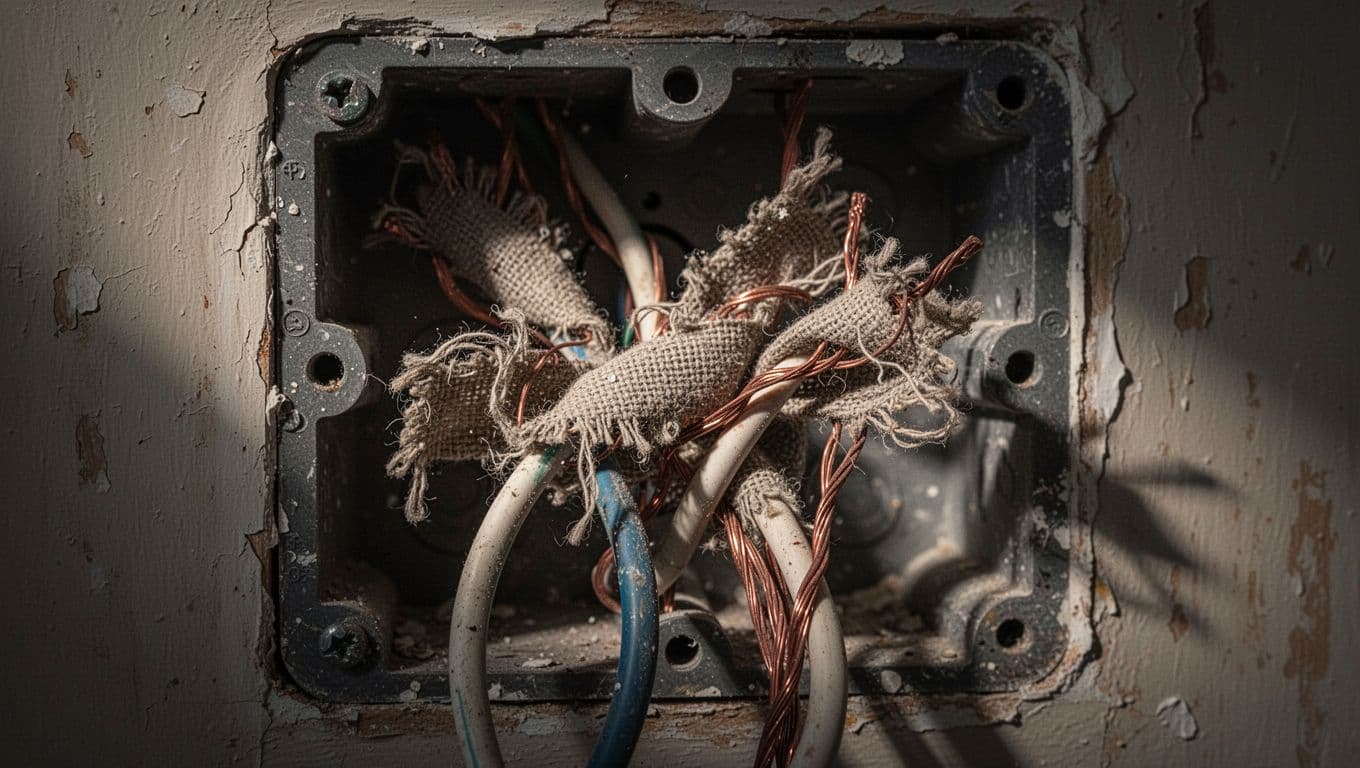
Look for these signs:
- Brittle insulation that cracks or flakes when touched.
- Fraying cloth wrap that leaves conductor exposed.
- Overheating at outlets, switches, or junction boxes.
- Ungrounded circuits that limit safe use with modern equipment.
- Overfused panels or oversized breakers that do not match the wire.
- Amateur splices with loose tape, wire nuts, or hidden box work.
- Mixed old and new wiring where the connections look crowded or messy.
- Discoloration or scorch marks around receptacles, switches, or panel parts.
Any one of these deserves attention. A few together deserve immediate review.
Heat damage is especially important. When insulation dries out, it can expose conductors and raise the chance of arcing. Arcing is a small electrical jump, but it can make a big mess. It can also create fire risk inside walls where you cannot see it.
Amateur splices are another common problem in older homes. A rough repair may work for a while, then fail when the circuit gets warm or the box is moved. The wiring may look patched instead of properly joined in an accessible junction box.
Ungrounded circuits are also common in older Boston-area homes. That does not mean every ungrounded circuit is dangerous by itself. It does mean the circuit may not support modern devices or surge protection the way a newer system does.
If you notice one of these signs, treat it as a reason to inspect, not panic.
Why mixed old and new wiring needs extra care
Many older homes were updated in pieces. A previous owner might have remodeled the kitchen, added a bathroom outlet, or finished a basement. As a result, one part of the house may have newer cable while another part still relies on cloth-covered conductors.
That mixed setup can create problems when the upgrades do not match. A newer outlet may be installed on an older circuit that was never meant to carry that load. A panel might have had a few breakers replaced, while the branch wiring stayed the same. Someone may also have added modern fixtures without updating the boxes or grounding path.
This is where hidden issues show up. The home can look updated on the surface, yet the wiring behind the walls is a patchwork. That patchwork can be safe only if the work was done correctly and the circuit was evaluated as a whole.
Older homes in Greater Boston often carry this kind of history. Some systems were repaired after additions. Some were patched after a renovation. Others were modified by different hands over the years, which means the work quality can vary from one box to the next.
A mixed system does not automatically need a full replacement. However, it does need a clear look at the whole circuit. A licensed electrician can tell whether the old and new parts are compatible, whether the panel protection matches the wire, and whether any hidden splices need to be redone.
If the wiring has been changed several times, the safest assumption is that you need a closer look, not a guess.
What homeowners and buyers should do next
The next step depends on what you see and how the home is used. A few simple habits can help you sort out low-risk aging from real trouble.
- Look at visible wiring in the basement, attic, utility room, and panel area.
- Note any brittle insulation, scorch marks, loose connections, or warm devices.
- Check whether old wiring and newer cable are tied together in the same boxes.
- Pay attention to frequent breaker trips, flickering lights, or buzzing sounds.
- Bring in a licensed electrician for a full evaluation before you add heavy loads.
That last step matters most if you are planning a renovation, adding central air, installing an EV charger, or replacing major appliances. Older wiring may still be fine for light use, but the home's demand may have changed. The system has to match the way you live now.
Buyers should also ask for documentation. Panel upgrades, rewiring work, and inspection notes can tell you a lot about the home. If there are gaps, that does not mean the house is a bad buy. It does mean you need more information before you close.
Homeowners should think the same way. If a circuit has worked for years but shows age-related wear, that is a reason to plan, not panic. A clean inspection report can help you decide whether to repair one section, rewire part of the home, or leave stable wiring in place for now.
Conclusion
Cloth wiring in an older Greater Boston home is not automatically unsafe. Its condition, installation history, and electrical load matter far more than the age stamped on the walls. When the insulation is intact and the circuit is used within its limits, the wiring may still be serviceable.
The real concerns show up when you see brittle insulation , fraying, overheating, amateur splices, overfused panels, or mixed old and new wiring. Those signs call for a licensed electrician, not a guess.
If you are buying or living in an older home, treat cloth wiring as a reason to inspect, document, and plan. That approach gives you a clearer picture of the home and a safer path forward.