
How to Plan Greenhouse Electrical Wiring Safely

Contact Us
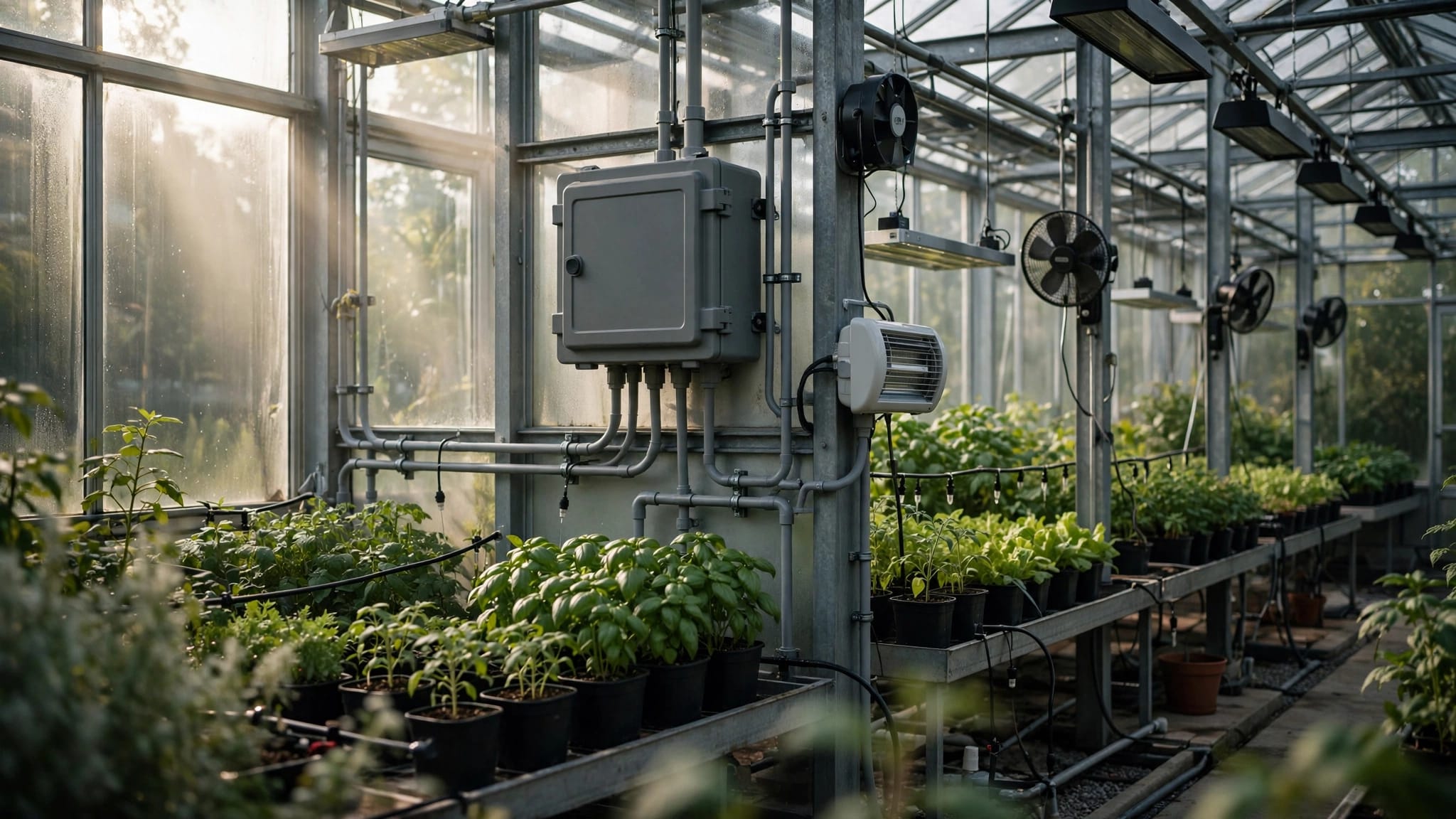
Plan greenhouse electrical wiring by listing equipment loads, mapping moisture exposure, and having a licensed electrician design the supply and protection. Electric heating often determines capacity, so choose your heating approach before selecting circuits.
A greenhouse combines water, conductive framing, and equipment that may run unattended. Start with an equipment list and a floor plan, then coordinate permits and installation before trenching or ordering fixed equipment.
Key Takeaways
- Include heating, lighting, fans, pumps, and controls in the electrical load plan.
- Match equipment ratings to condensation, irrigation spray, temperature, and chemical exposure.
- Have a licensed electrician evaluate service capacity, circuit protection, grounding, and the supply route.
- Address permits, inspections, and realistic expansion before construction closes access.
The greenhouse's size alone doesn't determine its electrical needs. A small structure with electric heat can demand more capacity than a larger seasonal greenhouse.
Build a Greenhouse Electrical Wiring Load Inventory
Record equipment nameplate information
List every device you expect to install, including equipment used only during freezing weather. Record quantity, voltage, amperage or wattage, and operating schedule. Photograph accessible equipment labels without opening electrical enclosures.
Use the inventory to capture these planning details:
| Equipment | Details that affect the design |
|---|---|
| Grow lights | Actual input watts, quantity, operating hours |
| Fans and vent motors | Running current, starting characteristics |
| Heaters and heat mats | Rated input, voltage, control requirements |
| Pumps | Motor rating, starting current, water exposure |
| Irrigation controls | Supply voltage, transformer and enclosure requirements |
Use actual electrical input, not a grow light's advertised replacement wattage. Also include convenience receptacles for occasional maintenance equipment.
Account for simultaneous operation
Winter operation may combine heaters, circulation fans, grow lights, and irrigation controls. A thermostat doesn't eliminate a heater's load because the heater still draws its rated power while operating.
For context, a 1,500-watt resistance heater draws 12.5 amps at 120 volts. That calculation describes one appliance, not the allowable load on a proposed circuit.
Your electrician should evaluate continuous operation, motor starting, manufacturer instructions, and applicable load-calculation rules. They should also assess the home's existing demand. Empty breaker spaces don't prove that the electrical service has spare capacity.
Plan Lighting, Ventilation, Heating, and Controls Together
Separate plant lighting from working light
Grow lights support plant growth, while general lighting helps you see walkways, switches, and equipment. Give them separate controls so a growing schedule doesn't leave you working in darkness.
Position fixtures around mature plant height and adjustable benches. Their supports, cords, and connections must remain suitable as plants grow and irrigation patterns change.
Exterior path lighting needs its own control strategy. Our guide to outdoor lighting controls explains timer and photocell options for that separate task.
Also identify the power supply for thermostats, environmental sensors, and irrigation controllers. Low-voltage controls still need correctly rated transformers, connections, and enclosures.
Coordinate climate equipment and irrigation
Select heating equipment for the greenhouse's conditions and heating demand. A portable indoor heater shouldn't become the default permanent solution for a humid growing space.
Tell your electrician whether heat will run overnight, whether heaters require dedicated circuits, and how thermostats switch the load. Control contacts must suit the equipment they operate; larger loads may need additional switching equipment.
Meanwhile, coordinate exhaust fans and motorized vents so they don't work against the heating strategy. Irrigation timers, solenoid valves, and pumps need coordinated control wiring, too.
Document what should happen after a power interruption. A controller that restarts with the wrong schedule can interrupt watering or leave equipment off when plants need it.
Design Around Moisture and Everyday Greenhouse Work
Map water, walkways, and equipment access
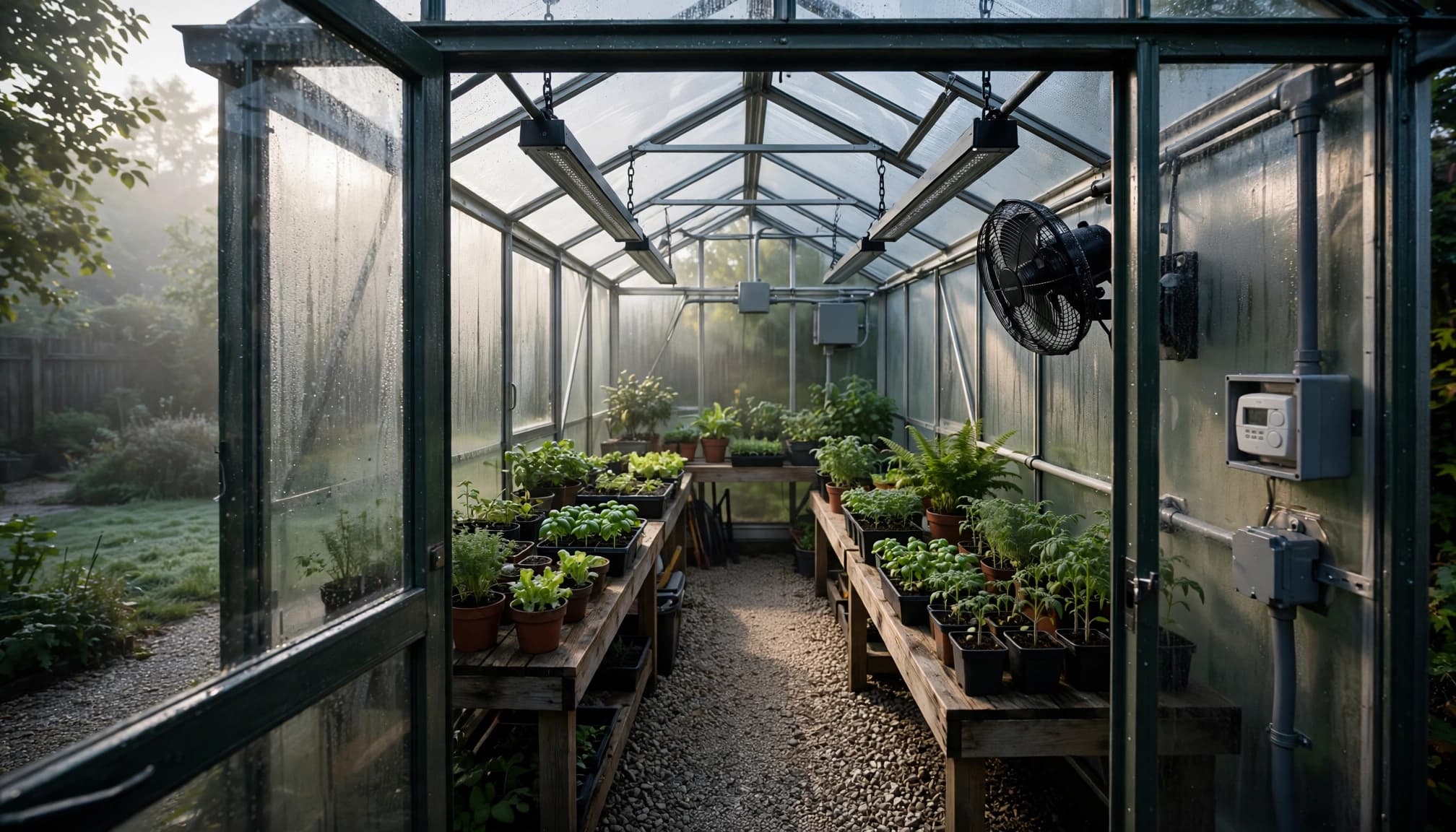
Draw benches, doors, hose locations, irrigation lines, drains, and equipment on one plan. Then mark proposed receptacles, switches, lights, disconnects, and junction boxes.
Keep connections away from direct spray, standing water, and routine potting work. Overhead condensation matters, too. A location protected from rainfall may still receive drips from the greenhouse roof.
Provide permanent, accessible mounting surfaces rather than attaching electrical equipment to glazing. Leave service access clear after benches and storage arrive. Also avoid routing cords across aisles or through doors where repeated movement can damage them.
Specify ratings for actual exposure
Your electrician should select equipment for the conditions at each location, including dampness, wet exposure, temperature, sunlight, and corrosion. Fertilizers and greenhouse chemicals can affect material selection.
Where required, specify weather-resistant receptacles and covers that protect connections while plugs remain inserted. However, a protective cover doesn't make indoor equipment suitable for greenhouse use.
Enclosures, fittings, fixtures, and wiring methods must work together as an approved installation. Underground raceways also need conductors suitable for wet conditions because buried conduit can contain moisture.
Treat equipment ratings as part of the design, rather than a last-minute shopping detail.
Choose the Power Supply and Route Before Trenching
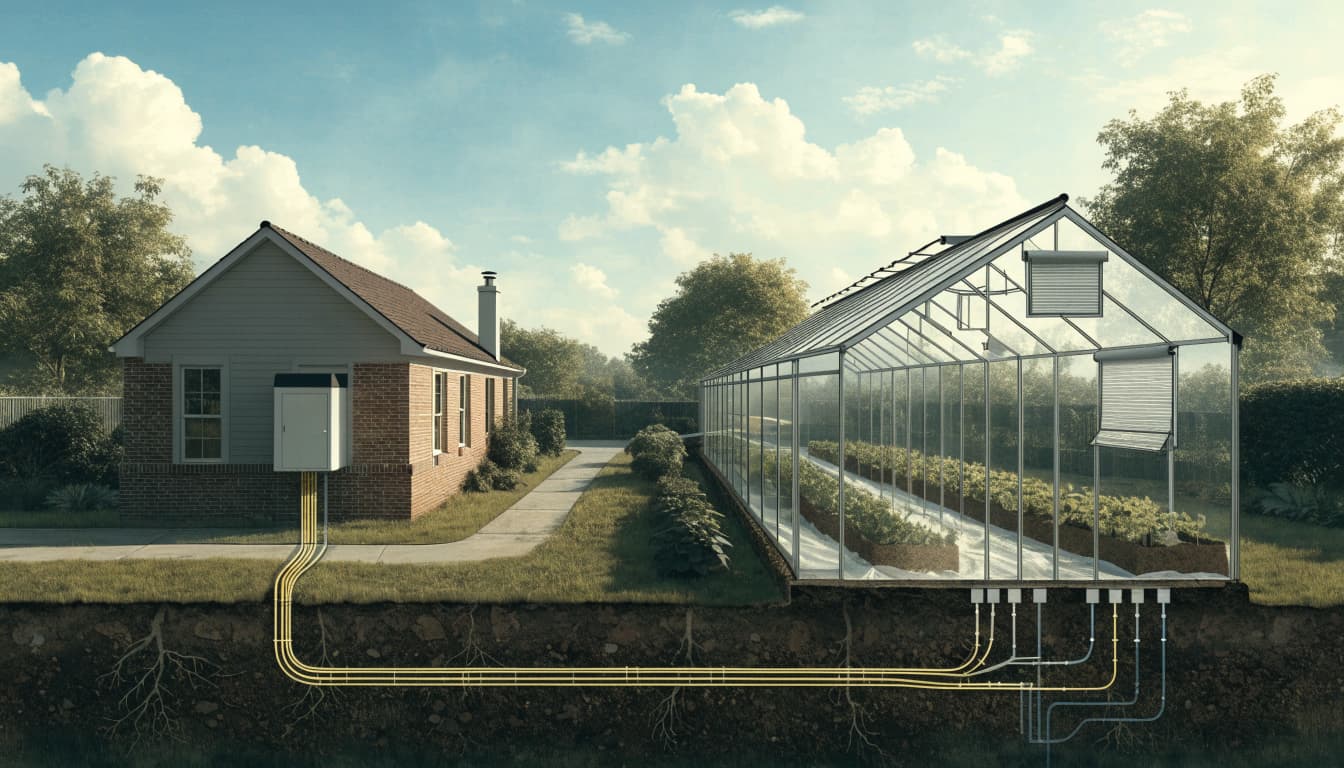
A modest installation may suit a branch circuit, while multiple substantial loads may justify a feeder and greenhouse panel. The electrician should choose the arrangement after reviewing demand, distance, and existing service capacity.
Longer runs can increase voltage drop. Therefore, conductor selection must consider distance as well as load, installation conditions, and equipment requirements.
Map the route around foundations, drainage, irrigation piping, trees, and other utilities. Coordinate underground utility marking before excavation, and keep required inspection access available before backfilling.
Burial depth depends on the wiring method and location. In its Article 300 overview, NFPA gives an example requiring 18 inches of cover for PVC raceway in an ordinary location not otherwise specified. Cover is measured to the top of the wiring method, not the trench bottom.
That example isn't a design specification for every yard. Let the electrician establish the applicable cover, raceway, conductor, and physical-protection requirements.
Have the design address building-entry details and any required disconnects. Extension cords shouldn't serve as the permanent greenhouse supply.
Include Shock Protection, Grounding, and Bonding
A ground-fault circuit interrupter, or GFCI, detects an imbalance between outgoing and returning current and interrupts power. It reduces shock risk, which matters around irrigation water, damp surfaces, and conductive equipment.
The electrician should identify GFCI requirements for each circuit and equipment connection under the applicable code. Standard breakers protect against overcurrent; they don't provide the same protection as GFCIs.
Other devices address different hazards. AFCI protection responds to certain arcing conditions, while equipment ground-fault protection isn't interchangeable with personnel GFCI protection.
A repeatedly tripping GFCI can indicate moisture intrusion or damaged equipment. Don't bypass it or keep resetting it to preserve a watering or heating schedule.
Grounding and bonding also belong in the design. Equipment grounding provides a fault-current path, while bonding connects conductive parts where required. A detached structure may need grounding electrodes, but ground rods don't replace the equipment grounding path.
Have a licensed electrician determine the requirements for metal framing, equipment, and the supply arrangement. These are professional design and installation tasks, not homeowner wiring steps.
Settle Permits, Expansion, and Inspection Access Early
Establish the project requirements
Requirements depend on the adopted electrical code, local amendments, equipment, and site conditions. NEC Article 547 may apply to some agricultural installations, but a backyard greenhouse doesn't automatically fall within its scope.
Have your licensed electrician establish the applicable requirements and permit responsibilities before installation. Electrical approval also doesn't replace any separate building or site approvals.
Our explanation of electrical permits for home projects covers permit responsibility in Massachusetts. Plan for required inspections before buried or concealed work becomes inaccessible.
Reserve useful capacity and document the installation
Identify realistic additions now, such as more grow lights, a larger heater, or another irrigation zone. Then have the electrician evaluate spare panel space, feeder capacity, and possible future raceways. Spare breaker spaces alone aren't an expansion plan.
An existing-system evaluation can identify limitations before greenhouse equipment arrives. For local homeowners, our guide to home electrical inspections in Greater Boston explains when professional assessment is useful.
At closeout, retain approvals, equipment instructions, circuit labels, and an underground-route record. Have the electrician test protective devices and controls, explain shutdown procedures, and identify the manufacturer's recommended testing schedule.
Frequently Asked Questions
Does a backyard greenhouse need its own panel?
Not always. A small installation may operate from an appropriately designed branch circuit. Multiple heaters, pumps, or lighting zones may make a feeder and separate panel more practical. Load calculations and site conditions determine the arrangement.
Can I install a larger breaker for future equipment?
A larger breaker is safe only when the entire circuit design supports it. Conductors, terminals, equipment ratings, and supply capacity all matter. Have an electrician assess the proposed equipment rather than changing breaker size.
What should I give the electrician before requesting an estimate?
Provide a greenhouse layout, equipment nameplate information, intended operating seasons, and likely future additions. Include the greenhouse's location relative to the house and any known irrigation or underground utility routes.
Build the Electrical Plan Around the Equipment
Safe greenhouse wiring starts with actual equipment demand and the conditions surrounding every connection. Heating capacity, water exposure, and the supply route deserve attention before installation begins.
Use your equipment list and layout to plan the project with a licensed electrician. A coordinated design gives lighting, climate equipment, and irrigation controls the power and protection they need without relying on temporary fixes.