

How to Read a Breaker Panel Directory

Contact Us
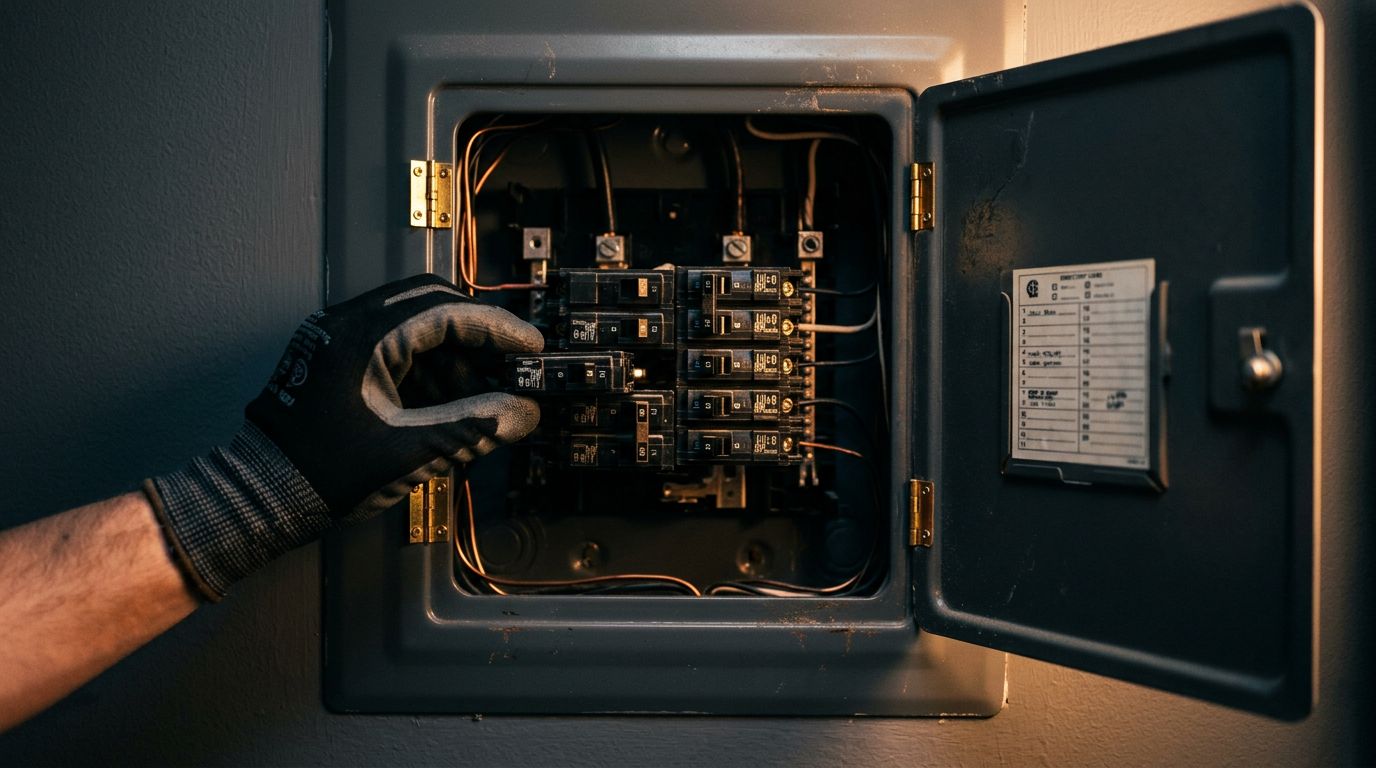
A breaker panel directory can save you time, stress, and a lot of guesswork when the lights go out. It also tells you how organized, or disorganized, the electrical system is.
If the labels are clear, you can shut off the right circuit fast. If they are faded, handwritten, or wrong, the panel can turn confusing in a hurry. Keep the metal cover in place and do not handle wiring. If labels are missing or make no sense, call a licensed electrician.
What the directory is telling you
The directory is the map for the breakers. Some electricians call it a panel schedule. On many panels, it sits on the inside of the door or on a card nearby. Each line should point to a room, appliance, or group of outlets.
A good directory does not need fancy wording. It needs to be specific enough to help you during a power problem or remodel. "Kitchen outlets" is better than "kitchen." "Second floor bedrooms" is better than "upstairs." Short, clear labels save time when you need to act fast.
Read the whole list before you touch anything. One breaker may control several rooms, and one room may have more than one breaker. That is normal. In older homes, a label can also reflect an old repair, so the note may no longer match the circuit exactly.
If the directory is blank, faded, or clearly wrong, stop there. Open the outer door only if your panel has one, and do not remove the metal cover behind it. A licensed electrician can retag the directory, test the circuits, and check whether the panel itself needs attention.
Common labels and abbreviations you may see
Most directories use a mix of room names and appliance names. Here are common examples you might find in a home:
- Kitchen outlets, which often cover countertop receptacles, a fridge, or a small appliance circuit.
- HVAC or furnace, which may feed the air handler, condenser, or heating equipment.
- Water heater, which usually controls an electric tank or tankless unit.
- Dryer, which is often a 240-volt circuit with a higher amp rating.
- GFCI , which may protect damp-area outlets in kitchens, baths, garages, or outdoors.
- Smoke detectors, which may feed hardwired alarms with battery backup.
- Garage, basement, or exterior lights, which often cover more than one space.
Handwritten directories often use shorthand to save space. "BR" usually means bedroom. "LR" often means living room. "WH" usually means water heater. "Kit" often stands for kitchen. If an abbreviation is unclear, do not guess. A bad guess can slow you down when the power is already out.
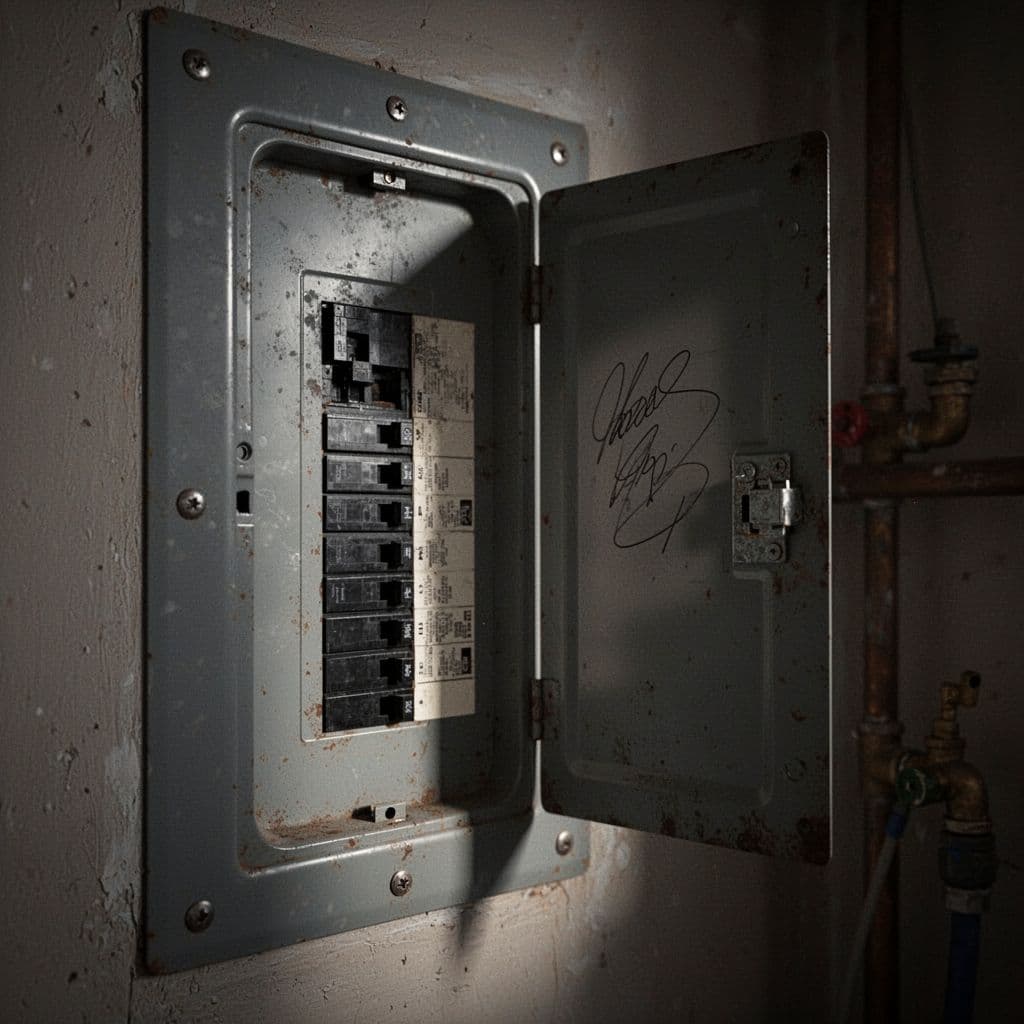
A directory can still be useful even when the handwriting is rough. The key is whether the words match the real circuit. If a breaker labeled "bath" also cuts power to the hallway, note that on the directory. If several labels are crossed out, the panel needs a cleaner record.
How to verify which breaker controls what
The safest way to verify a label is to test it without opening the panel. Use a lamp, radio, or phone charger in the room you want to check. If possible, have another person watch the device while you switch one breaker off at a time.
- Turn on a light or plug in a small appliance in the area.
- Switch off one breaker.
- See what lost power.
- Write the result next to the label.
- Turn the breaker back on before moving to the next one.
A plug-in lamp works well because the change is obvious. A phone charger can help too, as long as you can see when it stops charging. For GFCI labels, press the test and reset buttons on the outlet itself. For smoke detectors, use the test button on the alarm, not the panel.
If the breaker test does not match the label, trust the test, not the handwriting.
Do not remove the panel cover or touch any wiring while you are checking circuits. If a breaker trips again right away, leave it off and let an electrician look at it.
When a messy directory points to a bigger problem
Some directories are too far gone for a quick cleanup. Missing labels, crossed-out notes, or several circuits sharing the same vague word all make the panel harder to use. Frequent tripping, buzzing, heat, or scorch marks are bigger warning signs.
If the panel is old or crowded, warning signs of an outdated electrical panel can help you judge whether the issue goes beyond the directory. When the panel itself has reached the end of its useful life, breaker panel replacement services are safer than another round of guesswork.
This matters even more after home changes. Added appliances, finished basements, EV chargers, and newer HVAC equipment can stretch a panel that once worked fine. A directory that made sense ten years ago may no longer match the way the house is used today.
Conclusion
A clear breaker panel directory turns a panel from a mystery into a map. You can find the right breaker faster, keep outages short, and make smarter notes after repairs or remodels.
If the labels are readable, update them when circuits change. If they are missing, confusing, or tied to an older panel, stop guessing and bring in a licensed electrician. The safest panel is the one you do not have to decode under pressure.