
Interlock Kit vs Transfer Switch for Home Backup Power

Contact Us
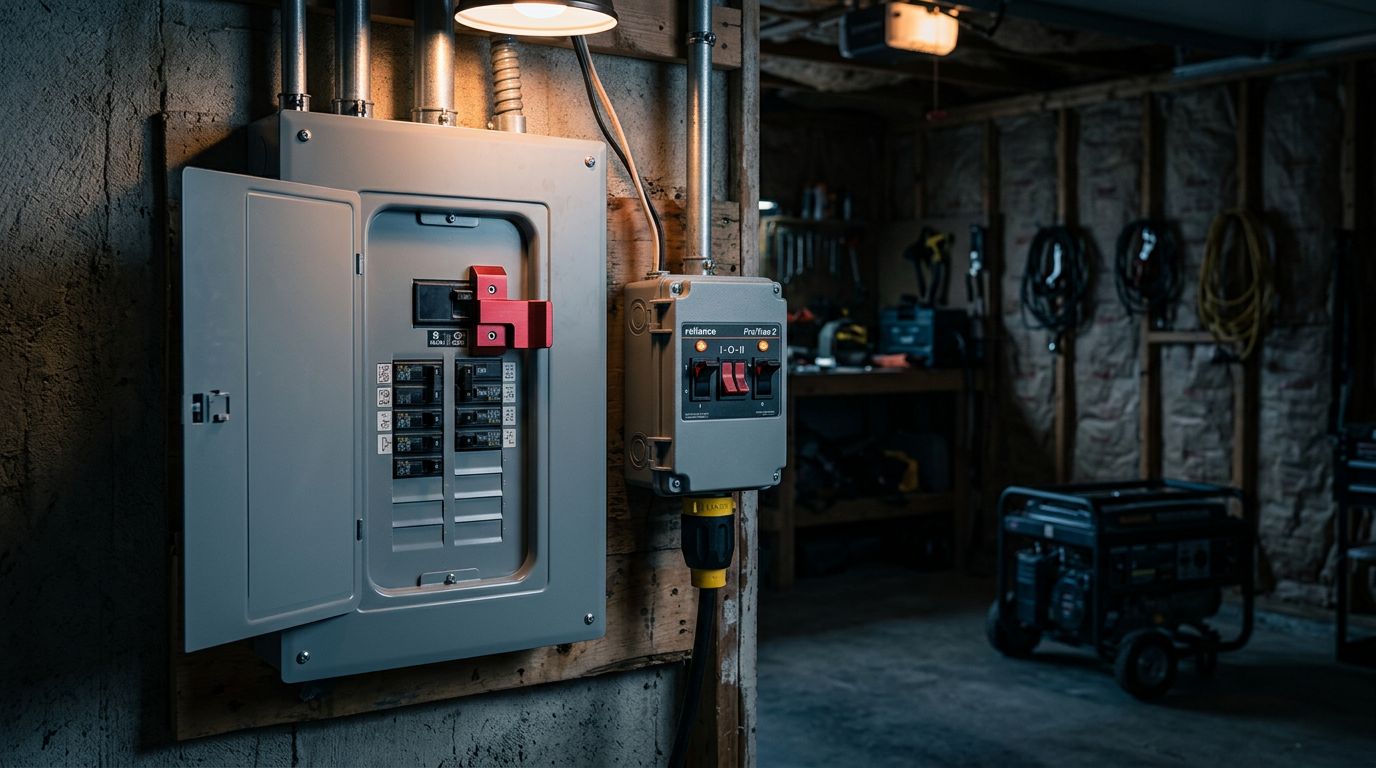
A power outage can turn a normal night into a race for flashlights and extension cords. If you want a cleaner way to keep the fridge, lights, or sump pump running, the choice between an interlock kit vs transfer switch matters more than most people expect.
Both options can support home backup power, but they do it in different ways. The right pick depends on your panel, your generator, your budget, and what your town or utility allows. Most of all, it depends on how you want the system to work when the lights go out.
How the two systems keep power safe
An interlock kit is a mechanical device that fits on a compatible breaker panel. It lets you use the main breaker or the generator breaker, but never both at once. That matters because it blocks backfeeding , which is when generator power can flow back into utility lines.
A transfer switch does a similar safety job, but in a different form. It moves power from the utility to the generator through a separate switch or panel. Manual transfer switches need you to move circuits by hand. Automatic transfer switches do that work for you when paired with a standby generator.
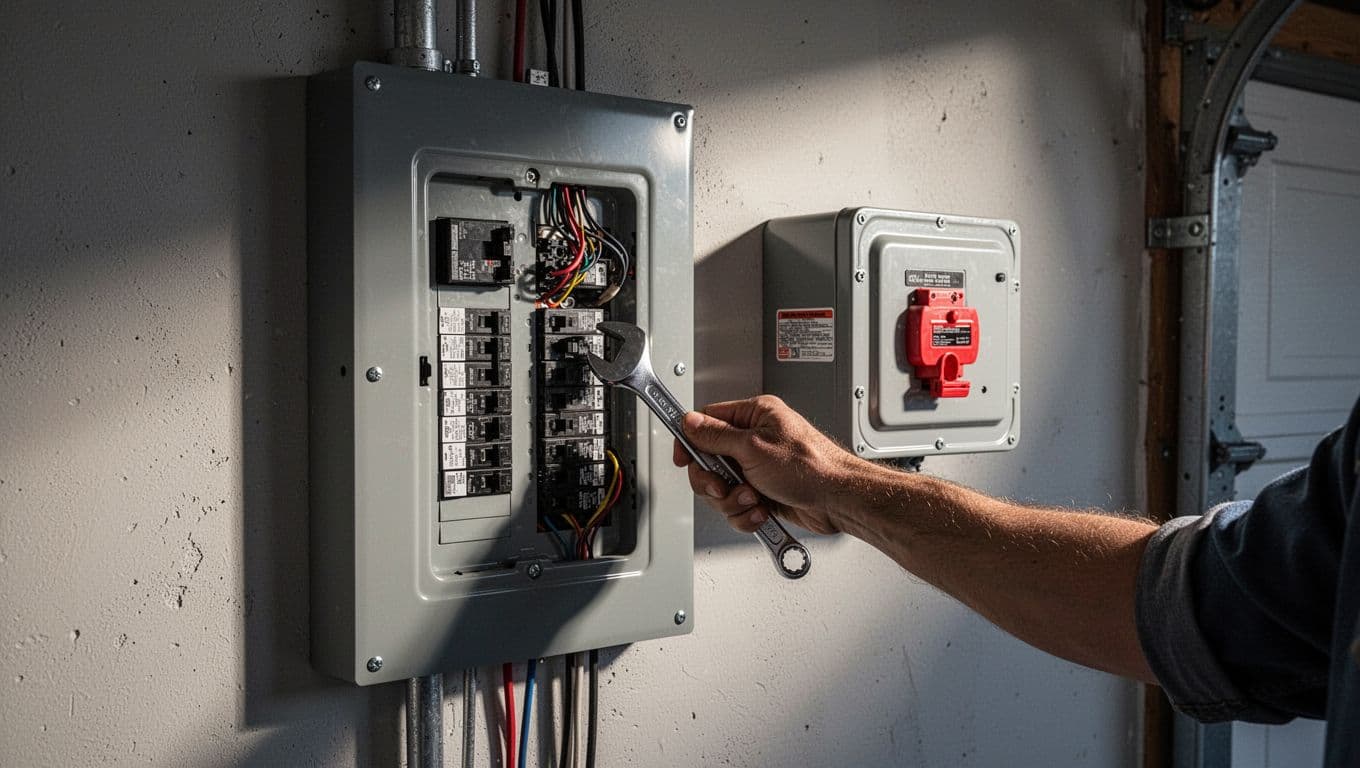
A tidy panel layout makes the whole system easier to understand and service. It also helps an electrician confirm that the breaker arrangement matches the equipment list and local code.
Interlock kit vs transfer switch at a glance
Here is the fast side-by-side view before the details get more specific.
| Feature | Interlock kit | Transfer switch |
|---|---|---|
| Best fit | Homes with a compatible panel and a portable generator | Homes that want dedicated backup circuits or automatic changeover |
| How it works | Uses the main panel, with a sliding plate that prevents both breakers from being on | Moves power through a separate switch or transfer panel |
| Generator type | Usually a portable generator | Manual transfer switch with portable generator, or automatic switch with standby generator |
| Coverage | Can power the whole panel, but you still manage load use | Often powers selected circuits, or the whole home with the right setup |
| Install scope | Usually simpler if the panel accepts the kit | Often more hardware and more circuit work |
| Upfront cost | Usually lower | Usually higher |
| Convenience | You manage loads and startup by hand | Easier to operate, especially with an automatic system |
| Code and compatibility | Must match the exact panel and local rules | Must meet listing, wiring, and permit requirements |
The main tradeoff is simple. An interlock kit gives you flexibility and a lower starting cost. A transfer switch gives you a more controlled setup, especially when you want specific circuits ready every time.
When an interlock kit makes sense
An interlock kit works well for many homeowners who already own, or plan to buy, a portable generator. If you only need to power a few essentials during an outage, it can be a practical solution. Lights, a refrigerator, internet gear, and a sump pump are common examples.
It also fits people who are comfortable managing loads during an outage. That means you may need to turn off large appliances before starting the generator. You may also need to watch what you run at the same time, because the generator still has a limit.
A good rule of thumb is this: if you want a lower-cost, hands-on setup and your panel supports the kit, interlock is worth a close look. A Greater Boston generator setup guide can help you think through the generator side of the decision if you are still choosing size and type.
Interlock kits are not a shortcut around planning, though. The panel has to accept the exact kit. The generator inlet has to match the load. The breaker layout has to make sense for the house. If those pieces do not line up, the savings disappear fast.
When a transfer switch is the better fit
A transfer switch is the stronger choice when you want a more defined backup system. That is especially true if you want selected circuits protected all the time, or if you plan to use a standby generator. In that setup, the switch and generator work together with much less manual effort.
For many homeowners, the big appeal is convenience. A transfer switch makes the backup plan feel organized. Instead of balancing loads across the whole panel, you can assign the circuits that matter most. That might include the furnace, kitchen outlets, well pump, and a few lights.
An automatic transfer switch goes a step further. When utility power fails, it changes over on its own, which is useful for homes where someone may not be there to start a generator. That said, automatic systems cost more and require the right generator type.
If you want a simple way to keep the house running with less day-to-day thinking, transfer switch systems are usually the cleaner match. If you want a portable generator and a lower up-front bill, an interlock kit may fit better.
Installation, permits, and code details that matter
This is the part homeowners should not treat casually. Both options have to meet electrical code, and both must prevent backfeeding. They also need to fit the panel, the generator, and the rest of the electrical system.
A safe backup setup is only safe when the installation matches the equipment list, the panel model, and local rules.
Panel compatibility is one of the biggest deal breakers. An interlock kit is not universal. It has to be listed for your specific panel. A transfer switch also has to be rated for the load and wired the right way. If the panel is old, crowded, or no longer supported, a replacement may be the better move.
Permits can matter too. Some towns want a permit for the work. Some utilities have their own rules for generator connections or transfer equipment. A local electrician should know what your area expects before the work starts.
A professional backup generator installation helps match the inlet, breaker, and transfer gear without guesswork. If the panel needs work first, an electrical panel upgrade for generators may be the smarter first step.
In many homes, the safest path is to have the electrician review three things before anything is purchased:
- the existing panel model and condition
- the generator size and output
- the local permit and utility requirements
That review can save a lot of money. It can also prevent a setup that looks fine on paper but fails inspection or leaves too little capacity for the loads you want to run.
Which setup fits common homeowner scenarios
The best choice usually becomes clear once you look at the house, not just the hardware.
- Portable generator and basic backup needs : An interlock kit is often the better fit if your panel supports it and you are fine managing loads by hand.
- Standby generator and automatic changeover : A transfer switch is the better match, especially if you want power to return with little input from you.
- Older panel or limited breaker space : A panel upgrade may need to happen before either option makes sense.
- A few must-have circuits only : A transfer switch with critical-load circuits is often the cleanest setup.
- Whole-home backup with a hands-on budget : An interlock kit can give you broad access to the panel without the cost of a full automatic system.
If you are trying to keep the budget tight, the interlock route often wins. If you care more about convenience and a clearly defined backup circuit plan, the transfer switch usually wins. Neither option is "better" in every house. The right answer is the one that fits the panel, the generator, and the way you actually live during an outage.
Conclusion
The interlock kit and the transfer switch both solve the same core problem, which is keeping backup power safe. They just take different paths to get there.
If you want lower cost and a portable generator, an interlock kit may be the right move. If you want dedicated circuits, easier operation, or automatic backup, a transfer switch is often the better choice.
Either way, the job has to be installed to code, sized correctly, and checked against local permit and utility rules. That is what keeps a backup plan from becoming a risk.