
Massachusetts Garage Outlet Requirements for Homeowners

Contact Us

If you're checking Massachusetts garage outlet requirements , the minimum is more specific than simply adding a convenient plug near the workbench. Outlet type, circuit size, height, GFCI protection, and local inspection requirements all matter.
Massachusetts adopts the National Electrical Code through 527 CMR 12.00, with state amendments that can change as new code editions take effect. The permit date, garage design, and local wiring inspector's interpretation can affect the final installation. Start with the minimum rule, then plan outlets around how you use the space.
What Massachusetts garage outlet requirements say about the minimum
For a project reviewed under the Massachusetts 2026 code language, each attached or detached garage must have at least one readily accessible, 120-volt, 20-ampere receptacle outlet . The same language addresses each attached carport.
The required outlet must be no more than 5.5 feet above the finished floor . A receptacle mounted high on the wall for a garage door opener may not satisfy this requirement if it isn't readily accessible. You shouldn't need a ladder, tools, or removal of a fixed obstruction to reach the required outlet.
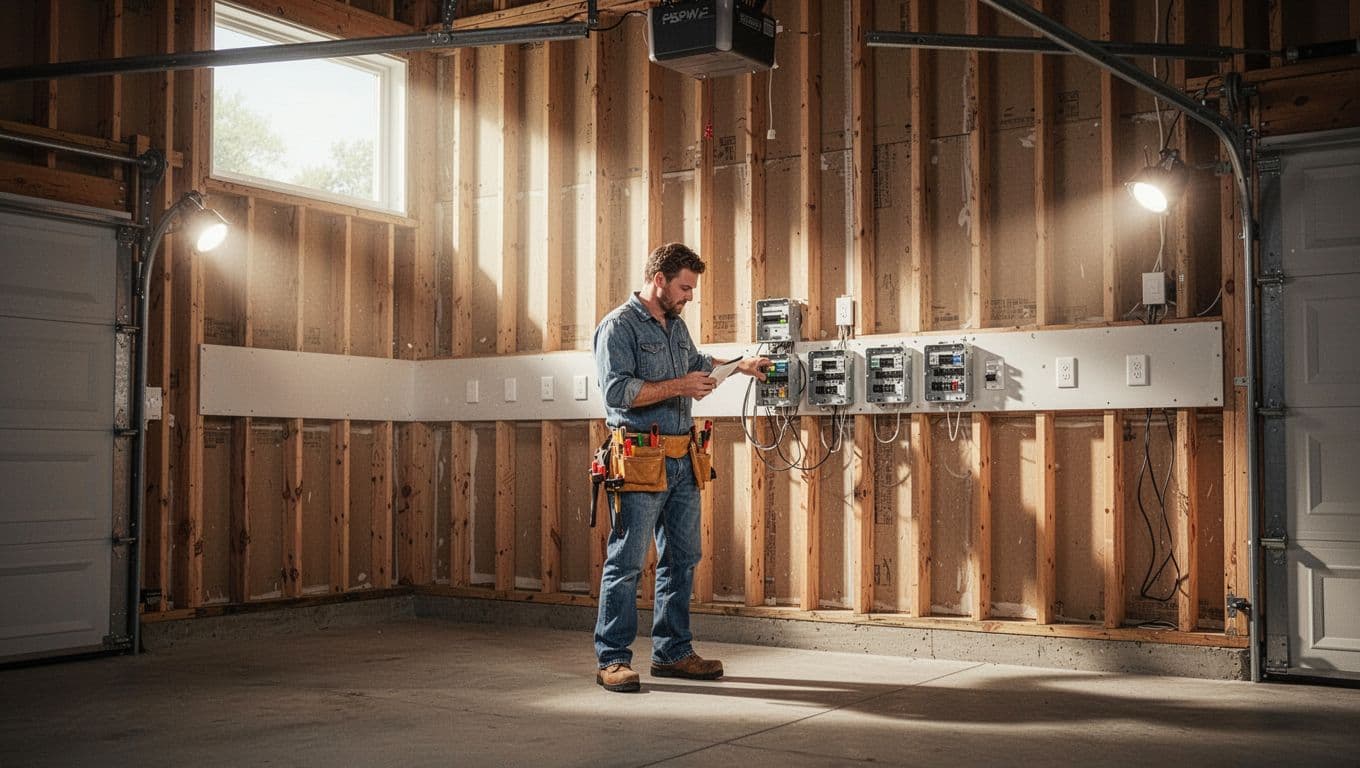
The required garage receptacle also has a circuit separation rule. Massachusetts code language states that lighting outlets and other receptacle outlets can't be connected to the circuit or circuits supplying the required garage receptacle outlets. In practical terms, the basic outlet shouldn't share its branch circuit with the garage lights or unrelated receptacles.
That separation helps preserve lighting if a tool causes the receptacle circuit to trip. It also gives the required outlet a clear purpose instead of making it part of an overloaded general-use circuit.
These rules establish a minimum, not a useful layout for every home. One outlet may meet the basic requirement, but it won't work well for a garage with a freezer, workbench, air compressor, door opener, or battery charging station.
Attached and detached garages are treated differently in the design
An attached garage usually receives power from the home's electrical system. A detached garage may need an underground feeder, a separate building disconnect, grounding and bonding equipment, and protection for the wiring where it enters each structure.
The outlet count alone doesn't determine whether the project is acceptable. A detached building also raises questions about trenching, conductor type, weather exposure, voltage drop, and the capacity of the home's service.
Carports appear in the Massachusetts 2026 amendment language for the minimum 120-volt, 20-ampere receptacle. However, don't assume every garage rule applies to a carport in exactly the same way. Outdoor exposure, cover requirements, and GFCI provisions may depend on the receptacle's location and the adopted code edition.
GFCI protection is a major part of garage electrical work
GFCI protection is intended to reduce shock risk when electricity can find an unintended path through a person, grounded equipment, moisture, or damaged wiring. Garages often have concrete floors, metal tools, vehicle fluids, outdoor access, and water tracked in from snow and rain.
Under NEC-based Massachusetts guidance, 125-volt, 15-ampere and 20-ampere receptacles in garages generally require GFCI protection . The rule applies broadly to attached and detached dwelling garages under the current code approach. The exact application still depends on the code edition in effect, local amendments, and the installation details.
A GFCI can be installed as a receptacle or as a circuit breaker. Either approach must be installed and tested correctly. If one GFCI receptacle protects outlets downstream, the wiring needs to identify the protected load terminals correctly. Otherwise, an outlet that appears protected may not be.
GFCI protection doesn't replace overcurrent protection. It helps detect ground-fault conditions, but the breaker and conductors still need to match the circuit's load. Pressing the test button and seeing the device trip also doesn't confirm that every downstream outlet has protection.
A garage outlet can have power and still lack the protection required for the equipment plugged into it. Testing the outlet is part of confirming the installation.
The NEC also addresses outdoor outlets associated with dwelling units, including outlets on garages with floors at or below grade, accessory buildings, and boathouses. That coverage matters when a receptacle is installed on an exterior garage wall or in a below-grade garage area.
A limited HVAC exception discussed in 2023 outdoor-outlet code guidance is scheduled to change on September 1, 2026. It isn't a general exemption for garage receptacles, so homeowners shouldn't use it to justify an unprotected outlet without confirming the current rule with the local inspector.
GFCI and AFCI protection are not interchangeable
GFCI protection addresses shock from ground-fault current. AFCI protection addresses certain dangerous arcing conditions. One device doesn't automatically satisfy the purpose of the other.
A garage circuit may also fall under AFCI requirements when it supplies other dwelling areas or when another applicable rule covers the installation. A licensed electrician can determine whether the project needs a GFCI receptacle, GFCI breaker, AFCI protection, dual-function protection, or another listed solution.
Plan garage outlets around the work you actually do
The most useful garage layout starts with the equipment, not an arbitrary outlet count. Walk through the space before wiring begins. Mark where the workbench, freezer, refrigerator, door opener, wall-mounted television, tools, and charging equipment will sit.
A workbench often needs several receptacles at a comfortable working height, but the exact mounting height should account for the bench, cabinets, shelves, and local code. Put outlets where cords won't cross a vehicle path or hang near moving doors.
A garage door opener normally needs power near the opener, yet that receptacle may be too high or inaccessible to satisfy the required general-use outlet. Plan both locations instead of trying to make one outlet do two jobs.
High-draw equipment deserves separate attention. An air compressor, welder, electric heater, large freezer, or other motor-driven appliance may need an individual branch circuit based on its nameplate rating and starting current. Repeated breaker trips are a design warning, not a reason to install a larger breaker.
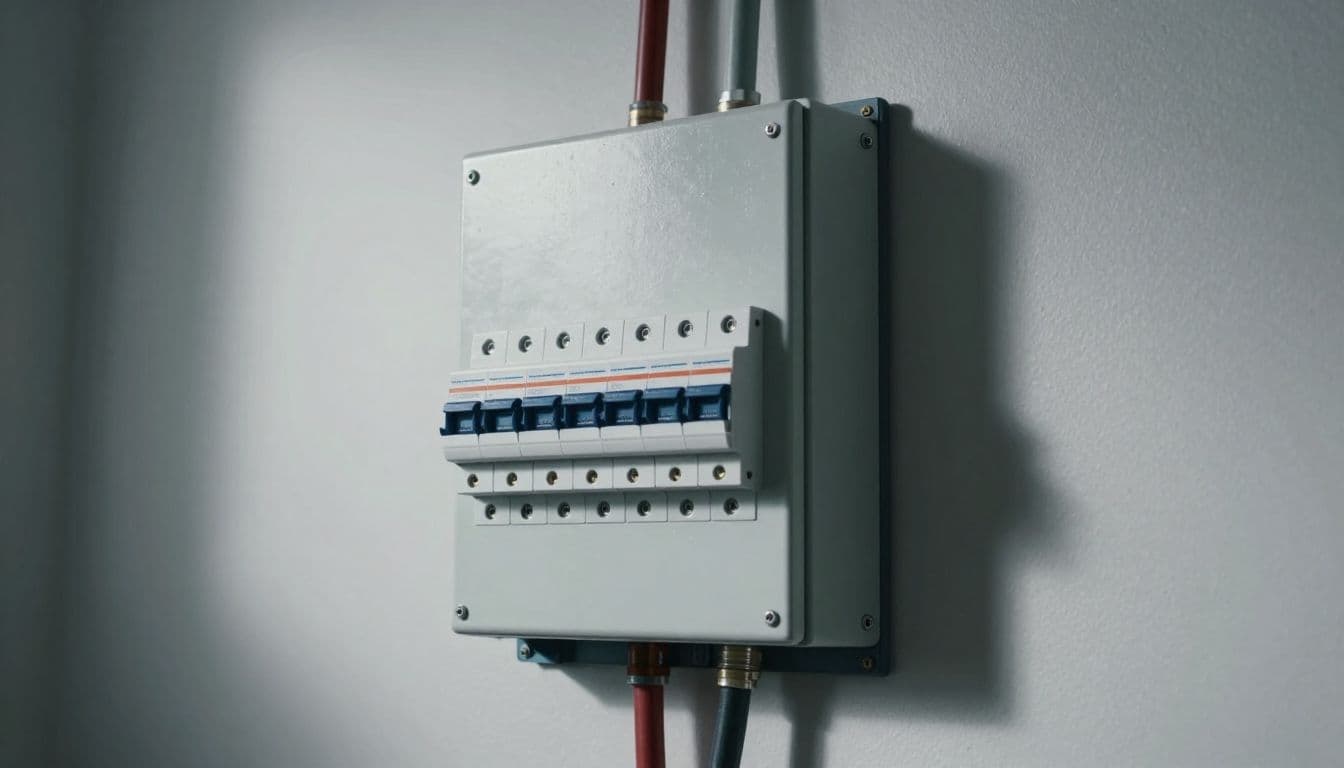
If you plan to charge an electric vehicle, treat the charger as a separate electrical project. The electrician may need to calculate the home's service load, install a dedicated branch circuit, upgrade the panel, or coordinate other work. A standard garage receptacle isn't automatically suitable for continuous EV charging. A qualified contractor can handle home EV charger installation with the required circuit and local approvals.
Protect outlets from impact, moisture, and clutter
A receptacle behind a permanent cabinet may be legal in some circumstances but useless when equipment needs service. Keep outlets accessible and away from locations where shelving, stored lumber, or a vehicle can strike them.
Where a receptacle is exposed to damp or wet conditions, the device, cover, and enclosure must be listed for that location. Exterior outlets commonly need weather-resistant equipment and an appropriate in-use cover, along with GFCI protection. A garage outlet near a hose, sink, or open exterior door deserves the same careful review.
Cable protection matters as well. Wiring on unfinished walls may need protection from physical damage, especially near the floor, corners, vehicle areas, and storage racks. The correct method depends on the cable, raceway, wall finish, and location.
Permits and inspections matter in Massachusetts
Electrical permits and inspection procedures vary by Massachusetts municipality. Before adding or relocating garage outlets, contact the local building department or wiring inspection authority to confirm the permit process, required documents, and inspection stages.
A homeowner may have limited legal options for performing work on an owner-occupied property, but permission to do work doesn't remove the code, testing, or inspection requirements. Rental properties, commercial garages, and work performed by contractors follow different rules and should be handled by properly licensed professionals.
An inspection can cover the circuit rating, conductor size, box fill, grounding, bonding, cable protection, GFCI operation, outlet height, and separation from lighting. For detached garages, the inspector may also review the feeder, disconnect, grounding electrode system, and underground wiring.
Don't close finished walls before required rough inspection. Exposed wiring and boxes let the electrician and inspector verify the work without destructive access later. Keep the permit record and inspection approval with the home's project documents, especially if you plan to sell or refinance.
For a repair, panel change, or new garage circuit, working with licensed electricians in Burlington, MA can help keep the project aligned with local requirements. The contractor should explain the proposed circuit design, permit responsibilities, and any conditions that could affect the price.
Common garage outlet mistakes to avoid
Several problems appear when homeowners treat the garage like an ordinary finished room:
- Counting a ceiling-mounted garage door opener receptacle as the only readily accessible outlet.
- Replacing a tripping breaker with a larger one without checking the wire size and load.
- Installing a 20-ampere receptacle as though the receptacle itself increases circuit capacity.
- Running a permanent extension cord to a freezer, heater, or detached garage.
- Assuming one GFCI device protects every outlet without testing the downstream wiring.
- Adding outlets before confirming whether the existing panel has enough capacity.
- Covering boxes or wiring before the required inspection.
- Using indoor-rated covers or devices in an exterior or damp location.
Older garages deserve extra caution. Aluminum branch-circuit wiring, ungrounded two-slot receptacles, damaged cable, overloaded panels, and abandoned wiring can change the scope of a simple outlet upgrade. Don't rely on an adapter or three-to-two-prong replacement to create a grounding path that the wiring doesn't have.
Before work starts, write down the equipment you expect to use and take photos of the existing panel and garage walls. The electrician can use that information to plan outlet locations, circuit capacity, protection, and access without guessing.
Conclusion
The core Massachusetts garage outlet requirements call for at least one readily accessible 120-volt, 20-ampere receptacle in each attached or detached garage, with a maximum height of 5.5 feet under the applicable 2026 code language. Garage receptacles generally also need GFCI protection, while separate circuits and additional safeguards may apply to equipment, detached structures, and outdoor locations.
One compliant outlet may satisfy the minimum, but a thoughtful layout prevents overloaded circuits, extension-cord hazards, and inconvenient access. Confirm the adopted code edition and permit requirements with your local authority, then have a licensed electrician evaluate the garage before installation begins.