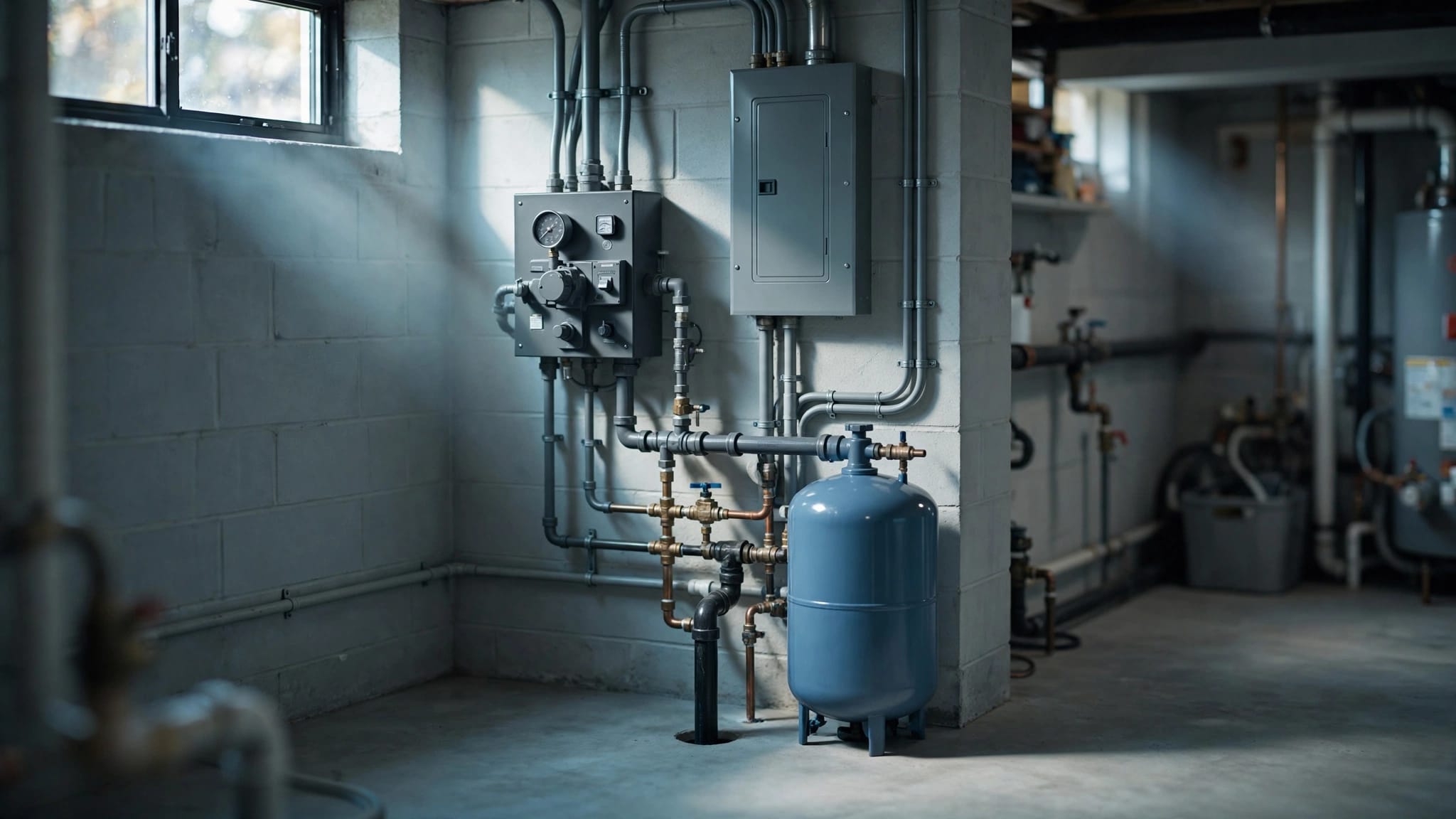

Sump Pump Circuit Requirements for Finished Basements

Contact Us
A finished basement can hide the wiring, but it can't hide a failed sump pump. Understanding sump pump circuit requirements helps you protect flooring, drywall, furniture, and the electrical system when groundwater rises.
The pump needs reliable power, proper shock protection, and a circuit that can handle the motor's startup demand. The right installation also leaves enough access for testing and repairs. Start with the circuit itself, then look at protection, panel capacity, and backup power.
Key Takeaways
- A sump pump usually benefits from a dedicated branch circuit sized to its nameplate and installation instructions.
- GFCI and AFCI requirements depend on the receptacle location, room use, and locally adopted electrical code.
- Keep the receptacle accessible, protected from splash, and within reach of the pump's listed cord.
- Don't use an extension cord or install a larger breaker without confirming conductor and equipment ratings.
- A backup pump, battery system, or generator can keep water moving during a power outage.
Sump Pump Circuit Requirements for Finished Basements
A dedicated circuit is the most dependable arrangement for a primary sump pump. Sharing the circuit with a dehumidifier, freezer, basement refrigerator, or other motor-driven equipment can create nuisance trips and voltage drops. The pump may run normally during a dry week, then lose power when several appliances start during a storm.
The circuit voltage and breaker size must match the pump's nameplate, installation manual, and wiring method. Many residential sump pumps operate at 120 volts, with 15-amp or 20-amp branch circuits used in appropriate installations. However, the horsepower and full-load current determine the actual requirements. A larger pump may need different protection.
Motor loads also draw more current during startup. That brief surge can trip an undersized or weak breaker even when the running amperage appears acceptable. A licensed electrician can check the pump's rated current, conductor size, overcurrent protection, and voltage drop before selecting the circuit.

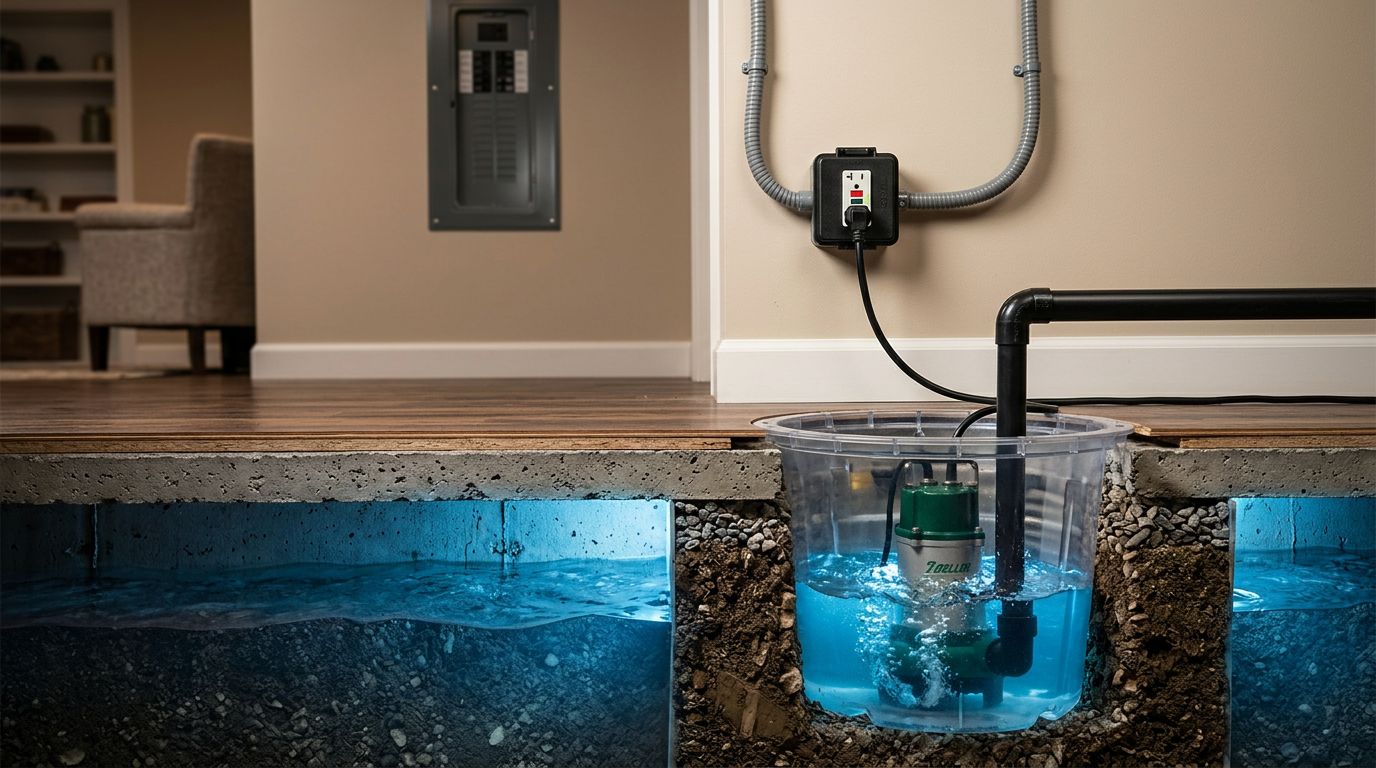
The receptacle should remain accessible after the basement walls and ceiling are finished. Avoid placing it behind permanent cabinets, inside a sealed utility wall, or directly where water from the pit could splash onto the device. A pump cord should plug directly into an approved receptacle rather than an extension cord or power strip.
If lights dim when the pump starts, the problem may involve a shared circuit, loose connection, excessive voltage drop, or an overloaded panel. A dedicated circuit can help, but an electrician should test the system first. These dedicated circuits for sump pumps are one possible solution among several.
GFCI and AFCI Protection in a Finished Basement
GFCI protection reduces the risk of severe shock by disconnecting power when current leaks from the intended circuit path. Basement areas deserve careful attention because concrete floors, plumbing, condensation, and groundwater can increase contact with moisture.
The exact GFCI requirement depends on the receptacle's location and the electrical code adopted by your jurisdiction. For example, rules can apply to unfinished basement portions, laundry areas, locations near sinks, and other damp or wet areas. A finished basement isn't automatically treated the same way as an unfinished utility space, so the room's actual use matters.
A sump pump receptacle may still require GFCI protection under local rules or because of the surrounding conditions. The pump manufacturer may also specify a particular protection method. Never remove GFCI protection because the device trips during operation. Repeated trips may indicate a failed pump, damaged cord, moisture intrusion, incorrect wiring, or a ground fault.
A GFCI receptacle can protect downstream outlets, while a GFCI breaker protects the entire branch circuit from the panel. The electrician should identify which method fits the pump, wiring layout, and service access. If a GFCI outlet won't reset, use this guide to review basement GFCI outlet and wiring issues, then arrange professional testing if the fault continues.
AFCI protection is a separate requirement. It protects against certain arc faults that can start fires inside damaged or compromised wiring. Many 125-volt, 15- and 20-amp dwelling-unit branch circuits require AFCI protection, but the applicable rule depends on the adopted code edition and the room classification.
In some installations, a dual-function breaker provides both AFCI and GFCI protection. That choice must match the panel, wiring, and equipment. The electrician should verify compatibility instead of treating a combination breaker as a universal fix.
Choosing the Breaker, Wire, and Receptacle
The breaker protects the branch-circuit conductors from overheating. It doesn't exist to make a pump run better, and increasing its amp rating can create a serious hazard if the wire isn't rated for the new protection.
For that reason, a 15-amp circuit should use conductors and devices rated for that circuit. A 20-amp circuit requires the correct conductor size and receptacle configuration, along with a pump that the circuit can serve. The pump's nameplate remains the starting point, not a guess based on the receptacle already installed.
The branch-circuit calculation should account for the motor's operating current and applicable motor rules. It should also consider the distance from the panel to the sump area. A long basement run may experience voltage drop, especially when the pump starts. The result can be hard starting, overheating, poor performance, or nuisance breaker operation.
The receptacle itself should be listed for the application and installed in an accessible electrical box. In a dwelling, tamper-resistant requirements may apply. If the area is damp, the electrician may need equipment and covers rated for that environment.
Finished walls create another concern. Any junction box, disconnect, or splice must remain accessible. A contractor shouldn't bury a connection behind drywall because the sump pump is considered a maintenance item. The finished surface should include a planned access point when equipment or wiring requires future service.
The panel also needs enough capacity and physical space. An open breaker position doesn't prove that the service can support another load. An electrician may review the service rating, existing demand, panel condition, available spaces, and signs of overheating before adding a circuit.
An older panel with corrosion, double-tapped breakers, damaged insulation, or poor labeling may need correction before the pump circuit is added. In some homes, a panel upgrade is more appropriate than forcing new equipment into an already crowded system.
Backup Power for a Basement Sump Pump
A primary pump protects the basement only while it has power and continues to operate. During severe weather, outages can occur at the same time groundwater reaches its highest level. A finished basement therefore needs a backup plan that matches the home's risks.
A battery backup pump is one option. It uses a separate pump and battery system when the primary pump loses power or cannot keep up with incoming water. The charger still needs a properly installed electrical supply, and the battery requires routine inspection and replacement according to the manufacturer's instructions.
Some systems include a water-powered backup pump. These don't depend on the home's electrical supply, but they require suitable municipal water pressure and plumbing conditions. A licensed plumber or pump installer should confirm whether that option is permitted and practical for the property.
A standby generator can keep the primary pump, backup equipment, and selected household circuits running during an outage. Generator sizing should include the pump's starting demand, not only its normal running wattage. This guide to sizing a generator for critical appliances can help homeowners understand why sump pumps belong in the load calculation.
A portable generator must remain outdoors and well away from doors, windows, and vents because of carbon monoxide. Never connect one to a house receptacle with a homemade cord. A properly installed transfer switch or approved interlock prevents dangerous backfeeding into utility lines.
If the primary and backup pumps share one receptacle or one failure point, the backup may not help when that device trips. The electrician should review how each system receives power and whether the arrangement provides meaningful redundancy.
Installation Checks Before You Finish the Basement
Electrical work should happen before walls are closed, but the planning should begin before framing. The pump location, discharge piping, receptacle height, finished wall thickness, access panels, and service path all affect the final installation.
Before covering the work, confirm that:
- The pump circuit matches the equipment nameplate and manufacturer's instructions.
- GFCI and AFCI protection match the local code and room conditions.
- The receptacle remains accessible and sits away from likely splash or flooding.
- Boxes, splices, and disconnects remain reachable after finishing.
- The panel has adequate capacity, correct labeling, and suitable breaker space.
- The pump cord doesn't pass through a wall, under flooring, or through a closed door.
- The system can be tested without removing finished materials.
A permit and inspection may be required for a new branch circuit, panel modification, or basement renovation. Requirements vary by municipality and project scope. In Massachusetts, the local authority having jurisdiction determines the inspection process and applies the adopted code requirements.
After installation, test the pump by adding water to the pit according to the pump manufacturer's instructions. Watch for a clean start, complete shutoff, unusual noise, slow drainage, or breaker and GFCI operation. Test any backup system separately, then record the date of battery checks and pump maintenance.
If the electrical work is already concealed and the pump trips, smells hot, or loses power, stop using the circuit until it has been inspected. A licensed master electrician can trace the wiring, test protective devices, inspect the panel, and identify whether the pump or circuit caused the failure.
Conclusion
Good sump pump circuit requirements protect more than the pump. They reduce the chance that a motor surge, ground fault, inaccessible outlet, or overloaded panel will leave your finished basement without drainage.
Use a properly sized circuit, the protection required for the location, and an accessible receptacle. Then add backup power that can operate when storms interrupt utility service. A sump pump is emergency equipment, so its electrical supply deserves the same careful planning as the finished room around it.