

What Ungrounded Three-Prong Outlets Mean in Greater Boston Homes

Contact Us

A three-prong outlet can look modern and still lack a real ground. That surprises a lot of homeowners in Greater Boston, especially in older houses where the wiring behind the wall may be much older than the outlet cover.
The bottom line is simple: a three-prong outlet does not automatically mean the outlet is grounded . It may work fine for a lamp or phone charger, but the circuit behind it can still be incomplete, outdated, or patched together. In many homes, that difference matters more than the faceplate you can see.
Why a Three-Prong Outlet Can Still Be Ungrounded
Grounding gives stray electricity a safe path away from people and equipment. When a fault happens, the ground helps the breaker trip and shut things down.
That protection only works if the circuit has a real grounding path. In older homes, a receptacle may have been replaced with a three-slot outlet while the old two-wire circuit stayed in place. In that case, the outlet looks current, but the wiring behind it still lacks grounding.
A three-slot outlet can look updated while the wiring behind it stays old.
This is why a plug-in tester can show an open ground even when the outlet accepts three-prong plugs. It also explains why some homeowners discover the issue only after they try to use a surge strip, a desktop computer, or another device that expects a grounded outlet.
The outlet may still power everyday items. That can make the problem easy to miss. However, a working outlet and a grounded outlet are not the same thing.
Why Older Boston Homes Run Into This Problem
Older Greater Boston homes often have a mix of electrical eras in the same building. A living room may have been updated years ago, while a bedroom or hall still uses older wiring. That patchwork is common in triple-deckers, brick row houses, and older Colonials.
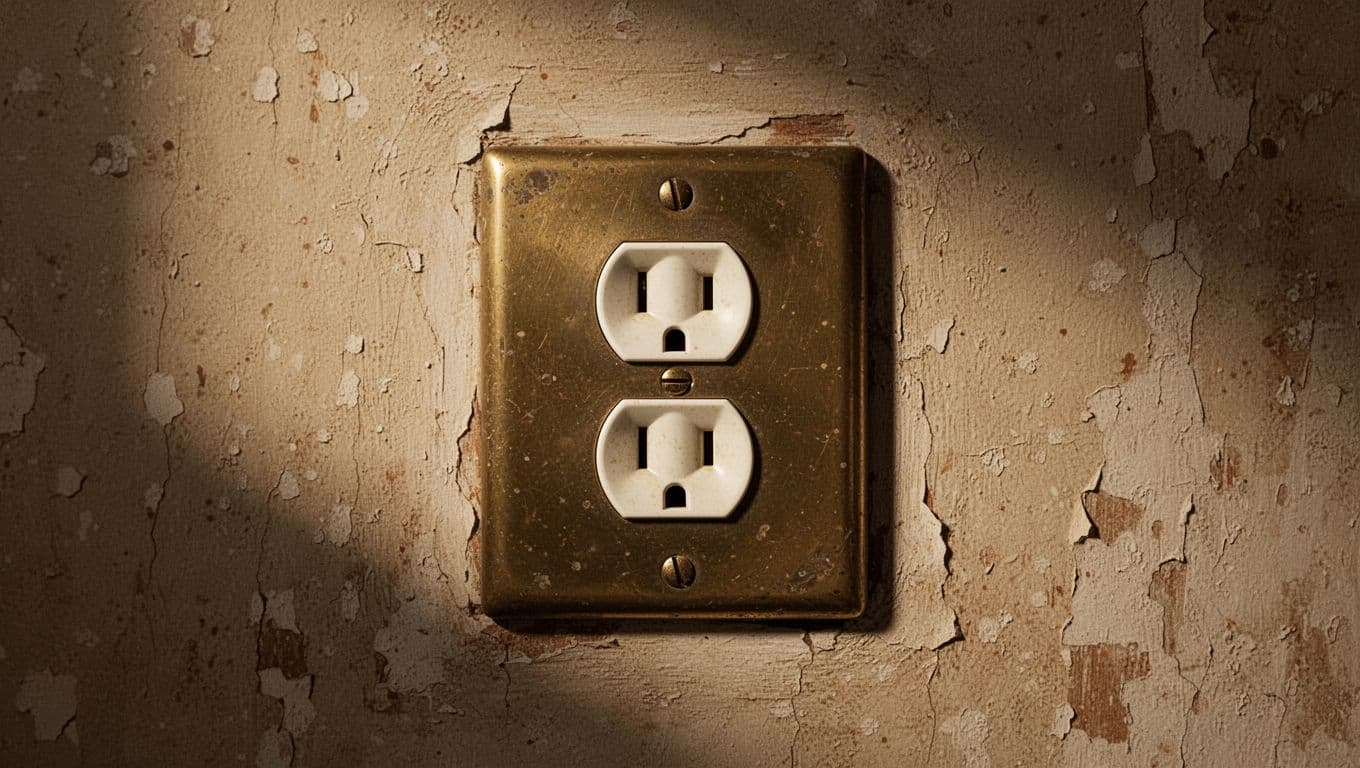
Fresh paint can hide a lot. So can new trim, new cabinets, or a renovated room that still contains legacy electrical work. A room may look finished, yet the outlet circuit may still be based on old cable, old splices, or a panel that has never been fully updated.
That is why mixed outlet types are such a clue. If one room has two-prong outlets and another has three-prong outlets, the home may have been improved in pieces instead of all at once. Sometimes that creates a harmless mismatch. Other times it points to a deeper issue with the circuit, the box, or the panel.
Older wiring does not automatically mean danger. Plenty of older homes are still sound when they have been maintained well. Even so, ungrounded outlets deserve attention because they tell you something about the state of the system behind the wall.
Signs an Outlet Should Be Checked by a Licensed Electrician
Some outlet problems are small annoyances. Others are warning signs. The difference often comes down to heat, shock, or visible damage.
Look for these clues:
- A plug-in tester shows open ground, reversed wiring, or another fault.
- The outlet or wall plate feels warm.
- You feel a small shock or tingle when touching a plug or appliance cord.
- You see sparks, hear crackling, or notice buzzing.
- Someone is using a two-prong-to-three-prong adapter to make a device fit.
- The home has a mix of two-prong and three-prong outlets in older rooms.
- The outlet feels loose, or plugs fall out too easily.
If any of those signs show up, the outlet needs more than a quick guess. It needs a professional look.
If the problem appears in more than one room, a broader home electrical inspection in Greater Boston can reveal whether you are dealing with one bad receptacle or a larger pattern of aging wiring.
What the Problem Means for Safety, Code, and Daily Use
Ungrounded outlets do not always create an immediate emergency. In many cases, they are first a code issue and a practical nuisance. A modern three-prong plug may fit, but the outlet may still offer less protection than the owner expects.
| Situation | What it means | Why it matters |
|---|---|---|
| Inconvenience | The outlet powers a device, but the circuit has no real ground | Some electronics and surge strips do not get the protection they expect |
| Code concern | The receptacle was updated without matching the wiring | The outlet may not meet current standards for that location |
| Safety risk | Warmth, sparks, shocks, or damaged insulation are present | The circuit needs prompt attention, not guesswork |
That split matters. A code issue can exist without a serious hazard right now. A safety risk is different. Heat, arcing, or shocks point to a problem that should be checked soon.
Grounding also affects how some equipment behaves. Surge protectors, desktop computers, and other sensitive electronics often depend on a grounded path to work as intended. A three-prong outlet without grounding can give a false sense of security.
A GFCI can improve shock protection in some situations, but it does not create a true ground path. That difference matters, especially in older homes where the wiring has been changed many times over the years.
How a Licensed Electrician Solves the Problem
The right fix depends on the circuit, not just the outlet cover. A licensed electrician can test the receptacle, trace the wiring, and check the panel for related issues. That matters because an ungrounded outlet may be a small symptom of a larger wiring pattern.
A proper repair may involve replacing a worn receptacle, correcting damaged wiring, or adding protection that fits the circuit. In some cases, the solution is targeted. In others, the safer answer is a broader upgrade because the wiring is too old or too inconsistent for a simple swap.
That is also why DIY outlet changes are a poor idea. A new faceplate or a new three-prong device does not fix missing grounding, loose splices, or hidden damage. Those problems sit inside the wall, where the eye cannot reach them.
The safest approach is simple. Have the outlet evaluated, find out what kind of wiring is behind it, and fix the cause instead of the symptom. That gives you a clearer answer than guessing from the wall plate alone.
Conclusion
A three-prong outlet in a Greater Boston home can be reassuring at first glance, but it may hide older wiring behind the wall. That is why ungrounded outlets deserve a closer look, especially in homes with patchwork updates, legacy receptacles, or mixed outlet types.
The main signs are plain enough to spot, a failed tester, warmth, sparks, shocks, adapters, or a house full of mismatched outlets. Some of those issues are mostly about code. Others point to a real safety concern.
When the outlet looks new but the wiring feels old, the wiring wins. A licensed electrician can tell you what is harmless, what needs updating, and what should be fixed right away.