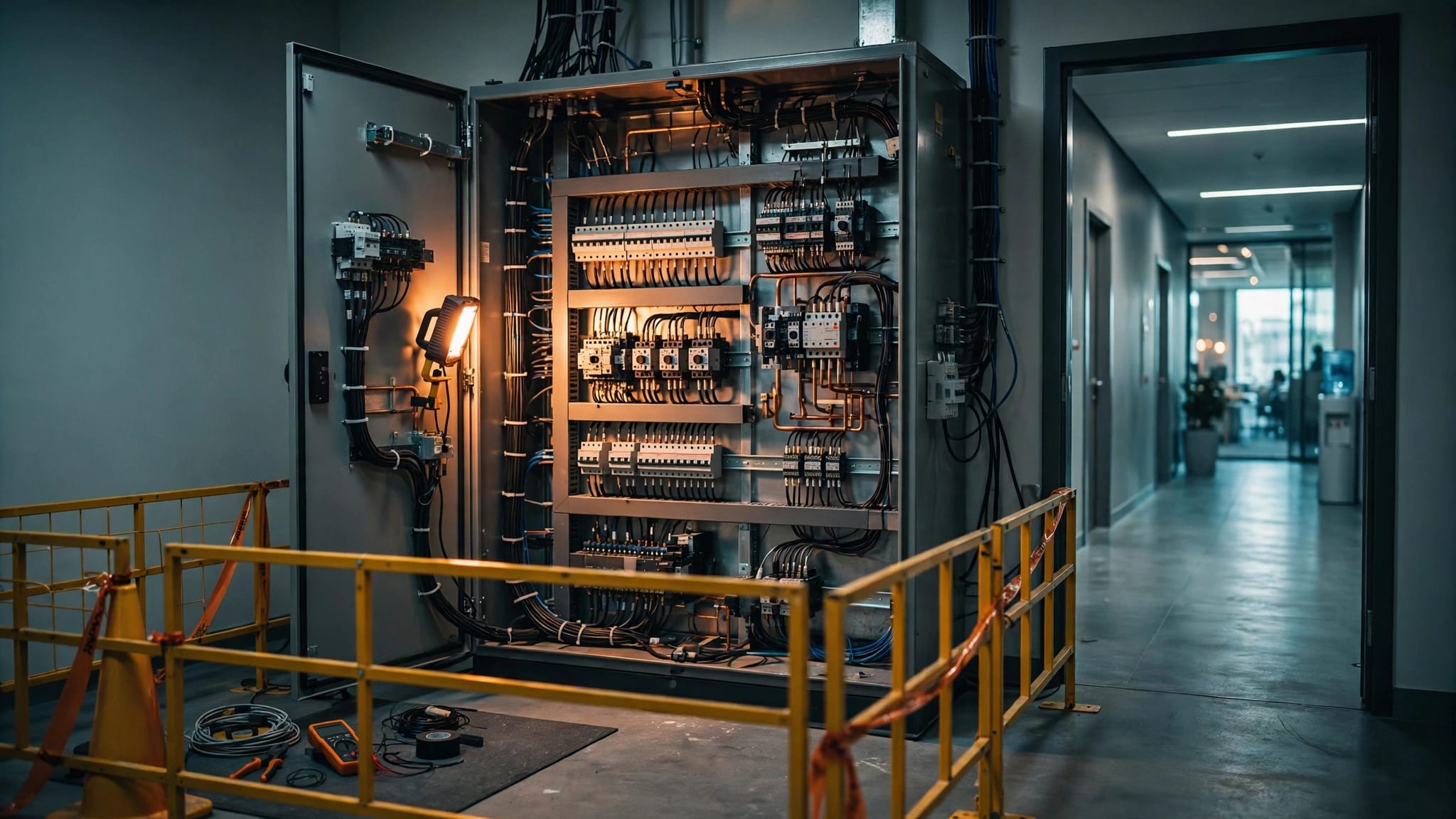

Massachusetts Attic Wiring Requirements Homeowners Should Know

Contact Us

An attic can hide electrical work that looks harmless until insulation, storage, or a renovation exposes a problem. Massachusetts attic wiring needs more than a quick visual check because cable routes, covered boxes, and light fixtures all have rules tied to safety and access.
The goal isn't to make homeowners nervous. It's to help you recognize what deserves a closer look and when a licensed electrician should take over.
Massachusetts Attic Wiring Starts With the Applicable Code
Massachusetts uses its own electrical code, 527 CMR 12.00, based on adopted editions of the National Electrical Code, or NEC, with state amendments. As of August 2026, the state code is based on the 2026 NEC for permits issued after April 24, 2026.
That date matters. A project permitted before the new code took effect may follow a different adopted edition. Also, Massachusetts cities and towns handle permits, inspection scheduling, and local administrative rules through their own electrical inspectors.
The Massachusetts Electrical Code is the statewide reference point. However, your municipal building department can confirm which edition applies to your job and what it expects before walls, ceilings, or insulation cover the work.
Code compliance isn't a guess based on age
Older attic wiring isn't automatically unsafe or illegal because it predates today's rules. Yet new wiring, alterations, and major upgrades usually need to meet the code in force when the permit is issued.
A homeowner might find knob-and-tube wiring, older cloth-jacketed cable, or a mixture of past additions in a century-old home. An electrician can determine whether the existing system can remain, needs repair, or affects an upcoming insulation or remodeling project.
Start With a Calm, Visual Attic Check
You don't need to touch wiring to notice conditions that call for professional attention. Bring a flashlight, watch your footing, and stay on established boards or framing designed to support weight.
Look for cable that has been crushed, chewed, scorched, or stretched tightly across sharp framing. Notice uncovered electrical boxes, loose fixtures, water staining near wires, and extension cords used as permanent attic power.
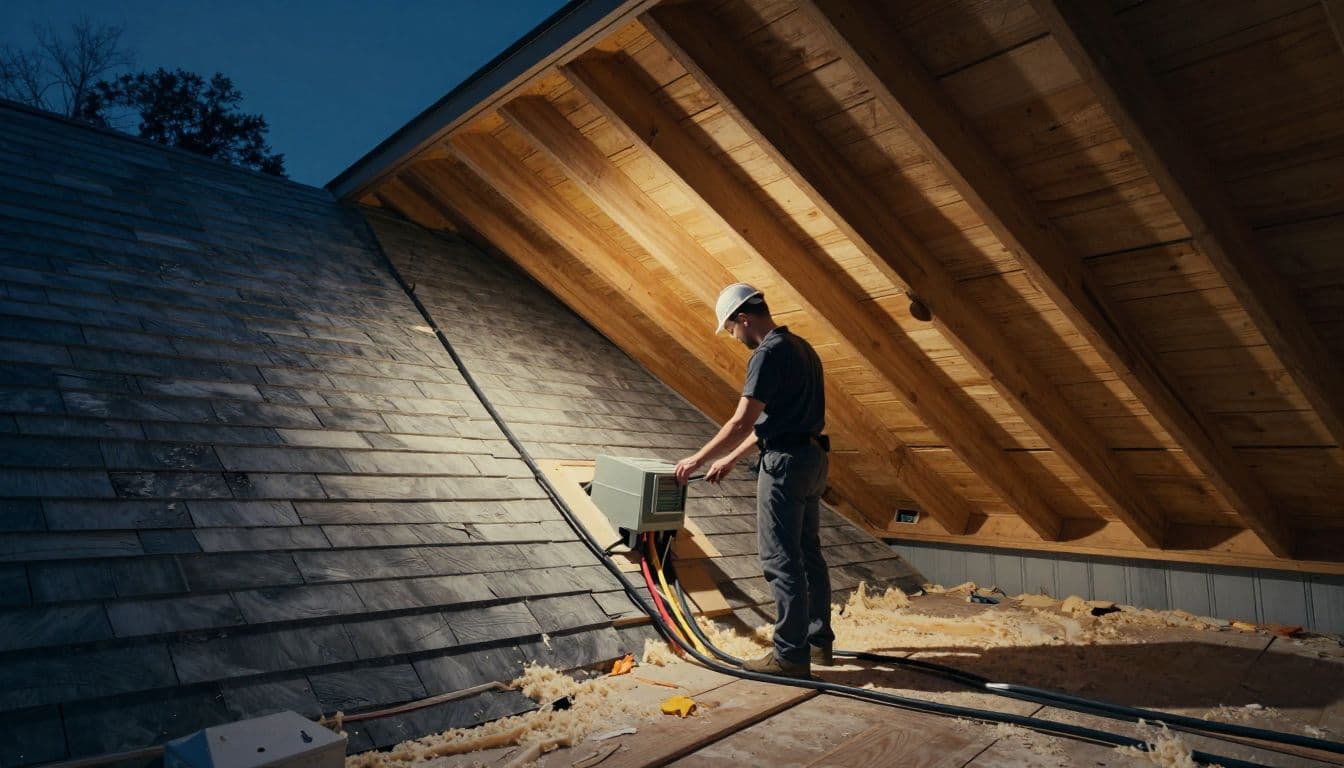
Warning signs that need a service call
Burn marks, a sharp odor, frequent tripped breakers, flickering lights, or a buzzing sound deserve prompt attention. So do wires that disappear into insulation without an obvious protected route.
Rodents can damage cable jackets without leaving dramatic evidence. If droppings, nesting material, or chewed insulation appear near wiring, schedule an inspection rather than pulling cable around yourself.
A breaker marked "off" only tells you what that breaker should control. It doesn't prove nearby wiring is dead, correctly labeled, or safe to handle.
Avoid lifting insulation to hunt for boxes or opening an electrical enclosure. Turning off a breaker does not make unfamiliar wiring safe.
Protect Cable Where People Can Damage It
Attics often become storage spaces, even when they were never designed for foot traffic. Boxes, seasonal decorations, and a misplaced knee can damage cable that runs across joists or rafters.
Massachusetts code materials address cable and raceway protection in attic and roof spaces. Where wiring crosses the tops of joists or runs across framing faces near an accessible area, guard strips or other approved protection may be required.
Guard strips and running boards serve different routes
Protection depends on how and where the wiring runs. Cable along the side of a joist or rafter is generally less exposed than cable stretched over the top, where someone may step or set a storage bin.
For certain routes through bored framing members, substantial running boards may protect conductors. In attic spaces without permanent stairs or ladders, the code includes a more limited protection area near the scuttle hole or access opening.
Don't assume plywood laid loosely over wires solves the issue. An electrician must evaluate the cable type, support method, framing route, and access conditions before choosing a compliant repair.
Exposed cable needs more than a tidy appearance
Neat cable runs are easier to inspect, but appearance isn't the test. A cable can look organized and still lack proper support, sit where it can be crushed, or pass through framing without suitable protection.
Damaged cable jackets, unsupported runs, and wiring draped over ducts should be corrected. Tape is not a lasting repair for compromised cable insulation.
Keep Splices and Junction Boxes Accessible
Every splice needs an approved enclosure. That box needs a cover, proper connections, and continued access after the job is complete.
A buried junction box is a common attic problem, especially after insulation upgrades. Homeowners may not know it exists until a circuit fails or an inspector finds it during a renovation.
Insulation cannot turn a box into a hidden connection
Loose-fill insulation can swallow a box in minutes. Fiberglass batts, flooring, or stored belongings can create the same problem. If a worker cannot locate and open the box without removing building materials, the installation may need correction.
Access does not mean leaving a random loose cover on top of insulation. The box must stay secure and reachable while its conductors remain protected.
Don't make attic splices outside a box
Wire nuts wrapped in electrical tape, twisted conductors, or cables joined in open air are not acceptable repairs. Even a small lighting change can create a hidden fault point if someone extends a cable without an approved box.
This is one reason Massachusetts attic wiring should be inspected before insulation crews begin work. A licensed electrician can identify existing boxes, make needed repairs, and prevent newly covered problems.
Match Insulation to Recessed Lighting Requirements
Attic insulation saves energy, but it changes conditions around recessed lights and wiring. Heat-producing fixtures need the clearance and installation method listed by their manufacturer.
Many newer recessed fixtures are IC-rated, which means they are designed for insulation contact when installed according to their listing. Others require a clear space around the housing. The fixture label and manufacturer instructions control the details.
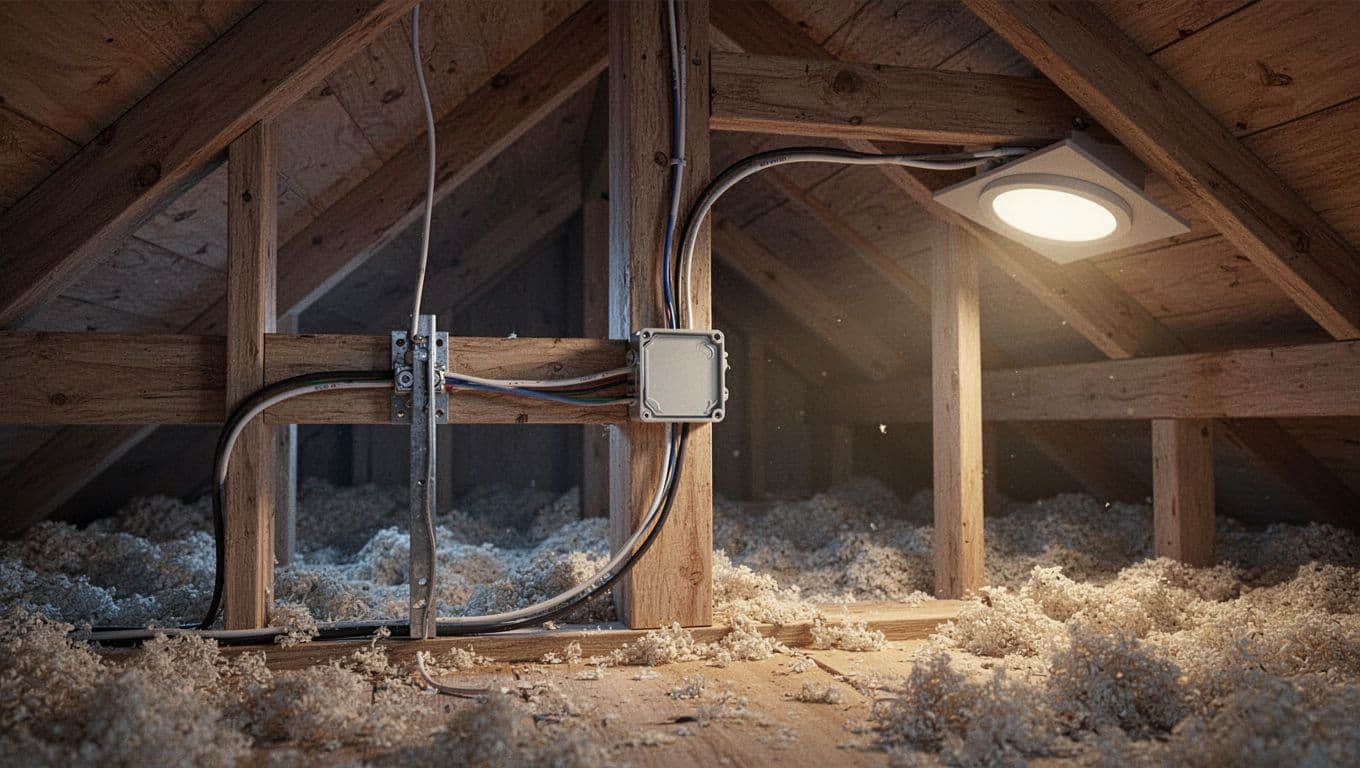
Old recessed cans deserve a close look
Older recessed lights may lack modern thermal protection or an insulation-contact rating. Covering the wrong housing with insulation can trap heat and shorten fixture life. It can also create a fire concern.
An electrician can identify the fixture type and recommend replacement when labels are missing or the equipment is outdated. Modern LED recessed fixtures often reduce heat, but they still need proper installation.
Keep electrical equipment identifiable
Don't cover panelboards, disconnects, junction boxes, or fixture labels with insulation. Marking locations before an insulation project helps, although a marker never replaces required access.
Coordinate electrical work before air sealing and insulating. Reopening an attic after blown-in insulation is installed adds mess, cost, and disruption.
Attic Access Affects Lighting and Wiring Protection
A pull-down stair, fixed stairway, or simple scuttle opening changes how people use an attic. More frequent access also raises the chance of cable damage.
Massachusetts amendments address stair access to attic-type spaces. Where a stairway provides access, a permanently wired switching device is required at the top of the stairway or attic access opening to control the stair lighting.
Storage attics and habitable attics are different
A basic storage attic doesn't have the same requirements as an attic converted into living space. Once an attic is finished or meets the dimensions and ceiling-height conditions for habitable space, building code rules for access, emergency escape, and other features may apply.
Electrical planning should happen early in a conversion. Adding bedroom receptacles, HVAC equipment, smoke alarms, lighting, and insulation after drywall goes up costs more and limits routing options.
A local building official can clarify whether your attic project is a storage improvement, a renovation, or a habitable-attic conversion.
GFCI and AFCI Protection Depend on the Circuit
GFCI and AFCI protection are not broad attic labels. Their requirements depend on the circuit's purpose, the connected outlets or equipment, the room or location served, and the code edition tied to the permit.
AFCI protection often applies to dwelling-unit circuits that supply living areas. GFCI rules commonly apply where shock risk is higher, such as bathrooms, kitchens, garages, unfinished basements, outdoors, and other listed locations.
An attic receptacle may be part of another space
An outlet in an attic could supply service equipment, a furnace, an air handler, a condensate pump, or a convenience receptacle. Its protection needs may differ based on the equipment and circuit design.
A breaker replacement is not always a simple swap. Installing the wrong breaker type, or placing it in an incompatible panel, can cause poor performance and violate the equipment listing. Have a licensed electrician review the circuit before changing protection devices.
Grounding and Bonding Must Stay Continuous
Grounding and bonding provide a planned path for fault current and help protective devices operate as intended. They matter in every attic branch circuit, even though most of the key components sit in boxes, equipment, and the service panel.
When a cable is extended, every metal box, grounding conductor, connector, and device must be handled correctly. A loose ground wire tucked behind a fixture is not a minor detail.
Service-panel work belongs with a licensed electrician
Adding circuits for attic lights, mini-splits, bathroom fans, solar equipment, or a finished attic may require panel capacity review. The electrician may need to assess load calculations, available breaker spaces, grounding, bonding, and the panel manufacturer's approved breaker types.
Never remove a panel cover or move service conductors. Even with the main breaker off, parts of a service panel can remain energized.
Permits and Inspections Protect the Finished Work
Massachusetts municipalities commonly require an electrical permit for new circuits, modifications, and other regulated electrical work. The permit process also creates a path for an inspector to review concealed work before insulation or finishes hide it.
Call your city or town before scheduling the project. Ask whether a licensed electrician must pull the permit, when rough inspection occurs, and whether the inspector needs access before insulation installation.
| Project situation | Practical question for the local inspector |
|---|---|
| New attic lighting | Is a rough inspection required before insulation or drywall? |
| Insulation upgrade | How should existing junction boxes remain accessible? |
| Finished attic conversion | Which electrical, building, and fire-safety permits apply? |
| New HVAC or EV-related circuit | Does the service panel need a load calculation or upgrade? |
The local process can vary, but the need for clear documentation does not. Keep permit records, inspection approvals, panel schedules, and photos of open wiring routes with your home records.
Call an Electrician Before You Modify Attic Wiring
Some attic discoveries need a same-week appointment. Others should stop a project until an electrician can inspect the area. Exposed splices, damaged cables, water near electrical equipment, overheated fixtures, and repeated breaker trips should not wait for a DIY fix.
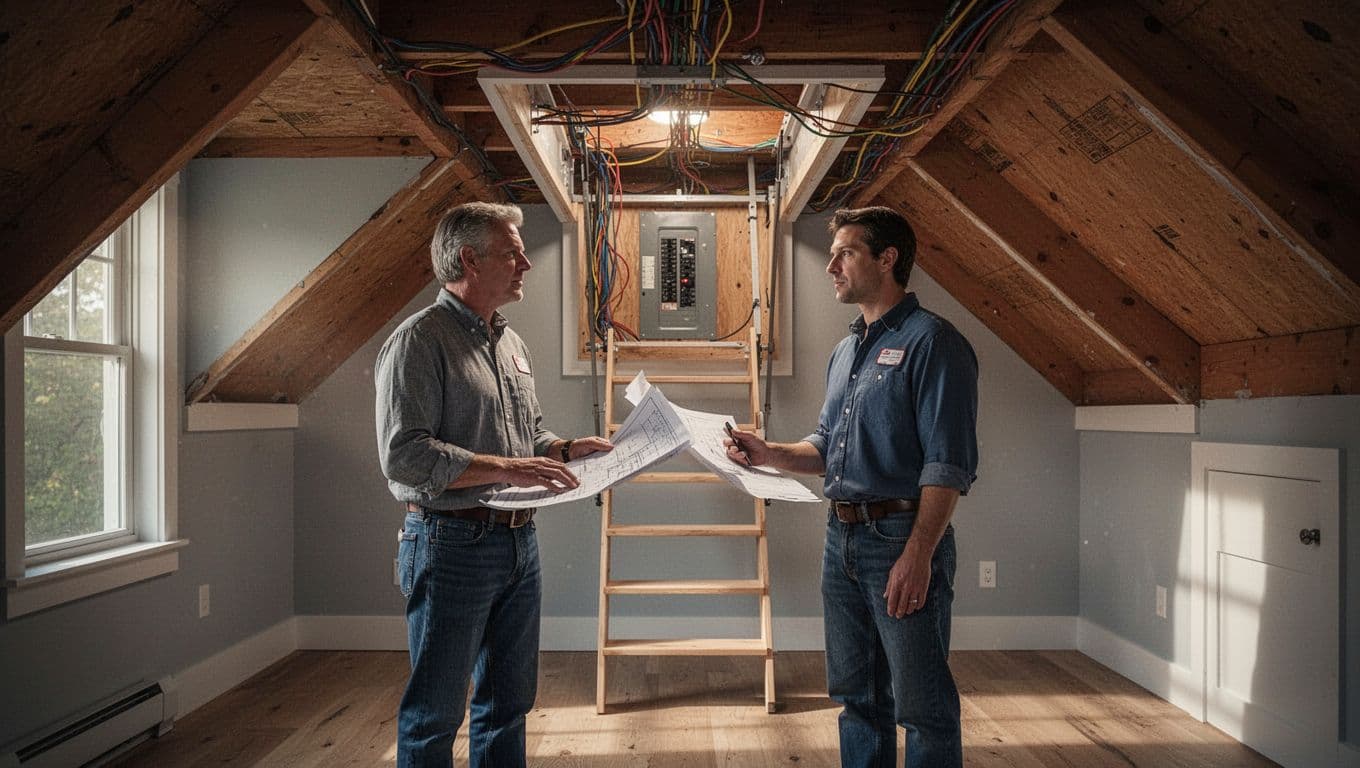
Plan electrical work before related trades arrive
If roofers, insulation contractors, HVAC installers, or remodelers will be in the attic, arrange the electrical review first. That order gives the electrician room to correct cable routes, locate boxes, and plan circuits before other work covers access.
For service-panel work, troubleshooting, new circuits, and any modification to unfamiliar wiring, hire a licensed electrician. A proper inspection can separate a minor correction from a larger upgrade before the project becomes more expensive.
A Safer Attic Starts With Accessible Work
Safe attic electrical work stays protected, supported, covered, and accessible. Those basics help inspectors, electricians, and future homeowners understand what is overhead without digging through insulation.
Because code editions and local procedures can change, confirm the current permit and inspection requirements with your municipality before work begins. Massachusetts attic wiring is safest when a licensed electrician handles the details that homeowners cannot verify from a visual check.