

Massachusetts Outdoor Kitchen Electrical Requirements for Homeowners

Contact Us
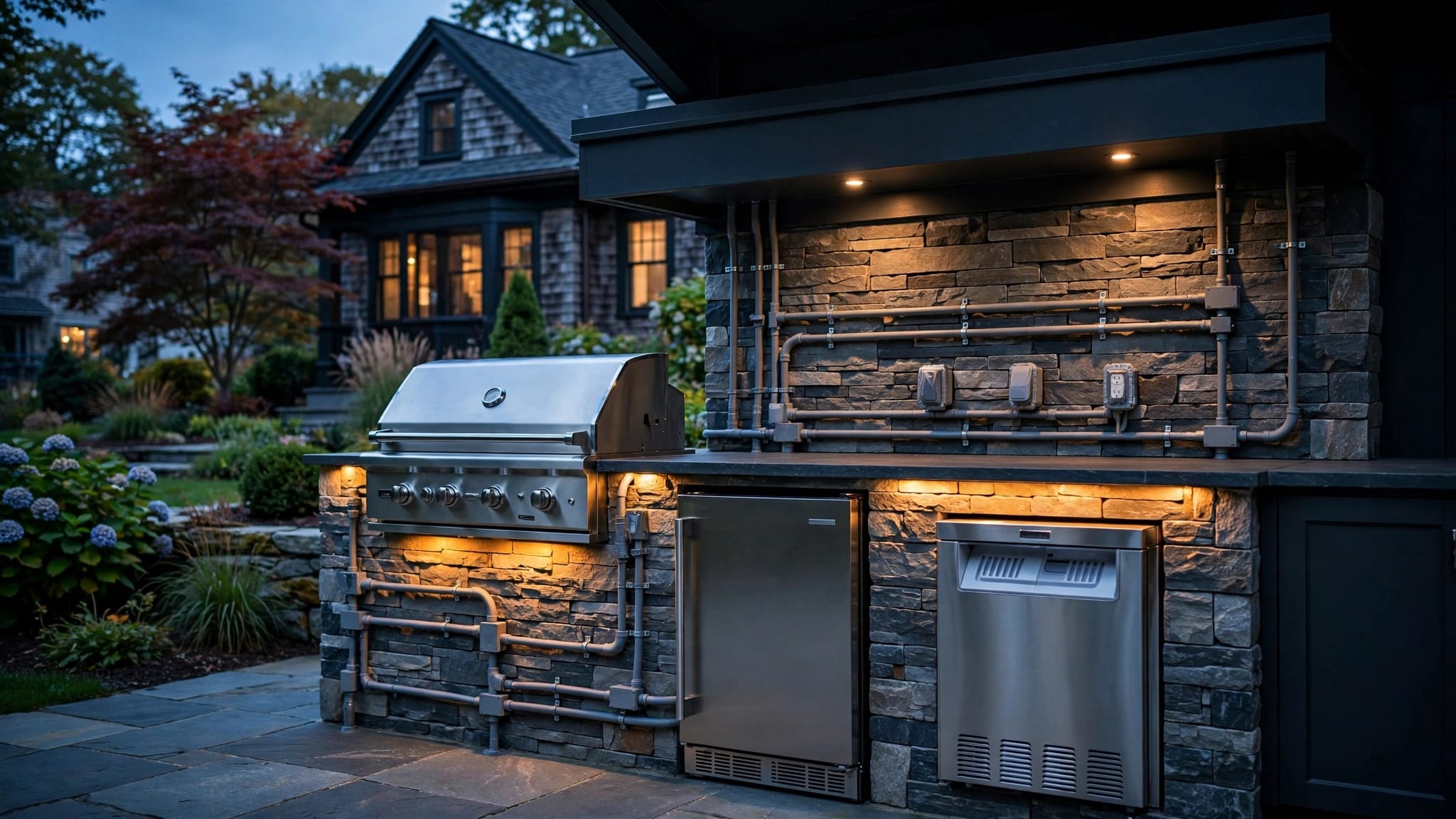
A built-in outdoor kitchen can add more electrical demand than many homeowners expect. The grill may need ignition power, while a refrigerator, ice maker, lighting, outlets, and ventilation can quickly turn a patio project into a serious electrical installation.
For Massachusetts homeowners, outdoor kitchen electrical requirements affect the design long before countertops or stone veneer arrive. A good plan protects people from shock, prevents overloaded circuits, and avoids expensive changes after the patio is finished.
Start with the permit, the electrical layout, and the home's available capacity.
Massachusetts Code and Permit Rules for Outdoor Kitchens
Massachusetts uses a statewide electrical code, but your city or town administers permits and inspections through its local wiring inspector. That means the code baseline is consistent, while application procedures, inspection timing, and required documents can differ by municipality.
For permits issued after April 24, 2026, Massachusetts Electrical Code 527 CMR 12.00 is based on the 2026 edition of NFPA 70, commonly called the National Electrical Code or NEC.
A permanent kitchen needs a real electrical plan
A movable grill and a string of temporary patio lights are one thing. A permanent island with built-in appliances, hardwired lighting, or a new feeder is another.
Electrical work for a fixed outdoor kitchen generally requires a permit and inspection. The local wiring inspector checks that the wiring method, equipment, protection, and installation meet the Massachusetts code.
Submit the appliance cut sheets early. A listed refrigerator, grill, ice maker, hood, or heater must be installed according to the manufacturer's instructions.
Local inspectors enforce the statewide code
Your inspector cannot waive electrical code requirements. However, the inspector may have questions about access to boxes, placement of disconnects, appliance listings, or the path of underground wiring.
Confirm the project scope before work starts. That conversation can prevent an inspection delay after cabinets, masonry, or a pergola blocks electrical equipment.
Outdoor equipment must remain accessible for service and inspection. A beautiful stone surround should never bury a junction box, disconnect, or panel.
Plan Circuits Before Choosing Appliances
The most attractive outdoor kitchen designs often hide their electrical needs. By the time appliances are selected, a homeowner may discover that one existing patio circuit can't support the planned equipment.
A licensed electrician should map the kitchen's loads before construction. This includes equipment that is hardwired, plug-in, or added later.
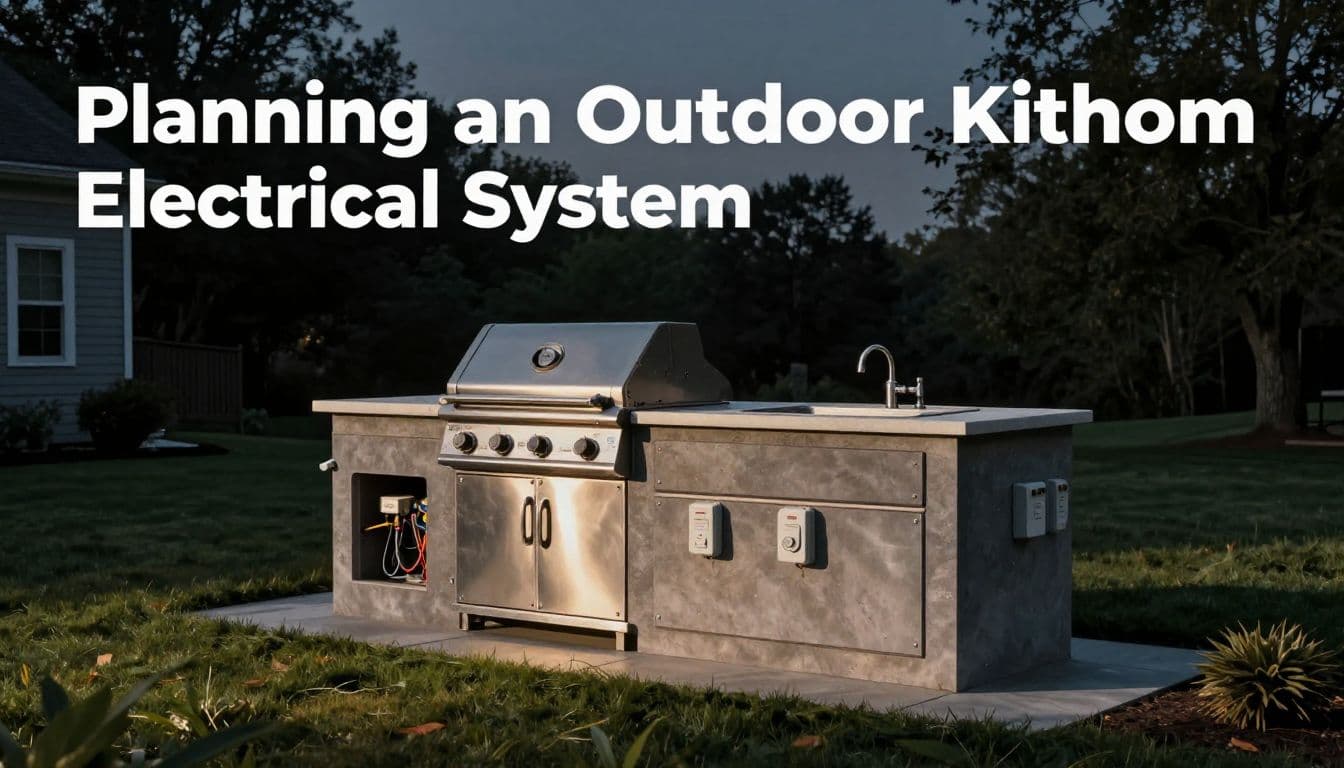
Separate appliances from convenience outlets
Countertop outlets are for blenders, phone chargers, small speakers, and similar temporary loads. They should not carry a refrigerator, ice maker, or other appliance that runs for long periods.
Dedicated circuits often make sense for:
- Outdoor-rated refrigerators, freezers, and ice makers.
- Electric grills, smokers, pizza ovens, and warming drawers.
- Vent hoods, exhaust fans, heat lamps, and motorized pergola equipment.
- Landscape lighting transformers and pool-related equipment, when present.
The appliance nameplate tells the electrician what the circuit must support. Gas appliances may still need electricity for ignition, controls, lighting, or a rotisserie motor.
Check service capacity, not only empty breaker spaces
An open breaker position doesn't prove that your home has enough electrical capacity. The service, panel rating, feeder conductors, and calculated household demand all matter.
Older Greater Boston homes often have 100-amp service and little room for new electric loads. Adding a kitchen with refrigeration and electric cooking equipment may call for a load calculation, a feeder to a subpanel, or a panel upgrade.
Review 100-amp versus 200-amp electrical service before assuming the existing system can take another major appliance circuit.
Outdoor Kitchen Electrical Requirements for GFCI Protection
Water, damp hands, metal surfaces, and portable appliances make outdoor kitchens a high-risk location for shock. GFCI protection is one of the most important outdoor kitchen electrical requirements because it responds quickly when current flows where it should not.
Massachusetts follows the NEC framework for GFCI protection. Outdoor receptacles serving a dwelling generally need GFCI protection, and typical 120-volt outdoor kitchen outlets fall within that protection.
Use weather-resistant receptacles and proper covers
A GFCI device can be a receptacle or breaker, depending on the circuit design. The installation also needs equipment rated for outdoor exposure.
Outdoor receptacles need weather-resistant components. In locations exposed to rain or snow, the cover must protect the receptacle even when a cord is plugged in. These are commonly called in-use covers.
A roof does not always make an outlet dry. Wind-driven rain, melting snow, splash from a sink, and hose spray can still reach an outlet under a pergola or eave.
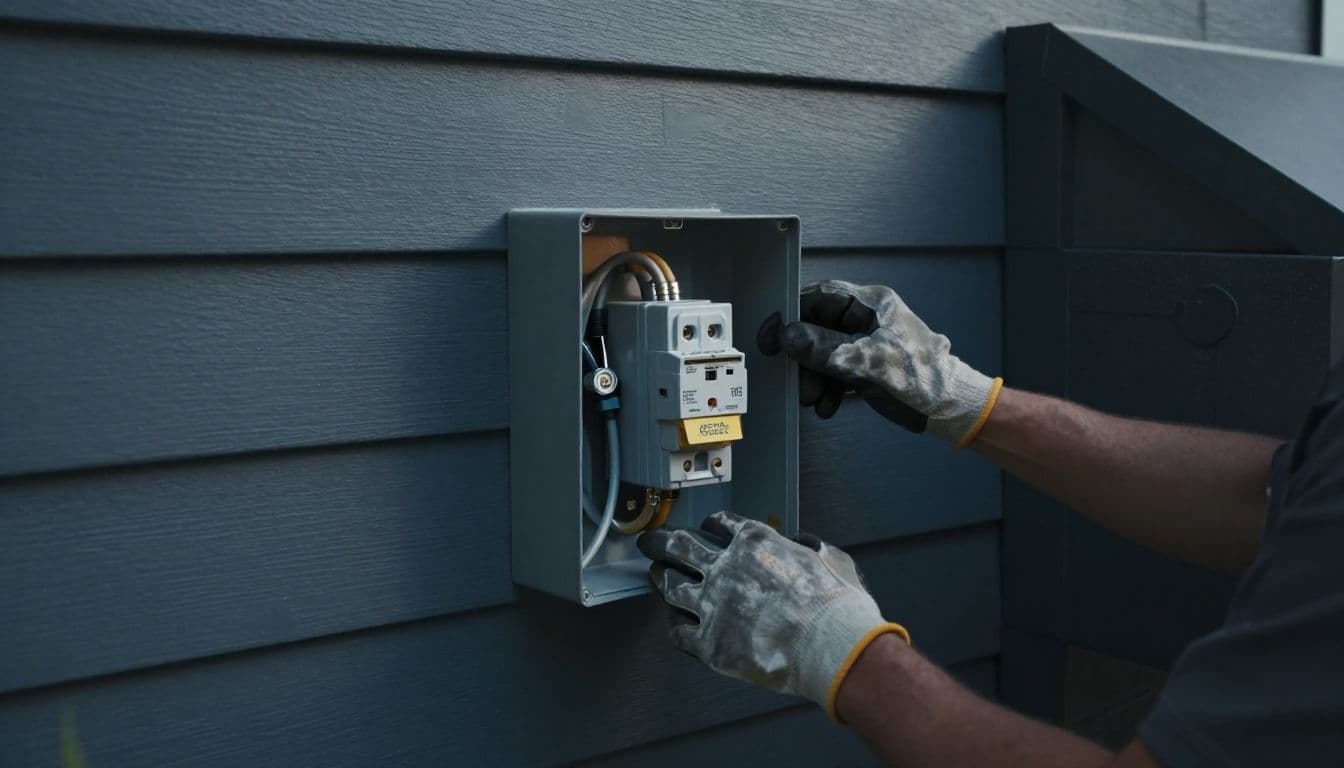
Keep outlets useful without putting them in harm's way
Plan outlet locations around how the kitchen will be used. A receptacle directly behind a sink, under an unprotected bar overhang, or near intense grill heat can become a constant maintenance problem.
Place convenience outlets where cords can reach the work surface without crossing walkways. The electrician should also account for doors, drawers, appliance clearances, and removable panels.
Do not rely on power strips outdoors. They are not a substitute for permanent, code-compliant receptacles.
Underground Wiring, Burial Depth, and Conduit
Many outdoor kitchens sit away from the house. That often means running a new branch circuit or feeder underground from the main panel, garage, basement, or a detached structure.
The right approach depends on the circuit, the wiring method, the soil conditions, vehicle traffic, and where the raceway enters each structure.
Burial depth depends on the wiring method
Massachusetts follows the 2026 NEC rules for underground wiring methods and cover requirements. Exact burial depth is not one universal number.
Direct-burial cable, rigid metal conduit, nonmetallic conduit, and other approved methods have different minimum cover requirements. A circuit below a pedestrian patio can have different needs than one crossing a driveway or parking area.
The electrician must select the compliant method before excavation begins. Local conditions may also affect routing, protection where conduit emerges from the ground, and separation from gas, water, drainage, and communication lines.
Conduit needs room, protection, and drainage
Conduit protects conductors, but it must be properly sized and supported. It also needs appropriate fittings, sweep bends, and protection where it rises above grade.
Outdoor raceways can collect condensation. For that reason, the wiring method and conductor type must suit wet locations when the code treats the interior of the raceway as wet.
Never bury a standard indoor extension cord or indoor-rated cable. Those products cannot handle soil contact, moisture, physical damage, or the inspection requirements for a permanent installation.
Grounding, Bonding, and Disconnecting Means
Grounding and bonding work in the background, yet they matter most when a fault occurs. The equipment grounding conductor gives fault current a low-resistance path back to the source, helping a breaker open quickly.
Bonding joins conductive parts that could become energized, so they remain at the same electrical potential.
Metal parts need the right electrical treatment
Every branch circuit or feeder to the outdoor kitchen needs an equipment grounding conductor sized and installed under the adopted code. Metal conduit, metal boxes, and equipment enclosures also need correct bonding where the wiring method requires it.
Appliance cabinets, grills, hoods, and other metal components should be installed according to their listing instructions. A licensed electrician can determine whether nearby metal components need bonding based on the actual equipment and wiring design.
Grounding isn't accomplished by attaching a random wire to a pipe, railing, or patio frame. Improvised connections can create a dangerous fault path.
Some equipment needs a nearby disconnect
A fixed appliance may require a disconnecting means, depending on its type and installation. A subpanel also needs a properly located disconnect arrangement and adequate working clearance.
For example, an outdoor kitchen supplied by a feeder may benefit from a nearby panel or disconnect that lets service technicians de-energize the equipment without entering the home. The final location must comply with the 2026 NEC provisions adopted in Massachusetts and stay accessible after construction.
Do not conceal disconnects behind locked cabinetry, fixed appliances, or decorative masonry.
Coordinate Electrical Work With Other Trades
Outdoor kitchens bring together electricians, masons, plumbers, gas fitters, cabinet installers, and landscape contractors. If each trade works from a different drawing, conflicts show up late.
A coordinated plan keeps electrical boxes out of sink cavities, preserves service access, and prevents conduit from colliding with gas piping or structural footings.
Finalize the layout before trenching or masonry
Mark the proposed location of every appliance, outlet, switch, light, disconnect, and low-voltage component. Include clear measurements for counter height, backsplash details, cabinetry, and appliance doors.
Then identify where electrical equipment will be visible. A weatherproof outlet can blend into a backsplash or side wall, but it still needs access and the correct cover.
If lighting is part of the project, include task lighting over prep surfaces and safe path lighting around steps. Professional landscape lighting installation can tie the cooking area into the rest of the yard without overloading a convenience circuit.
Schedule inspection before finishes close the work
The local inspector may need to see wiring, conduit, grounding, and box placement before stone, stucco, cabinetry, or ceiling finishes cover them. Ask about the required inspection sequence when the permit is issued.
Keep appliance documentation and equipment labels available. If the project changes, such as swapping a gas grill for an electric pizza oven, have the electrician review the circuit and load calculation before installation.
A licensed electrician should perform all permitted electrical work. Confirm requirements with your local building department or wiring inspector because project details and local permit procedures can vary.
Build an Outdoor Kitchen That Is Ready for Real Use
A permanent outdoor kitchen needs more than a few outlets near the grill. It needs GFCI protection, weather-rated equipment, safe underground wiring, proper grounding and bonding, accessible disconnects, and enough service capacity for the appliances you plan to use.
When the electrical design happens before the patio is finished, the kitchen is safer, easier to service, and less likely to need costly rework. Code-compliant planning gives the finished space the power it needs through every New England season.