
Massachusetts Electrical Requirements for Driveway Gates

Contact Us
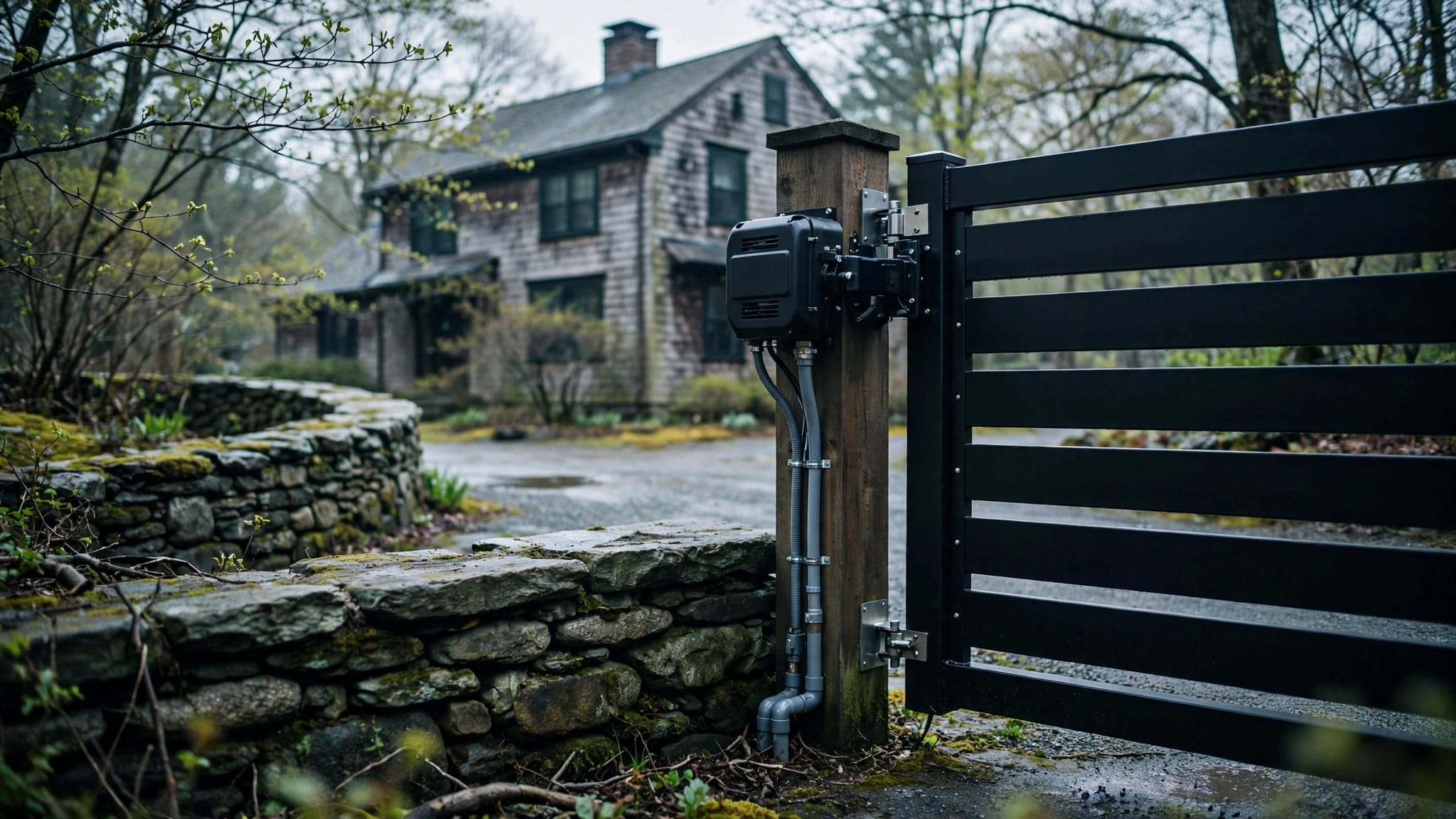
An automatic driveway gate in Massachusetts needs more than a motor and a power source. Its electrical installation must follow the Massachusetts Electrical Code, while separate building and gate-safety provisions may apply to the gate and operator.
For homeowners, the important distinction is electrical compliance versus gate safety . A properly wired motor doesn't by itself protect someone from a moving gate. Start by understanding which parts of the project fall under each set of requirements.
Which Massachusetts Codes Apply to an Automatic Gate?
A driveway gate project can involve both electrical work and construction work. Each has its own requirements, and a permit for one doesn't automatically cover the other.
The Massachusetts Electrical Code
Massachusetts regulates electrical installations through 527 CMR 12.00 . For permits granted after April 24, 2026, the code is based on the 2026 edition of NFPA 70, the National Electrical Code, with Massachusetts amendments.
The permit date matters because an earlier project may fall under a different code edition. The Massachusetts Electrical Code covers the wiring and equipment that supply the gate operator, including applicable requirements for installation, protection, grounding, and inspection.
Building and Gate-Safety Provisions
Massachusetts also has a state building code, published as 780 CMR . Its 10th edition includes provisions addressing automatic vehicular gates.
For one- and two-family properties, Appendix AO of the residential code addresses automatic vehicular gates. The appendix calls for gates intended for automation to comply with ASTM F2200 and, where openers are provided, for the openers to be listed to UL 325. Appendix AO isn't mandatory unless the adopting ordinance specifically references it.
That distinction matters: an electrical inspection and a review of gate construction address different hazards.
Permits and Inspections for Gate Wiring
Adding a branch circuit, installing fixed wiring, or adding an outdoor receptacle for a gate commonly requires an electrical permit and inspection. The municipal Inspector of Wires administers that process.
A larger gate or driveway project may also involve building or other local approvals. However, a building permit doesn't replace the separate electrical permit for work that requires one.
Who Handles the Electrical Permit?
A Massachusetts-licensed electrician should handle new circuits, fixed wiring, and grounding repairs. The project scope should identify who submits the electrical application and requests inspections.
Depending on the work, the local department may ask for equipment specifications, a panel schedule, load calculations, or drawings. Our guide to electrical permit responsibilities in Massachusetts explains how the permit holder fits into the process.
Fees, forms, and submission procedures vary by community. Service changes may also require coordination with the electric utility.
Keep Underground Work Visible
Massachusetts rules prohibit covering electrical work before the required inspection. For a driveway gate, that can mean leaving a wiring trench open until the Inspector of Wires has reviewed it.
After proper notice, the code provides inspection windows of 24 hours for excavations and 72 hours for other installations, excluding Saturdays, Sundays, and holidays. Schedule that stage before paving or landscaping crews need access to the trench.
The final inspection follows completion of the permitted work. Our guide to Massachusetts electrical inspections explains what happens at that stage.
Power Supply and Disconnects

The gate operator's electrical requirements are the starting point for the circuit design. A licensed electrician can match the supply to the equipment, the distance involved, and the conditions at the property.
Plan the Circuit Around the Operator
Before wiring begins, provide the electrician with the operator's specifications. The equipment's voltage, current requirements, connection method, and instructions affect the circuit and protective device.
Distance matters, too. A gate at the end of a long driveway may need a larger conductor than a gate close to the panel to account for voltage drop. The electrician also needs to consider other loads on the proposed circuit and the available capacity in the panel.
An extension cord isn't a substitute for a permanent power installation. If an operator plugs into an existing receptacle, the electrician can assess whether that receptacle and its circuit are suitable for the equipment and location.
Provide a Suitable Disconnect
Service personnel need a compliant way to disconnect power before working on the operator. The required disconnect arrangement depends on the equipment, installation, applicable code provisions, and manufacturer instructions.
The disconnect must remain accessible. Don't enclose it behind fixed masonry, landscaping, or a locked decorative cover that prevents necessary access. If the operator has a battery backup, its instructions also need to address how stored power is isolated during service.
Underground Wiring and Outdoor Conditions
A gate circuit often travels through a yard or beneath a driveway. Its route needs to accommodate excavation, vehicle traffic, drainage, and the transition where wiring emerges near the operator.
Select the Wiring Method Before Digging
The Massachusetts Electrical Code doesn't give every gate circuit the same burial depth. Cover requirements depend on the wiring method and site conditions. Conductors installed in outdoor underground raceways must also be suitable for the wet conditions that can occur inside them.
The electrician selects the wiring method and protection before excavation begins. That decision affects trench depth, conduit placement, and the material needed where the wiring comes above ground.
Planning matters under a finished driveway. A compliant route laid out before paving can avoid cutting through the surface later. See our guide to underground electrical rough inspections for the inspection stage.
Use Equipment Suited to the Location
Outdoor boxes, fittings, and enclosures need to suit their exposure. Rain, snow, standing water, and snow-removal equipment can all affect where components should go.
The electrician also determines where ground-fault circuit-interrupter, or GFCI, protection applies under the code. Protection requirements depend on the circuit and equipment, so the design should account for them before the wiring is installed.
Grounding and Bonding at the Gate
Grounding and bonding are related but different parts of electrical safety. The equipment grounding conductor provides a fault-current path for applicable equipment. Bonding connects metal parts where required so a fault can be cleared by the circuit's protective device.
For a gate installation, the electrician evaluates the operator, metal raceways, boxes, and other associated equipment under the applicable rules. The connections must remain suitable for outdoor exposure and accessible where the code requires access.
A ground rod alone doesn't replace a properly installed equipment grounding conductor. Likewise, an existing metal gate or conduit shouldn't be assumed to provide the required fault-current path.
If an older circuit serves the proposed operator, an assessment may reveal missing or damaged grounding components. Repairs belong in the electrical scope rather than being left for the gate installer to discover at startup.
Gate Safety and Entrapment Protection
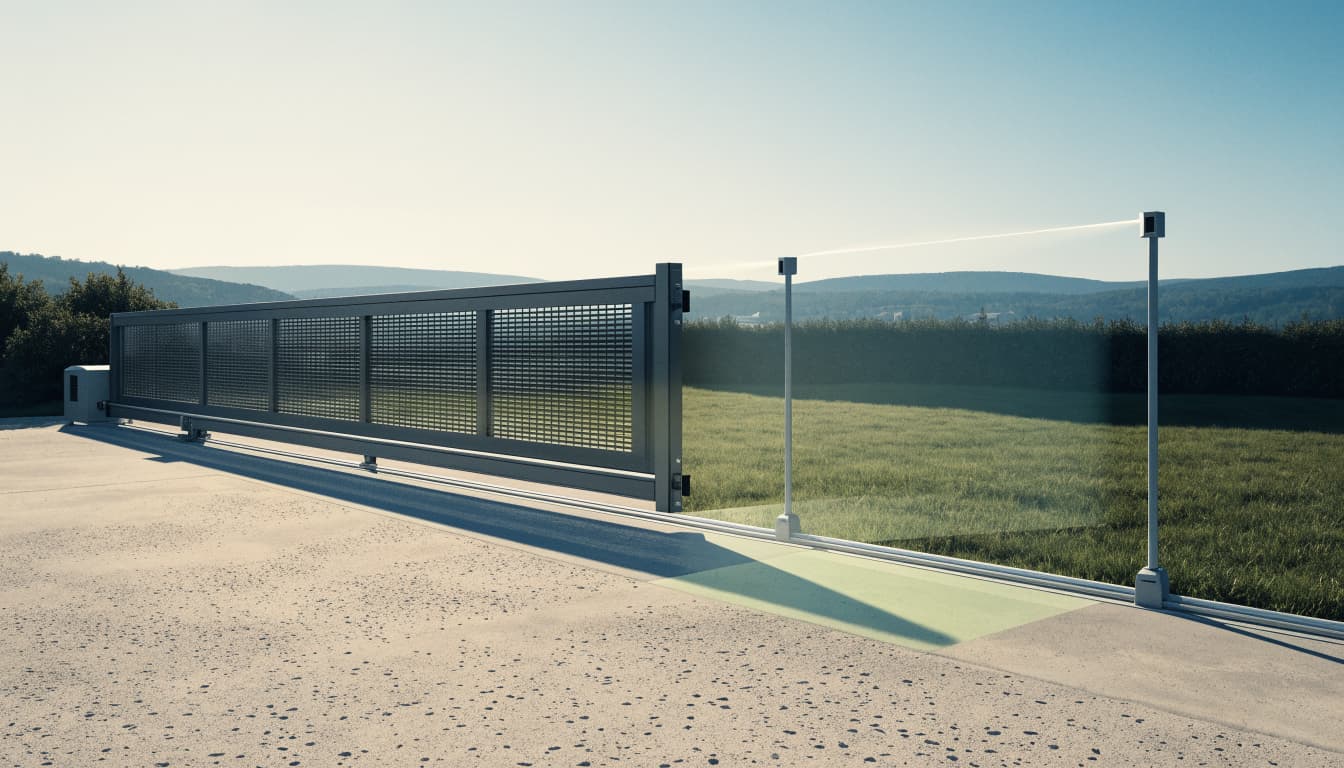
A powered gate can trap someone between the moving gate and a fixed object. Sliding gates can create hazards near posts and rollers. Swing gates can create pinch points as they move toward a wall, fence, or other obstruction.
Entrapment protection needs to address the actual gate layout, not just the electrical connection.
Gate Construction and Operator Standards
ASTM F2200 addresses the construction of automated vehicular gates. UL 325 addresses the safety of door, gate, and related operators. They cover different parts of the installation.
Where Appendix AO applies, it identifies both standards for the residential gates and openers within its scope. The applicable gate provisions, operator instructions, and site layout all matter when choosing equipment and designing protections.
Sensors and Moving-Gate Hazards
Photoelectric sensors and contact edges are examples of devices that can help detect an obstruction. Their suitability and placement depend on the operator, the gate's movement, and the entrapment zones at the site.
Use devices compatible with the operator and installed according to the applicable requirements and manufacturer's instructions. A remote control, camera, or working motor isn't a substitute for required entrapment protection.
Electrical approval of the supply circuit doesn't establish that every moving-gate hazard has been addressed.
A qualified gate installer should assess the complete moving assembly, including areas a person could reach from either side.
Choosing and Using the Gate Operator
The operator must suit the gate it moves. Gate weight, dimensions, swing or slide configuration, and expected use affect equipment selection. A heavy commercial gate and a residential swing gate may have different operating needs.
The gate itself should move properly before an operator is added. Binding hinges, damaged rollers, or an obstructed track put stress on the equipment and can interfere with safe operation. A gate professional should address those mechanical problems as part of the project.
Keep controls positioned so users can operate the gate safely. People should have a suitable pedestrian route rather than relying on a vehicle gate as their walking entrance. Access needs for deliveries, emergency responders, and occupants also belong in the site plan.
Once installed, keep the manufacturer's operating and maintenance instructions. Leaves, snow, ice, and other debris can interfere with movement or sensors. If a safety device is damaged or the gate behaves unpredictably, stop using the automatic function and arrange service.
How Local Requirements Can Vary
Massachusetts supplies the statewide electrical-code framework, while cities and towns administer permits and inspections. Local procedures can differ for application documents, fees, scheduling, and inspection records.
Other approvals depend on the project and property. A new gate structure, masonry work, driveway alteration, or access arrangement may raise building or local review questions separate from the electrical permit. Appendix AO's adoption status is another local consideration for one- and two-family properties.
A project in Burlington may therefore follow different administrative steps than one in another community, even though both use the same statewide electrical-code framework. The local Inspector of Wires oversees the electrical permit and inspection; other departments may have roles in the gate or site work.
Practical Next Steps for Homeowners
Start with the gate's location and the equipment you intend to use. Share the operator specifications and site plan with both the gate installer and a Massachusetts-licensed electrician before trenching or ordering related electrical materials.
Then include these steps in the project schedule:
- Have the electrician assess the panel, proposed circuit route, power requirements, and disconnect arrangement.
- Establish who will submit the electrical permit and arrange any separate gate or site approvals.
- Coordinate the trench inspection before backfilling, then arrange the final electrical inspection when the work is complete.
- Have the gate installer address the moving assembly, entrapment zones, and compatible safety devices.
- Keep the permit and inspection records alongside the operator's instructions.
At Sirois Electric, Inc., we provide electrical services in Metro and Greater Boston. We can help with the electrical work for a gate project, including the power supply and inspection coordination.
Plan for Both Electrical and Gate Safety
A dependable automatic gate starts with a suitable power supply and permitted electrical work. It also needs a gate and operator installation that addresses the hazards created by movement.
Plan those responsibilities together before excavation begins. With the electrician and gate installer working from the same equipment information, you can avoid burying wiring too early or overlooking a gate-safety requirement .