
Massachusetts Commercial Parking Lot Lighting Requirements

Contact Us
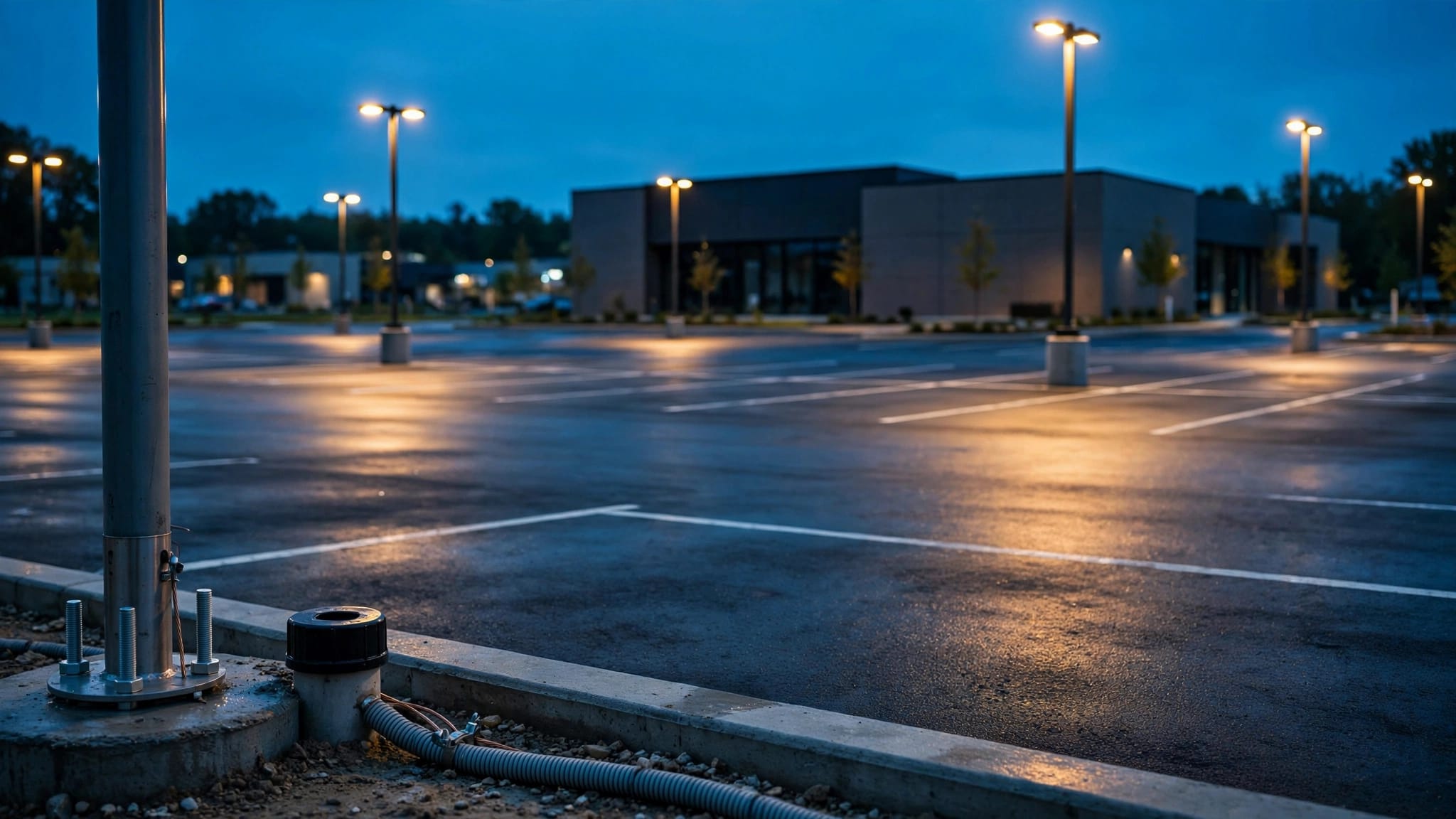
Commercial parking lot lighting in Massachusetts must meet the state electrical code, applicable energy provisions, and local site approvals. These parking lot lighting requirements cover more than fixture brightness: they also address underground wiring, grounding, poles, controls, and inspections.
Your permit date and project scope help determine which rules apply, especially when replacing existing equipment. A compliant installation starts with coordinated electrical, structural, and lighting plans before trenching begins.
Key Takeaways
- Massachusetts uses 527 CMR 12.00, based on the 2026 National Electrical Code with state amendments, for installations with permits granted after April 24, 2026.
- Electrical permits, excavation inspections, and final approval belong in the construction schedule.
- Underground wiring requires wet-location materials, while metal poles need effective grounding and bonding.
- LED fixtures still need compliant power calculations, controls, and a layout that addresses local lighting restrictions.
Which Massachusetts Codes Apply?
Electrical code and state amendments
The Massachusetts Electrical Code, 527 CMR 12.00, adopts NFPA 70, the 2026 National Electrical Code, with Massachusetts amendments. It applies to installations with permits granted after April 24, 2026.
The state amendments are part of the enforceable code. A design based only on an unamended NEC book can miss Massachusetts requirements. Also, later NFPA changes don't automatically become Massachusetts law.
Projects permitted under an earlier edition can follow different requirements. The permit's governing edition matters more than the date fixtures arrive or construction crews mobilize.
Building, energy, and local site rules
Massachusetts' building framework includes the 10th edition of 780 CMR. Pole foundations, structural loads, required exit lighting, and related construction can involve building-code review alongside electrical approval.
The state's commercial energy-code framework uses the 2021 IECC with Massachusetts amendments. Municipal adoption of the Stretch Code and Specialized Code affects the applicable compliance path.
Meanwhile, zoning bylaws and approved site plans can regulate pole height, shielding, operating hours, and light reaching neighboring property. The electrical code alone doesn't settle those issues.
Permits and Inspections Come Before Paving
Define the permitted work
New lighting circuits, underground wiring, replacement poles, and substantial lighting alterations generally require electrical permitting and inspection. A building permit doesn't automatically include the electrical permit.
A Massachusetts-licensed electrician should coordinate the filing. Depending on scope, the submission can include a lighting layout, circuit information, panel schedules, load calculations, fixture specifications, and control details.
Separate excavation, structural, or site approvals may also apply. The local Inspector of Wires administers electrical permitting, while other municipal departments handle their respective approvals. Forms, fees, submission procedures, and inspection sequences vary by community.
Keep concealed work available for inspection
Underground electrical work needs inspection before backfilling. Foundation work can also require inspection before concrete placement when structural approval applies.
Massachusetts inspection timing provisions identify 24 hours for excavations and 72 hours for other installations after proper notice, excluding Saturdays, Sundays, and holidays. These timing provisions don't authorize covering unapproved work.
At completion, the electrician should demonstrate circuit identification, grounding, fixture operation, and control settings. Our commercial electrical commissioning checklist also addresses testing records and owner handoff.
Wiring Must Suit Underground and Outdoor Conditions
Select an approved wiring method
Underground raceways are wet locations , even when their joints appear watertight. Conductors need suitable wet-location ratings, such as THWN-2 or XHHW-2. A THHN-only marking doesn't establish wet-location suitability.
Raceways, fittings, boxes, and splices must also suit their exposure. Direct-buried cable requires a listing for that use. Aboveground conduit needs protection against physical damage where vehicles, landscaping equipment, or other hazards expose it.
Outdoor fixtures and associated equipment need appropriate wet-location ratings and installation according to their listings.
Design burial and circuits together
There isn't one burial depth for every parking lot. Required cover depends on the wiring method, circuit characteristics, location, and applicable protection. Vehicle areas can have different requirements than landscaped areas.
Long circuit runs also need voltage-drop analysis. Excessive drop can interfere with LED drivers and reduce dependable operation.
Circuit design should account for continuous lighting loads where applicable, conductor ampacity, overcurrent protection, and available panel capacity. LED driver inrush also matters when selecting contactors and switching equipment.
Grounding and Bonding Protect Metal Poles
Metal poles and other exposed conductive parts need an effective fault-current path back to the electrical source. Proper bonding allows protective devices to operate when a fault energizes metal.
A ground rod at a pole doesn't replace the equipment grounding conductor or another code-recognized equipment grounding path. Soil alone doesn't provide the low-impedance path needed for reliable fault clearing.
Bonding connections must use suitable hardware and remain protected against corrosion and physical damage. The design also needs continuity through metal enclosures, pole components, and wiring connections where required.
For existing lots, replacing a fixture doesn't establish that the pole's grounding is sound. Missing grounding conductors, damaged underground wiring, and corroded connections need attention when they affect the work. The neutral conductor must not substitute for the equipment grounding path.
Pole Foundations Need Structural Coordination
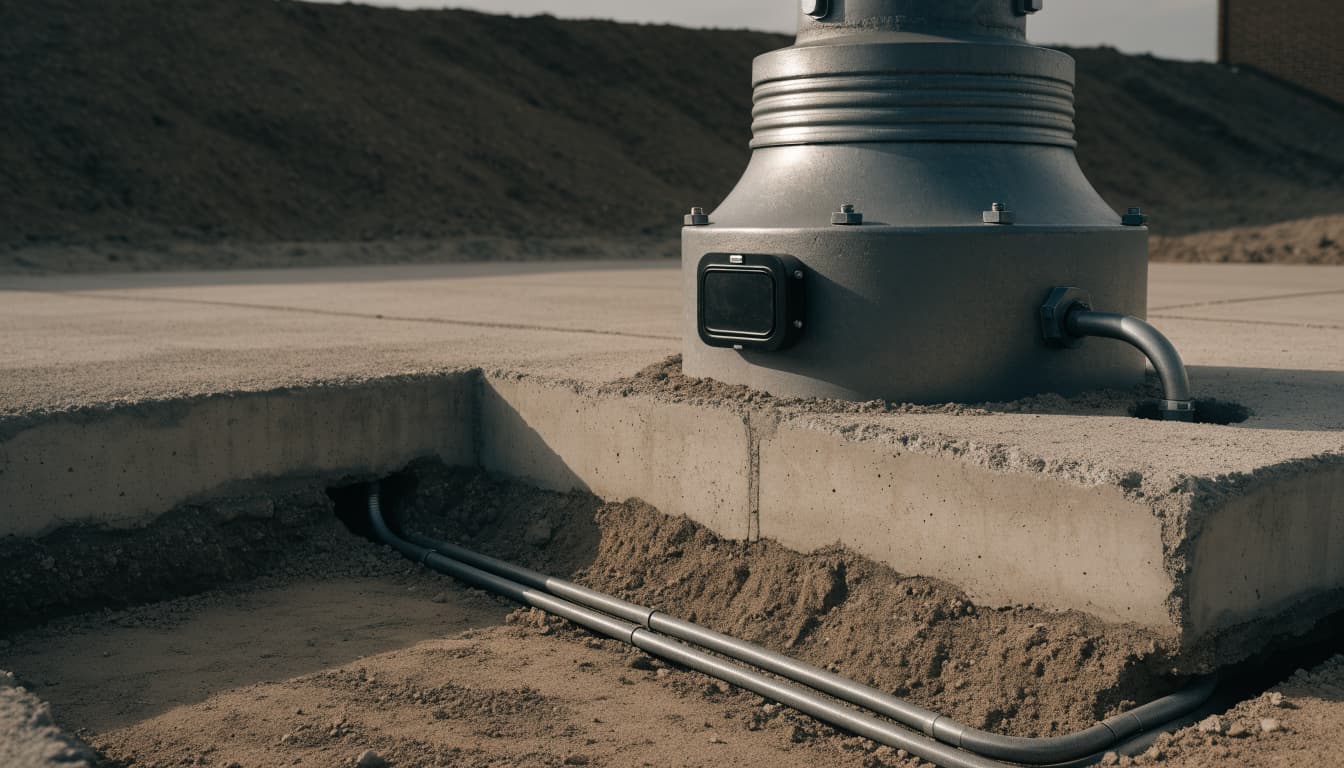
Pole height, fixture weight, fixture wind area, soil conditions, and wind loading affect foundation design. A concrete base that supported an older fixture isn't automatically suitable for a taller pole or a larger replacement assembly.
Anchor-bolt size, spacing, embedment, and installation must match the approved structural design and pole manufacturer's requirements. There's no universal foundation depth for every Massachusetts parking lot.
Electrical and structural drawings also need compatible conduit locations. Poor coordination can leave conduit obstructing anchor hardware or make pole wiring difficult to access.
Keep handholes and junction points accessible after paving and landscaping. Pole placement should also account for vehicle movement, snowplows, snow storage, pedestrian routes, and maintenance access.
Lighting Layout Must Address Glare and Property Limits
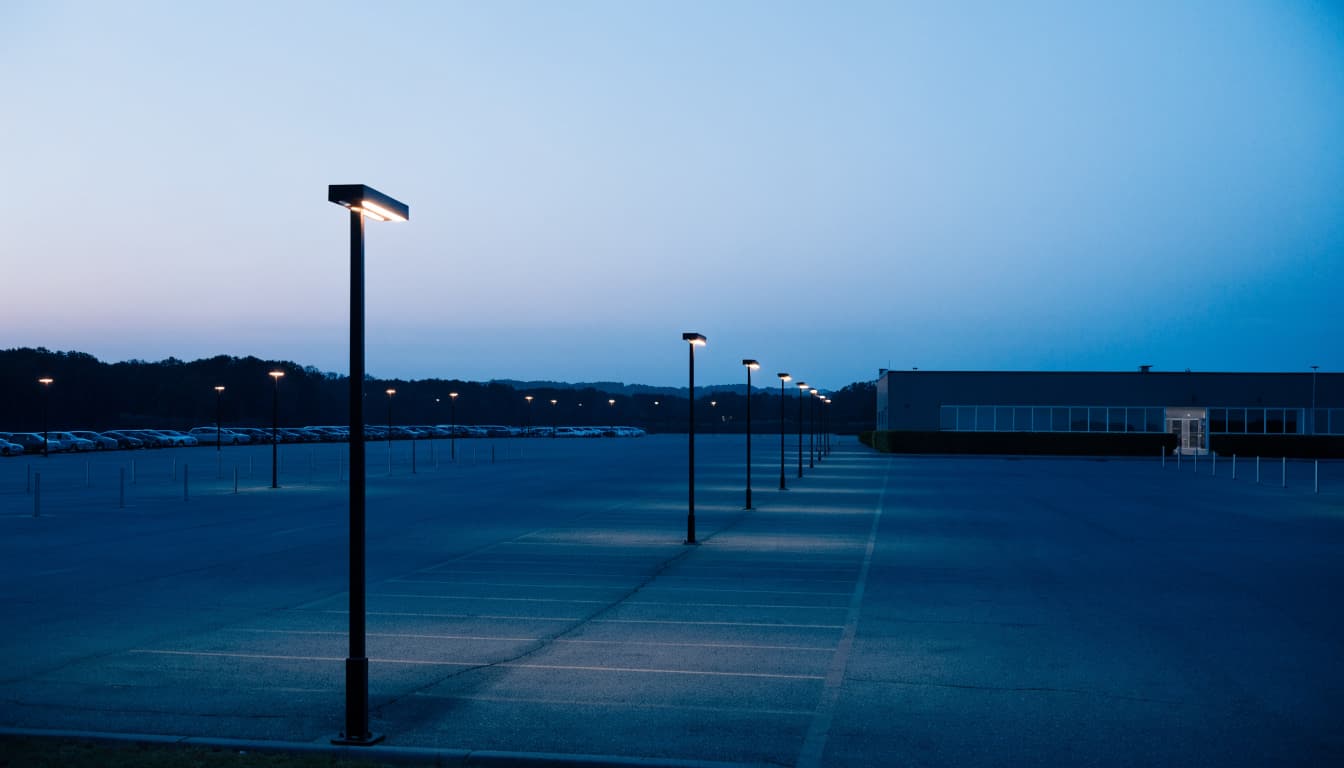
Electrical approval doesn't establish that a lot has an acceptable lighting layout. A photometric plan evaluates illumination across parking spaces, drive aisles, pedestrian areas, and property boundaries.
Avoid treating one average foot-candle value as a complete design. Bright areas beneath poles can coexist with dark pedestrian crossings. Fixture optics, mounting height, spacing, and shielding affect that distribution.
Local zoning and site-plan conditions may establish illumination limits, uniformity criteria, pole heights, or restrictions on spill light. Industry recommendations become enforceable when an applicable regulation or approval incorporates them.
Required exterior exit-discharge lighting needs separate treatment. Our Massachusetts emergency lighting requirements address backup operation and testing. Ordinary parking illumination doesn't automatically provide compliant emergency egress lighting.
Energy Limits and Lighting Controls Work Together
Calculate the exterior lighting allowance
Commercial energy compliance addresses installed lighting power as well as equipment efficiency. The allowance depends on the adopted compliance path, lighting zone, application, and applicable exceptions.
Under the ASHRAE framework, uncovered parking is a tradable exterior-lighting application. Its power allowance can combine with other permitted tradable applications, but not every exterior-lighting allowance is interchangeable.
An LED label alone doesn't demonstrate compliance. The design needs fixture input wattages, quantities, applicable areas, and the exterior power calculation. Our commercial LED retrofit planning guidance addresses replacement equipment and control compatibility.
Program daylight and after-hours operation
Applicable exterior-lighting provisions require automatic daylight shutoff. Where after-hours reduction applies, controls must reduce lighting power by at least 50% or shut designated lighting off, subject to the governing provisions and exceptions.
A photocell handles daylight response, but it doesn't independently provide scheduled nighttime reduction. Our comparison of photocells and timer controls explains their different functions.
The control sequence should define operating hours, dimming levels, sensor delays, and manual overrides. Required egress lighting needs coordination so an energy-saving schedule doesn't darken an occupied exit route.
Finally, functional testing should demonstrate daylight response, scheduled operation, and any required dimming. Facility staff need usable instructions so they don't routinely bypass the controls.
Frequently Asked Questions
Does an LED retrofit require replacing the entire system?
A fixture-only replacement doesn't automatically require rebuilding every circuit and foundation. However, altered wiring, added fixtures, changed loads, unsafe conditions, and energy-code alteration provisions can expand the required work.
The retrofit scope needs to distinguish equipment that remains, equipment that changes, and deficiencies affecting safe operation. Reusing a pole also requires evaluating its condition and suitability for the replacement fixture.
Can each town set different parking lot lighting requirements?
Massachusetts establishes the statewide electrical framework. Municipalities administer electrical permits and inspections, and local zoning or site-plan approvals can add lighting-related conditions.
As a result, two similar lots can face different pole-height restrictions, spill-light limits, operating schedules, or submission requirements. The authority having jurisdiction applies the governing rules to the actual project; local administration doesn't eliminate state electrical or energy obligations.
Build Compliance Into the Installation
A compliant parking lot lighting project coordinates safe wiring, effective grounding, suitable poles, controlled illumination, and documented approvals. Buying efficient fixtures addresses only part of that work.
At Sirois Electric, Inc., we provide commercial electrical and lighting services throughout Greater Boston. Include the full installation scope in your lighting plan so permits, excavation, controls, and final testing receive attention before construction begins.