
Outdoor Outlet Safety Tips for Greater Boston Homes

Contact Us
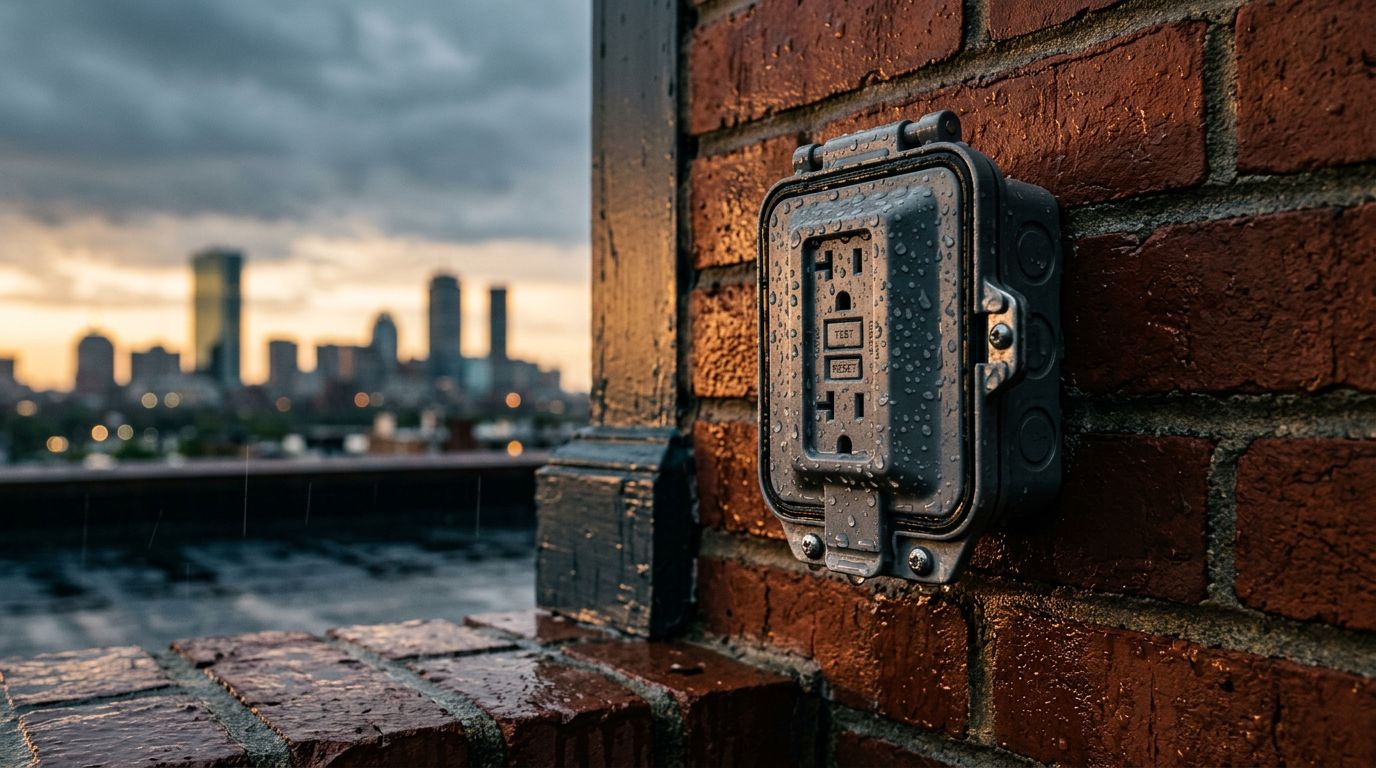
An outdoor outlet can look fine and still be unsafe. In Greater Boston, rain, snow, ice, and freeze-thaw cycles put extra stress on every exterior connection.
That matters if you use outlets for holiday lights, patio gear, grills, power tools, or garden equipment. Outdoor outlet safety starts with the right hardware, but it also depends on regular checks and fast repairs when something seems off.
What a safe outdoor outlet should have
A good outdoor outlet does more than power a cord. It should shut off fast when something goes wrong and keep moisture out when the weather turns.
Most modern exterior outlets should have GFCI protection . That means the outlet can cut power quickly if it detects a ground fault. It should also have a weather-resistant cover that closes over the outlet even when a cord is plugged in. Without that, rain and snow can reach the contacts.
The box matters too. A proper outdoor box should sit tight against the wall, with no obvious gaps around the edges. Loose covers, cracked plastic, or an outlet that sits crooked are all warning signs.
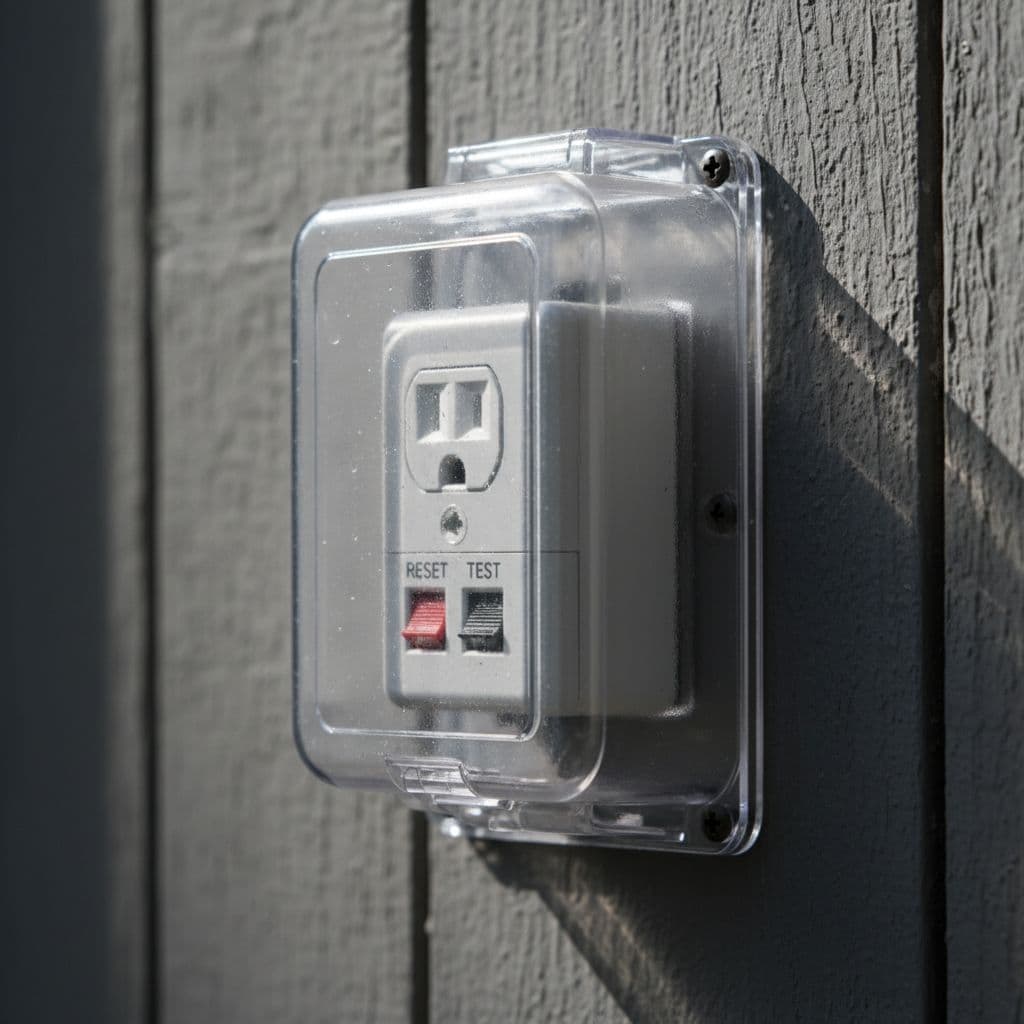
An in-use cover is a smart choice for any outlet that often has something plugged in. A simple flip lid helps, but it does not always protect a live connection well enough. If you leave holiday lights, patio lights, or a pump plugged in for weeks, that detail matters.
If an outdoor outlet needs a loose cover to stay dry, it's already one storm away from trouble.
Why Greater Boston weather is hard on exterior outlets
The weather in Greater Boston is rough on anything mounted outside. Rain can seep into small openings. Snow can pile up against a wall. Ice can press into a cracked cover and make the damage worse.
Freeze-thaw cycles are a big problem. Water gets into tiny gaps, freezes, expands, then opens those gaps wider. Over time, a cover that looked "fine" in October can fail by February.
Wind-driven moisture is another concern. Even a covered porch outlet can get damp if the cover is weak or the box is not sealed well. In spring, wet pollen and heavy rain can collect around the outlet. In fall, leaves and debris can trap moisture against the wall.
The area around the outlet matters as much as the outlet itself. Snow buildup, mulch, and standing water should never sit against a receptacle. If you use an outlet near a deck, walkway, or driveway, keep that area clear whenever you can.
Salt air can also wear on exterior metal parts in some neighborhoods near the coast. Rust on screws, covers, or boxes is never a small issue. It often points to a seal that has already failed.
Seasonal wear can build quietly. A cover may still close, but the gasket may be worn out. A GFCI may still work, but the housing may let in water. When outdoor outlets age in New England weather, small weaknesses show up fast.
Warning signs that call for fast repairs
Some outlet problems are easy to spot if you look closely. Others show up the moment you plug in a cord. Either way, don't brush them off.
Watch for these signs:
- The outlet feels loose when you plug something in.
- You see scorch marks, rust, or melted plastic.
- The outlet buzzes, crackles, or throws sparks.
- The GFCI trips again and again.
- The cover no longer seals tightly.
- The outlet has gone dead without a clear reason.
Any one of these signs deserves attention. A dead outlet can mean a tripped GFCI, but it can also point to a loose connection or damaged wiring. A loose plug fit can create heat. Heat can damage the outlet, the cord, and the wall behind it.
A sparking outlet needs quick action. So does one that feels warm, smells burnt, or shows water inside the box. Do not keep resetting a faulty outlet and hoping it will hold. That can turn a small repair into a larger hazard.
A damaged outdoor outlet is not a minor annoyance. It is a warning.
Safer habits for patios, decks, and yards
Good habits help your outlet last longer, and they also protect the gear you plug in. Outdoor power should stay dry, stable, and free of strain.
Use cords rated for outdoor use. Indoor extension cords do not belong outside, even for a short job. Keep plug connections off the ground when you can, because puddles and melting snow can collect where you least expect them.
A few simple habits go a long way:
- Unplug patio lights and seasonal gear before heavy rain or snow.
- Keep cords out of walkways where they can get crushed or nicked.
- Avoid daisy-chaining adapters and splitters outside.
- Check that the outlet cover closes fully after each use.
- Move portable equipment away from gutters, downspouts, and meltwater paths.
Don't overload one outlet with too many devices. A string of lights, a heater, and a pump should not all share the same weak connection. If you need that much power outside, the setup may need a better circuit or a new outlet location.
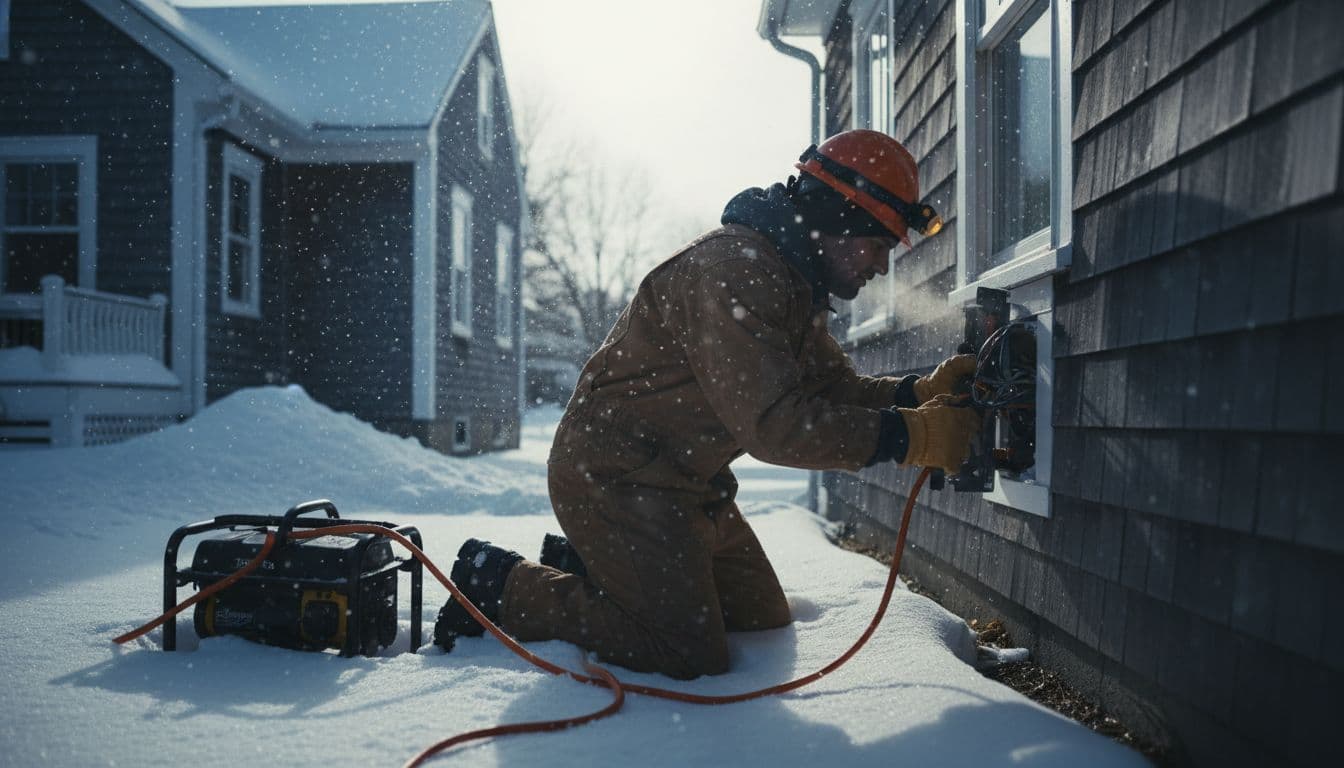
Holiday displays deserve the same caution. Extension cords buried under snow or hidden in wet leaves can wear out fast. So can plugs left hanging where ice can pull on them. A little planning before the weather changes can save you from a cold-weather repair call later.
When to bring in a licensed electrician
Some outdoor outlet problems need more than a cover change or a reset. If the outlet is loose, sparking, charred, or still not working after a reset, bring in a licensed electrician.
That also applies if the outlet is old, sits in a damp spot, or has no GFCI protection. Older homes in Greater Boston often have a mix of upgrades and older hardware. One outlet may be modern, while the one next to it is not. That kind of mismatch is common, and it can hide bigger issues.
If you are not sure when the system was last checked, when to schedule an electrical inspection is a useful place to start. A professional can look at the outlet, the wiring, and the circuit as a whole.
If the problem is part of a broader home safety concern, book a professional electrical inspection so a licensed electrician can find weak points before the next stretch of bad weather. That is especially smart after water damage, renovation work, or repeated outlet trips.
You should also call for help if:
- The outlet sparks when you plug something in.
- The faceplate is cracked or missing.
- Water gets into the box.
- The outlet works only sometimes.
- A breaker trips when the outlet is used.
- The wiring behind the outlet feels hot or smells burnt.
Outdoor repairs are not the place to guess. A wrong fix can leave the outlet exposed to the next storm, and the problem often comes back worse.
Conclusion
A safe outdoor outlet should stay dry, hold a plug firmly, and trip fast when something goes wrong. In Greater Boston, that matters every time the weather shifts.
If a cover is cracked, a plug feels loose, or the outlet no longer works, have it checked before the next storm or cold snap. Small outdoor problems tend to grow fast when rain, snow, and freeze-thaw wear keep working on them.