
What a Fuse Box Means in Greater Boston Homes

Contact Us
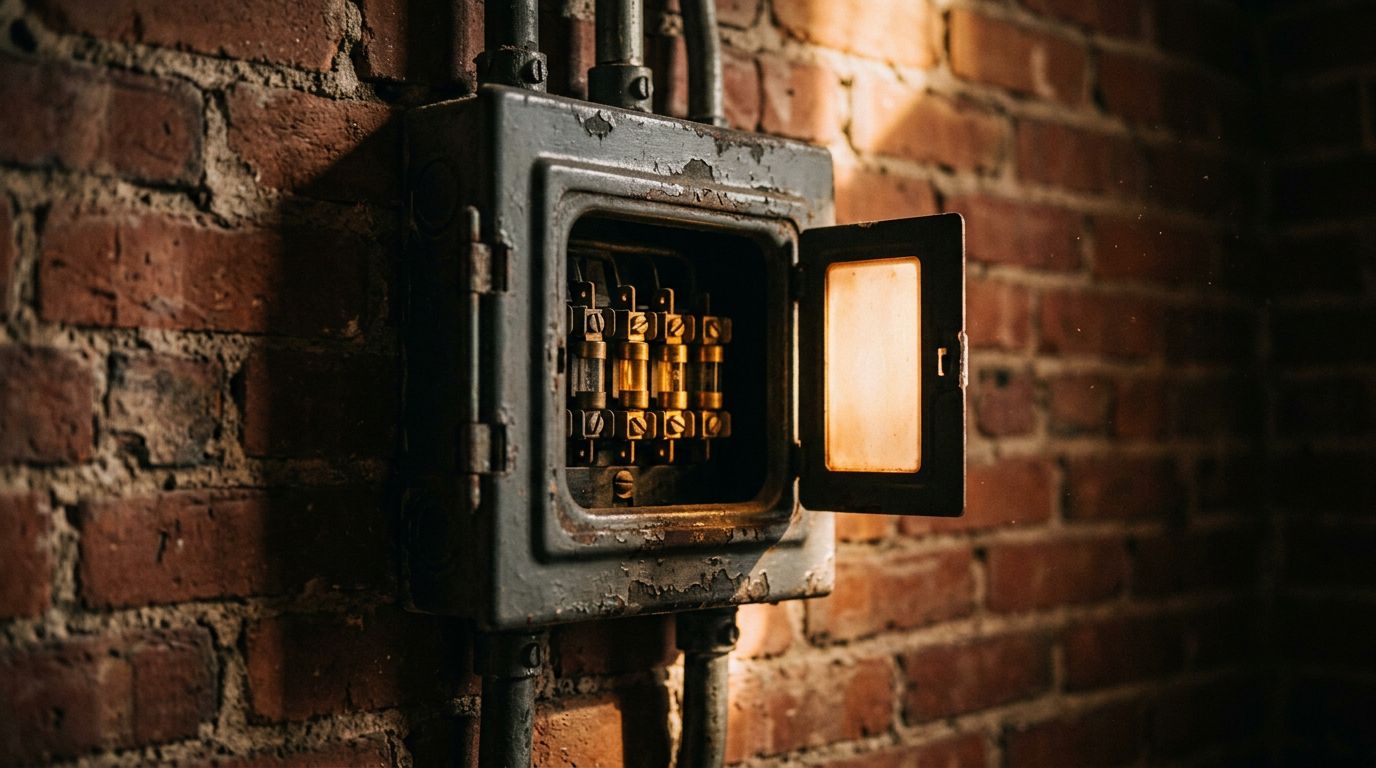
If your Greater Boston home still has a fuse box, you are living with older electrical hardware that can still work, but may no longer match how you use the house. That matters because modern homes draw more power than older systems were built to handle.
Many fuse box homes in Greater Boston were built before today's appliances became normal. The system may run fine for years, yet the same box can also hide capacity limits, safety concerns, and insurance questions.
Understanding what that box means helps you decide whether a repair is enough or an upgrade makes more sense. Start with the basics.
What a fuse box tells you about the home
A fuse box usually means the house has an older electrical system, or one that has never been fully updated. In many Boston-area homes, it is a sign that the wiring was designed for a different era.
Fuses protect a circuit by melting when the current gets too high. That stops the flow of power, but it also means the fuse must be replaced after it blows. A breaker panel does the same job with a switch you can reset.
That difference matters more than convenience. A fuse box often points to lower capacity, fewer modern protections, and more chances for a homeowner to patch around the system instead of improving it.
In older triple-deckers, Cape-style homes, and converted two-families, the box may have been added to or patched over instead of replaced. That can leave one part of the house updated and another part lagging behind.
Some homes have new appliances, finished rooms, and added outlets, but the fuse box stayed behind. When that happens, the electrical system can feel like an old road with too much traffic.
How a fuse box works compared with a breaker panel
A side-by-side look makes the difference easier to see.
| Feature | Fuse box | Breaker panel |
|---|---|---|
| Protection method | A fuse melts when a circuit overloads | A breaker trips and cuts power |
| After a problem | The fuse must be replaced | The breaker can usually be reset |
| Day-to-day use | Needs spare fuses and more attention | Easier for most homeowners to use |
| Capacity | Often older and smaller | Better suited to modern loads |
| Service work | Harder to label and inspect | Easier for electricians to test |
A fuse box can work, but it asks more effort from the homeowner and leaves less room for new electrical demand.
The real danger starts when someone uses the wrong fuse size to keep a circuit alive. That can let wiring carry more heat than it should. Once that happens, the box is no longer a simple old fixture. It becomes a weak point in the home.
Why fuse boxes can create headaches in Greater Boston
Older homes in Greater Boston often carry more electrical demand than their original panels were built to handle. Kitchens get remodeled. Basements get finished. Window units, laundry equipment, and home office gear get added. The fuse box stays the same.
That mismatch can show up in small ways first. Lights may dim when an appliance starts. A hair dryer and microwave may not work well on the same circuit. You may find yourself swapping fuses more often than you would like.
A fuse box that still works can still be the wrong fit for the way you live now.
There is also the question of safety and resale. Some insurers look closely at older electrical systems, especially when they see other signs of wear. Buyers may ask about the panel during a sale, and a dated fuse box can become part of the discussion. It can also raise questions about how the home was maintained over time.
If you are seeing repeated blown fuses or other warning signs, electrical panel upgrade warning signs can help frame the conversation before the problem grows.
Signs your fuse box needs attention
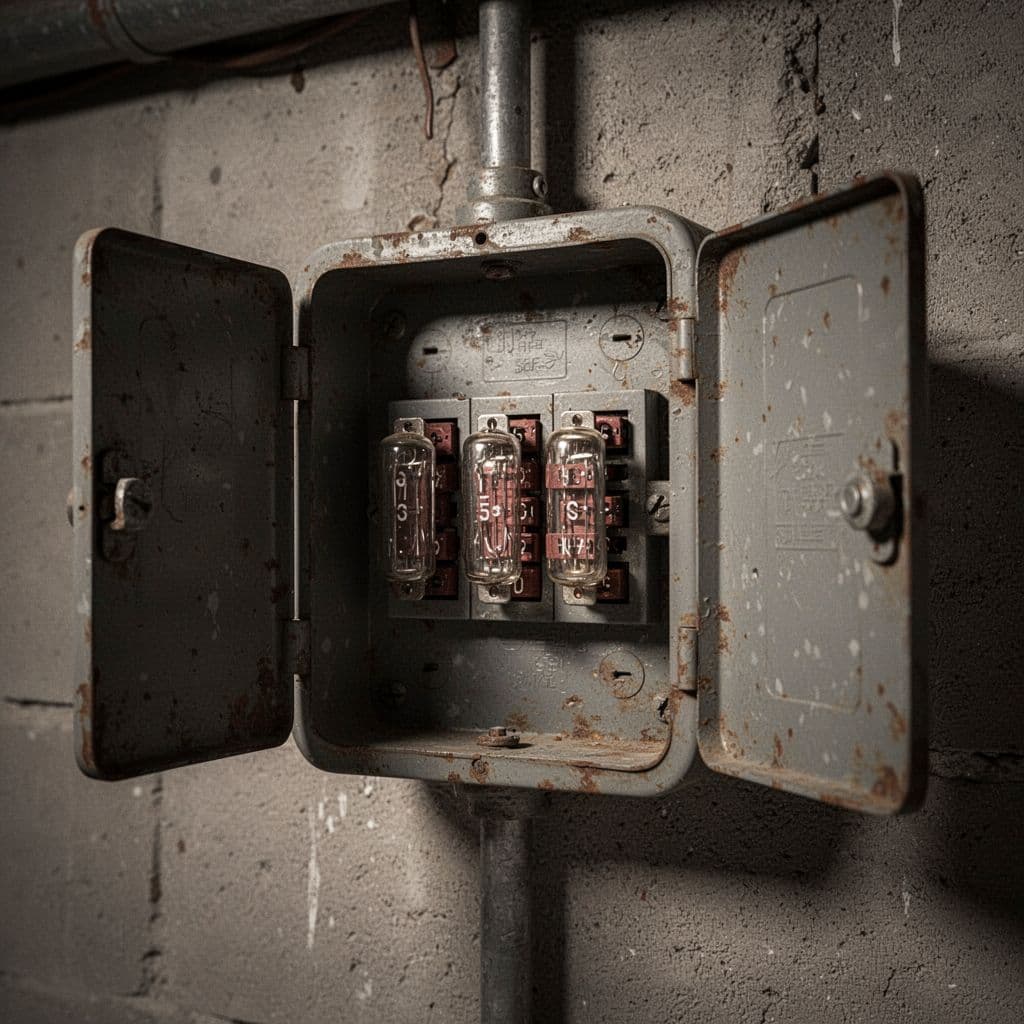
A fuse box does not need to fail completely before it needs attention. Small warning signs can tell you a lot.
- Fuses blow often when normal appliances run at the same time.
- Lights flicker or dim when large equipment starts.
- The panel feels warm, smells burnt, or makes a buzzing sound.
- You see scorch marks, cracked parts, or loose covers.
- The home depends on extension cords or power strips because the circuits do not keep up.
One blown fuse does not mean panic. Repeated overloads do matter. They show that the system is working harder than it should.
Older basements can make the problem worse. Moisture, dust, and tight spaces can be hard on electrical equipment over time. If the box looks rusty, cluttered, or patched together, it deserves a closer look.
When a fuse box might stay, and when it should go
Not every fuse box needs immediate replacement. If the home has light electrical demand, the system is in decent shape, and a licensed electrician has checked it, the box may still buy you time.
That said, a fuse box is a poor match for major upgrades. New HVAC equipment, a finished basement, an EV charger, or a bigger kitchen can push an older system past its comfort zone. In a full-time home, that matters more than it might in a lightly used property.
A professional electrical system assessment helps separate a system that is old but serviceable from one that is ready for replacement. It also gives you a clearer picture of the wiring, grounding, and any past fixes that may not have been done well.
That is useful if you are planning repairs, buying a house, or thinking about a remodel. A fuse box can look harmless from the outside, while the real issues sit behind the cover.
What a replacement or upgrade usually changes
A panel upgrade does more than remove the nuisance of blown fuses. It gives the house room to handle modern loads with less strain. It also makes future work easier because an electrician can identify circuits, size them correctly, and add new ones with less guesswork.
Many homeowners notice the difference right away. The new panel is easier to use. The labeling makes sense. The home no longer depends on a supply of spare fuses tucked in a drawer somewhere.
A replacement also creates a cleaner base for future upgrades. If you ever add a heat pump, a dedicated office, or better lighting, the work starts from a stronger place. That matters in Greater Boston, where older homes often go through several rounds of updates over the years.
The right upgrade depends on the home, not on a rule of thumb. Service size, existing wiring, signs of wear, and the way you use the house all shape the decision. A good electrician looks at the whole picture, not just the box on the wall.
What to Do Next with an Older Fuse Box
A fuse box in a Greater Boston home usually means older electrical technology, and that age matters when the rest of the house has moved on. The box may still work, but it can bring capacity , safety, and insurance concerns with it.
The clearest next step is simple. Have a licensed electrician evaluate the system, look for warning signs, and tell you whether a repair, inspection, or full upgrade makes the most sense.
If your home still relies on a fuse box, treat it as a clue, not a mystery. The right evaluation can tell you how long it can keep doing the job, and when it is time to move on.