
Rust Inside an Electrical Panel in Greater Boston Homes

Contact Us
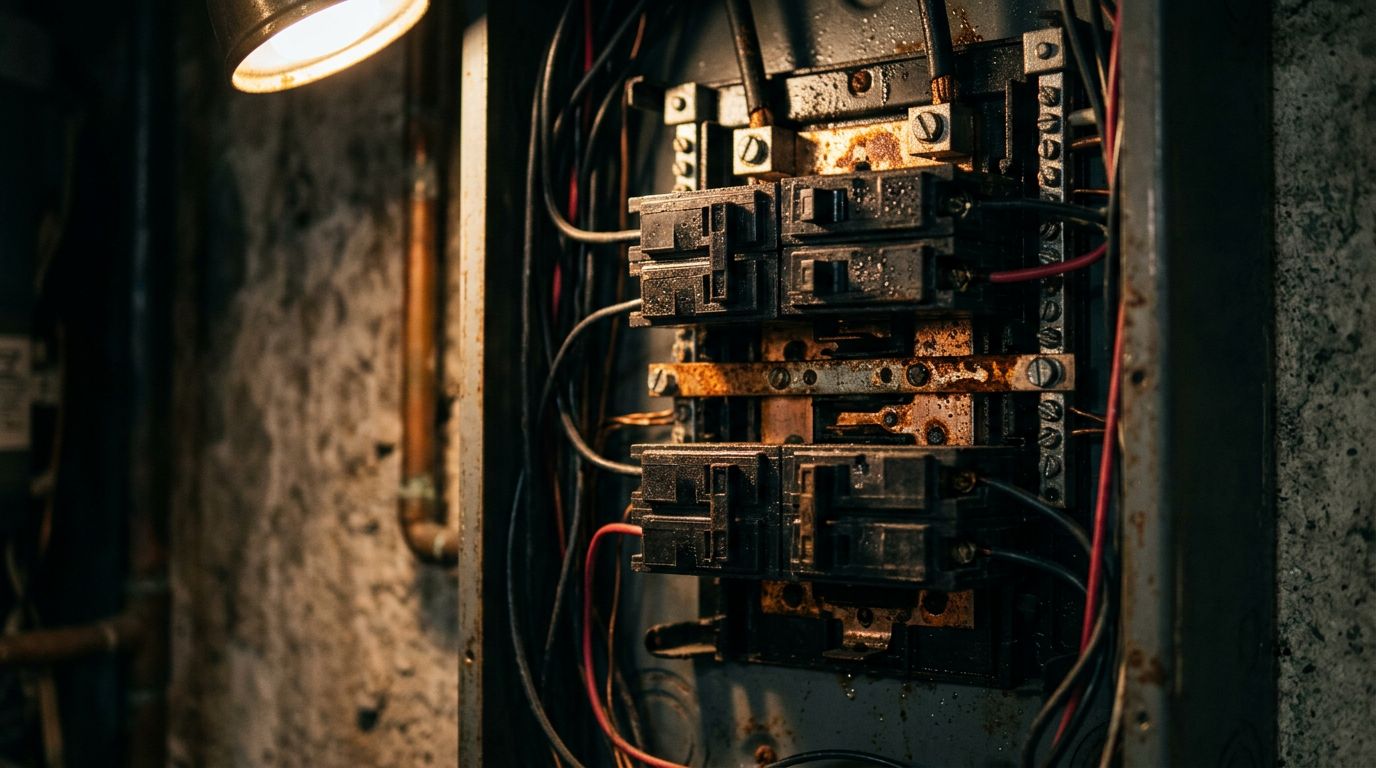
Rust inside an electrical panel is a warning sign, not a small cosmetic flaw. In Greater Boston homes, it often points to moisture that has already reached equipment that should stay dry.
Basements, older service gear, coastal air, and hidden leaks can all leave the same mark. If you spot corrosion in a panel, the safest move is to treat it as an electrical issue, not a cleaning job.
Here's what that rust usually means, and why it deserves a closer look.
What rust inside a panel usually means
Rust inside an electrical panel usually means water or damp air got where it shouldn't. Sometimes the source is obvious, like a leak above the panel or water near a meter socket. Other times it's slower, like years of condensation in an unheated basement.
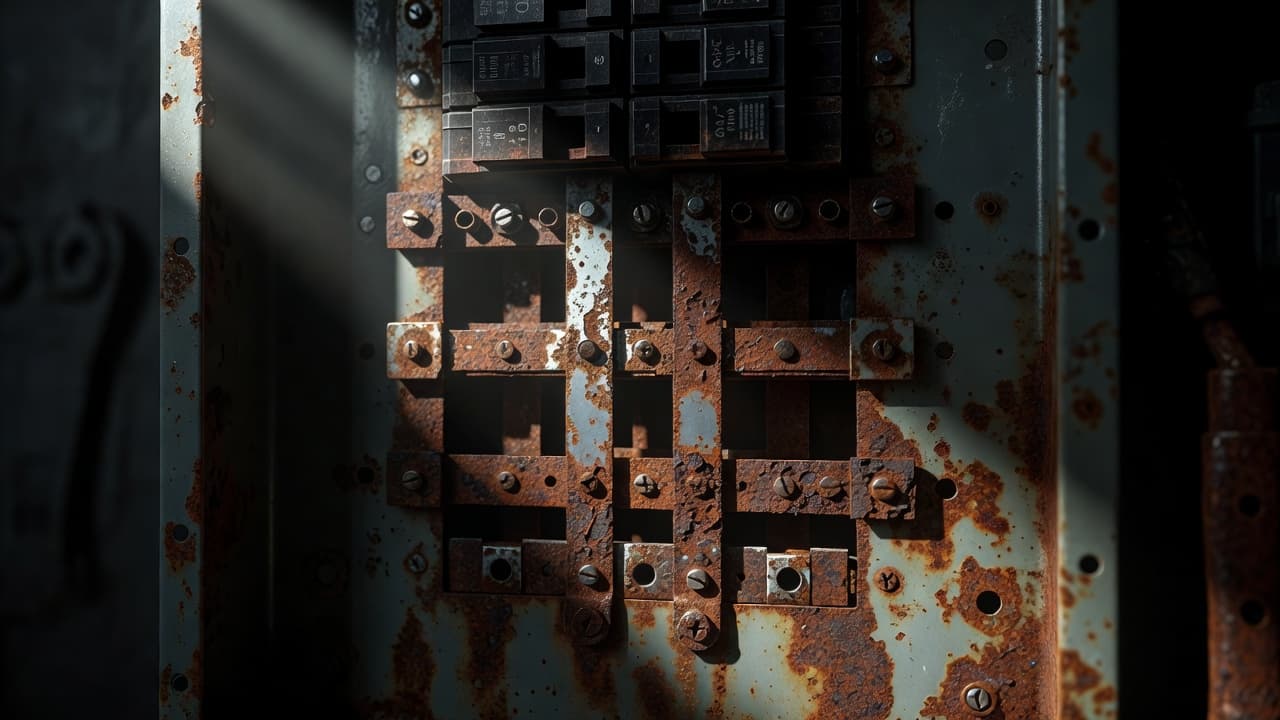
In older Boston-area homes, panels are often in basements, laundry rooms, garages, or utility closets. Those spaces can hold humidity after storms, and cold metal can collect condensation when warm air hits it. Over time, that moisture leaves orange stains on the enclosure and corrosion on internal parts.
The rust may start on the cabinet, then spread to the breaker handles, screws, and the metal bars inside. Once that happens, the problem is no longer just visual. Corrosion can weaken connections and change how current moves through the panel.
A panel can still look mostly normal on the outside while the inside tells a different story. That is why visible rust inside the cabinet matters. It usually means the equipment has already had exposure, and more moisture may still be getting in.
Why rust is a safety issue, not just a cosmetic one
Rust and electrical parts do not mix well. Breakers depend on solid contact, and bus bars need clean metal-to-metal connections. When corrosion gets in the way, resistance rises, heat builds, and the parts can wear faster.
That can show up as nuisance tripping, a breaker that feels warm, or a circuit that acts unevenly. In worse cases, corrosion can help create arcing, which is an electrical spark where there should be a tight connection. Arcing can damage nearby parts and leave burn marks.
Rust inside a panel is a moisture story until proven otherwise.
If you also see discoloration, melted plastic, or a burnt smell, the panel needs prompt attention. Those signs can mean the issue has moved beyond simple rust.
This matters even more in homes with older service equipment. Some panels in Greater Boston still carry decades of wear. If rust starts to affect the breaker clips, lugs, or neutral connections, the whole system can become less dependable.
Boston homes that see panel rust more often
Greater Boston homes face a few common moisture problems. A damp basement is one of the biggest. Many triple-deckers, capes, and older colonials keep the electrical panel near the foundation, where humidity stays high and floodwater can creep in after heavy rain.
Condensation is another trouble spot. An unheated basement can stay cool while summer air is warm and wet. When that air reaches a cold metal panel, water can form on the surface and collect inside the cabinet over time.
Coastal air also plays a part. Homes closer to the harbor or the coast can see more corrosion on exposed metal, especially if the panel area already runs damp.
Leaks near meter sockets, service entry points, or the line where the utility feed enters the house are worth attention too. A small roof leak or masonry crack above a panel can drip in the same place for months before anyone notices.
Older service equipment is more vulnerable because seals, knockouts, and cabinet covers wear down. Even a small gap can let damp air and dust settle on parts that should stay clean and dry. In some homes, rust starts with a long-ignored drip line, then spreads after another wet season.
When to call a licensed electrician
You should not wait if rust is visible inside the panel. A licensed electrician should look at it when the corrosion reaches breakers, bus bars, or wire connections. The same goes for any sign of heat, arcing, or water intrusion.
A quick response matters when the panel is still in use. The longer corrosion sits there, the more chance it has to spread into the parts that carry power through the home.
Call for an inspection if you notice any of these:
- Breakers with rust, green residue, or white crust on the metal parts
- A panel that smells burnt, feels warm, or makes a buzzing sound
- Water stains, drip marks, or a damp floor near the panel
- Tripping that started after a storm, flood, or plumbing leak
Even if the panel still works, that does not mean it is safe. Electrical equipment can keep running while hidden damage gets worse.
If the corrosion is limited, the electrician may be able to correct the moisture source and assess the affected parts. If the panel is too far gone, replacement may be the safer path. In that case, breaker panel installation and replacement can address both the damage and the weak points that allowed it.
What a professional inspection looks for
A professional inspection starts with the source of the moisture. That may be a leak above the panel, a bad seal at the service entry, missing knockouts, or chronic basement dampness. Leave the cover closed and let a pro inspect it. The electrician will also look for rust on the enclosure, breaker terminals, neutral bars, and feeder connections.
Then comes the condition of the metal parts themselves. Surface rust can sometimes be contained, but pitted metal or corroded breaker clips are a different story. Those parts need tight contact to work as designed.
The electrician may also check for heat damage, loose connections, and any signs that water once traveled through the cabinet. In some homes, infrared or thermography testing can help spot hot spots that the eye misses. That matters when a panel has been exposed to moisture for a long time.
Older panels may also have missing blanks, worn covers, or past repair work that never fully solved the moisture problem. A panel like that needs a careful review, not a quick patch. The goal is to find the source, judge the damage, and decide whether repair or replacement makes sense.
From there, the next step depends on the findings. A dry panel with minor surface rust may need repairs to the moisture source and selective part replacement. A panel with corrosion inside the live section often needs more than a patch. Safety comes first, because electrical systems do not forgive guesswork.
Conclusion
Rust inside an electrical panel is often the first visible sign of a moisture problem. In Greater Boston, damp basements, older service equipment, coastal humidity, and small leaks can all leave the same trail.
If you see rust on breakers, bus bars, or connections, treat it as a safety issue and get it checked by a licensed electrician. A panel that looks only a little corroded can still hide damage where the metal has to carry power cleanly.
The safest home is the one that does not ask a rusty panel to keep doing a clean job.