
What a Pushmatic Panel Means in Greater Boston Homes

Contact Us
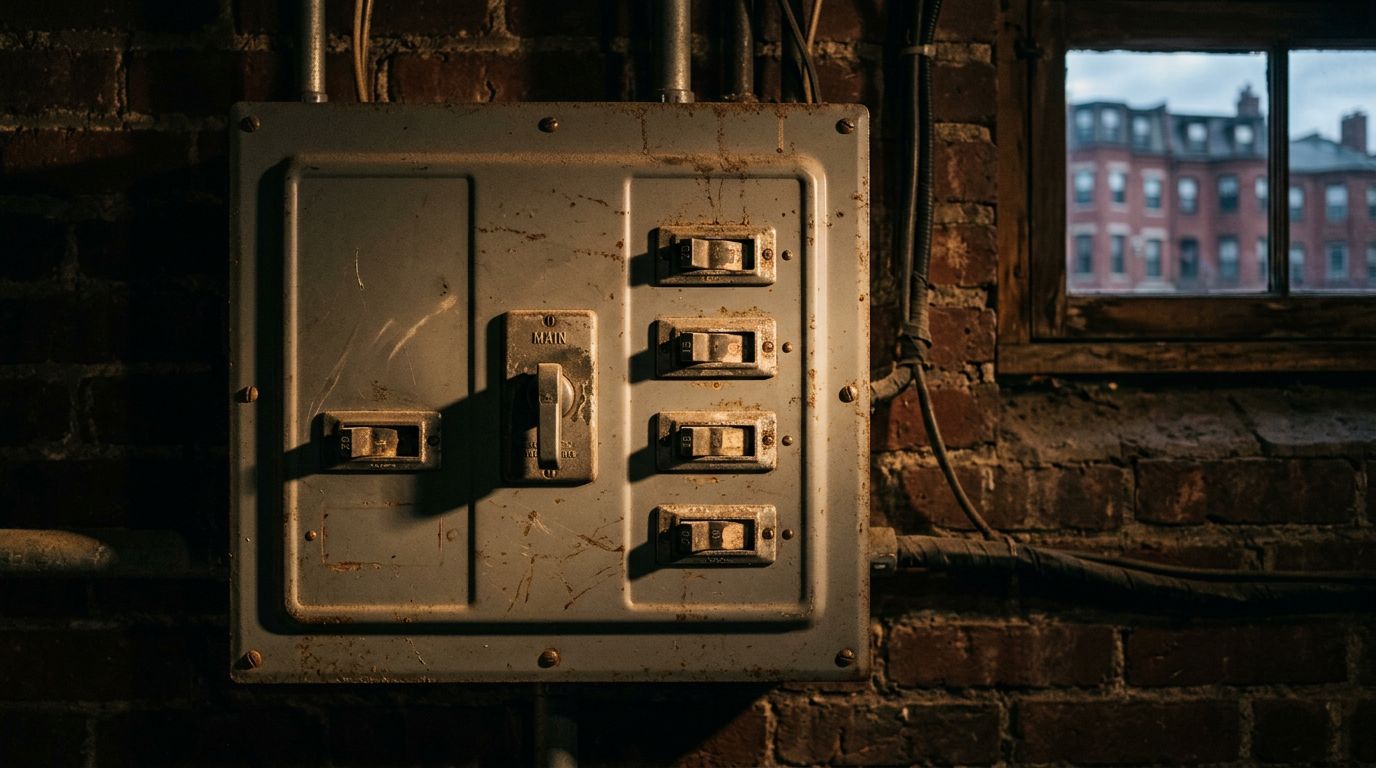
An older electrical panel doesn't always mean a problem. In Greater Boston, a Pushmatic panel often points to a home that has carried its wiring through several decades, a few remodels, and changing power needs.
That matters because age alone does not tell the full story. Breaker performance, available capacity, and the panel's current condition matter much more than fear-based claims. A licensed electrician can tell you whether the panel still fits the home, or whether it has reached the point where replacement makes sense.
Why Pushmatic panels still show up in older homes
Pushmatic panels are common in older homes across Greater Boston, especially in houses built before modern electrical loads became normal. Many were installed when a household needed far less power than it does today.
Some homeowners notice these panels during a basement cleanout, a renovation, or a home inspection. Others live with one for years without giving it much thought. That's because an older panel can still work for a long time if it stays in decent shape and the home's power demands remain modest.
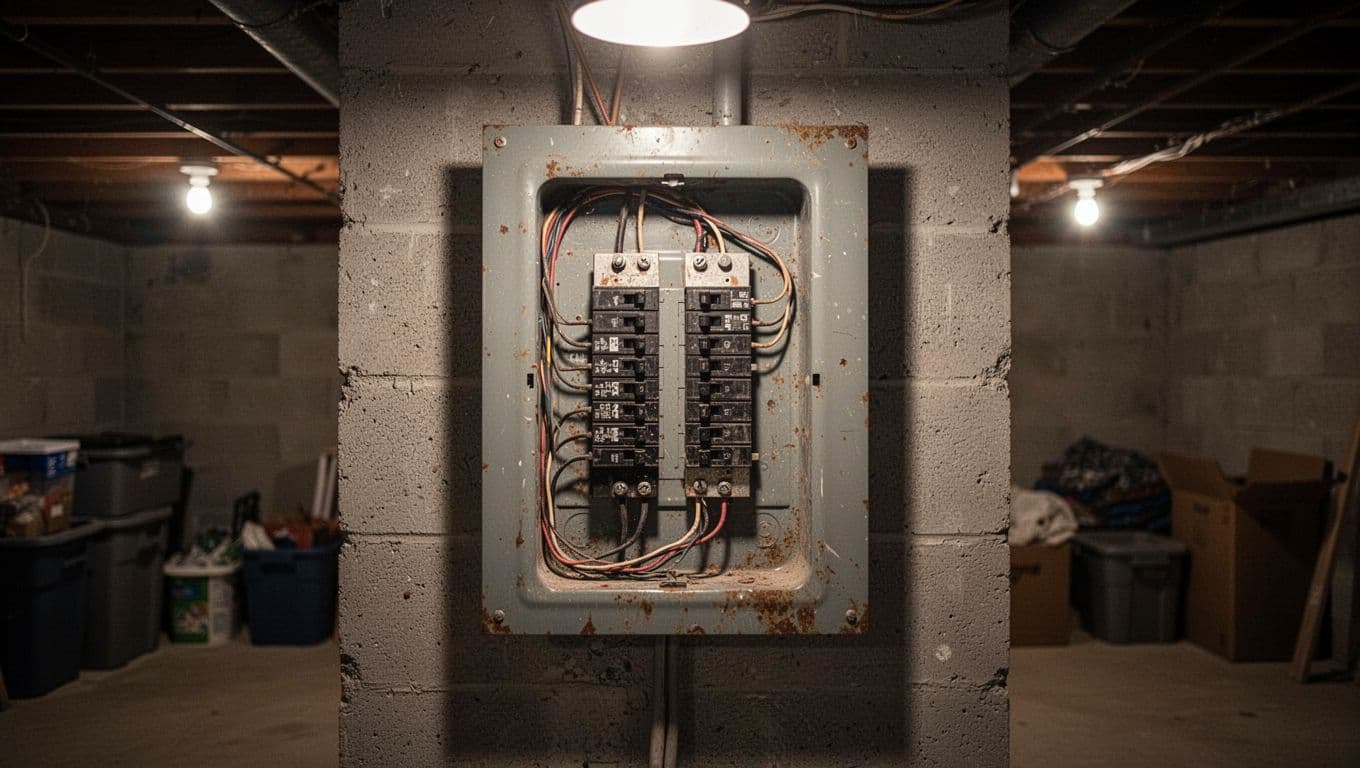
The main point is simple. A Pushmatic panel is not a verdict. It is a clue about the home's age and electrical history.
Modern households ask more from their electrical systems than older homes did. Air conditioning, induction cooking, home offices, EV chargers, and finished basements can all change the picture fast. A panel that once fit the home may now be stretched thin.
Signs a Pushmatic panel deserves attention
Age is only one part of the picture. A panel also needs a close look when it starts showing physical or performance issues.
If you notice any of the signs below, it's time for a licensed electrician to inspect the system. A home owner does not need to guess, and shouldn't.
- Breakers feel stiff, stick, or won't reset easily.
- A breaker trips often without an obvious reason.
- The panel cover feels warm, or nearby surfaces feel hotter than normal.
- You see rust, moisture, or visible corrosion.
- There are scorch marks, discoloration, or a burning smell.
- The home has added more appliances, but the panel has not changed.
If you want a broader checklist, electrical panel safety warning signs is a useful place to start.
A panel's age matters, but condition and performance matter more.
That's why a careful inspection is better than a guess. Two similar-looking panels can have very different stories. One may be stable and serviceable. Another may be ready for replacement because of wear, heat, or limited capacity.
A fast response is smart when you see visible damage. Still, the goal is not panic. It's a clear assessment from someone who works with residential electrical systems every day.
What buyers and sellers should know before a home changes hands
A Pushmatic panel can affect a home sale, but it doesn't have to derail one. In Greater Boston, older homes often come with older electrical equipment, and most buyers understand that updates may be part of the deal.
Buyers should treat the panel as one item in the larger inspection report. If the home inspector notes age, capacity concerns, or breaker issues, a follow-up by a licensed electrician is the right next step. That extra review gives a much better picture of cost and timing than a general inspection alone.
Sellers can help by being upfront. If the panel has already been checked, repaired, or replaced in part, keep those records handy. If it has not been inspected in years, scheduling a Greater Boston home electrical assessment before listing can prevent last-minute surprises.
A few simple steps make the process smoother:
- Buyers should ask how much electrical capacity the home has now.
- Sellers should disclose known panel problems or prior service work.
- Both sides should expect a licensed electrician to review any concerns.
- If a renovation is already planned, the panel should be part of that conversation early.
This is where older homes often need context. A panel can be old and still usable, but a buyer wants to know whether it can support the life they plan to live in the house.
How replacement decisions are usually made
Replacement usually comes down to four things, the panel's condition, the home's electrical load, breaker performance, and future needs. A licensed electrician looks at the full picture, then recommends repair, monitoring, or replacement.
Here's a simple way to think about common outcomes.
| What the electrician sees | Common next step |
|---|---|
| The panel is old, but breakers work and the load is modest | Inspect, monitor, and plan ahead |
| The panel has stiff breakers, heat marks, or corrosion | Replacement is often the better choice |
| The home is adding major electrical loads | Service upgrade or panel replacement may be needed |
| The panel has limited space for new circuits | A larger-capacity system may solve the problem |
The takeaway is that replacement is a decision, not a reflex. Some homes need a full update because the panel is worn out. Others need more capacity because the house has grown beyond the original design.
Modern upgrades can also shift the math. A kitchen remodel, EV charger, heat pump, or finished addition may push an older panel past its comfort zone. In those cases, replacing the panel is often less about the brand name and more about matching the home to how it is used now.
Parts and future serviceability matter too. If an electrician has trouble finding compatible breakers or sees signs that the panel is harder to maintain, replacement becomes easier to justify.
Permits and inspections can shape the process
In Greater Boston, electrical work often goes through local permitting and inspection steps. The exact process depends on the town or city, so a project in Burlington may move a little differently than one in Boston, Quincy, or Newton.
That process can affect both timing and cost. A permit may need to be pulled before work starts, and a final inspection usually follows once the job is complete. Some municipalities schedule inspections quickly. Others need more lead time.
For homeowners, that means planning matters. If you're lining up a panel replacement, ask the electrician who handles the permit, when the inspection happens, and what the local office expects. A little advance planning can keep the job moving.
Permits are not just paperwork. They give the work a clear trail and a final check. That matters in older homes, where hidden wiring issues can show up once the panel is opened and evaluated.
The same rule applies whether the job is a simple panel swap or part of a larger service change. The electrical work should be inspected, documented, and signed off according to local rules.
What a Pushmatic panel usually means
A Pushmatic panel in a Greater Boston home usually means the house has history, not trouble by default. The real questions are simpler and more useful. Is the panel working well? Does it still have enough capacity? Does its condition support safe, dependable service?
Those answers come from a licensed electrician, not from a guess based on age alone. If your panel is old, the next step is a careful inspection and a realistic look at what the home needs now.