
What a Receptacle Tester Can and Cannot Tell You

Contact Us
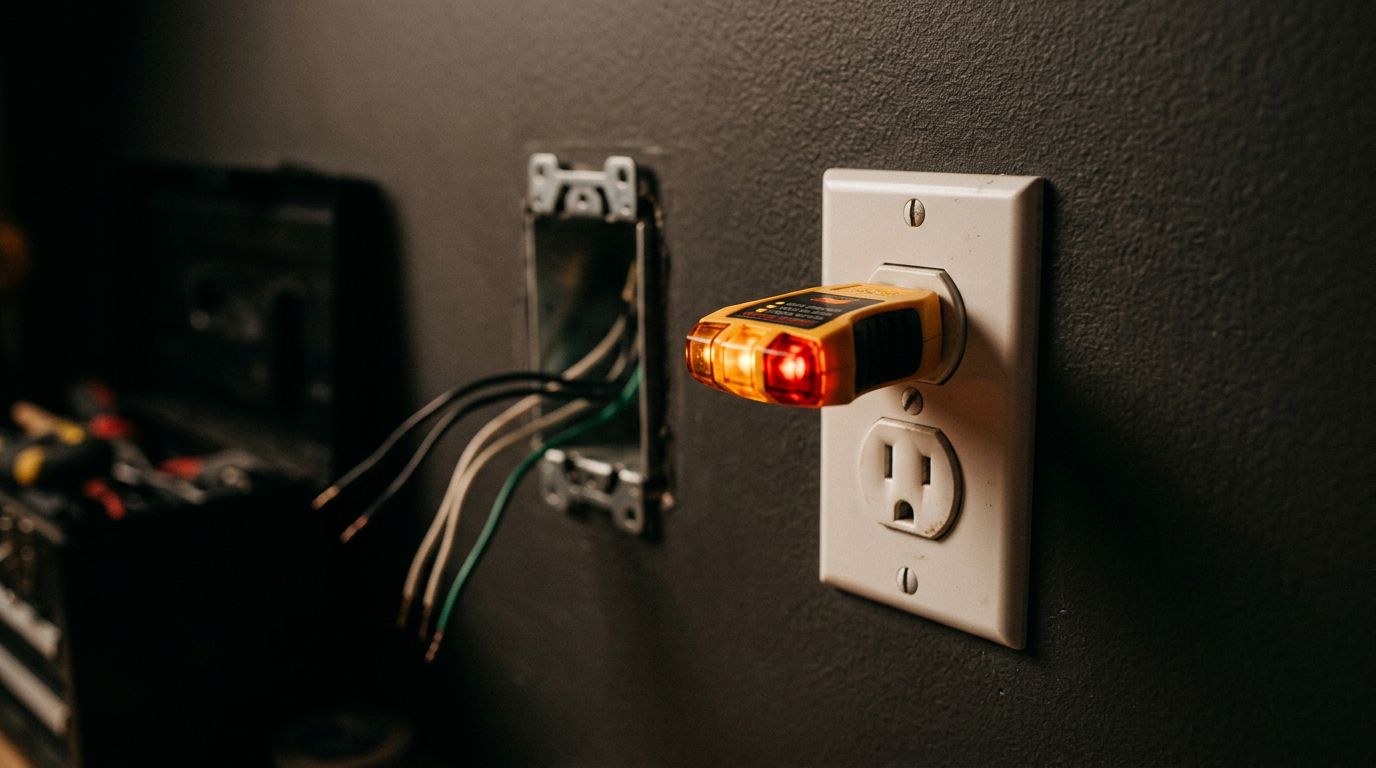
A receptacle tester can reveal a surprising amount about a wall outlet in a few seconds. It can also leave you with a false sense of security if you treat a green light as proof that the entire circuit is safe.
These plug-in devices are screening tools , not complete electrical diagnostic instruments. They can identify certain wiring patterns at the receptacle, but they can't inspect hidden connections, measure every safety condition, or confirm that an installation meets code. Knowing the difference helps you use one responsibly.
Key Takeaways
- A receptacle tester can detect several common wiring problems, including open grounds, open neutrals, and reversed polarity.
- A "correct" light pattern doesn't prove the circuit is safe, properly sized, or free from loose connections.
- Basic testers may miss bootleg grounds, high-resistance faults, intermittent failures, and problems elsewhere in the circuit.
- GFCI and AFCI protection require appropriate testing methods. A standard three-light tester can't evaluate both.
- Stop testing if an outlet is hot, damaged, buzzing, wet, or behaving unpredictably. A licensed electrician should investigate it.
What a Receptacle Tester Actually Checks
Most basic receptacle testers plug into a standard 120-volt, three-slot outlet. They use a combination of indicator lights to compare voltage relationships between the hot, neutral, and equipment grounding contacts.
The tester may identify conditions such as:
- Open ground
- Open neutral
- Open hot
- Hot and neutral reversed
- Hot and ground reversed
- Some combinations of missing or misplaced conductors
The exact light pattern depends on the model. A three-light tester from one manufacturer may use a different chart than another, so read the instructions supplied with your device. Never assume that a color pattern means the same thing on every tester.

The tester only evaluates the electrical relationships it can sense at that receptacle. It doesn't trace every wire back to the electrical panel. In other words, it provides a quick snapshot of one outlet rather than a full inspection of the branch circuit.
A normal result means the tester detected an expected pattern under its limited test conditions. It doesn't mean that every connection is tight or that the circuit can safely carry its assigned load.
Basic receptacle testers are useful during a first check after moving into a home, before using an older outlet, or after an electrical repair. They can also help identify outlets that deserve professional attention. However, the device should never replace an inspection by a qualified electrician when the condition is unclear.
What the Tester Can Tell You About an Outlet
A receptacle tester is good at finding obvious wiring errors. For example, if the neutral conductor is disconnected, the tester may show an open neutral. If hot and neutral are connected to the wrong terminals, it may indicate reversed polarity.
Polarity matters because many electrical devices switch the hot side of the circuit. Reversed polarity can leave parts of a device energized when the switch is off. An open ground can also remove the intended path for fault current, depending on the equipment and protection in use.
The device can provide a useful comparison when several outlets on the same circuit behave differently. If one receptacle shows an open ground while nearby outlets show a normal pattern, the issue may be local to that box or its connections. If multiple outlets show the same abnormal result, the problem may be farther upstream.
Some models include a GFCI test button. When pressed, that button creates a small current imbalance intended to make a GFCI device trip. If the GFCI trips, the tester has shown that the device responded to that simulated condition. If it doesn't trip, stop using the affected outlet and have it checked.
Still, the tester's display must be interpreted with care. A light labeled "correct" only means the sensed voltage pattern matches the manufacturer's expected pattern. It doesn't certify the outlet, the circuit, or the building's electrical system.
A useful test routine is simple:
- Read the tester's instructions and identify the correct light pattern.
- Plug it fully into the receptacle without touching the metal contacts.
- Compare the lights with the manufacturer's chart.
- Use the built-in GFCI function only as directed, if the tester includes one.
- Remove the tester and stop if the outlet sparks, heats up, smells burnt, or produces an unexpected result.
Testing several outlets can help you spot a pattern, but it shouldn't lead you to open electrical boxes or troubleshoot energized wiring.
What a Receptacle Tester Cannot Confirm
A "correct" indication cannot confirm that the circuit is safe under real operating conditions. The tester usually draws little current, so it may not expose a loose connection that fails when a space heater, microwave, air conditioner, or other heavy load operates.
Loose terminals and damaged wire connections can create resistance. That resistance may produce heat, flickering, or intermittent power without changing the tester's light pattern. An outlet can look normal during a quick check and still need replacement.
A basic device also can't confirm:
- The wire size matches the circuit breaker
- The breaker protects the circuit correctly
- The circuit has adequate capacity for its connected loads
- Connections inside the outlet box, junction boxes, or panel are secure
- The grounding electrode system is intact
- The voltage remains stable while equipment operates
- The circuit has safe fault-current performance
- The installation complies with all applicable electrical code requirements
The tester may also miss a bootleg ground , where someone connects the receptacle's grounding terminal to neutral instead of providing a real equipment grounding conductor. That arrangement can produce a normal-looking light pattern while creating a serious shock hazard. A plug-in tester can't reliably distinguish a proper grounding path from every improper substitute.
Intermittent problems create another limitation. A loose wire may make contact when the receptacle is still and lose contact when someone plugs in a cord or moves the device. The tester reports the condition present at that moment. It can't predict every failure that may occur later.
GFCI testing has limits, too. A plug-in GFCI tester simulates one type of imbalance, but it doesn't replace the test and reset buttons on the GFCI device. It also doesn't inspect every downstream receptacle protected by that GFCI. AFCI protection requires a suitable test method and evaluation of the breaker or device. A standard three-light tester doesn't test arc-fault protection.
A green light answers a narrow question: "Does this outlet show the expected voltage pattern right now?" It doesn't answer, "Is the whole electrical system safe?"
You also shouldn't use a receptacle tester to prove that an outlet is de-energized before electrical work. A failed tester, an unexpected circuit condition, or a wiring error can produce a misleading result. Qualified electricians use properly rated test equipment and safe work procedures before touching conductors.
How to Use One Safely and Know When to Call an Electrician
Start with the outlet itself. Don't test a receptacle that is cracked, loose, wet, discolored, or hot to the touch. Don't use a tester with damaged housing, bent blades, exposed parts, or a questionable cord. Keep your hands dry, insert the tester fully, and keep fingers away from the plug contacts.
You can check the tester on a known-working outlet before and after checking an unfamiliar one. This basic comparison helps identify a damaged device, but it doesn't prove that the tester caught every possible fault.
Never remove the receptacle cover, pull the device from the electrical box, or inspect the panel as part of a casual outlet test. Those steps expose energized components and require appropriate training, tools, and procedures. If you need the power disconnected for work, turn off the correct breaker and have a qualified person verify the circuit condition with equipment designed for that purpose.
Call an electrician when the tester indicates anything other than the expected result. Professional help is also appropriate when:
- The same outlet shows different results at different times.
- Lights flicker when a device runs.
- The outlet buzzes, smells hot, or feels warm.
- A breaker or GFCI trips repeatedly.
- A receptacle has no equipment grounding conductor.
- An outlet is loose in the wall or shows scorch marks.
- You need to add a high-demand appliance, EV charger, generator, or dedicated circuit.
- You suspect outdated wiring or unapproved modifications.
A professional electrical inspection can go beyond the limited reading from a plug-in device. Sirois Electric's electrical inspection services include evaluation of receptacles, wiring, panels, and other parts of the electrical system for residential and commercial properties in the Metro and Greater Boston area.
For homeowners, property managers, and business owners, the most important step is reporting the symptom accurately. Tell the electrician which outlets are affected, what the tester showed, whether the problem changes under load, and whether a breaker or GFCI has tripped. That information can shorten the diagnostic process without putting you near exposed wiring.
The Right Role for a Receptacle Tester
A receptacle tester is useful when you treat it as an early warning device. It can identify clear wiring errors, point out outlets that need attention, and give you helpful information before a professional visit.
Its limits are just as important as its functions. The tester doesn't inspect hidden connections, prove grounding quality, assess circuit capacity, or replace GFCI and AFCI evaluation. A correct light pattern is one data point, not a safety certificate.
If an outlet gives an abnormal reading, take it out of service until someone qualified checks it. When the outlet looks normal but still causes heat, noise, flickering, shocks, or repeated trips, trust those symptoms over the green light. The safest tester result is useful information followed by the right decision.
Conclusion
A receptacle tester can quickly flag common wiring problems, but it can't diagnose an entire electrical circuit. Its lights show a limited voltage pattern at one outlet under one set of conditions.
Use the device for screening, follow its instructions, and avoid opening boxes or touching energized parts. When the reading conflicts with what the outlet is doing, safety comes before the light pattern , and a licensed electrician should investigate.