
Can Mice Damage Electrical Wiring in Older Homes?

Contact Us
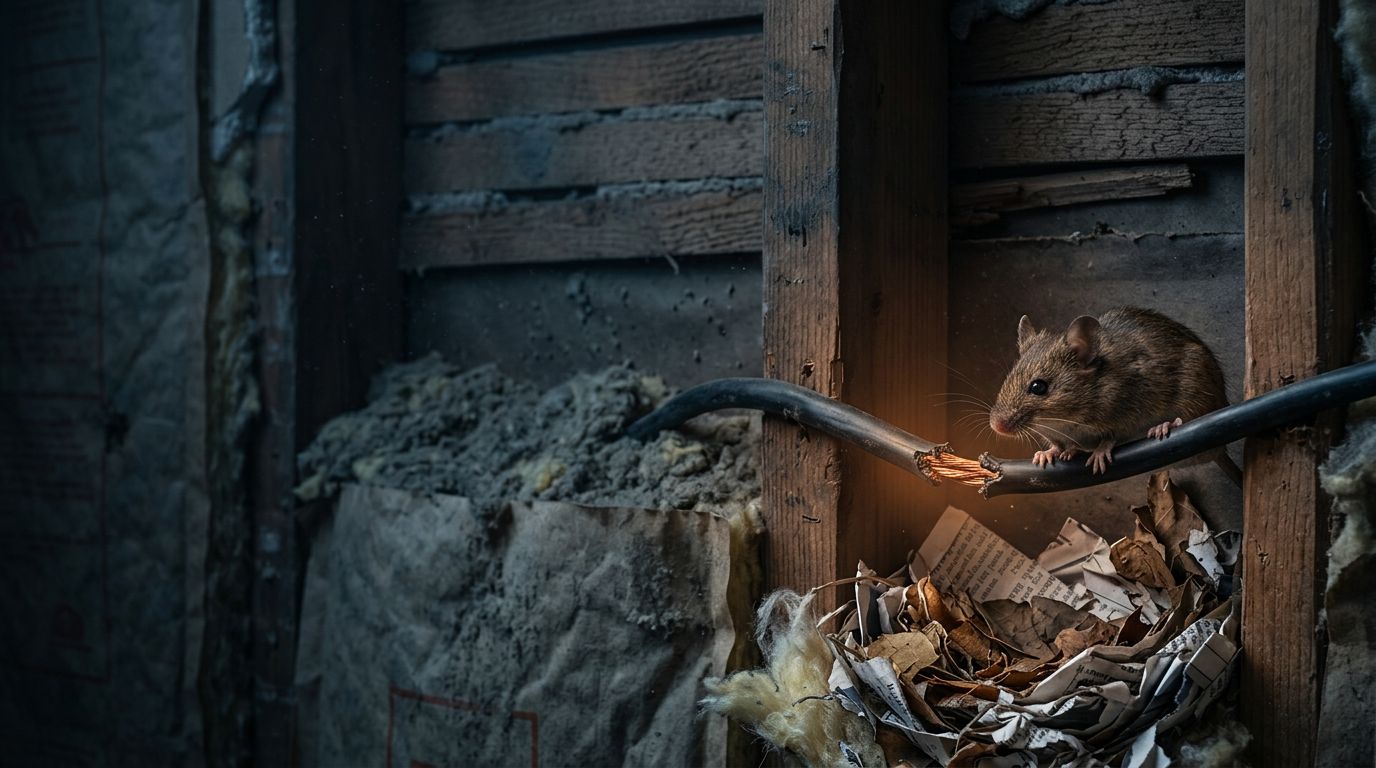
One mouse can reach spaces you rarely see, including wall cavities, attics, basements, and crawl spaces where electrical cables run. When rodents chew insulation or build nests near wiring, a small pest problem can become an electrical safety concern.
Mice can damage electrical wiring in older homes , especially where aging insulation, open framing, and accessible cable routes give them room to move. Learn how to spot the warning signs, what risks the damage creates, and when to call a licensed electrician.
Key Takeaways
- Mice chew electrical insulation, cable jackets, and low-voltage wiring while making nests or wearing down their teeth.
- Older homes often have exposed wiring, unfinished voids, and aging insulation that make rodent damage easier.
- Flickering lights, tripped breakers, burning odors, and unexplained outages can point to damaged wiring.
- Never handle chewed wires or open electrical boxes yourself. A licensed electrician should test and repair the circuit.
- Rodent control and electrical repairs work together. Fixing only one problem can leave the other unresolved.
Why Older Homes Face More Risk
Older houses often give mice more access to electrical wiring. Settling, renovations, and years of repairs can create gaps around pipes, baseboards, vents, and utility openings. A mouse can fit through a hole about the size of a dime, then travel along wall cavities or floor joists.
Many older homes also have unfinished attics, basements, or crawl spaces. These areas may expose cables that would be enclosed in newer construction. Mice can reach wires near insulation, wooden framing, electrical boxes, and recessed fixtures without crossing the open areas of the home.
The wiring itself may be more vulnerable because its insulation has aged. Cloth-covered wire, rubber insulation, and other older materials can become brittle, cracked, or loose. When a mouse chews an already weakened covering, the copper conductor underneath may become exposed.
Knob-and-tube wiring creates different concerns because portions of the system may run openly through framing. Older BX cable has a metal jacket, but damage can still occur at cable ends, connections, or sections that lack proper protection. The condition of the cable, its grounding, and its installation all matter.
A house built more than 40 years ago deserves a careful electrical review, especially if it has never had a major update. An electrical inspection for an older home can identify aging materials and hidden problems before rodent damage adds another hazard.
How Mice Damage Electrical Wiring
Mice do more than nibble on visible cables. They may chew through outer jackets, scrape away insulation, or damage wire coverings in small sections. Even a narrow exposed area can create trouble if the conductor contacts a metal box, another wire, or a grounded component.
Rodents also use electrical spaces for nesting. Shredded insulation, paper, fabric, and other materials can gather around fixtures or junction boxes. Nesting material close to a heat-producing connection increases the risk of overheating. Droppings and moisture can also contribute to corrosion around metal parts.
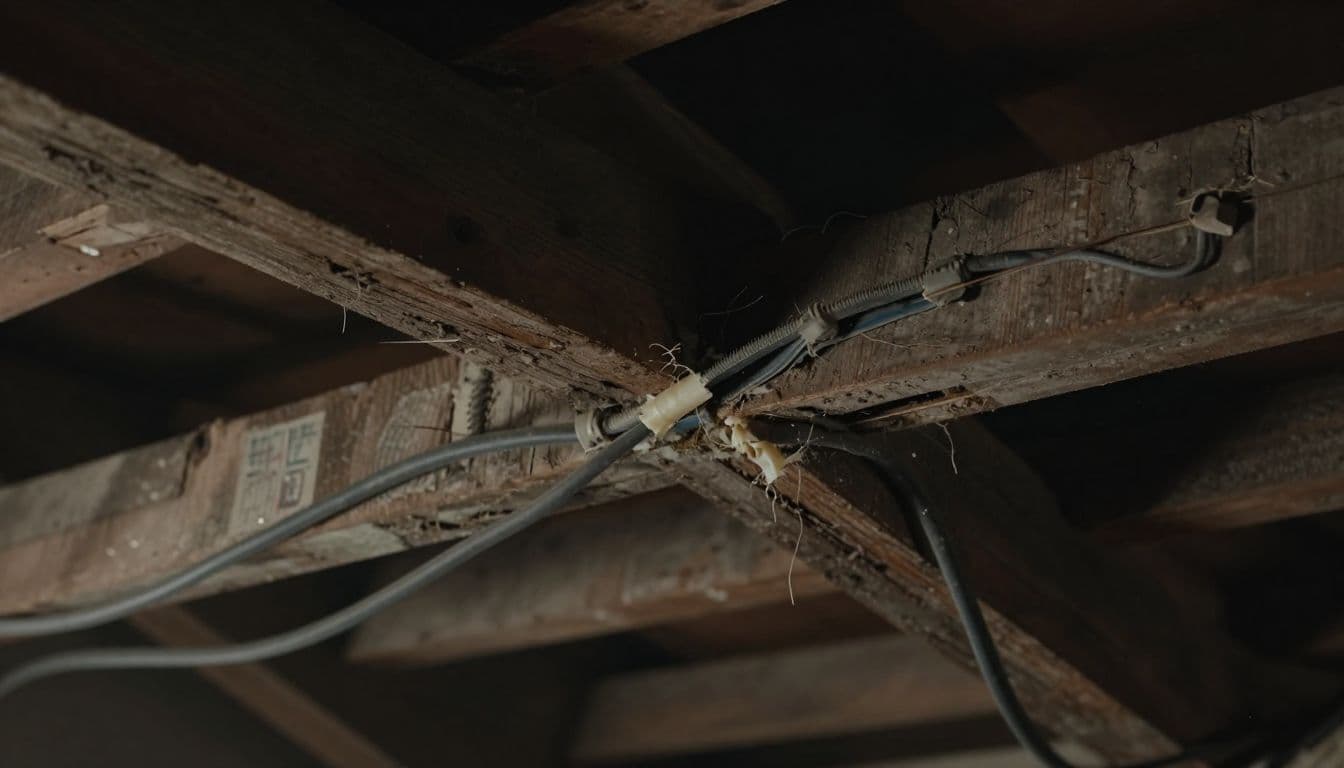
Chewed insulation near attic framing can expose wiring to further damage and contact with surrounding materials.
The most serious risk occurs when damaged conductors short out or create an arc. An arc can produce intense heat at a loose connection or damaged point. A circuit breaker may trip, but protective devices cannot correct every wiring problem, particularly when older electrical systems have poor grounding or outdated components.
Mice may also damage wiring that does not carry household power. Alarm cables, thermostat wires, doorbell lines, internet cables, and security camera wiring can all become targets. These problems may not cause a fire risk, but they can disable important systems or make a fault harder to trace.
The age of the wire changes how a repair should be handled. A new section of cable may not be an appropriate fix if the existing system has deteriorated insulation, overloaded circuits, missing grounding, or obsolete connections. In some cases, the visible chew mark is only one part of a larger electrical problem.
Warning Signs of Mouse-Related Electrical Damage
Rodent evidence and electrical symptoms often appear together. Look for droppings, shredded nesting material, gnaw marks, or a stale odor near the electrical panel, basement ceiling, attic, and utility penetrations. Small holes in insulation or damaged cable jackets deserve attention even if the lights still work.
Electrical warning signs include:
- Flickering or dimming lights , especially when appliances start or stop.
- Breakers that trip repeatedly without an obvious overload.
- Warm, discolored, or buzzing outlets and switches .
- A burning plastic or rubber smell near a wall, fixture, or panel.
- Sparks, shocks, or crackling sounds when operating a device.
- A dead outlet or lighting circuit that worked previously.
- Alarms, thermostats, or network equipment that suddenly loses power or connection .
One symptom may have several causes. Flickering lights can result from a loose connection, a failing fixture, an overloaded circuit, or damaged wire insulation. Mouse activity makes a professional inspection more important, but it doesn't identify the exact fault by itself.
Turn off the affected circuit if you can do so safely and identify the correct breaker. If you smell burning, see smoke, hear active arcing, or notice heat at an outlet or wall, shut off the main power only if you can reach it without touching damaged equipment. Leave the building and call emergency services if a fire starts.
Don't pull cable from a wall, move a nest near wiring, or open the panel to investigate. A circuit can remain energized even when one outlet or fixture stops working. Electrical testing requires the right instruments and a safe method.
What an Electrician Should Check
A licensed electrician will begin by asking where you found rodent activity and which electrical symptoms you noticed. That information helps narrow the likely cable routes, but the electrician still needs to inspect the system rather than rely on visible evidence.
The inspection may include the panel, accessible junction boxes, attic and basement wiring, receptacles, switches, light fixtures, and areas around plumbing or heating equipment. The electrician can remove cover plates, look for heat damage or loose connections, and trace the affected circuit.
Testing helps separate a damaged cable from a problem with a breaker, receptacle, fixture, or connection. Depending on the system, an electrician may check voltage, continuity, grounding, polarity, and the condition of insulation. They may also inspect for overloaded circuits or missing protection near damp locations.
Older wiring needs special care during this process. Opening a box can disturb brittle insulation. A repair that appears small may expose a larger need for rewiring or a panel upgrade. For homes with older armored cable, assessing aging BX electrical cables includes checking the metal jacket, cable ends, grounding path, and visible wear.
Ask the electrician to document the damaged locations and explain whether the recommended work involves:
- Replacing a short damaged section
- Replacing a complete branch-circuit run
- Repairing or replacing a junction box or device
- Correcting grounding or bonding problems
- Updating the panel or protective devices
- Rewiring additional areas with deteriorated insulation
A proper repair uses approved cable, boxes, connectors, and devices that match the circuit and local code requirements. Electrical tape over a chewed section is not a permanent repair. It may hide the damage while leaving the conductor, connection, or surrounding cable unsafe.
Repairing the Wiring and Preventing More Damage
Electrical repair and pest control should happen as part of the same plan. A new cable can suffer the same damage if mice still enter the attic, basement, or wall cavity.
Start with the electrical hazard. Keep people away from the affected area, unplug equipment connected to the circuit, and avoid disturbing exposed wiring. Then schedule an electrician to inspect and make the circuit safe. If the electrician finds active rodent access, contact a qualified pest-control professional for removal and exclusion.
A complete response often follows this order:
- Make the area safe. Shut off power to the affected circuit when it is safe to do so, and keep children and pets away.
- Inspect the wiring. Have a licensed electrician identify every damaged cable, connection, box, and device.
- Complete the repair. Replace damaged conductors and correct related grounding, connection, or protection problems.
- Remove the access points. Seal gaps around foundations, vents, pipes, doors, and utility lines after confirming rodents are no longer inside.
- Reduce future shelter. Store food in sealed containers, remove clutter, and keep basement and attic areas accessible for inspection.
Avoid sealing an opening while mice remain inside a wall or ceiling. Trapping animals inside can create odor, contamination, and further damage. A pest professional can recommend a safe removal and exclusion plan.
Homeowners should also take care with insulation and nesting material. Don't sweep droppings or pull apart a nest located near wiring without proper protection and advice. Contaminated materials may require specialized cleanup.
For property managers and businesses, document the location, circuit, affected tenant or equipment, and repair date. Repeated damage in a multi-unit building often points to a shared entry route, such as a utility chase or basement penetration. Addressing only one apartment may not solve the building-wide problem.
Conclusion
Mice can damage electrical wiring in older homes by chewing insulation, disturbing connections, and nesting near cables. Aging materials and accessible wall, attic, and basement spaces make the problem harder to spot.
Treat rodent evidence near wiring as a reason for an electrical inspection, especially when lights flicker, breakers trip, or outlets feel warm. The safest repair addresses both hazards , restoring the circuit and stopping mice from reaching it again.