

Whole-Home Rewiring Cost in Greater Boston in 2026

Contact Us
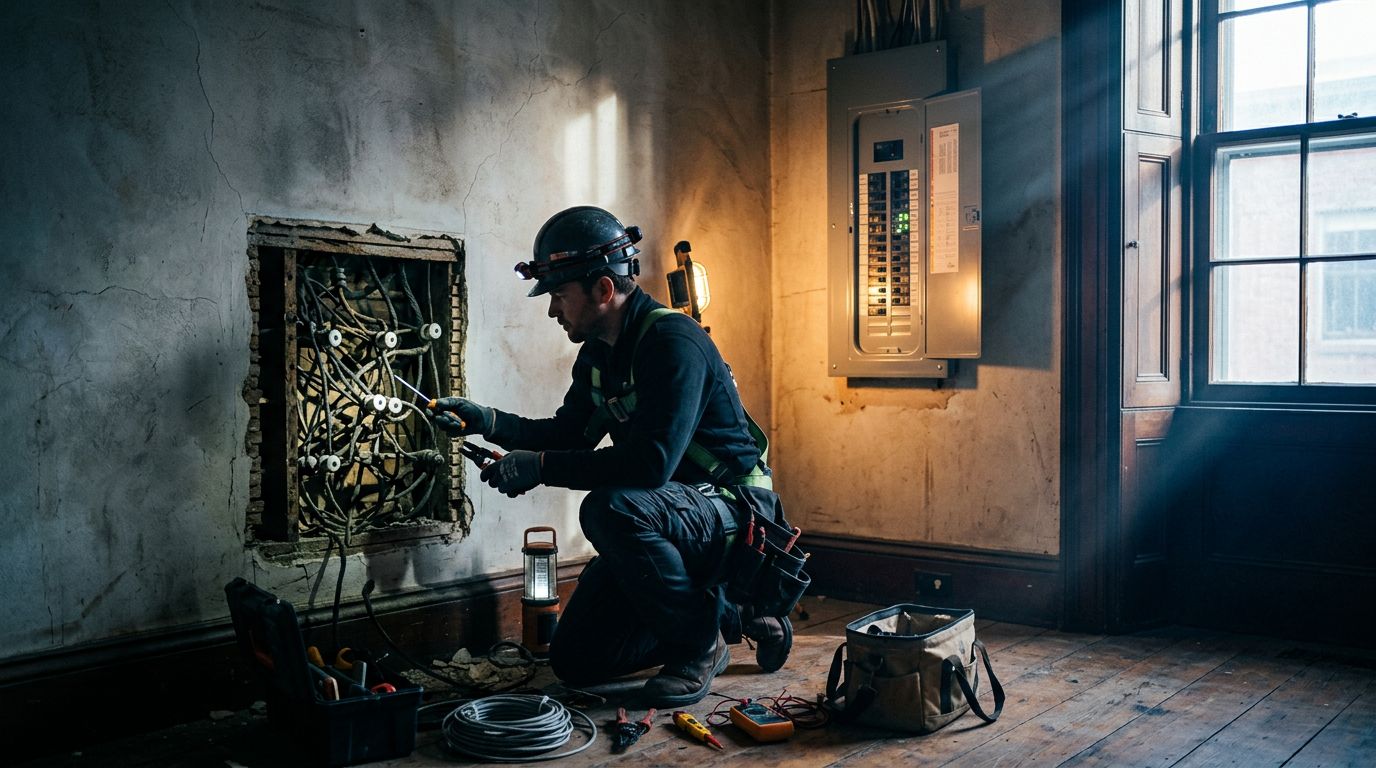
A full rewire can feel expensive fast, especially in a Greater Boston home with plaster walls, old circuits, and tight access. In 2026, many homeowners are seeing whole home rewiring cost estimates between $6,000 and $20,000 , with a common middle range around $8,000 to $15,000 .
The house matters more than the ZIP code. Age, layout, knob-and-tube wiring, panel condition, and permit needs can move the number in a big way. If you're trying to separate a fair estimate from a scary one, the details below will help.
What a full rewire usually includes in an older Boston home
A full rewire is more than swapping a few outlets. It usually means new branch circuits, modern outlets and switches, updated grounding, and a safer path for heavy loads like kitchens, laundry rooms, and HVAC equipment.
Older Boston-area homes add their own quirks. Plaster walls slow the work, finished rooms need careful patching, and knob-and-tube often hides in walls, attics, or crawl spaces. In a triple-decker, a 1920s Colonial, or a finished Cape, access can shape the price as much as the wire itself.
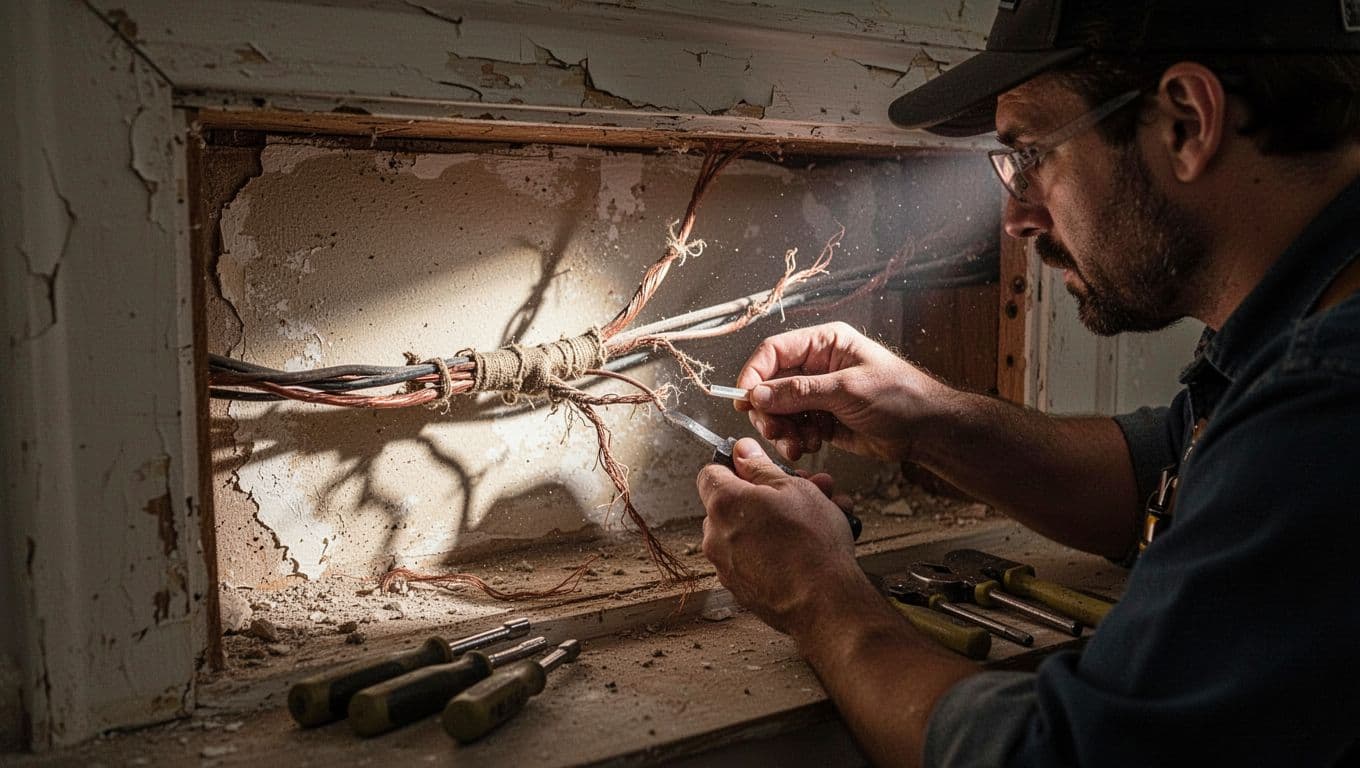
Permit and inspection steps also matter. Most towns in Greater Boston want the work permitted, and the final inspection has to pass before the job is closed out. That paperwork is normal, but it adds time and cost.
2026 price ranges in Greater Boston
For a rough planning number, this is a practical way to think about the whole home rewiring cost in the area.
| Home type or scope | Typical 2026 range |
|---|---|
| Small condo or compact home | $6,000 to $9,000 |
| Typical 1,500 to 2,000 sq ft single-family | $8,000 to $15,000 |
| Large or complex older home | $15,000 to $20,000 |
These are ballpark figures, not fixed bids. A home with easy access and fewer repairs may stay near the low end. A home with plaster, finished ceilings, or hard-to-reach wiring often lands closer to the top.
If your house still has knob-and-tube or a patchwork of old circuits, the local cost to rewire an older house guide is a useful starting point for comparing estimates.
The cheapest quote is not always the real price if it leaves out panel work, patching, or permit fees.
What pushes the bill up or down
Several things move the number, and most of them are easy to spot once you know what to look for.
- Knob-and-tube or cloth wiring adds labor because electricians have to trace older runs carefully.
- Plaster walls slow the job, and clean patching takes extra care.
- Finished basements, attics, and detailed trim make access harder.
- A panel upgrade or service change often belongs in the same project.
- Occupied homes cost more to work in, because crews have to protect rooms and keep daily life moving.
- Permits, inspections, and code corrections can add hours before the job is done.
A home that is open, empty, and simple to access usually costs less. A home that has hidden wiring paths, fragile finishes, or outdated hardware usually costs more. That is why two houses of the same size can get very different quotes.
In Greater Boston, older housing stock is common, so many electricians plan for surprises. Hidden junctions, undersized boxes, and old splices can show up after walls open. Good estimates leave room for that reality.
Why the panel matters as much as the wire
If the panel is old, undersized, or full, a rewire is only half the story. Many homes built before modern loads became normal still need a 100-amp service replaced with 200-amp service, especially if the owner wants central air, an EV charger, a heat pump, or backup power later.
That is why breaker panel replacement often ends up in the same estimate. A solid quote should say whether the panel, meter, grounding, and service entrance are included or priced separately.
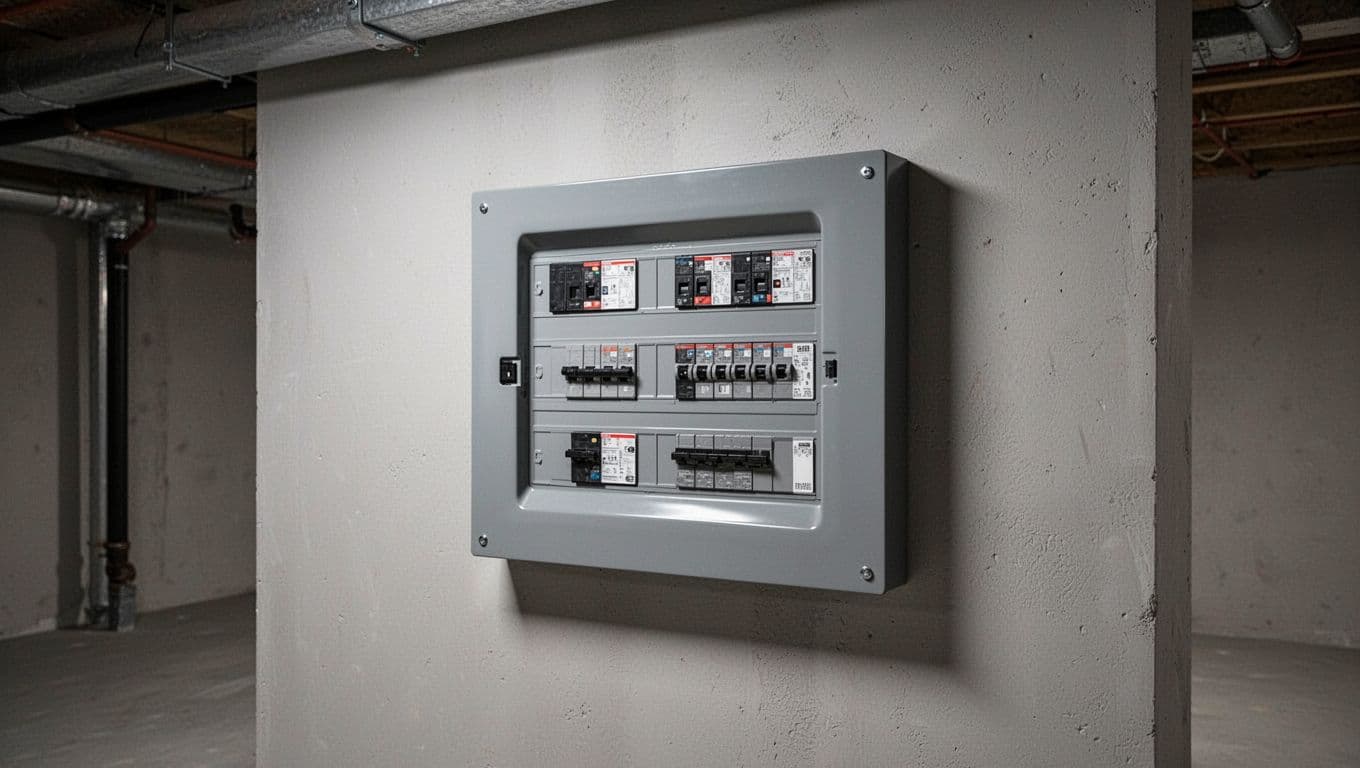
Panel work also affects timing. Utility coordination, shutdowns, and inspection windows can stretch a project by a few days. If the service upgrade is not planned well, the rest of the rewire may wait on it.
A clean estimate makes the sequence clear. First comes the service and safety work, then the new circuits, then the final testing and sign-off. When that order is spelled out, the project is easier to compare and easier to trust.
How to compare estimates without guessing
When you compare bids, look at the scope line by line. One quote may include patching, permits, new breakers, and disposal. Another may leave those out. That is where a low number gets expensive later.
Ask who handles wall repair, whether the electrician will open and close the walls, how many new circuits the home will get, and whether the estimate includes inspection corrections. If the work has to happen while you live there, ask how the rooms will be phased and how long each phase takes.
A useful estimate should also say whether the electrician is replacing devices only, or replacing the full circuit path. Those are very different jobs. Replacing a few outlets is cheaper, but it doesn't solve aging wiring hidden behind the walls.
For Greater Boston homeowners, it also helps to ask about timing. Winter jobs can move slower because of weather, access, and holiday schedules. Summer can fill up fast, especially when many owners want work done before school starts or before a renovation.
Conclusion
A full rewire is a big project, but the price usually makes sense once you break it down. In Greater Boston, the house's age, layout, panel condition, and access are what drive the whole home rewiring cost more than anything else.
If your home has plaster, knob-and-tube, or a panel that is already at its limit, expect the estimate to reflect that. A clear quote should explain the scope, the permits, the inspection steps, and any panel upgrade that needs to happen with it.
The best number is the one that matches the house you actually own. Once you know what is behind the walls, the estimate becomes much easier to judge.