
Why a GFCI Outlet Won't Reset in Your Greater Boston Home

Contact Us
A GFCI outlet not resetting is more than an annoyance. It's a warning that something on the circuit needs attention.
In many Greater Boston homes, the cause is small and easy to spot. In others, it points to moisture, a bad appliance, older wiring, or a deeper circuit problem. The key is to stay safe, avoid forcing the reset button, and narrow down the cause step by step.
Safe checks you can do before touching the reset button
Start with the simple things. A GFCI often refuses to reset because the circuit is still under load, another device is tripped, or moisture is present.
If the outlet is in a kitchen, bathroom, basement, garage, or outdoor area, move slowly and keep your hands dry. For a broader home safety refresher, these home electrical safety tips are a good place to start.
- Unplug anything on the circuit.
Remove lamps, chargers, appliances, and power strips from nearby outlets. A faulty device can keep the GFCI from resetting. - Check the breaker panel.
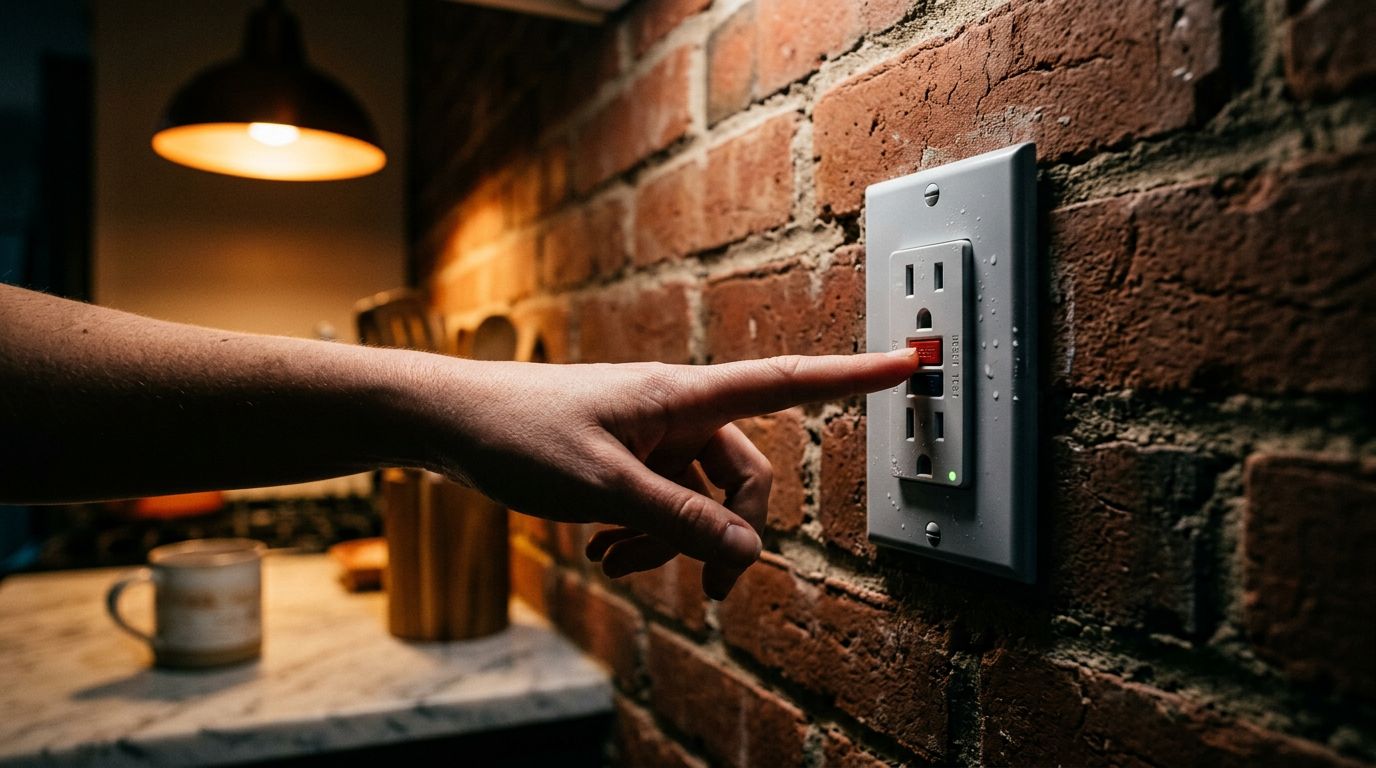
Look for a tripped breaker. A breaker may sit in the middle position or appear slightly off. If it's tripped, that can stop the outlet from coming back on. - Press the reset button firmly once.
Use one hand and dry fingers. Push it all the way in. If it clicks and holds, the outlet may be fine for now. - Look for moisture or visible damage.
A damp outlet box, a recent leak, or water near the receptacle can keep the GFCI tripped. Scorch marks, buzzing, or a warm faceplate are red flags. - Plug items back in one at a time.
If the outlet resets, restore power slowly. Watch for the exact appliance that makes it trip again.
If the button won't stay in after these checks, stop there. Repeated forcing can make a bad situation worse.
Common reasons a GFCI outlet won't reset
A GFCI outlet is designed to shut off when it senses danger. When it won't reset, the problem usually sits in one of a few places.
- A tripped breaker is still interrupting the circuit.
The outlet may look like the problem, but the panel could be the real issue. Resetting the breaker first often clears the fault. - Another outlet downstream is causing the trip.
One GFCI can protect several outlets. If a bathroom or basement outlet farther down the line has a fault, the main one may refuse to reset. - Moisture is present in the outlet box or connected wiring.
This is common in bathrooms, kitchens, basements, laundry rooms, garages, and outdoor receptacles. Even a little dampness can keep the device from resetting. - The outlet itself is worn out.
GFCIs do not last forever. If the device is old, it may fail mechanically or lose its ability to latch. - An appliance or tool on the circuit is faulty.
A bad toaster, space heater, sump pump, dehumidifier, or extension cord can trip the outlet every time. - The wiring or grounding has a problem.
Loose connections, a damaged neutral, or a ground fault can stop the GFCI from resetting and point to a larger circuit issue. - The circuit has too much on it.
Overloads can trip the breaker and the GFCI together. That is common when several high-draw devices share one circuit.
If you unplug everything and the outlet still will not reset, the issue is less likely to be a plugged-in device. At that point, the fault is probably inside the circuit itself.
Why older Greater Boston homes see this problem more often
Older homes across Boston, Cambridge, Somerville, Brookline, and nearby towns often have a mix of old and updated wiring. That mix can make GFCI problems harder to pin down.
Many houses were built before today's outlet layout was common. Later repairs and remodels may have added GFCI protection in one spot, while other parts of the circuit stayed unchanged. That can leave a single outlet protecting a bathroom, basement, porch, or garage in ways that are not obvious to the homeowner.
You can read more about common electrical problems in older Greater Boston homes if your house has seen several rounds of repairs over the years.
Older wiring also tends to show wear in hidden places. Loose connections, aged insulation, damp basement runs, and patched circuits can all create a GFCI fault. In some homes, one outlet appears to be the problem, but the real issue sits several feet away in another box or junction.
That is why older homes can be tricky. The visible outlet is only part of the story.
When a licensed electrician needs to step in
Some GFCI problems need more than a reset. If the outlet trips again right away, if the breaker keeps falling, or if multiple outlets on the circuit go dead, stop troubleshooting.
Call a licensed electrician if you notice any of these signs:
- burning smell or heat at the outlet
- sparking, buzzing, or crackling
- discoloration on the outlet or cover plate
- signs of water intrusion
- a reset button that will not stay in after safe checks
- more than one dead outlet on the same circuit
- repeated tripping with no clear appliance cause

A professional electrician can trace the circuit, test the outlet, check downstream receptacles, and look for grounding or wiring problems. They can also find damage that sits behind the wall, where you can't see it.
That matters in Greater Boston homes, where older wiring, finished basements, and long-used circuits often hide the real cause. A proper inspection can separate a simple outlet failure from a circuit that needs repair.
Conclusion
A GFCI that won't reset usually points to a clear cause, even if it takes a few checks to find it. Start with the easy steps, like unplugging devices, checking the breaker, and looking for moisture.
If the outlet still won't reset, or if it keeps tripping after it comes back on, the problem may be in the circuit or the wiring. That's the point to stop and bring in a licensed electrician.
For a Greater Boston homeowner, the safest move is simple: respect the warning, don't force the outlet, and treat repeated GFCI trouble as a sign that the circuit needs a closer look.